


Winning and Qingdao Beihai Sign 10-Year Pact to Extend Ties Beyond Newbuildings
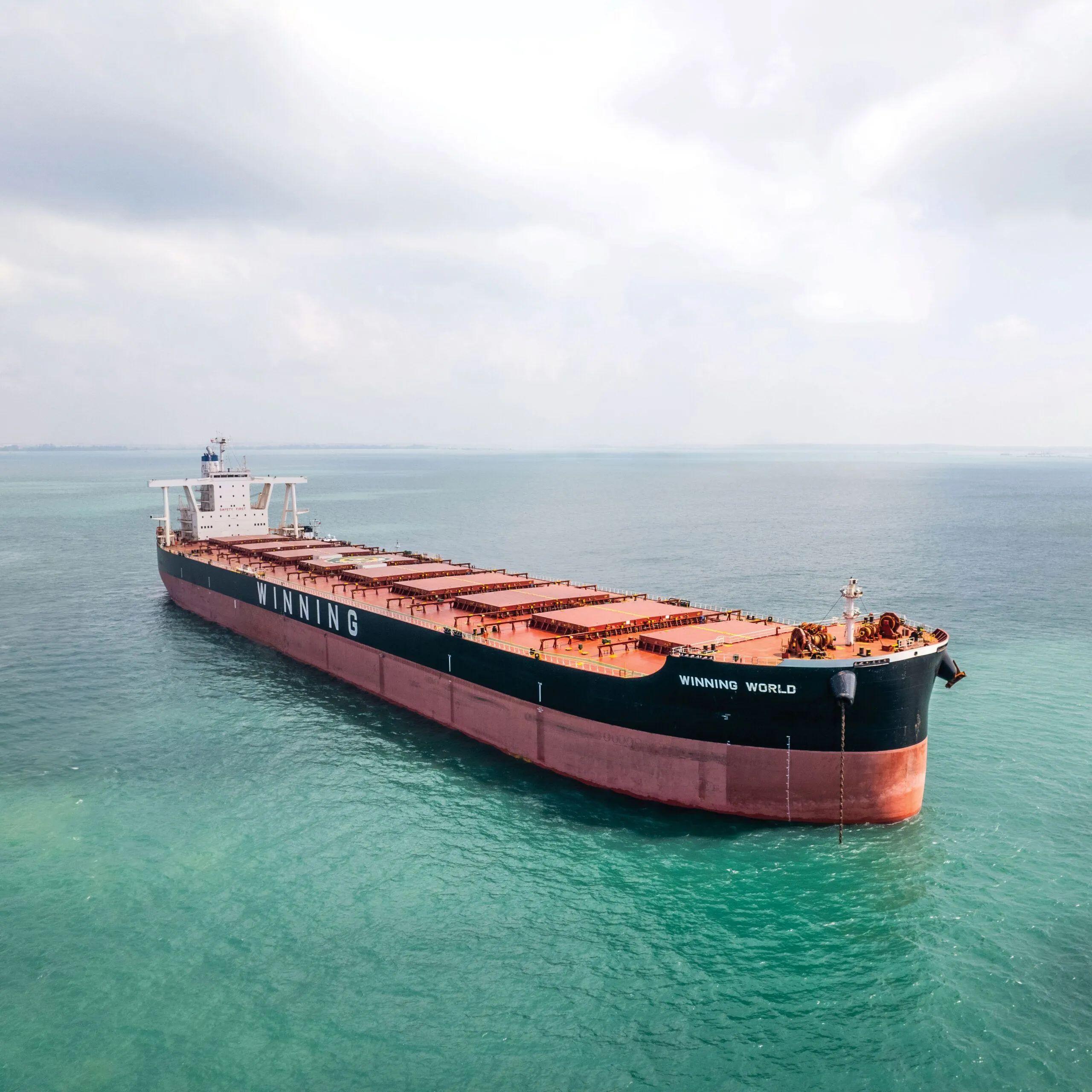

Winning International Group and CSSC Qingdao Beihai Shipbuilding have signed a 10-year shipbuilding and repair cooperation memorandum covering newbuildings, fleet maintenance, technical upgrades and lifecycle support. No fresh vessel orders were announced with the agreement, making the deal less about locking in a decade of tonnage and more about extending the yard-owner relationship beyond ship delivery.
Singapore-based Winning International Group has signed a 10-year shipbuilding and repair cooperation memorandum with CSSC Qingdao Beihai Shipbuilding, potentially giving the Chinese yard a much longer role in supporting one of the world’s largest bauxite shipping fleets.
The memorandum was signed in Qingdao on August 27. Public disclosures say the cooperation will cover customised newbuilding construction, routine fleet maintenance, vessel technology upgrades and lifecycle technical support. No new ship orders or contract value were announced alongside the agreement.
That distinction matters.
The memorandum should not be interpreted as a 10-year shipbuilding order or a guaranteed allocation of Winning’s future repair work to Beihai. Publicly available details do not specify minimum newbuilding volumes, a guaranteed share of dockings, exclusivity, pricing mechanisms or mandatory purchasing commitments.
Instead, the agreement creates a long-term framework through which individual newbuilding, maintenance and retrofit projects can potentially be developed.
For Beihai, the commercial opportunity could therefore extend well beyond winning another batch of ships.
Eight WinningMax VLOCs Form the Foundation
The relationship is anchored by Winning’s 325,000-dwt WinningMax very large ore carrier programme.
Winning ordered its first two 325,000-dwt vessels from Qingdao Beihai in 2023. In December 2025, the owner returned for another six ships, taking Beihai’s share of the programme to eight vessels. Lloyd’s List reported that all six additional ships were expected to be delivered by 2028.
The first vessel, WINNING AMBITION, was delivered on June 16, 2026. China Classification Society describes the 329.99-metre ship as the first vessel in the series and confirms that it is equipped with a 12,000-cu-m methanol fuel tank, shaft generator and high-voltage shore-power system.
The second ship, WINNING BRAVE, followed on August 12, according to information released around the signing of the 10-year memorandum.
Winning’s wider programme is larger still.
The group’s latest corporate information says it is building 16 WinningMax-class 325,000-dwt ore carriers with China State Shipbuilding Corporation and Hengli Heavy Industries. Lloyd’s List has identified the split as eight ships at Beihai and eight at Hengli.
| Yard | WinningMax vessels | Current position |
|---|---|---|
| CSSC Qingdao Beihai Shipbuilding | 8 | First two delivered; six additional ships contracted |
| Hengli Heavy Industries | 8 | Newbuilding programme under construction |
| Total | 16 | Winning’s current WinningMax programme |
That already makes Beihai one of Winning’s two principal yards for its next generation of ultra-large ore carriers.
The new memorandum seeks to extend that relationship into what happens after those vessels leave the yard.
The Bigger Opportunity Starts After Delivery
This is where the agreement becomes more strategically interesting.
Shipbuilding is largely project-based: the yard builds the vessel, delivers it and recognises most of the value during the construction cycle.
But a large merchant ship may remain in service for two decades or more. During that period it requires scheduled drydockings, machinery maintenance, steel renewal, energy-efficiency upgrades, regulatory modifications and potentially major propulsion or alternative-fuel conversions.
Winning offers substantial scale for such a model.
Its current website says the group operates and controls nearly 150 vessels, including nearly 60 owned Capesize bulk carriers with close to 12m dwt of combined capacity. Annual cargo throughput is approaching 100m tonnes, with bauxite and iron ore among its core commodities.
For a shipyard, access to a fleet of that size creates a very different commercial proposition from securing an isolated newbuilding contract.
A successful relationship can potentially generate revenue throughout the vessel lifecycle: initial construction, warranty work, periodic dockings, technical upgrades, efficiency modifications and, eventually, major fuel-system conversions.
That is precisely what the wording of the new agreement is designed to encompass.
Beihai Is Building a Retrofit Business Alongside Newbuildings
Qingdao Beihai is also not entering the lifecycle-services market from scratch.
China State Shipbuilding Corporation has previously disclosed that Beihai secured two 10,000-TEU containership methanol dual-fuel conversion projects and has also undertaken LNG-related conversion work. The yard has simultaneously expanded its newbuilding portfolio across LNG-, methanol- and ammonia-related designs.
That capability is increasingly relevant as shipowners confront tighter carbon-intensity requirements and uncertainty over future fuel choices.
For China’s major shipbuilders, the competitive contest is therefore gradually moving beyond one metric — how many newbuilding orders a yard can secure.
A second question is becoming more important:
Can the yard retain the owner after delivery?
Winning’s 10-year framework gives Beihai an opportunity to demonstrate that it can.
Methanol-Ready Creates a Future Retrofit Question
The WinningMax design adds another layer to the lifecycle-service argument.
CCS confirms that WINNING AMBITION incorporates a 12,000-cu-m methanol fuel tank, separate from its conventional fuel tanks. Winning describes the 325,000-dwt series as methanol-ready, alongside significantly improved energy efficiency per tonne-mile.
But “methanol-ready” needs to be interpreted carefully.
It does not mean that the vessels are currently operating as methanol dual-fuel ships.
The designation means that elements of the ship have been designed to facilitate future adoption of methanol. Actual operation on methanol would still depend on the required propulsion, fuel supply, safety and control systems being installed, approved and commissioned.
That creates a potentially important long-term business opportunity.
If green methanol becomes commercially viable on Winning’s long-haul trades, the owner could eventually have to decide whether to convert at least part of the fleet.
A shipyard that built the original vessels, understands their structural design and already provides maintenance support could be well placed to compete for that work.
The 10-year memorandum therefore covers a period in which the technological configuration of these ships could itself evolve.
From Selling Ships to Managing Customer Lifecycles
For Chinese shipbuilders, this model has broader significance.
China has gained global market share primarily through expanding newbuilding capacity, competitive pricing, rapidly improving design capability and a deep domestic marine-equipment supply chain.
But as more international owners take delivery of Chinese-built fleets, the next competitive layer is increasingly likely to involve after-sales service, repair, retrofit and repeat ordering.
A customer that returns for another newbuilding series is valuable.
A customer that also returns for drydockings, energy-efficiency modifications and fuel conversions can be more valuable still.
The Winning-Beihai agreement offers a practical example of that transition.
It does not guarantee that Winning’s next ships will be ordered at Beihai. Nor does it mean that the yard has secured the repair business of the owner’s entire fleet for the next decade.
But it does create an institutional framework that could make Beihai a recurring technical partner rather than simply one of Winning’s construction yards.
The MoU’s Value Will Be Measured in Follow-On Projects
The most important developments will therefore come after the signing ceremony.
The market should watch for three things in particular: whether Winning places additional newbuilding orders at Beihai, whether a meaningful share of its existing fleet begins using the yard for scheduled maintenance, and whether methanol or other energy-transition retrofits emerge from the framework.
Delivery performance will also matter.
The first WinningMax ships are now entering operation, giving Winning real-world data on fuel consumption, reliability and technical performance. Positive operating experience would strengthen Beihai’s case for repeat work; disappointing performance would have the opposite effect.
For now, the conclusion should remain measured.
Winning has not handed Qingdao Beihai a decade of guaranteed orders. What it has done is give the yard an opportunity to compete for a decade of business across the full vessel lifecycle.
If newbuildings, drydockings and fuel-system upgrades begin to flow through that framework, the memorandum could become a useful example of how Chinese yards are moving from project-by-project shipbuilding toward longer-term international owner relationships.

READ MORE
 Sustainability
Singapore Offers Up to S$250,000 for Electric Harbour Craft
 Sustainability
Greater Bay Area Launches First Zero-Carbon Container Shipping Route Between Guangzhou and Hong Kong
 Sustainability
1000Ton! CMB.TECH in World First Commercial STS Green Ammonia Bunkering
 Sustainability
MPA, CMA CGM and SLNG Join Forces on Bio-LNG Bunkering
 Sustainability
China Sets 2028 Targets for Electric and Methanol-Powered Inland Vessels
 Sustainability
China Merchants Takes Delivery of Third Methanol Dual-Fuel Car Carrier
 Sustainability
Alexander Saverys :Green Ammonia Will Be Cheaper Than Diesel—Sooner Than You Think
 Sustainability
Beihai Delivers First Ammonia-Powered Bulker as Mineral Europa Sets Sail
 Sustainability
World's First Ammonia Dual-Fuel Bulker Delivered in China
 Sustainability