


Beihai Delivers First Ammonia-Powered Bulker as Mineral Europa Sets Sail


The 210,000-dwt Newcastlemax has begun its maiden voyage to Australia, bringing Chinese-built ammonia propulsion into large-scale dry bulk operations and opening the next phase of CMB.TECH’s fleet programme.
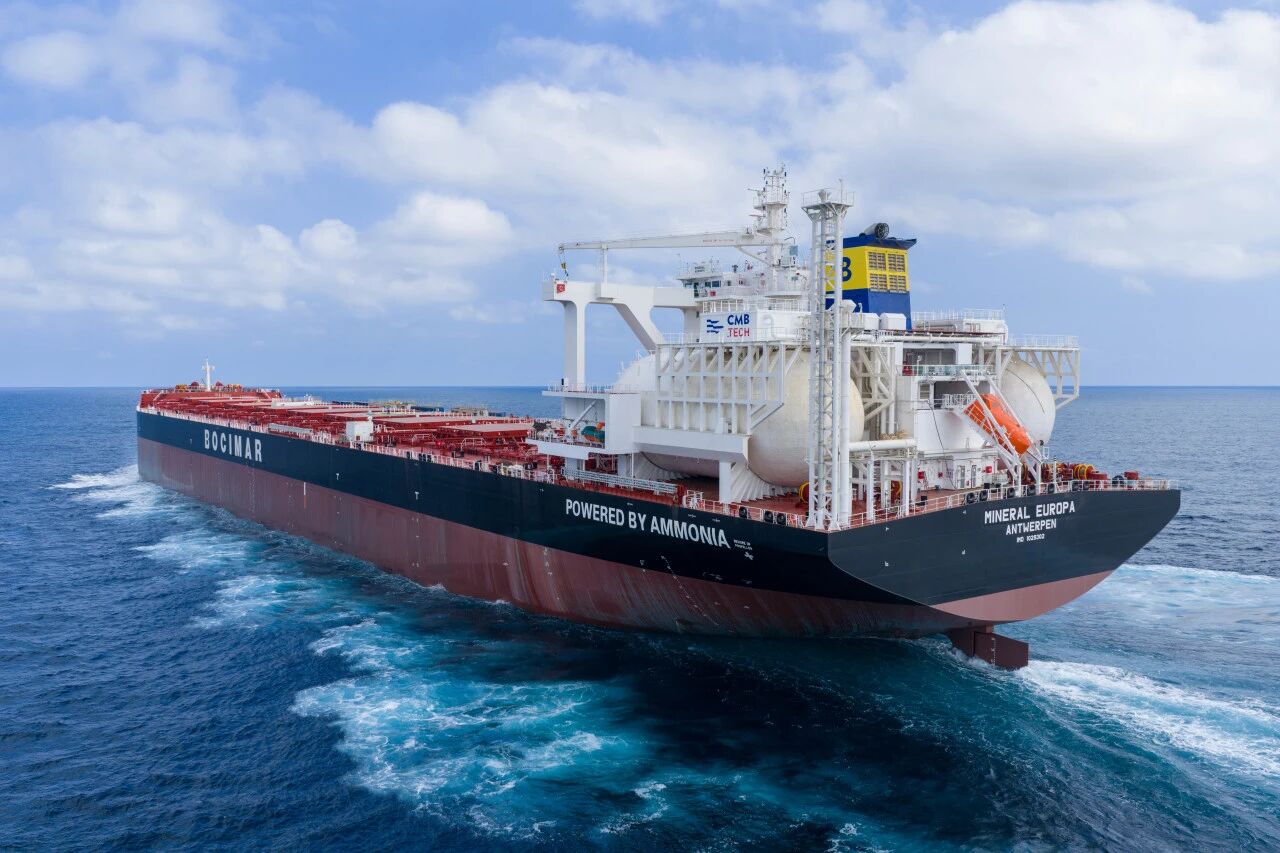
China’s Qingdao Beihai Shipbuilding has delivered Mineral Europa, the world’s first ammonia-powered dry bulk carrier, to Belgian shipping group CMB.TECH.
The 210,000-dwt Newcastlemax was formally handed over on October 9 through a project involving Beihai, part of China State Shipbuilding Corporation, and China Shipbuilding Trading Co. CMB.TECH confirmed the same day that the vessel had begun its maiden voyage to Australia.
For the Chinese shipbuilding industry, the delivery advances ammonia propulsion beyond equipment testing and sea trials into an operating vessel in one of shipping’s largest cargo-carrying segments.
From ammonia-ready to operational capability
Mineral Europa belongs to CMB.TECH’s Europa series built at Beihai and is the first ammonia-powered vessel in that series. Its dual-fuel engine can operate on ammonia or conventional marine fuel, retaining flexibility while ammonia bunkering infrastructure develops.
The distinction from an ammonia-ready vessel is significant. An ammonia-ready design allows for future conversion; a delivered dual-fuel ship has the propulsion equipment needed to use the alternative fuel.
The engineering programme has brought together engine design, manufacturing, fuel-supply equipment and shipyard integration. On June 15, WinGD announced that its X72DF-A ammonia engine had completed factory acceptance testing at CSSC Engine Co. in China.
CSSC Engine manufactured the engine, while Sunrui supplied the fuel-supply system. WinGD identified the installation as intended for the first of ten bulk carriers ordered by CMB.TECH. Testing was witnessed by Lloyd’s Register and representatives of the American Bureau of Shipping and China Classification Society.
For Beihai, operating feedback from the lead vessel should help inform subsequent construction, commissioning and technical support. The next challenge is delivering that capability consistently across follow-on ships.
First voyage backed by a cargo owner
Riviera reported, citing a CMB.TECH spokesperson, that Mineral Europa had bunkered 1,000 tonnes of green ammonia for the voyage to Australia and would use the fuel during the passage. The vessel is chartered to Australian mining group Fortescue.
Ammonia operation does not mean the engine consumes no oil. WinGD says its X-DF-A technology uses high-pressure ammonia injection with a targeted pilot-fuel contribution of around 5% at full load. Actual voyage fuel consumption and emissions performance will require operating data.
Fortescue’s involvement provides a commercial application for the technology. In June, the mining group and CMB.TECH announced an agreement covering the charter of up to 12 Newcastlemax vessels from Bocimar, CMB.TECH’s dry bulk business.
Under the disclosed arrangements, up to three ships would be delivered with ammonia dual-fuel engines and were expected to enter service by the end of 2026. The remaining nine would be ammonia-ready, with the ability to undergo conversion later.
That structure combines immediate deployment with a pathway for later conversions, allowing the partners to expand ammonia use as fuel supply and operating experience develop.
A broader fleet programme
CMB.TECH’s October 9 announcement outlined a programme of 21 ammonia-powered vessels scheduled for delivery through 2029: 18 dry bulk carriers, one containership and two chemical tankers.
The company said most were expected within the following nine months. This is a group-wide programme spanning several ship types, rather than a single Beihai construction series.
Fuel procurement is developing alongside the fleet. CMB.TECH previously announced a green-ammonia offtake agreement with CEEC Hydrogen Energy for production in China’s Jilin province, together with an investment in Jiangsu Andefu Energy Technology.
The group is also investing in ammonia storage and bunker barges, extending its preparations beyond the vessels themselves. These arrangements give Chinese companies roles across ship construction, fuel production and distribution.
Commercial performance will still depend on delivered fuel prices, reliable bunkering, maintenance requirements and charterers’ demand for lower-emission transport. Public disclosures do not yet establish whether Mineral Europa can achieve voyage-cost parity with a conventionally fuelled vessel.
Its departure nevertheless marks a concrete step for Chinese shipbuilding: a large ammonia dual-fuel bulker has been delivered and sent into service. Follow-on deliveries and results from the first operating voyages will now determine how quickly that achievement develops into a repeatable fleet operation.

READ MORE
 Sustainability
World's First Ammonia Dual-Fuel Bulker Delivered in China
 Sustainability
UK & CHINA: NAVIGATING TOGETHER TOWARDS SAFER, GREENER SHIPPING
 Sustainability
India, EU launch coalition to develop green shipping corridor
 Sustainability
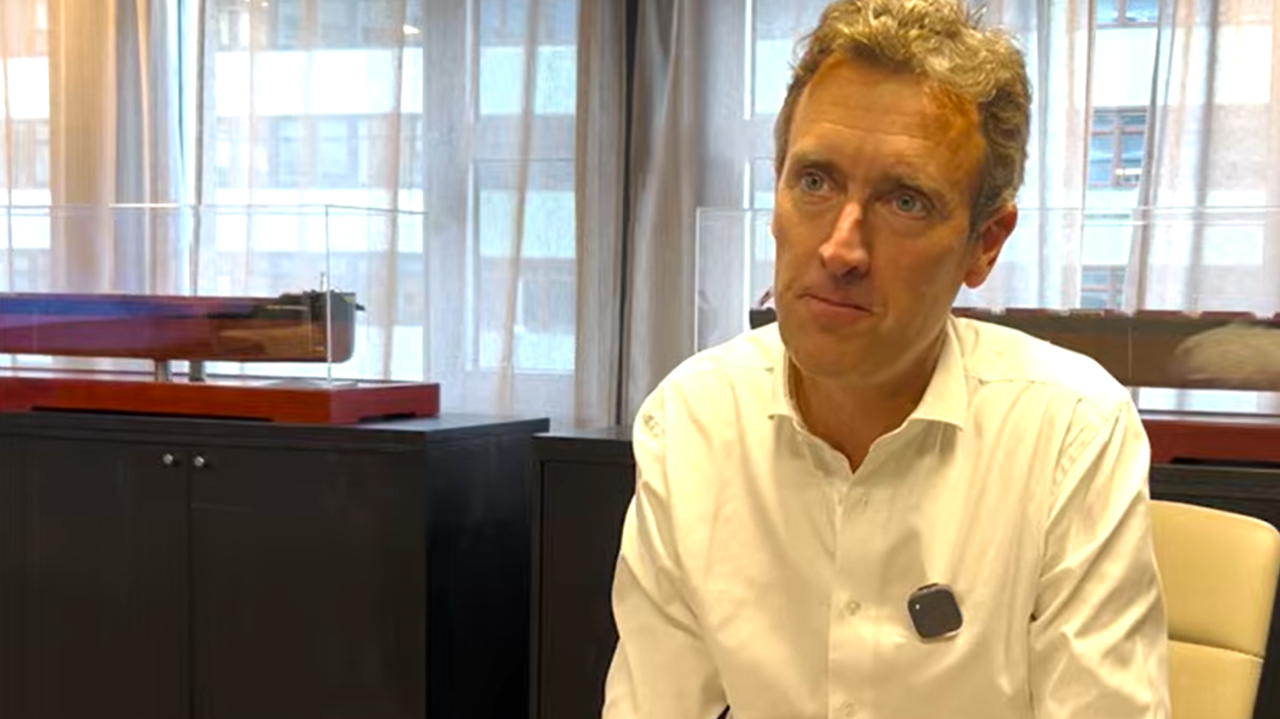
Alexander Saverys :Green Ammonia Will Be Cheaper Than Diesel—Sooner Than You Think
 Sustainability
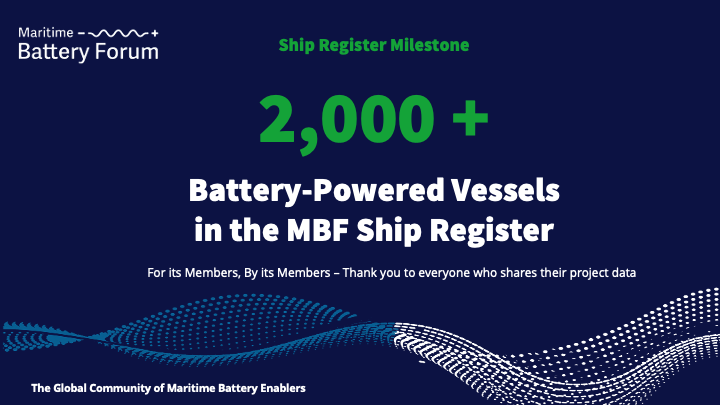
Global fleet of battery-equipped ships surpasses 2,000 vessels
 Sustainability
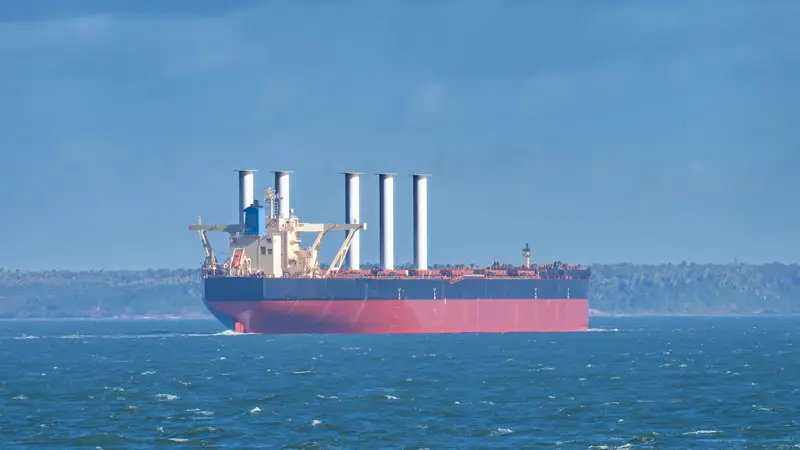
BIMCO adopts new contract addendum to ease investment in ship energy-saving retrofits
 Sustainability
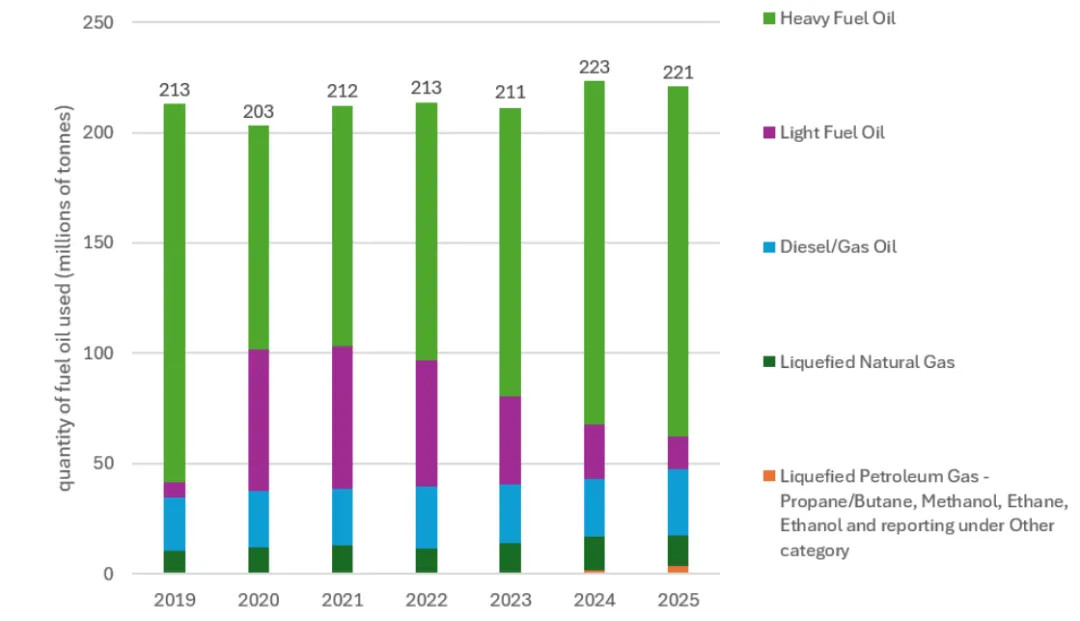
IMO Report: Ship Fuel Consumption Hits 221 Million Tonnes, Biofuel Use Surges 109%
 Sustainability
Hapag-Lloyd Bunkers Goldwind Bio-Methanol in Busan
 Sustainability
CIMC Raffles’ Second Golar FLNG Project Advances With Donor Vessel Deal
 Sustainability