


Alexander Saverys :Green Ammonia Will Be Cheaper Than Diesel—Sooner Than You Think
Behind the World’s First 210,000-dwt Ammonia Dual-Fuel Bulker
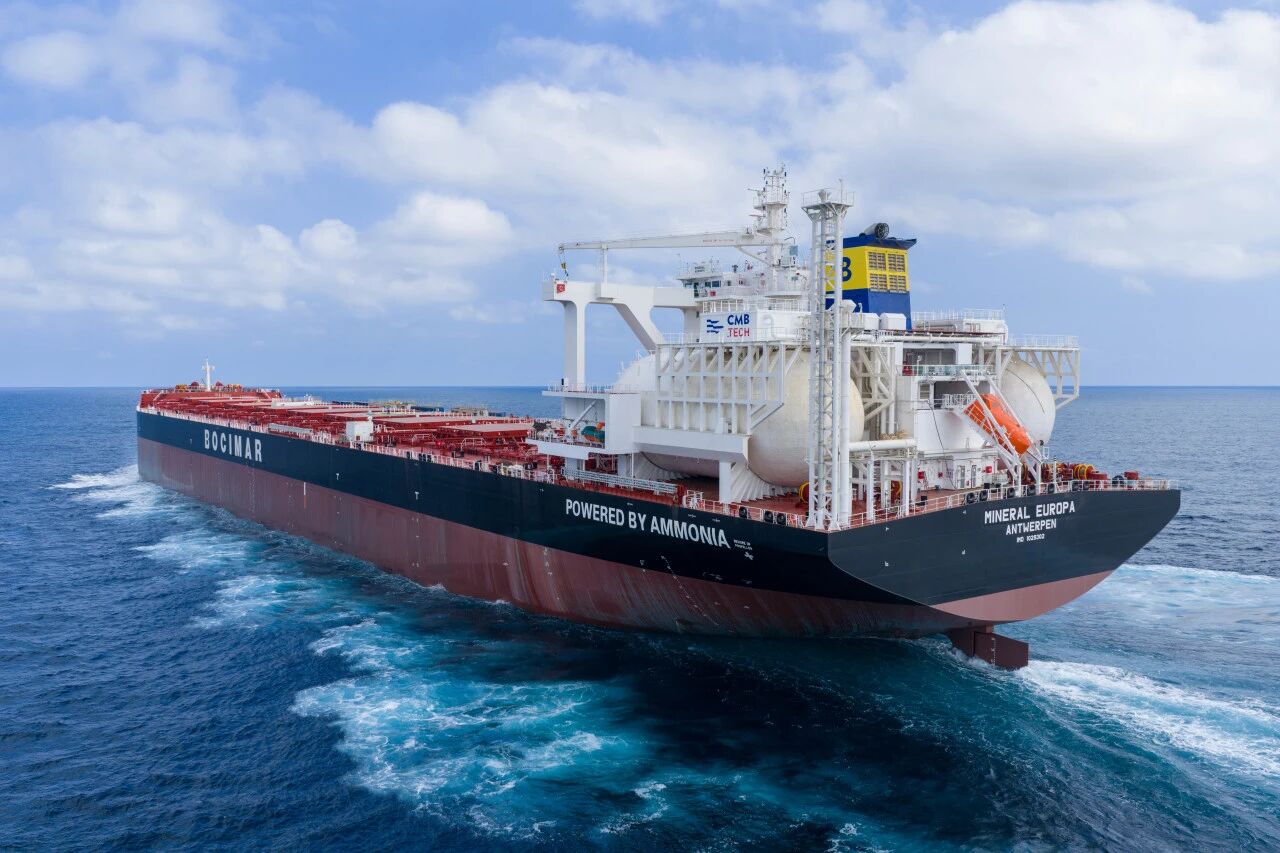
Mineral Europa, the world’s first 210,000-dwt ammonia dual-fuel bulk carrier, was delivered to Belgian diversified shipping group CMB.TECH on 9 October 2026. The vessel was built by Qingdao Beihai Shipbuilding, part of China State Shipbuilding Corporation (CSSC), in cooperation with China Shipbuilding Trading (CSTC). Measuring 300 metres in length and 50 metres in breadth, the Newcastlemax bulker has completed sea trials, and its owner announced on the delivery date that it had begun its maiden voyage to Australia.
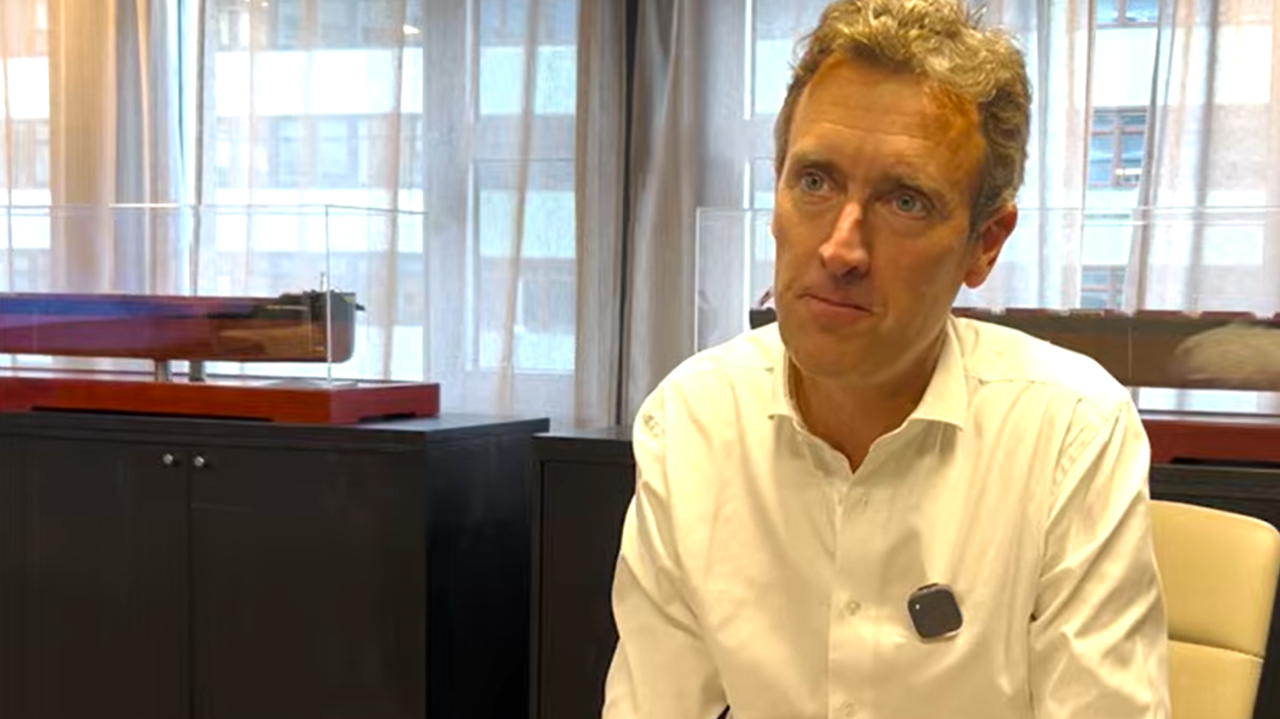
In an interview published by Norwegian business and maritime podcast host Christopher Vonheim on 10 October(Click), CMB.TECH chief executive Alexander Saverys explained how the project developed. The company began investigating alternative fuels in 2016, moved from hydrogen towards ammonia for larger ships, and spent years bringing together shipyards, engine manufacturers, customers and fuel suppliers. With the first vessel delivered, Saverys has set a further objective: demonstrating that ammonia-powered ships can offer customers a commercially competitive transport service.
https://www.youtube.com/watch?v=QieITW8O8IA
From Hydrogen to Ammonia
According to Saverys, CMB.TECH began examining alternatives to conventional marine fuels in 2016. The team assessed fossil-based LNG, LPG and methanol options but did not adopt them as its preferred route to decarbonisation, because they continued to depend on fossil resources and emit carbon dioxide during use. Its initial development work focused on hydrogen.
Experience led the company to see hydrogen as suitable for smaller vessels, while storage and logistics posed greater challenges for large ocean-going ships. Carrying enough fuel for long voyages requires storage arrangements that fit the vessel’s available space and transport requirements. In 2018, the team considered how hydrogen could serve larger ships, including the possibility of liquid hydrogen, but concluded that the technical and engineering conditions at the time did not meet its requirements. It then selected ammonia.
Ammonia combines hydrogen and nitrogen. Green ammonia can be produced using renewable electricity to extract hydrogen from water, which is then combined with nitrogen separated from air. Saverys described this fuel pathway through the phrase “water, sunshine and air”. Hydrogen and ammonia subsequently became complementary parts of CMB.TECH’s approach to different vessel types, with large bulk carriers providing a platform for demonstrating ammonia’s use in ocean-going transport.
A Ten-Ship Programme Takes Shape
Choosing a fuel was followed by the work of finding partners capable of designing and building the ships and their propulsion systems. Saverys said the team had spent the past five to six years developing vessel designs, engines and equipment, integrating them into ships, and finding customers willing to use the resulting vessels. Classification societies also participated, working with the project partners on the safe design and application of the new technology.
In January 2023, CMB.TECH and Swiss marine engine designer WinGD announced a programme to develop ammonia-fuelled two-stroke engines for ten 210,000-dwt bulk carriers. In December that year, they entered a four-party partnership with Beihai Shipbuilding and engine manufacturer CSSC Engine, linking engine development and production with vessel construction. Mineral Europa belongs to CMB.TECH’s Europa series, whose ships include vessels named after European Union member states. It is the first ammonia-powered ship in that series.
Safety assessment progressed alongside development. In September 2023, Lloyd’s Register granted Approval in Principle to WinGD’s X-DF-A ammonia dual-fuel two-stroke engine technology. Its assessment covered the safety concept, risk analysis, preliminary engine and fuel supply system designs, and material compatibility with ammonia. The fuel’s toxicity makes leak detection, ventilation, personnel protection and fuel-system isolation important considerations in both design and operation.
In June 2026, the first X72DF-A engine intended for the bulk carrier series completed factory acceptance testing at CSSC Engine. Qingdao-based marine equipment supplier SunRui provided the associated fuel supply system, while Nantong-based CIMC Sinopacific Offshore & Engineering manufactured the liquid ammonia fuel tanks. Each ship in the series is equipped with two 3,000-cubic-metre Type C tanks. WinGD’s published development and testing results showed greenhouse gas emissions more than 90% lower in ammonia mode than in diesel mode, with a target pilot-fuel share of approximately 5% at full load.
Ship Investment Drives Fuel and Bunkering Development
Asked about the biggest lesson from the project, Saverys gave a direct answer: “You just need to do it.” Committing to a project, he argued, reveals which ideas do not work and which are too expensive, while also pushing the team to find solutions. He cited CMB.TECH’s search for fuel and bunkering arrangements as an example.
Saverys said investment in the vessels had led the company to engage with Chinese ammonia producers, advance its proposed energy project in Namibia and develop a bunkering solution in China. The ships created a need for fuel, and supplying that fuel required transport, storage and bunkering infrastructure. CMB.TECH consequently extended its investment and partnerships into those activities.
In December 2025, the company announced a green ammonia offtake agreement involving China Energy Engineering Corporation’s Songyuan project in Jilin province. It also announced a proposed minority investment in Jiangsu Andefu Energy Technology, a Chinese ammonia supply-chain company. The cooperation encompasses liquid ammonia storage facilities in Nanjing, a storage and logistics project in Panjin, and ship-to-ship ammonia fuel bunkering. The Chinese vessel Shenghang Yongle has also completed a conversion for ship-to-ship liquid ammonia fuel bunkering and obtained relevant class certification from China Classification Society.
In Namibia, CMB.TECH is developing a large green hydrogen and ammonia project near Arandis, with planned first-phase ammonia capacity of approximately 200,000 tonnes annually and a target for commercial operation around 2030. Further engineering work, approvals and a final investment decision are still required. The company is also developing ammonia storage and bunkering infrastructure at Walvis Bay, adding another potential source of fuel and port support for its future fleet.
Securing Customers for the New Ships
Saverys described finding customers as an integral part of the development process, alongside securing a shipyard and an engine manufacturer. Japan’s Mitsui O.S.K. Lines (MOL) is one of the commercial partners. A cooperation agreement announced in March 2025 includes three 210,000-dwt ammonia dual-fuel bulk carriers being built at Beihai Shipbuilding. The vessels are to be jointly owned by CMB.TECH and MOL and chartered to MOL for 12 years each, with delivery scheduled in 2026 and 2027.
Australian iron ore producer Fortescue has joined the programme through its longstanding relationship with Bocimar, CMB.TECH’s dry bulk division. In June 2026, the companies signed a charter agreement for up to 12 Newcastlemax bulk carriers of 210,000 dwt. The agreement covers up to three ammonia dual-fuel ships and nine ammonia-ready vessels designed for future conversion. Fortescue and Bocimar have worked together for more than 20 years, giving the new propulsion technology a place within an established iron ore transport relationship.
The Next Test Is Commercial Competitiveness
Vonheim asked whether the main obstacle to wider adoption would be fuel, technology, cost or regulation. Saverys said he believed fuel could be produced and distributed at scale. In his view, the greater challenge now is persuading customers that participating today will leave them better placed in two to five years, in terms of both decarbonisation and cost.
“We believe green ammonia will be cheaper than diesel and it will happen much quicker than you think,” he said. That expectation defines the company’s next objective: having demonstrated that the technology works, CMB.TECH wants to show that it can deliver a competitive product for customers.
The emphasis on fuel production, engine efficiency, bunker vessels and terminals follows from that commercial objective. Customers purchase a transport service, whose cost depends on how fuel is produced and delivered, as well as how reliably the ship operates. Actual voyages and continuing customer commitments will provide the evidence needed to assess Saverys’s expectations.
For entrepreneurs looking to enter shipping, he identified opportunities across the same activities: better ammonia production methods, more efficient engines, bunker vessels and port terminals. Building a new hydrogen and green ammonia fuel supply system, he said, would require substantial participation from entrepreneurs and investors.
More Bulk Carriers and a Container Ship to Follow
In the interview, Saverys said Mineral Europa would be followed relatively quickly by nine more ammonia-powered Newcastlemax bulk carriers and a container ship intended for trade involving Norway. The vessels will allow CMB.TECH to gain experience with ammonia across different routes and transport requirements.
The company has previously announced the 1,400-TEU Yara Eyde project for services between Norway and Germany. The ship is to be owned by Delphis, CMB.TECH’s container shipping division, and operated through a joint venture between Norwegian feeder operator North Sea Container Line and Yara Clean Ammonia, the clean ammonia business of Norwegian fertiliser group Yara. Yara Clean Ammonia is also to supply the fuel, bringing the vessel, service and fuel arrangements together within the same project.
Under the fleet plan announced by CMB.TECH on 9 October, the company is scheduled to receive 21 ammonia-powered ships between now and 2029: 18 dry bulk carriers, one container ship and two chemical tankers. Most are expected to be delivered within the next nine months.
For Saverys, Mineral Europa has provided an important demonstration of technical feasibility. The voyages ahead will test fuel availability, operational reliability and the economics he believes will persuade more customers to commit their cargoes to ammonia-powered shipping.

READ MORE
 Sustainability
World's First Ammonia Dual-Fuel Bulker Delivered in China
 Sustainability
UK & CHINA: NAVIGATING TOGETHER TOWARDS SAFER, GREENER SHIPPING
 Sustainability
India, EU launch coalition to develop green shipping corridor
 Sustainability
Beihai Delivers First Ammonia-Powered Bulker as Mineral Europa Sets Sail
 Sustainability
Global fleet of battery-equipped ships surpasses 2,000 vessels
 Sustainability
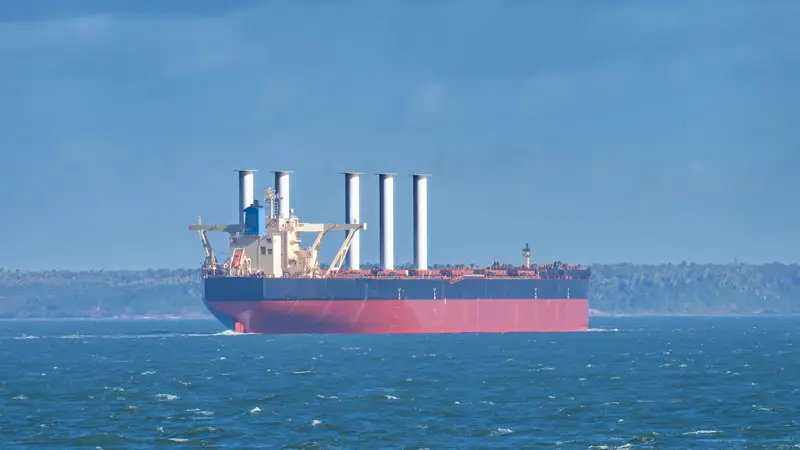
BIMCO adopts new contract addendum to ease investment in ship energy-saving retrofits
 Sustainability
IMO Report: Ship Fuel Consumption Hits 221 Million Tonnes, Biofuel Use Surges 109%
 Sustainability
Hapag-Lloyd Bunkers Goldwind Bio-Methanol in Busan
 Sustainability
CIMC Raffles’ Second Golar FLNG Project Advances With Donor Vessel Deal
 Sustainability