


World's First Ammonia Dual-Fuel Bulker Delivered in China
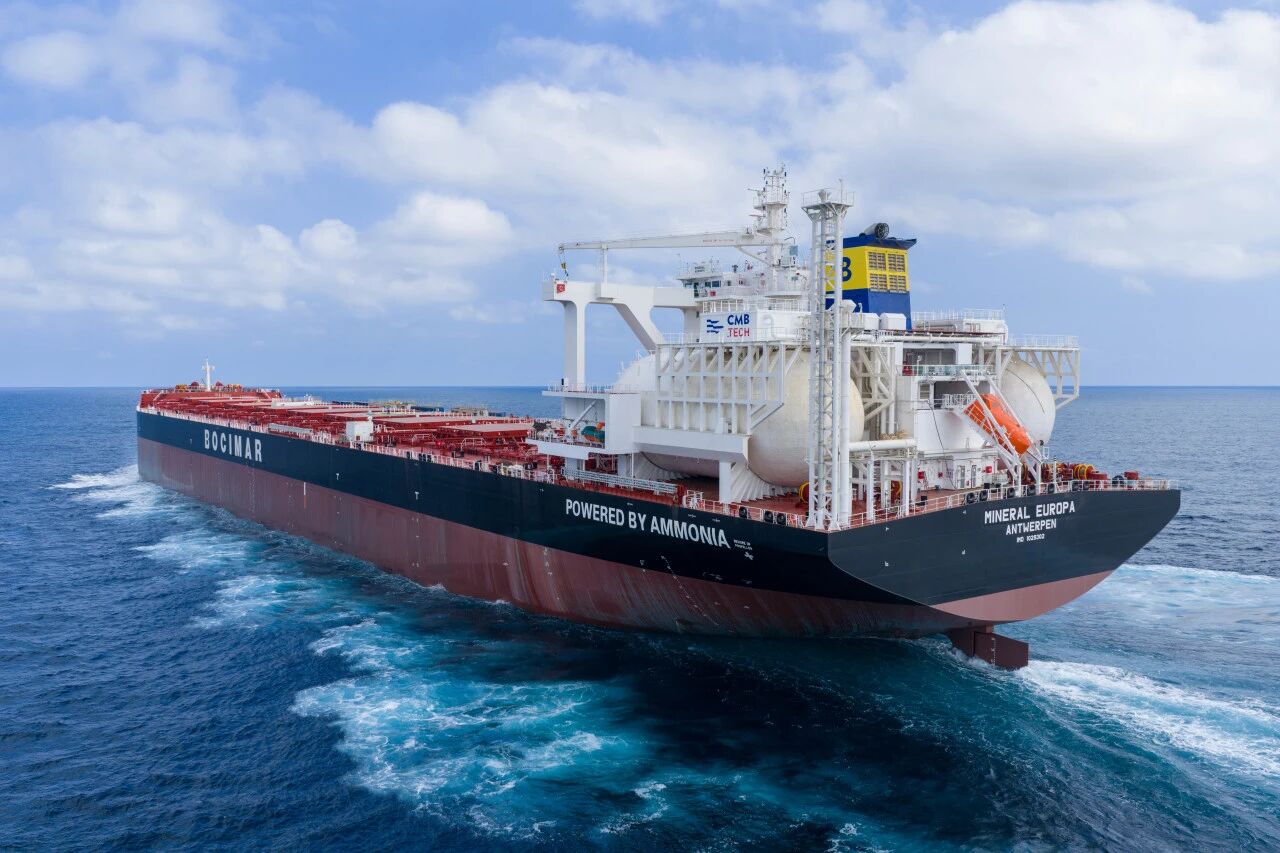

The world's first 210,000-dwt ammonia dual-fuel bulk carrier, Mineral Europa, was officially delivered to Belgian shipping group CMB.TECH on October 9, marking a major milestone in the adoption of ammonia propulsion technology in the dry bulk shipping sector.
The Newcastlemax bulk carrier was built by Qingdao Beihai Shipbuilding Heavy Industry, a subsidiary of China State Shipbuilding Corporation (CSSC), in cooperation with China Shipbuilding Trading Co. (CSTC).
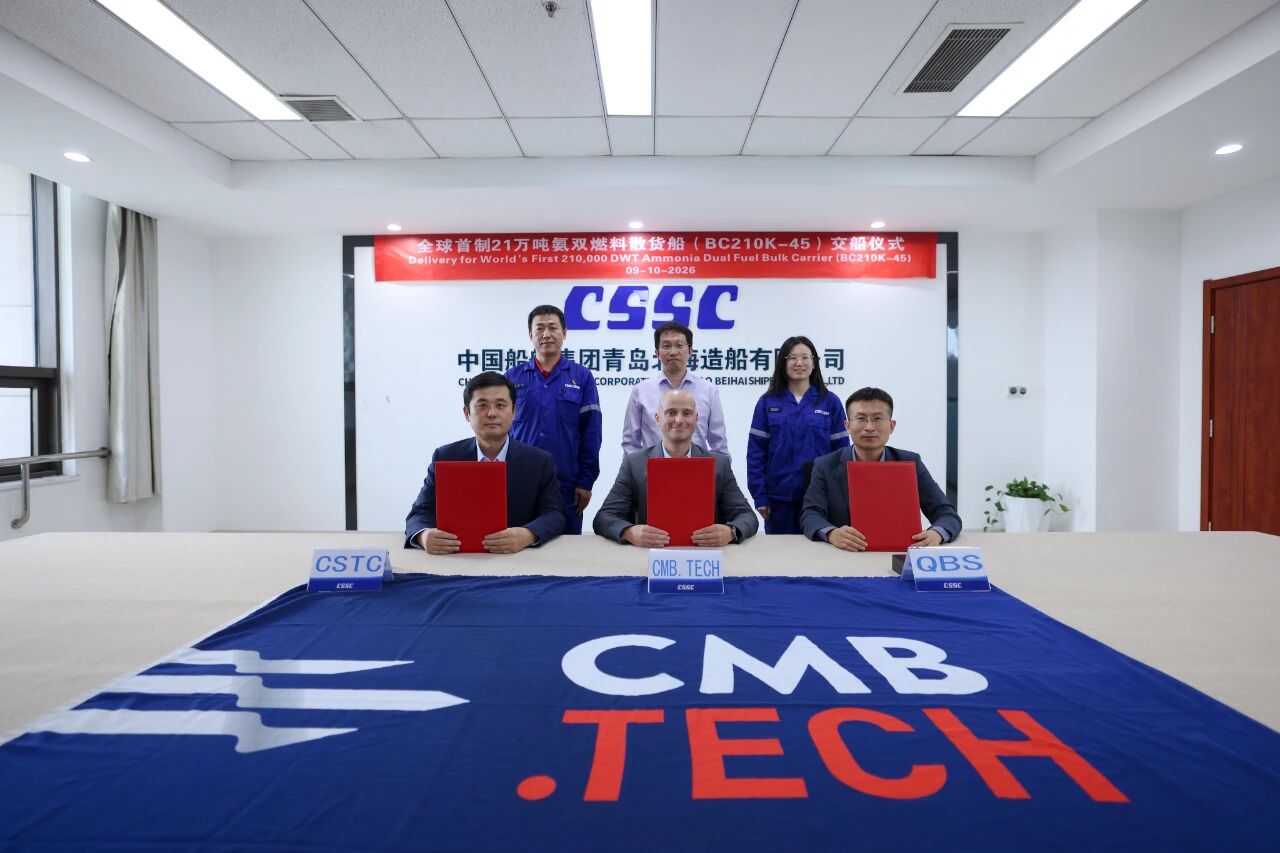
At the delivery ceremony, Thomas De Graef, Technical Manager of CMB.TECH, Zhou Yinghui, Senior Project Manager at CSTC, and Hao Dawei, Deputy Director of the Business Department at Qingdao Beihai Shipbuilding, signed the Protocol of Delivery and Acceptance.
According to CMB.TECH, Mineral Europa has successfully completed sea trials and embarked on its maiden voyage to Australia.
The vessel is the first in CMB.TECH's new generation of ammonia-powered ships. According to the company's latest fleet development plans, a further 21 ammonia-powered vessels are scheduled for delivery between 2026 and 2029, comprising 18 bulk carriers, one container ship and two chemical tankers. Most of these vessels are expected to be delivered within the next nine months.
CMB.TECH Expands Its Newcastlemax Fleet at Qingdao Beihai Shipbuilding
CMB.TECH has maintained a longstanding shipbuilding relationship with Qingdao Beihai Shipbuilding, gradually expanding its Newcastlemax newbuilding programme while transitioning towards alternative marine fuels.
In January and April 2022, CMB placed additional orders for ammonia-ready Newcastlemax bulk carriers at the Chinese shipyard, bringing the series to 10 vessels.
Further orders followed. In March 2024, CMB.TECH ordered another two 210,000-dwt Newcastlemax bulk carriers, increasing the total number of vessels contracted at Qingdao Beihai Shipbuilding to 28, with deliveries extending into 2027.
The vessels in this series feature different fuel configurations, reflecting the company's gradual transition from conventional propulsion to ammonia-capable technology.
The earliest vessels, including Mineral Belgie, Mineral Nederland, Mineral Luxembourg and Mineral France, were built with fuel-efficient conventional propulsion systems.
Subsequent vessels, including Mineral Deutschland and Mineral Italia, incorporated ammonia-ready designs, allowing for potential conversion to ammonia propulsion in the future.
The latest generation has moved a step further, incorporating ammonia dual-fuel propulsion systems capable of operating on ammonia.
According to CMB.TECH's annual report, the company took delivery of eight 210,000-dwt ammonia-ready Newcastlemax bulk carriers in 2025: Mineral Portugal, Mineral Osterreich, Mineral Suomi, Mineral Sverige, Mineral Polska, Mineral Cesko, Mineral Slovensko and Mineral Slovenija.
At the beginning of 2026, another 10 ammonia dual-fuel Newcastlemax bulk carriers remained on order at Qingdao Beihai Shipbuilding, with deliveries scheduled throughout 2026 and 2027.
During 2026, CMB.TECH has also continued taking delivery of Newcastlemax vessels, including Mineral Latvija, Mineral Eesti, Mineral Magyar and Mineral Lietuva.
Alongside its newbuilding programme, CMB.TECH has been securing long-term commercial arrangements with major international shipping companies and cargo owners to support the deployment of its ammonia-capable fleet.
In March 2025, the company announced an agreement with Japan's Mitsui O.S.K. Lines (MOL) and its subsidiary MOL Chemical Tankers covering nine ammonia-related vessels.
Under the agreement, three 210,000-dwt ammonia-fitted Newcastlemax bulk carriers, already on order at Qingdao Beihai Shipbuilding, will be jointly owned by CMB.TECH and MOL and chartered to MOL under separate 12-year agreements.
These three vessels form part of CMB.TECH's existing newbuilding programme at the Chinese yard, rather than representing additional orders.
The agreement also covers six chemical tankers under construction at China Merchants Jinling Shipyard (Yangzhou/Dingheng), comprising two ammonia-fitted and four ammonia-ready vessels. They are scheduled for delivery between 2028 and 2029 and will be chartered to MOL Chemical Tankers.
Meanwhile, CMB.TECH has been strengthening its relationship with Australian mining group Fortescue.
In April 2025, the two companies initially announced a chartering arrangement involving one 210,000-dwt ammonia dual-fuel Newcastlemax bulk carrier.
On June 22, 2026, they announced an expanded agreement covering up to 12 Newcastlemax bulk carriers.
Under the arrangement, up to three vessels will be equipped with ammonia dual-fuel engines and are expected to enter service by the end of 2026. The remaining nine vessels will be ammonia-ready, allowing for future conversion to ammonia propulsion.
The ships are intended to support Fortescue's iron ore transportation operations while reducing greenhouse gas emissions associated with Australia's seaborne iron ore exports.
Through long-term chartering agreements with MOL and Fortescue, CMB.TECH is seeking to establish commercial employment for its growing fleet of ammonia-capable vessels.
Ammonia-Powered Vessels Begin Commercial Operations
Before the delivery of Mineral Europa, ammonia propulsion technology had already made progress in other vessel segments, particularly tugboats and gas carriers.
On July 17, 2024, Japanese shipping company NYK completed the first ammonia bunkering operation for its ammonia-powered tugboat Sakigake at Honmoku Pier in the Port of Yokohama.
The operation used the truck-to-ship bunkering method, with Japanese energy company JERA and other partners involved in the fuel supply.
Originally powered by LNG, Sakigake was converted to ammonia dual-fuel propulsion using an engine developed by IHI Power Systems.
The conversion was completed on August 23, 2024, after which the vessel began towing operations and ammonia propulsion trials in Tokyo Bay.
In March 2025, NYK announced that Sakigake had completed approximately three months of demonstration operations. Testing under actual towing conditions reportedly demonstrated greenhouse gas emission reductions of up to 95%.
In September 2024, US clean energy technology company Amogy successfully demonstrated its ammonia-powered tugboat, NH3 Kraken.
Unlike ammonia dual-fuel internal combustion engines used on larger commercial vessels, NH3 Kraken uses ammonia cracking technology to produce hydrogen, which is subsequently converted into electricity through fuel cells.
China also achieved a milestone in ammonia bunkering on December 24, 2024, when Sinopec Zhonghai Ship Fuel Supply completed the country's first marine ammonia fuel bunkering operation.
The operation involved Yuan Tuo Yi, China's first 5,500-horsepower ammonia dual-fuel tugboat, at the Dalian COSCO Shipping Heavy Industry facility.
Ammonia was supplied using the truck-to-ship method, with the operation taking approximately two hours.
Designed and built by Dalian COSCO Shipping Heavy Industry, Yuan Tuo Yi is equipped with a domestically developed ammonia-diesel dual-fuel engine, an ammonia fuel supply system and dedicated storage tanks.
Following bunkering, the vessel underwent further fuel system commissioning, engine testing and endurance verification, providing technical experience for China's development of ammonia-powered ships.
Beyond tugboats, ammonia propulsion has also begun entering the deep-sea commercial shipping market.
On June 10, 2026, Belgian shipowner EXMAR, which is also controlled by the Saverys family, took delivery of ANTWERPEN, a 46,000-cbm ammonia dual-fuel medium gas carrier built by HD Hyundai Heavy Industries in South Korea.
Equipped with a WinGD ammonia dual-fuel main engine, the vessel can transport ammonia and liquefied petroleum gas (LPG), while also using ammonia as a marine fuel.
In July 2026, ANTWERPEN completed a commercial voyage using ammonia fuel, demonstrating the technology's application in actual deep-sea shipping operations.
The second vessel in the series, ARLON, was delivered on July 30, while the two remaining sister vessels, ADINKERKE and AALTER, were named on August 25.
The delivery of Mineral Europa represents a further expansion of ammonia dual-fuel propulsion technology into the large dry bulk carrier segment.
China Accelerates Development of Ammonia Bunkering Infrastructure
As more ammonia-powered vessels enter service, securing a reliable, cost-competitive and low-emission ammonia supply is becoming an increasingly important challenge for the shipping industry.
In December 2025, the first phase of China Energy Engineering Corporation's (CEEC) Songyuan Green Hydrogen, Ammonia and Methanol Integrated Project in Jilin Province officially commenced operations.
During the same month, CEEC signed a green ammonia sales agreement for international shipping with CMB.TECH and Jiangsu Andefu Energy Technology, establishing a potential source of green ammonia for CMB.TECH's future fleet.
In January 2026, CMB.TECH announced further investments in China's green ammonia supply chain, including fuel procurement arrangements with CEEC-related companies and investment in Jiangsu Andefu Energy's ammonia storage, logistics and marine bunkering operations.
Xinde Marine News has learned that a green ammonia ship-to-ship bunkering operation involving CMB.TECH is expected to take place shortly in Zhoushan, Zhejiang Province.
The operation is being presented by its organisers as the world's first green ammonia ship-to-ship bunkering project.
The green ammonia to be used in the operation will be supplied by CEEC's Songyuan Green Hydrogen, Ammonia and Methanol Integrated Project.
In September 2026, CEEC announced that the project's first 5,000 tonnes of green ammonia had been successfully dispatched to the Port of Nanjing.
The fuel is intended to be transported onward to Zhoushan by an ammonia bunkering vessel for delivery to ocean-going ships.
The planned bunkering operation will involve Sheng Hang Yong Le, a 5,500-cbm semi-refrigerated, semi-pressurised liquefied gas carrier built by China Merchants Industry's Dingheng Shipyard.
Previously employed in the transportation of ammonia and other liquefied gases, the vessel underwent modifications to enable ship-to-ship ammonia fuel bunkering.
In September 2026, Sheng Hang Yong Le completed its bunkering-related conversion and obtained the relevant class certification from China Classification Society (CCS), enabling it to perform both ammonia transportation and marine fuel bunkering operations.
If successfully completed, the upcoming Zhoushan operation will demonstrate a more integrated green ammonia supply chain in China, connecting renewable ammonia production, inland transportation, storage and ship-to-ship bunkering.
It could also help establish a practical fuel supply route for CMB.TECH's ammonia-powered vessels calling at Chinese ports.
For large ammonia dual-fuel bulk carriers, however, successful vessel construction and engine development represent only the first stages of commercial deployment.
The broader adoption of ammonia as a marine fuel will ultimately depend on the availability and cost of low-emission ammonia, bunkering infrastructure, safety management and the development of an internationally accessible fuel supply network.
With Mineral Europa now delivered and green ammonia bunkering activities progressing in China, CMB.TECH is advancing several interconnected elements of its ammonia shipping strategy, from vessel construction and fuel procurement to logistics and bunkering infrastructure.
The operational performance of these vessels and the development of their fuel supply networks will provide important insights into the commercial viability of ammonia propulsion for large ocean-going ships.

READ MORE
 Sustainability
India, EU launch coalition to develop green shipping corridor
 Sustainability
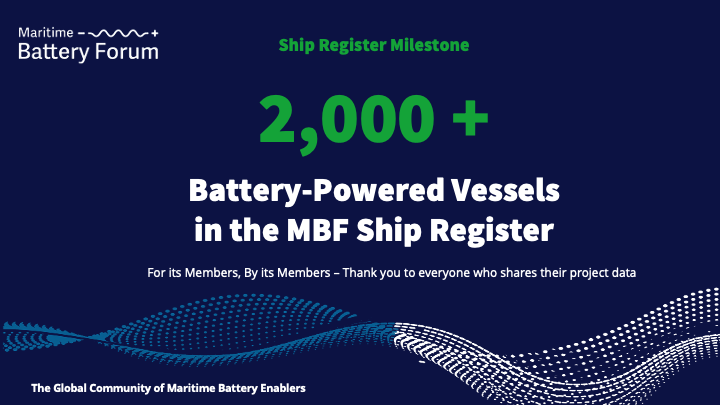
Global fleet of battery-equipped ships surpasses 2,000 vessels
 Sustainability
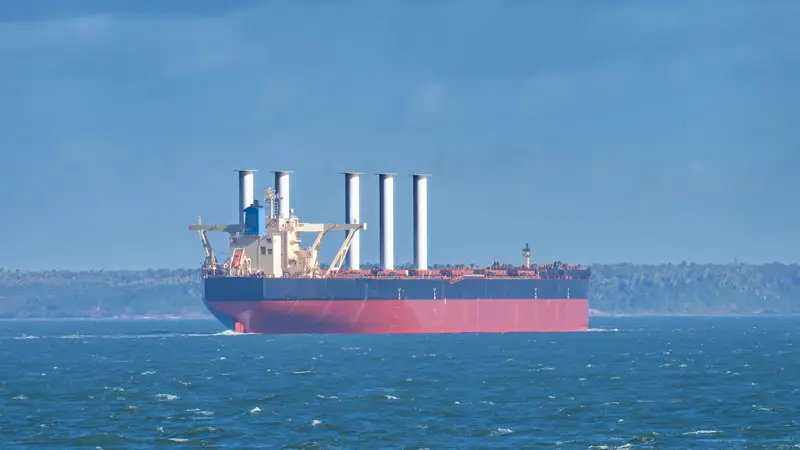
BIMCO adopts new contract addendum to ease investment in ship energy-saving retrofits
 Sustainability
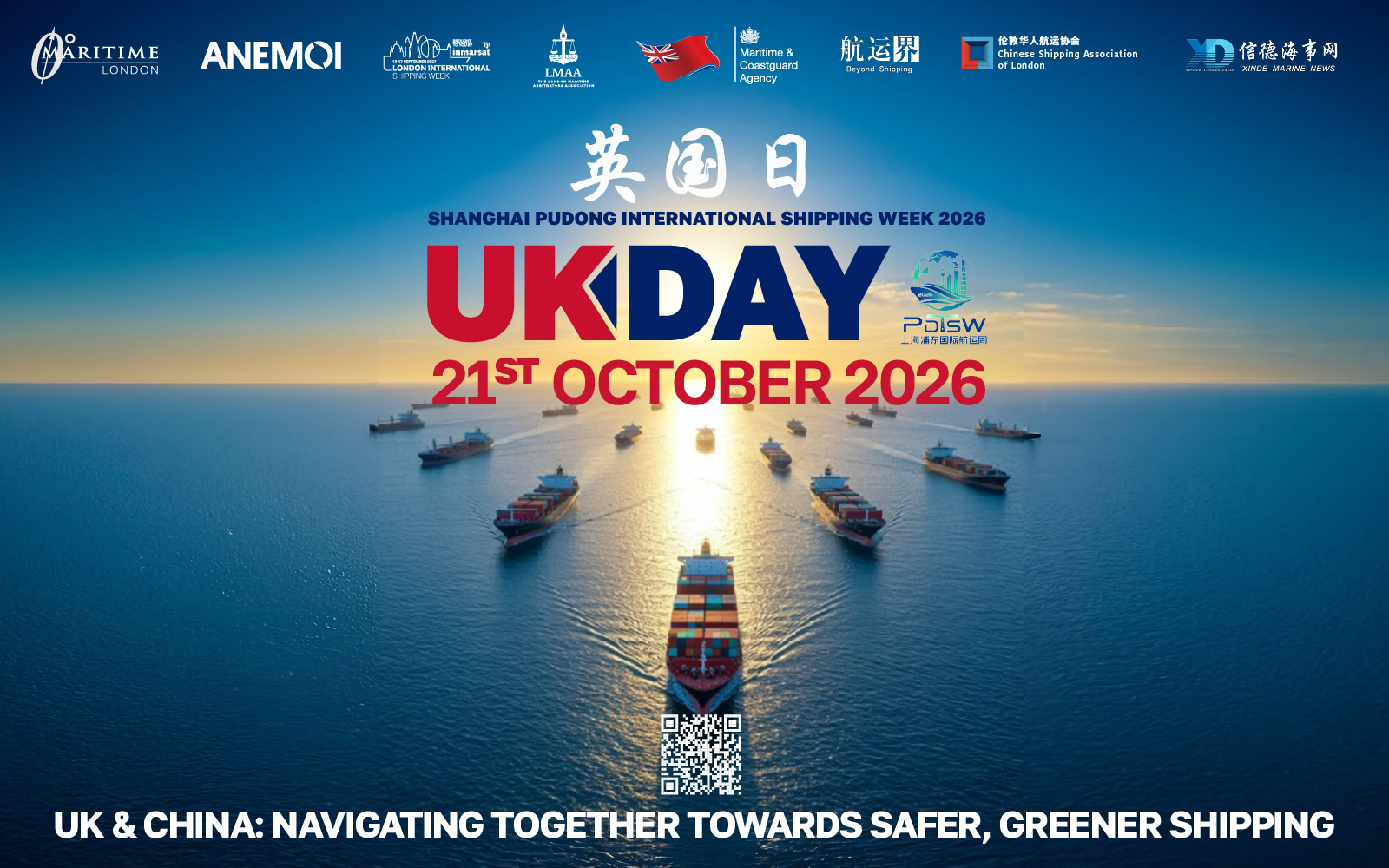
UK & CHINA: NAVIGATING TOGETHER TOWARDS SAFER, GREENER SHIPPING
 Sustainability
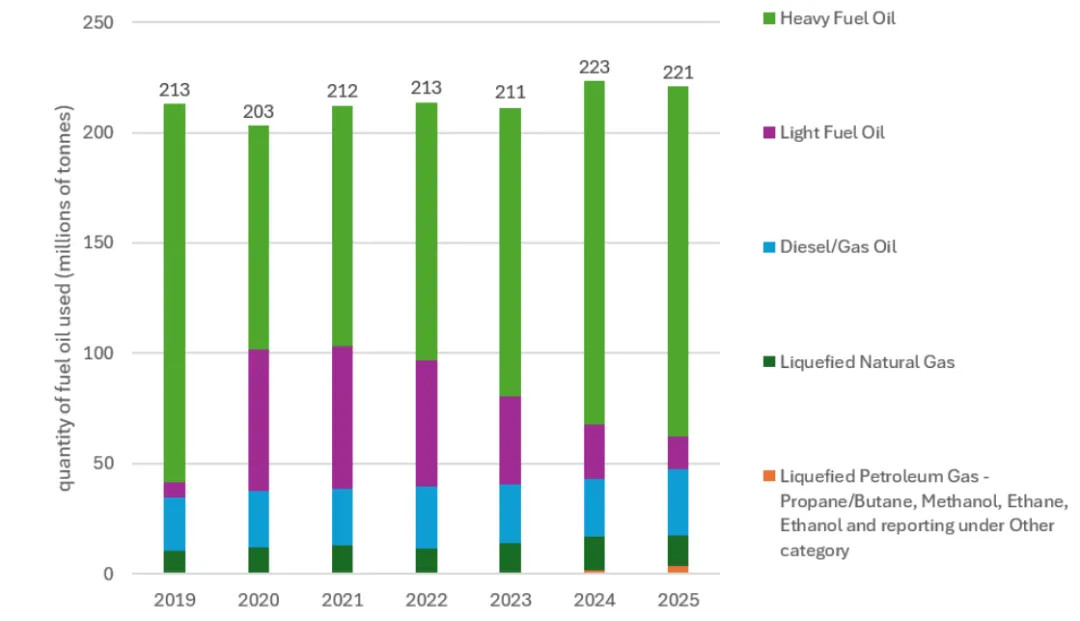
IMO Report: Ship Fuel Consumption Hits 221 Million Tonnes, Biofuel Use Surges 109%
 Sustainability
Hapag-Lloyd Bunkers Goldwind Bio-Methanol in Busan
 Sustainability
CIMC Raffles’ Second Golar FLNG Project Advances With Donor Vessel Deal
 Sustainability
In this Chaos world,How Can Your Shipping Company Weather the Next Storm?
 Sustainability
Maersk Completes First U.S. Ethanol Bunkering for a Deep-Sea Containership
 Sustainability