


Hengli ’s First-Half Profit Surge as Newbuilding Orders Reach 207 Vessels
Songfa Co., Ltd. (603268), the listed parent company of Hengli Heavy Industry, has issued a strong first-half profit forecast, highlighting the rapid earnings contribution from its shipbuilding business after a major asset restructuring.
According to the company’s announcement released on 7 July, Songfa expects to report net profit attributable to shareholders of around RMB 3.6 billion for the first half of 2026, representing a year-on-year increase of 456.33%. Net profit excluding non-recurring items is expected to reach around RMB 3.5 billion, up 2,922.83% year-on-year.
The sharp increase reflects the scale-up of Hengli Heavy Industry as Songfa’s core operating asset. Following the restructuring, Songfa’s main business has shifted from ceramics to shipbuilding and high-end equipment manufacturing. Hengli’s order intake, production ramp-up, delivery schedule and capacity expansion are now feeding directly into the listed company’s financial performance.
Hengli Heavy Industry secured 207 newbuilding orders in the first half of 2026. Its cumulative order intake has now exceeded 500 vessels, with delivery slots extending to 2030. The yard also delivered 40 vessels in the first six months and plans to deliver 82 vessels for the full year.
This marks a new phase for Hengli: from rapid order accumulation to simultaneous order execution and large-scale delivery.
Profit Commitment Completed Ahead of Schedule
As part of the restructuring, Hengli Heavy Industry had committed to generating cumulative net profit excluding non-recurring items of no less than RMB 4.8 billion from 2025 to 2027.
In 2025, Hengli contributed RMB 2.579 billion in net profit excluding non-recurring items. With Songfa now expecting around RMB 3.5 billion in such profit for the first half of 2026, the combined figure has already exceeded RMB 6 billion in just one and a half years.
This means the three-year profit commitment has effectively been completed well ahead of schedule.
For Songfa, the impact is significant. Its earnings profile has been fundamentally reshaped by the inclusion of Hengli Heavy Industry. The first-half forecast shows that shipbuilding is no longer just a newly injected business segment, but the main driver of the listed company’s profitability.
The year-on-year increase in net profit excluding non-recurring items appears exceptionally large partly because of a low base in the same period last year. But the underlying reason is clear: Hengli’s shipbuilding business has entered a period of accelerated production, delivery and revenue recognition.
207 Orders in Six Months
Hengli’s order intake in the first half of 2026 was one of the most closely watched indicators in China’s shipbuilding sector.
The yard secured 207 vessels in six months. Based on 181 days in the first half of the year, this is equivalent to more than one newbuilding order per day.
The orderbook is also becoming increasingly diversified. The 207 vessels include 49 bulk carriers, 56 containerships, 94 tankers and 8 very large ammonia carriers.
Tankers remained the largest segment, accounting for nearly half of all new orders. Containerships followed with 56 vessels, showing Hengli’s growing presence in the boxship market. Bulk carriers added further depth to the product mix, while the 8 VLACs marked an important step into high-value gas carrier construction.
Together, tankers and containerships accounted for 150 vessels, or more than 70% of the first-half order intake. This points to a clear shift toward higher-value mainstream vessel types. At the same time, the addition of bulk carriers and VLACs gives Hengli broader exposure across shipping cycles.
From Tankers to a Broader Shipbuilding Platform
Hengli Heavy Industry has gained strong market attention in recent years through its rapid breakthrough in large tankers.
The yard has secured multiple orders for VLCCs, Suezmax tankers and LR2 product tankers from international owners, including major Greek and European shipping groups. This has quickly established Hengli as an important new force in the tanker newbuilding market.
But the latest order figures show that Hengli is no longer only a tanker story.
Its current order portfolio now spans containerships, bulk carriers, tankers and gas carriers. Vessel types include 6,000 TEU-class containerships, Capesize and Kamsarmax bulkers, VLCCs, Suezmaxes, LR2 tankers and VLACs.
This broader product range matters. Newbuilding demand is highly cyclical, and different vessel segments rarely move in perfect alignment. A yard with multi-segment capabilities has a stronger chance of maintaining stable order flow and capacity utilisation across market cycles.
The VLAC orders are particularly important. These vessels require advanced engineering in low-temperature cargo containment, gas handling, safety systems and energy-efficiency design. Their inclusion in Hengli’s orderbook suggests that the yard is moving further into technically demanding and energy-transition-related ship types.
Delivery Execution Becomes the Next Test
Order volume is only part of the story. For a fast-growing yard, delivery performance is the real test.
Hengli delivered 40 vessels in the first half of 2026 and plans to deliver 82 vessels for the full year. This implies that the yard will need to maintain a high delivery pace in the second half.
The company has also highlighted several production milestones this year. These include multiple VLCCs undocking from the same dock, six large vessels undocking on the same day, two 306,000 dwt VLCCs being named and delivered simultaneously in June, and the launch of a 93,000 cbm VLAC.
These events underline Hengli’s push toward batch production and rhythm-based construction.
For shipowners, however, the key question is not just how many ships a yard can win, but how consistently it can deliver them. As Hengli’s orderbook grows and the technical complexity of its vessel mix increases, execution quality, supply-chain coordination and schedule control will become increasingly important.
Capacity and Integration Support Hengli’s Expansion
Hengli’s rapid growth is supported by a large-scale production base and an increasingly integrated industrial chain.
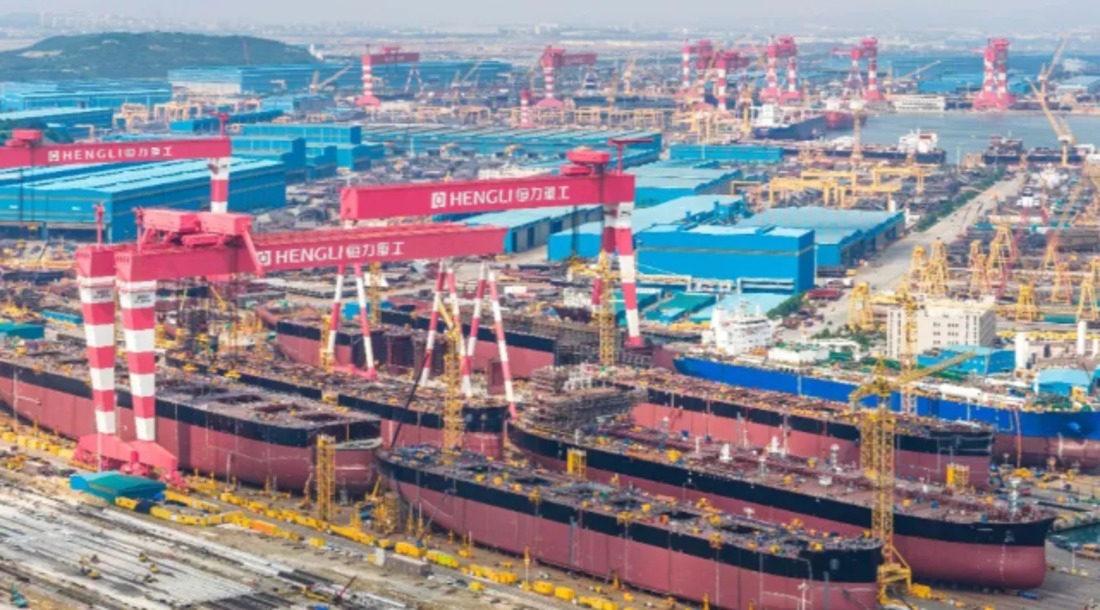
According to company information, Hengli Heavy Industry has annual steel processing capacity of 3 million tonnes and annual marine engine production capacity of 300 units. It operates four large docks and world-class building berths capable of batch construction of VLCCs, large containerships and other major vessel types.
Its integrated system covers steel processing, block construction, dock assembly and propulsion equipment. This gives the yard greater control over key stages of ship production.
Marine engine capability is especially relevant. Main engines and major propulsion systems are among the most critical components in shipbuilding. Hengli’s ability to support marine engine production may improve supply certainty, cost control and project coordination.
In April, Hengli delivered an 8G95 LNG dual-fuel engine. The company said the engine filled a domestic gap in this power range. This also shows that Hengli is trying to strengthen its position not only in hull construction, but also in green propulsion and key marine equipment.
A New Stage for China’s Private Shipbuilding Sector
China remains the world’s largest shipbuilding nation, but high-end vessel orders from major international owners have traditionally been concentrated among state-owned shipbuilding groups and a limited number of established yards.
Hengli’s rapid rise is changing that picture.
The yard now has three defining characteristics.
First, scale. Its first-half order intake of 207 vessels and cumulative orders of more than 500 vessels put it among the most active shipbuilders globally.
Second, product depth. Hengli has moved from tankers into containerships, bulk carriers and gas carriers, with a growing share of higher-value vessel types.
Third, industrial integration. Steel processing, engine production, large docks and a broader equipment ecosystem give Hengli the foundation to handle large-volume, multi-type construction.
In today’s market, shipowners are looking beyond price alone. Delivery windows, technical capability, quality, supply-chain reliability, financing support and long-term service are becoming equally important. Hengli’s growing international orderbook suggests that more owners are reassessing the competitiveness of China’s leading private shipyards.
From Order Growth to Long-Term Execution
Songfa’s first-half profit forecast shows how strongly Hengli Heavy Industry is now supporting the listed company’s earnings. Expected net profit of around RMB 3.6 billion and net profit excluding non-recurring items of around RMB 3.5 billion demonstrate the earnings leverage of shipbuilding during a strong market cycle.
The next stage will be more demanding.
With delivery slots already extending to 2030, Hengli must prove that it can manage parallel construction across multiple vessel types, secure key equipment supply, meet international quality standards and maintain delivery discipline under a heavy workload.
For any shipyard, orders show market confidence. Deliveries define long-term credibility.
Overall, Hengli Heavy Industry delivered a strong first-half performance across earnings, orders and deliveries. Its 207 newbuilding orders, more than 500 cumulative orders, 40 first-half deliveries and planned 82 full-year deliveries all point to a larger trend: China’s private shipbuilding sector is becoming more visible in the global high-end newbuilding market.
As green shipbuilding projects are brought into full operation, propulsion capability is further localised, and Hengli’s product portfolio across containerships, bulk carriers, tankers and gas carriers continues to mature, the yard’s role in global shipbuilding is likely to keep expanding.
For China’s shipbuilding industry, Hengli’s rise is also a sign of a broader shift: from scale advantage to system-wide competitiveness, and from order intake to integrated industrial capability.

READ MORE
 Shipbuilding
Yichang Changyun plans RMB120m inland bulker programme
 Shipbuilding
Steel Giant Shagang Eyes Shipbuilding as a Booming Market Draws Industrial Capital
 Shipbuilding
Hengli Secures 12 Tanker Orders, Retaining World’s Largest VLCC Orderbook
 Shipbuilding
Amid China’s Shipbuilding Boom, a State-Owned Yard Quietly Enters Liquidation
 Shipbuilding
Hengli Signs 11 VLAC Contracts in One Week
 Shipbuilding
China ZWI Enters Ocean Shipping with VLGC Acquisition and Chemical Tanker Newbuild Project
 Shipbuilding
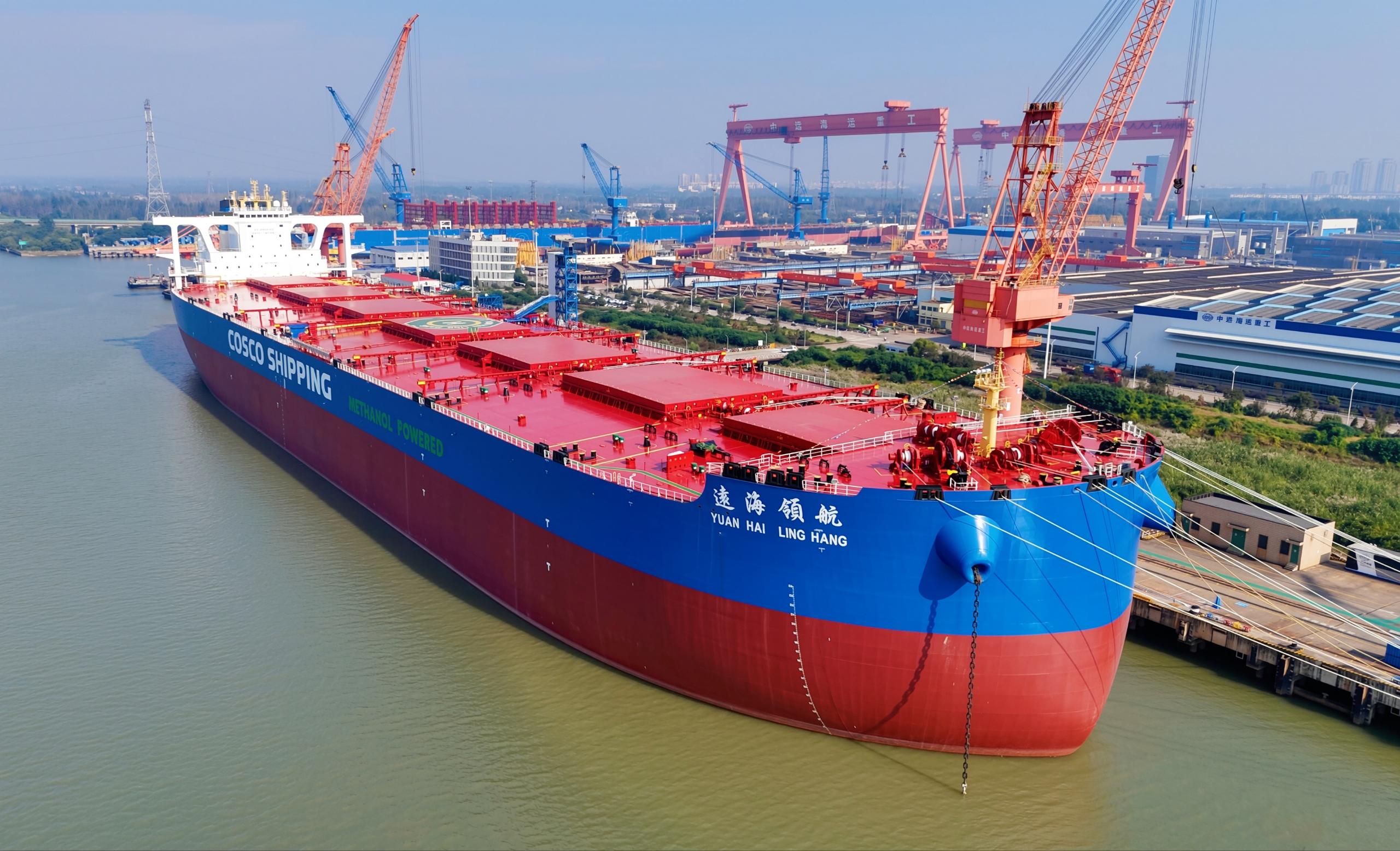
World’s First 325,000-DWT Methanol Dual-Fuel Ore Carrier Delivered
 Shipbuilding
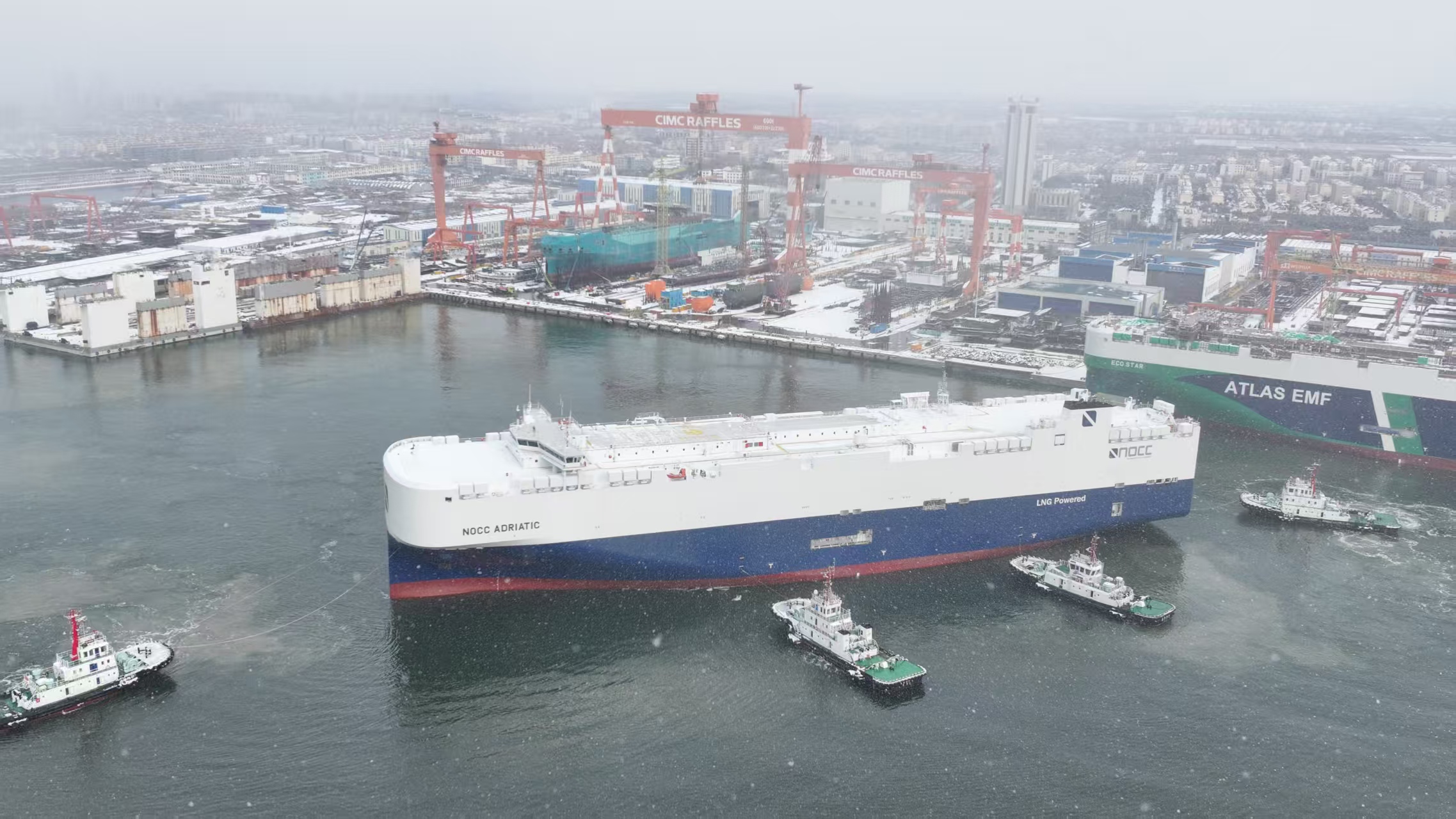
CIMC Raffles Extends NOCC Car Carrier Programme to 2030
 Shipbuilding
Grimaldi Advances New ConRo and Multipurpose Projects as Fleet Renewal Continues
 Shipbuilding