


CSSC Chengxi Secures Four 3,700-TEU Boxships, With Peter Döhle Linked as Buyer

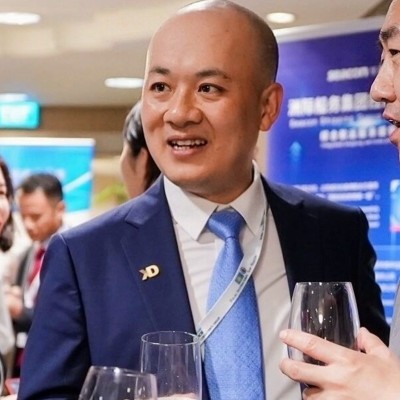
CSSC Chengxi Shipyard has secured a contract for four 3,700-TEU containerships, extending its return to the feeder newbuilding market. The European buyer has been linked by industry sources to Germany’s Peter Döhle, whose recent Chinese ordering programme spans feeder, midsize and large containerships.
Chengxi and China Shipbuilding Trading Co., Ltd. (CSTC) signed the contract on 23 October with an unnamed leading European shipowner. Shipbroking and market sources have linked the buyer to Peter Döhle, although the contracting parties have not publicly confirmed the name. The contract price and delivery schedule have not been disclosed.
From Two 3,100-TEU Ships to Four 3,700-TEU Newbuildings
The latest agreement is Chengxi’s second publicly announced feeder containership contract this year. On 31 March, the yard and CSTC signed for two 3,100-TEU vessels with an unnamed European owner, subsequently linked by market sources to Peter Döhle. That project marked Chengxi’s return to containership contracting approximately seven years after its early-2019 order for two 910RFEU refrigerated containerships for Dole.
Intermodal’s Week 14 report, dated 7 April 2026, listed two 3,100-TEU containerships at Chengxi for Peter Döhle at US$48 million each. Separate market indications put delivery in 2029, with around 900 reefer plugs per ship. Those reported terms concern the earlier pair; equivalent commercial details have not been released for the four 3,700-TEU ships. If the latest buyer identification is confirmed, Peter Döhle’s reported containership commitments at Chengxi would reach six vessels across two sizes.
For Chengxi, the progression expands both the number of ships contracted and the range of containership designs in its portfolio. For the owner, the larger feeder design would add another capacity option alongside the earlier high-reefer ships. No employment arrangements have been announced for the new quartet, leaving their intended deployment and charter counterparties undisclosed.
A Chinese Ordering Programme Across Several Sizes
Peter Döhle’s recent investment in Chinese shipbuilding extends well beyond Chengxi. The Hamburg-based group, whose activities include shipowning, chartering and shipmanagement, has placed or been linked to orders across several containership segments. Taken together, these projects show a fleet investment programme covering different deployment requirements.
At the larger end, Peter Döhle ordered four 14,000-TEU methanol-ready containerships at Hudong-Zhonghua in June 2024. On 1 September 2026, during SMM Hamburg, the owner signed with Hudong-Zhonghua and CSTC for another two vessels, taking the series to six. The first ship in the original series was delivered in May, approximately five months ahead of its contractual schedule.
Huangpu Wenchong is another part of that procurement network. Peter Döhle has been linked to four 2,900-TEU feeder containerships at the yard, as well as six 6,400-TEU vessels among contracts announced in June. Together with the Chengxi projects, these investments cover several capacity bands, from regional feeders to larger ships suitable for a wider range of liner services.
For an owner supplying tonnage to liner operators, such a portfolio can broaden the range of customers and services it can support. Capacity alone, however, does not establish a ship’s commercial suitability. Cargo intake, reefer provision, fuel consumption, port access and charter terms all influence whether a vessel meets a customer’s requirements. The returns from each project will also depend on financing and the market conditions prevailing when the ship is delivered.
Chengxi Broadens Its Containership Offering
The 3,700-TEU contract adds to a product range that has developed from refrigerated containerships into larger feeder designs. According to Chengxi, the new vessels offer competitive cargo capacity, deadweight and fuel consumption. The yard says their energy-efficiency performance improves on applicable IMO Energy Efficiency Design Index requirements, while nitrogen oxide emissions meet Tier III standards and the ships comply with sulphur oxide regulations.
These are the shipyard’s stated design characteristics. Operating performance will depend on the vessels’ actual speed, loading condition, trading pattern and technical execution. For prospective charterers, the commercial value of an efficient design ultimately lies in its ability to carry the required cargo reliably at a competitive operating cost.
Containerships remain a relatively small part of Chengxi’s broader newbuilding business. A market snapshot published on 24 October, citing Clarksons data, put the yard’s backlog before the latest quartet at 107 vessels, including 75 bulk carriers and two containerships, with deliveries extending into 2030. The new agreement therefore adds depth to its containership business alongside a substantial existing bulker workload.
The commercial test now moves from contracting to construction and employment. Chengxi will need to translate its expanding design portfolio into consistent delivery and operating performance, while the owner’s eventual returns will depend on the ships’ specifications, financing and charter arrangements. Further disclosure of the quartet’s delivery dates, propulsion configuration and employment would provide a clearer picture of how this investment fits into the wider containership renewal cycle.


READ MORE
 Containers
CMA CGM’s Transformation Strategy: Fix the Process Before Automating It
 Containers
Ningbo Containerized Freight Index Weekly Commentary Freight Rates Continued Their Divergent Trend; Composite Index Edged Up
 Containers
What Kind of Company Is Seaspan Today?
 Containers
KMTC Orders Six Boxships at Huangpu Wenchong in First Chinese Newbuilding Deal
 Containers
With an Orderbook Above 45% of the Fleet, Why Are Container Lines Still Paying Up for Ships?
 Containers
HMM Approves $1.62 Billion Plan to Add 12 Containerships
 Containers
Buy Again! From Ships to Ports: Inside the Maersk Family’s Infrastructure Buying Spree
 Containers
CMA CGM Updates eBL Templates to Clarify Electronic Original Status
 Containers
Bigger Fleets, Wider Networks: China’s Provincial Shipping Companies Step Up Expansion
 Containers