


CMA CGM’s Transformation Strategy: Fix the Process Before Automating It

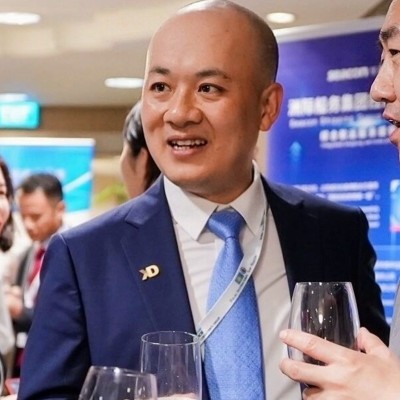
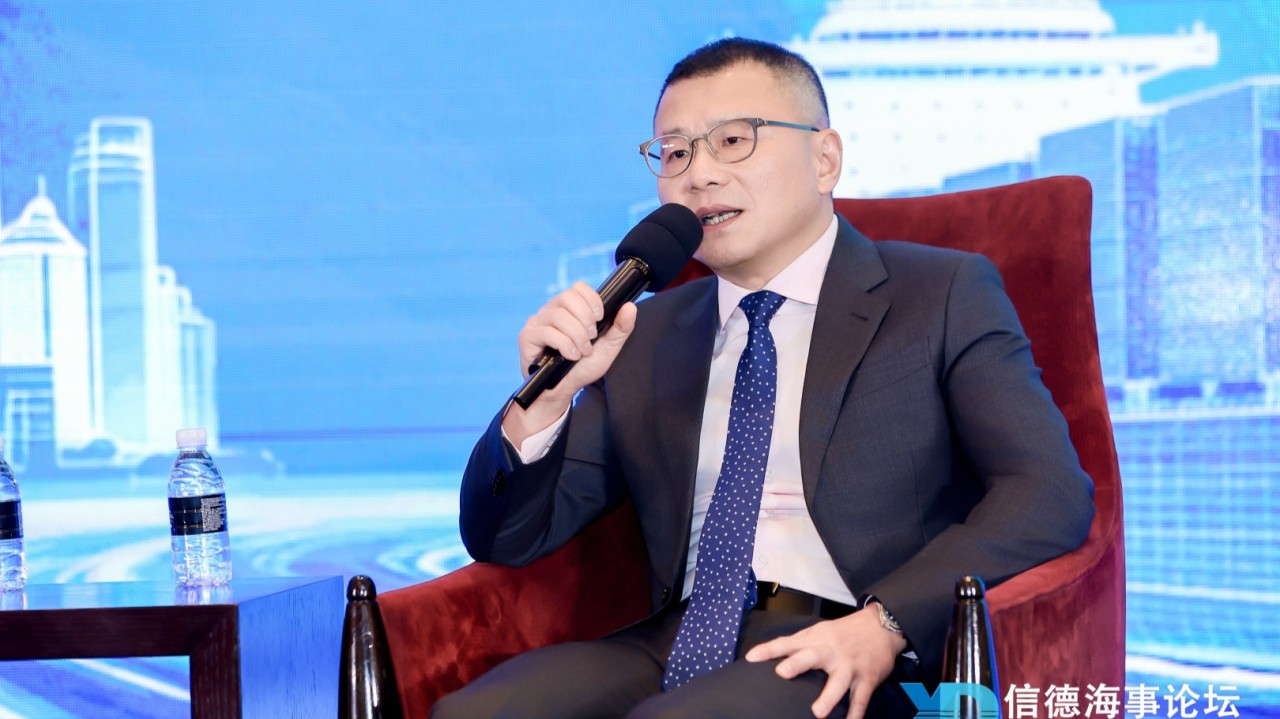
Automating a flawed process can make errors happen faster, @CMA CGM Executive Vice President Mathieu Friedberg told the maritime main forum of the 2026 North Bund International Shipping Forum in Shanghai on 20 October. His message was that companies need to establish sound business processes before accelerating them through automation.
In his presentation, “Leading Through Innovation in a Changing World”, Friedberg outlined work spanning shipping network digital twins, artificial intelligence, employee training and collaboration with technology companies and startups. The commercial objective is to make better use of vessels, terminals, warehouses, aircraft, data and people, translating those resources into more efficient and reliable customer service.
The subjects also reflect his current responsibilities. Friedberg became CMA CGM Group’s Executive Vice President, Transformation, on 1 July 2026, overseeing AI, IT, cybersecurity and ZEBOX, among other activities. He previously spent six years as CEO of CEVA Logistics, leading transformation and the integration of several acquisitions.
Start with the Business Objective
Friedberg began with the question of why companies need to transform. Changing trade rules, recurring disruption and rising customer expectations require shipping businesses to keep adapting their operations. Rapid advances in AI provide additional tools for allocating resources and improving services. CMA CGM’s objectives include greater efficiency and reliability for customers, safer and more rewarding work for employees, and lower-carbon trade.
He identified five priorities: global shipping digitalisation, autonomous assets, physical AI and robotics, decarbonisation, and a future workforce built around collaboration between people and machines. Technology choices need to serve those objectives, drawing on physical assets alongside the data moving through the network and the professional experience held by employees.
Implementation, he argued, requires discipline. CMA CGM handles more than 50 million customer requests annually, making the consistency of its underlying processes important to both service quality and internal coordination. The group is therefore prioritising standardised core processes, supported by a unified data foundation and platforms that make information accessible.
For shipping businesses, bookings, documentation, shipment updates and exception handling are closely connected. Inconsistent information or unclear responsibility at a handover can affect subsequent work across the service chain. Faster processing leaves those weaknesses in place unless the company first establishes how tasks should be completed, how information should move and who should resolve problems.
CMA CGM’s technology partnerships are also moving into those business processes. In information published in May, the group described MAIA, its platform co-developed with Mistral AI, as connecting AI agents with business knowledge and internal applications. Around 20 Mistral AI engineers had joined relevant CMA CGM teams to develop solutions close to operations, linking technical expertise with the work the systems are intended to support.
Use Digital Twins to Understand Network Disruption Earlier
Friedberg described CMA CGM’s use of AI to support anticipation and its development of a digital twin of the group’s shipping network. The model dynamically represents relationships between vessels, terminals and cargo flows. When a route closes or a port becomes congested, it can help teams identify the consequences earlier and respond more quickly.
The application addresses the interdependencies within a liner network. A delayed vessel can affect subsequent berthing arrangements, transhipment connections and cargo delivery. Disruption to a maritime passage can alter vessel deployment, port requirements and inland transport arrangements. Operations teams need to understand how far the effects may spread and which shipments and customers are exposed.
A network model helps bring those relationships into a shared operational view. Knowing that a port is congested is one part of the picture; teams also need to understand the implications for later schedules, connections and delivery commitments. Earlier visibility creates more time to adjust transport arrangements, coordinate resources and communicate with customers.
This gives digital investment a specific role in resilience. Once operating conditions change, a company must establish the scope of the disruption and organise an executable response. The connection between models, usable data and operational teams determines whether an early assessment can lead to a practical adjustment in service.
Develop Cybersecurity and Workforce Skills Alongside Technology
Friedberg placed cybersecurity within the same transformation programme. Every connected device, robot and AI agent creates additional exposure, he said, making security an integral part of innovation.
As more systems exchange information and participate in business processes, data access, permissions and system stability become part of everyday service reliability. For a shipping group coordinating work across countries and departments, the technology must function within a continuously operating business. Security capabilities need to develop alongside the extent of those connections.
People are another essential part of that preparation. Friedberg said CMA CGM plans to provide AI-related training for more than 90,000 employees. In a crisis, he argued, resilience ultimately depends on people who have the tools and understand how to use them.
That places training within the development of practical job skills. Employees need to understand which tasks a tool can support, how to assess its output using their professional experience, and when an exception requires further judgement. For teams serving customers, coordinating transport or managing physical operations, these capabilities influence whether technology becomes useful in daily work and remains useful under pressure.
Friedberg returned to this human foundation at the end of his address, referring to the people navigating ships, operating aircraft, running terminals and serving customers. Introducing technology requires changes that connect with the responsibilities, working methods and development of those employees.
Connect Research and Startup Innovation with Real Operations
Open collaboration was the third major element of Friedberg’s approach. Shared challenges require participation from different companies and countries, he said. Shipping businesses can contribute real operating requirements, while technology companies, researchers and entrepreneurs bring capabilities that help address them.
He described CMA CGM’s establishment of a research and development centre in Shenzhen focused on physical and embodied AI. The centre supports research, testing and learning within the group’s global R&D network. Friedberg highlighted the pace and scale of innovation in China’s robotics and intelligent equipment industries as reasons for maintaining close links with those capabilities.
CMA CGM also uses its ZEBOX accelerator to bring startup solutions into real business environments. Friedberg identified the path from an idea to industrial deployment at scale as a recurring difficulty. Testing provides an opportunity to establish whether a proposed solution can address the conditions encountered in operations.
Published ZEBOX programme results offer examples of this work. Its fourth acceleration cohort, launched in June 2026, brought together 32 startups and connected them with CMA CGM executives, business teams and industrial partners to identify practical applications. ZEBOX also reported that CMA CGM funded and conducted 26 innovation trials through the two 2025 cohorts.
Moving from an individual trial to sustained use requires technology to work with available data, system interfaces and operating procedures. Business teams need to be able to adopt and maintain it. Shipping and logistics operations provide environments in which developers can test those requirements and use the findings to refine their solutions.
Friedberg’s presentation located innovation within this continuing work on processes, data, security, skills and operational validation. Customers will experience the results through the accuracy of information, the reliability of delivery and the quality of the response when something goes wrong. CMA CGM’s approach brings those preparations into a common transformation programme, with technology investment judged against the services it helps the business deliver.


READ MORE
 Containers
What Kind of Company Is Seaspan Today?
 Containers
With an Orderbook Above 45% of the Fleet, Why Are Container Lines Still Paying Up for Ships?
 Containers
HMM Approves $1.62 Billion Plan to Add 12 Containerships
 Containers
Ningbo Containerized Freight Index Weekly Commentary Freight Rates Continued Their Divergent Trend; Composite Index Edged Up
 Containers
Buy Again! From Ships to Ports: Inside the Maersk Family’s Infrastructure Buying Spree
 Containers
CMA CGM Updates eBL Templates to Clarify Electronic Original Status
 Containers
Bigger Fleets, Wider Networks: China’s Provincial Shipping Companies Step Up Expansion
 Containers
2,824-TEU GFS PRIDE Sinks in Hormuz; All 21 Crew Safe
 Containers
Zhonggu Orders Its First 14,000 TEU Ships as Annual Newbuilding Tally Reaches 20
 Containers