


HMM Approves $1.62 Billion Plan to Add 12 Containerships
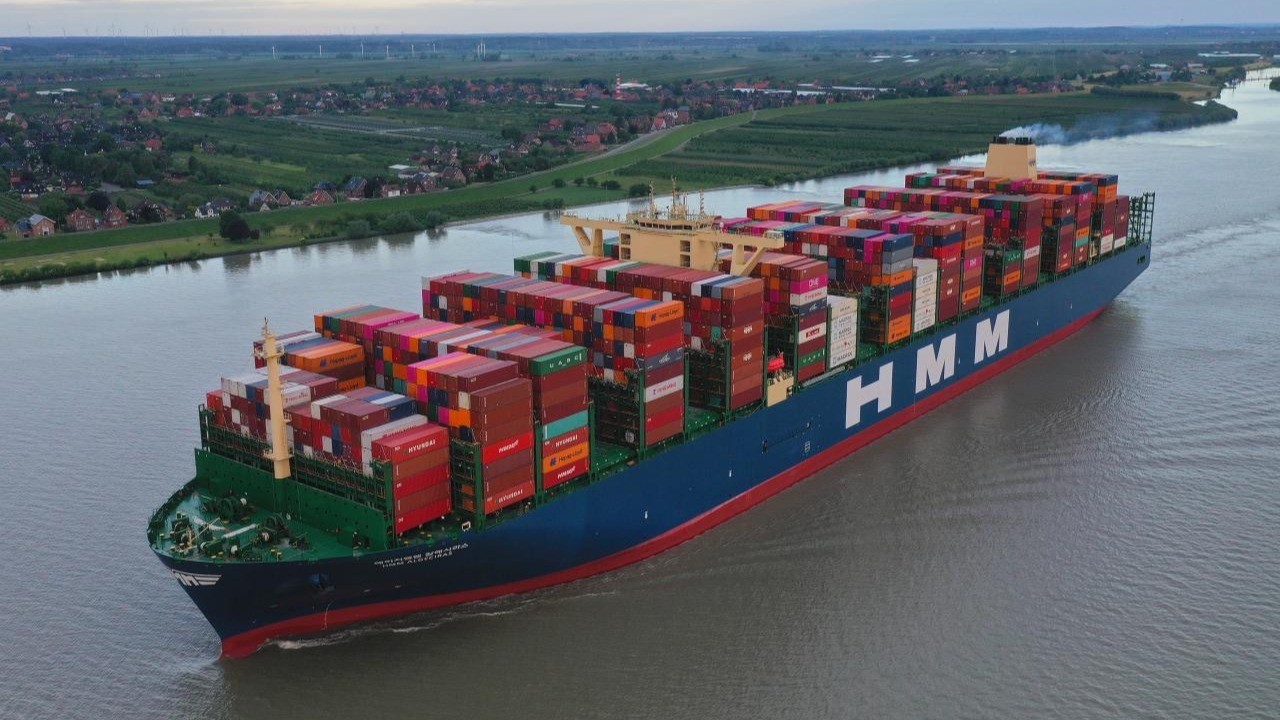
South Korea’s largest container carrier, HMM, has approved a $1.62 billion investment programme covering eight large containership newbuildings and four smaller resale newbuildings, extending its fleet expansion across both mainline and feeder operations.
The board decision, disclosed on 15 October 2026, involves approximately KRW 2.168 trillion, equivalent to $1.617 billion at the exchange rate used in the disclosure. The programme covers a combined 114,100 TEU, with the final vessel scheduled for delivery in December 2029.
The investment follows a major shipbuilding programme announced a year earlier and fits HMM’s broader effort to connect its long-haul services with a wider regional network. Its revised fleet targets point to a growing role for smaller vessels alongside continued investment in mainline tonnage.
Eight large newbuildings and four resale acquisitions
The programme comprises eight 13,000 TEU newbuildings, three 2,800 TEU resale vessels and one 1,700 TEU resale vessel. The larger ships account for 104,000 TEU, while the four smaller units contribute another 10,100 TEU.
The resale vessels are ships ordered by another owner and being acquired before delivery. Purchasing tonnage with existing construction arrangements can shorten the wait for additional capacity, complementing the longer delivery timetable associated with fresh newbuilding orders.
The investment represents approximately 8.16% of HMM’s consolidated shareholders’ equity at the end of the previous financial year. The company said the amount and completion timetable could change depending on vessel specifications and delivery schedules.
The disclosure did not identify the builders or propulsion specifications for the eight larger ships, or the sellers of the four resale vessels.
Further investment in 13,000 TEU tonnage
On 16 October 2025, HMM announced a shipbuilding programme worth approximately KRW 4 trillion, covering 12 LNG dual-fuel containerships in the 13,000 TEU class and two very large crude carriers. The container vessels were assigned to HD Hyundai Heavy Industries and Hanwha Ocean.
Those 12 ships, together with the latest eight-vessel investment approval, bring the number of large containerships covered by the two announcements to 20. The latest decision shows that HMM continues to allocate capital to its mainline fleet while adding smaller ships for regional services.
The previous series had an explicitly stated LNG dual-fuel specification. Propulsion arrangements for the latest eight vessels remain to be disclosed, leaving fuel selection and the associated operating requirements among the details to emerge as the programme advances.
More ships with a different fleet mix
The changing composition of HMM’s expansion is evident in its long-term targets. In September 2024, the carrier set a goal of operating 130 containerships with a combined capacity of 1.55 million TEU by 2030. Its updated strategy, disclosed in July 2026, increased the vessel target to 166 while revising capacity to 1.47 million TEU.
The revised plan therefore calls for 36 more ships but 80,000 TEU less capacity than the earlier target. This points to a larger role for smaller and medium-sized vessels in the future fleet, consistent with the company’s stated hub-and-spoke strategy.
HMM has explicitly used that term in its own corporate announcements. The approach links large ships on long-haul routes with smaller vessels serving regional markets through hub ports. Different vessel sizes allow capacity and service frequency to be matched more closely to cargo volumes and port requirements.
The latest combination of eight large ships and four smaller units is consistent with that approach. Mainline vessels provide scale on major trade lanes, while feeder services can aggregate cargo at hubs and extend the destinations accessible through the wider network.
Feeder investment supports regional reach
HMM’s feeder expansion was already well under way before the latest decision. In April 2026, the company said it had secured 24 feeder vessels over the preceding six months: ten 2,800 TEU ships ordered from HD Hyundai Heavy Industries in March, two approximately 1,900 TEU ships acquired earlier in the year, and twelve 1,800–2,700 TEU vessels ordered in October 2025.
Its April announcement of the Mediterranean–West Africa service, MA2, provided a concrete example of the intended network structure. The service was scheduled to start in July in cooperation with Ocean Network Express, deploying five 2,800 TEU vessels on a 35-day round trip. Algeciras was designated as the hub connecting HMM’s east–west services with ports including Dakar, Tema, Lekki and Abidjan.
This design gives regional customers access to a broader range of destinations through mainline connections, while creating an additional source of cargo for the long-haul network. HMM has not specified where the latest four resale vessels will operate, but their size is consistent with its continuing investment in regional coverage.
A broader programme spanning ships and terminals
The containership investment sits within HMM’s approximately KRW 29 trillion strategy for 2026–2030. Alongside the 166-ship, 1.47 million TEU container fleet target, the plan envisages a non-container fleet of 110 vessels totalling 13.52 million dwt. It also includes investment in terminal infrastructure in key overseas growth markets, together with environmental and digital initiatives.
Terminal development is closely connected to the economics of a hub-and-spoke network. As more cargo moves between mainline and regional services, the quality of those transfers affects the usefulness of the entire network. Additional ships need dependable terminal connections if their capacity is to translate into reliable schedules and broader customer access.
The commercial test for HMM will be whether its feeder expansion generates more cargo for the mainline network and whether the resulting connections deliver a service customers can use reliably. The latest investment approval sets out another part of that fleet plan; shipyard selection, technical specifications and deployment decisions will show how it takes shape.


READ MORE
 Containers
Buy Again! From Ships to Ports: Inside the Maersk Family’s Infrastructure Buying Spree
 Containers
CMA CGM Updates eBL Templates to Clarify Electronic Original Status
 Containers
Bigger Fleets, Wider Networks: China’s Provincial Shipping Companies Step Up Expansion
 Containers
With an Orderbook Above 45% of the Fleet, Why Are Container Lines Still Paying Up for Ships?
 Containers
2,824-TEU GFS PRIDE Sinks in Hormuz; All 21 Crew Safe
 Containers
Zhonggu Orders Its First 14,000 TEU Ships as Annual Newbuilding Tally Reaches 20
 Containers
CMA CGM Expands Biomethane Push with Singapore Supply Partnership
 Containers
sakos Returns to Containership Ordering After Four Years with Hengli Deal
 Containers
Global Ambitions, Provincial Roots: China’s State-Owned JOSCO Expands Overseas
 Containers