


5,000 Tonnes: Maersk Completes World’s Largest Ethanol Bunkering in Singapore
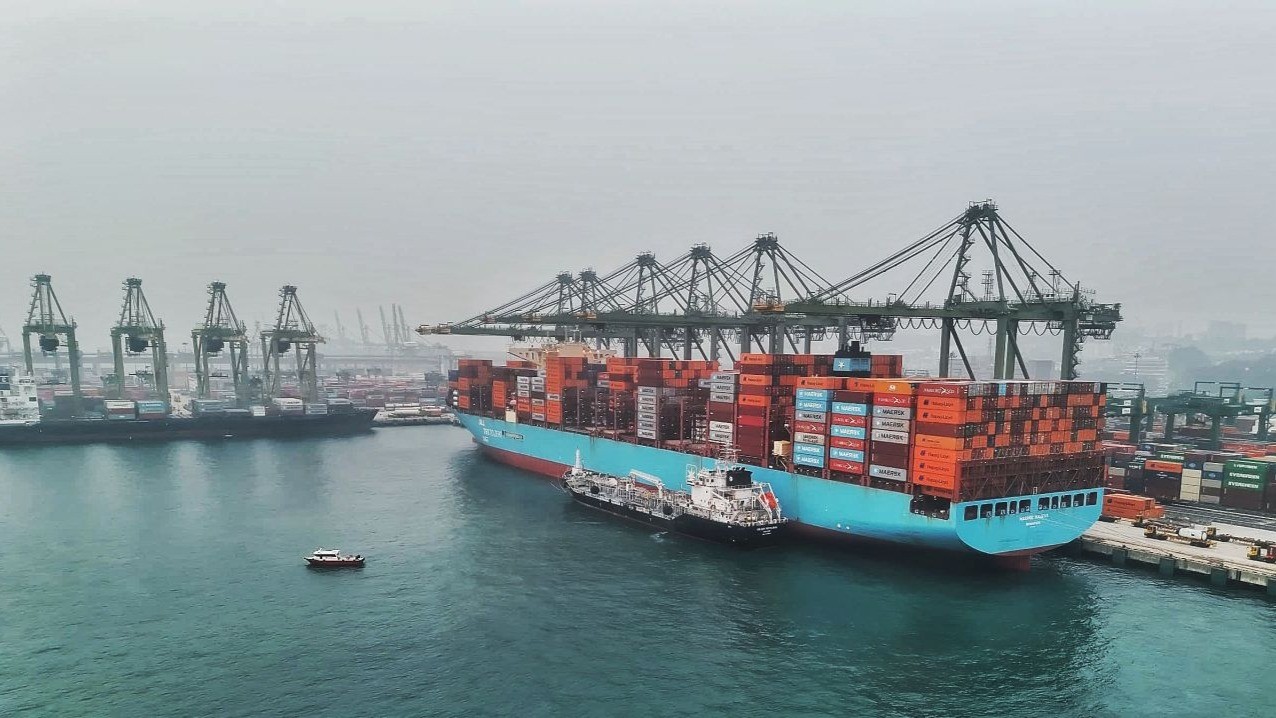
Singapore has completed its first ethanol bunkering operation, supplying approximately 5,000 tonnes of bioethanol to Maersk Halifax in what the Maritime and Port Authority of Singapore (MPA) described as the largest single ethanol bunker delivery globally to date.
The operation took place on 17 October 2026 at PSA Singapore’s Pasir Panjang Terminal. Maersk, Singapore-based marine fuel supplier Golden Island and PSA Singapore carried out the delivery with MPA’s support, while container loading and unloading continued alongside bunkering.
The Singapore-registered dual-fuel containership received bioethanol certified under the International Sustainability and Carbon Certification (ISCC) scheme from Golden Island’s Singapore-registered IMO Type II chemical tanker Golden Centaurus. A mass flow meter (MFM) was used to measure the delivery.
The operation extends a sequence of ethanol trials and bunker deliveries across Europe and the Americas. Alongside engine development and newbuilding projects involving Chinese shipowners and shipyards, it adds further evidence that ethanol is moving into the practical procurement and operating decisions of deep-sea shipping.
Scale and simultaneous operations
The Singapore delivery represents a substantial increase in the quantity supplied in a single operation.
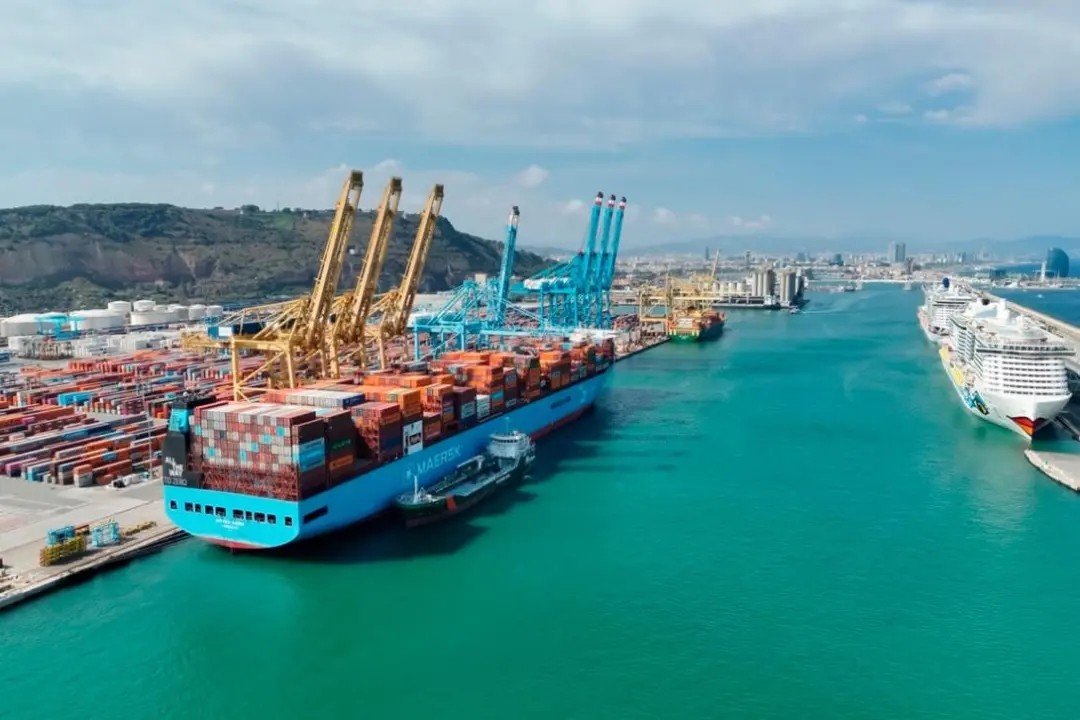
In July, Spanish energy company Repsol supplied 2,800 tonnes of bioethanol to Antonia Mærsk at the Port of Barcelona. The approximately 5,000-tonne Singapore delivery was about 79% larger than that previously disclosed operation.
Larger quantities bring greater demands on the supply chain. A supplier must assemble sufficient fuel of the required specification within a ship’s port window. The supplying and receiving vessels must complete a safe transfer and a reliable quantity handover, while the terminal coordinates bunkering with other activities.
For containership operators working to fixed schedules, these arrangements are central to whether a new fuel can become part of routine operations.
At Pasir Panjang, bunkering took place simultaneously with container handling, an arrangement known as SIMOPS. The operation therefore provided experience in integrating ethanol delivery into a working container terminal, with the potential to reduce the additional time a vessel might otherwise need for a separate bunkering operation.
Before the transfer, participating parties conducted Hazard Identification (HAZID) and Hazard and Operability (HAZOP) studies. MPA also worked with stakeholders to ensure that crew members received training in fuel handling and emergency response, drawing on experience gained from methanol bunkering.
Golden Island Managing Director Johnny Tan said the crew and Golden Centaurus built on lessons from previous methanol operations to complete the delivery safely and on time.
The project brought together three requirements for wider adoption: delivery at scale, integration with cargo operations and reliable measurement.
Building on methanol infrastructure
The operation will also support the development of ethanol bunkering standards and procedures.
MPA said the findings would help assess how Singapore’s existing methanol bunkering technical reference, TR 129, could be adapted for ethanol. The data will also inform whether existing MFM systems can be used for future ethanol deliveries.
MPA Chief Executive Ang Wee Keong said the project would test how Singapore’s methanol bunkering experience and infrastructure could support another emerging marine fuel, helping develop the standards and procedures needed for safe and efficient operations.
A similar connection exists onboard ships. Methanol and ethanol are both alcohol fuels and share several handling and combustion characteristics. Suitable methanol propulsion systems can be adapted to broaden their fuel options.
Classification society DNV has indicated that methanol dual-fuel engines can operate on ethanol following relatively minor modifications. Each application still requires an assessment of the engine configuration, fuel supply system and relevant approval requirements.
This creates an opportunity for owners and suppliers to extend existing investments. Ships approved for several fuels can adjust procurement according to availability, cost and emissions requirements, while ports can examine how existing capabilities could support additional products.
From blends to deep-sea deliveries
Ethanol’s recent development has followed a progressive expansion in fuel concentration, vessel size and supply locations.
In October and November 2025, Maersk tested a blend of 10% ethanol and 90% e-methanol aboard Laura Mærsk, a vessel originally designed to use methanol as its alternative fuel. In December, the company announced a further trial using a 50/50 ethanol-methanol blend. The Port of Barcelona subsequently confirmed that the vessel had completed voyages using both neat ethanol and ethanol-methanol blends.
Testing expanded to a larger ship in July 2026, when Repsol supplied 2,800 tonnes of bioethanol to Antonia Mærsk. The Port of Barcelona said the delivery took place under commercial conditions. Maersk described it as its first ethanol trial aboard one of its large dual-fuel vessels, intended to deepen its understanding of the fuel’s potential at scale.
CMA CGM has also advanced its own programme. On 12 July, the 13,000-TEU CMA CGM IRON received bioethanol at Brazil’s Port of Santos. Brazilian sugar and ethanol trader Copersucar supplied the fuel, with marine fuel supplier Bunker One undertaking ship-to-ship delivery.
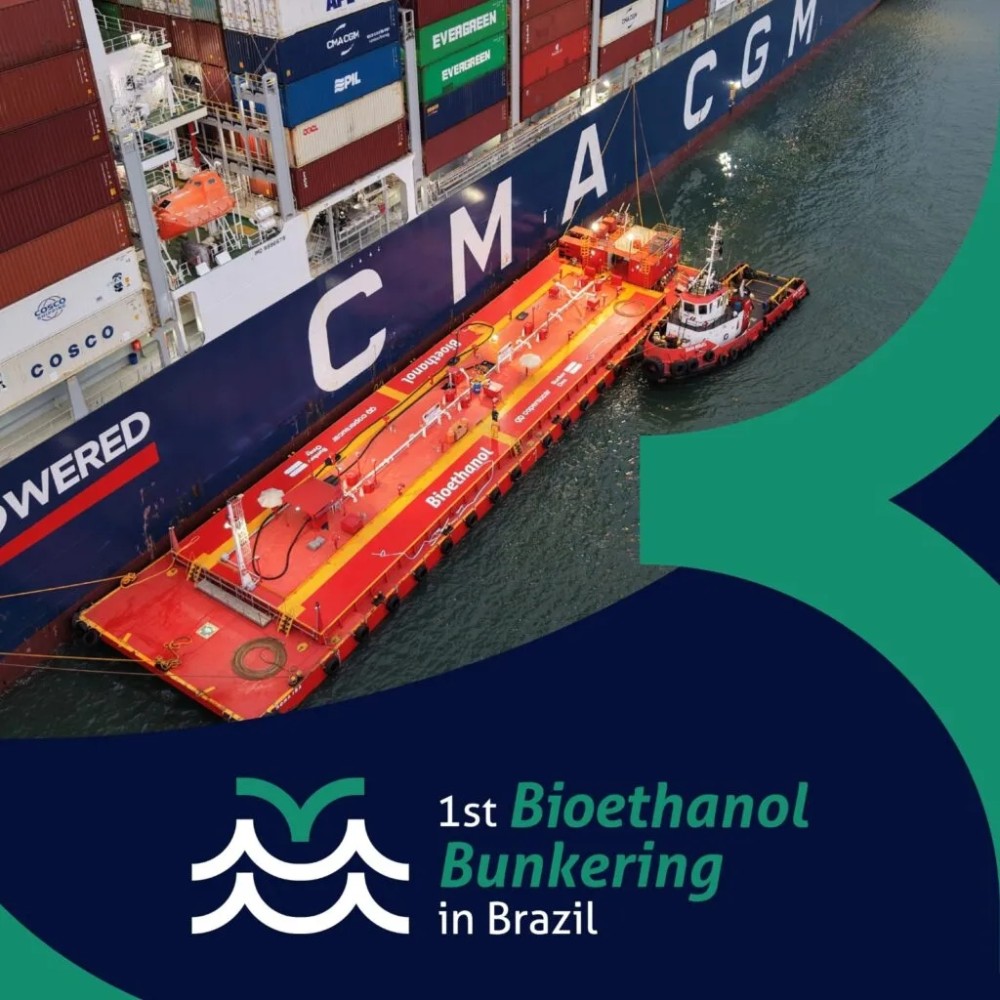
As previously reported by Xinde Marine News, the operation involved 500,000 litres of anhydrous ethanol. It connected Brazil’s established ethanol industry with port storage, marine delivery and a deep-sea containership.
On 28 September, Maersk announced the first commercial ship-to-ship ethanol bunkering of a deep-sea containership in the United States. Tangier Maersk received U.S.-produced corn ethanol. U.S. bioethanol producer POET confirmed that the operation took place in Houston and used 100% bioethanol.
Singapore now adds another supply location and a larger single delivery to that operating experience. In the announcement, Maersk Head of Energy Markets Emma Mazhari reiterated the company’s commitment to a multi-fuel strategy, recognising that several fuel pathways will be needed to decarbonise global shipping.
Chinese shipowners and shipyards support long-term projects
Ethanol development also extends into large ore carriers, supported by long-term transportation arrangements and engine orders.
In April, Brazilian mining company Vale and Shandong Shipping confirmed a project covering two second-generation, 325,000-dwt Guaibamax ore carriers under 25-year contracts, with deliveries expected from 2029 and options for additional vessels. The ships will be able to use ethanol, methanol and conventional marine fuel oil.
In May, Swiss marine power company WinGD announced orders for ethanol-fuelled engines for the two vessels, to be built by Beihai Shipbuilding in Qingdao. The X-DF-M/E engines will be optimised primarily for ethanol use, including changes to fuel supply and injection pressures to accommodate differences between ethanol and methanol.
A separate development involves Everllence, formerly MAN Energy Solutions. On 2 September, the company announced that its ethanol-capable G80 engine had completed research and development testing at HD Hyundai Heavy Industries in South Korea.
The engine is intended for the third vessel in an earlier series of 10 very large ore carriers ordered by Shandong Shipping for service with Vale. That ship is scheduled for delivery in early 2027. The engine can operate on fuel oil, methanol, ethanol or blends of the two alcohol fuels.
These projects belong to different vessel batches and stages of development. They illustrate both the adoption of ethanol in newbuilding specifications and the expansion of fuel capabilities on established methanol engine platforms.
Brazil’s combination of iron ore exports and an established ethanol industry is particularly relevant. For ships carrying ore from Brazil to China, fuel procurement can potentially be organised around the cargo-loading region. Experience gained at international bunkering hubs such as Singapore could broaden the supply options available along those trading routes.
Turning supply capacity into commercial value
Ethanol enters shipping with an established production and distribution base, particularly in the United States and Brazil. POET alone reports annual production of more than 3 billion U.S. gallons across 35 bioprocessing facilities.
Existing production, transport and distribution infrastructure provides a starting point for marine supply. Compatibility with suitable methanol propulsion systems could also widen the pool of potential customers.
Sustained adoption will depend on whether suppliers can deliver the required fuel consistently, within vessel schedules and at commercially workable costs. Owners must assess energy requirements, system adaptation, port delivery costs and the value of recognised emissions reductions. A comparison based only on the purchase price per tonne cannot establish voyage economics.
The Singapore announcement did not disclose the purchase price, feedstock, production origin or specific lifecycle carbon intensity of the bioethanol supplied. More data will be needed to assess the operation’s cost and emissions performance.
Environmental performance depends on the production pathway. Vale has said that second-generation ethanol could reduce well-to-wake emissions by up to approximately 90% compared with heavy fuel oil. That estimate is subject to specific fuel and lifecycle assumptions and cannot be applied directly to the Singapore delivery.
ISCC certification provides assurance against the scheme’s sustainability, traceability and greenhouse gas requirements. Quantified savings must still be assessed using the documentation for the particular fuel and the applicable accounting framework.
Maersk has previously emphasised lifecycle emissions, traceability, certification and responsible sourcing in its assessment of ethanol, including the need to avoid contributing to land conversion or deforestation, or competing with food and feed supplies.
Singapore prepares for a broader fuel mix
The ethanol operation forms part of Singapore’s wider preparations to supply several marine fuels.
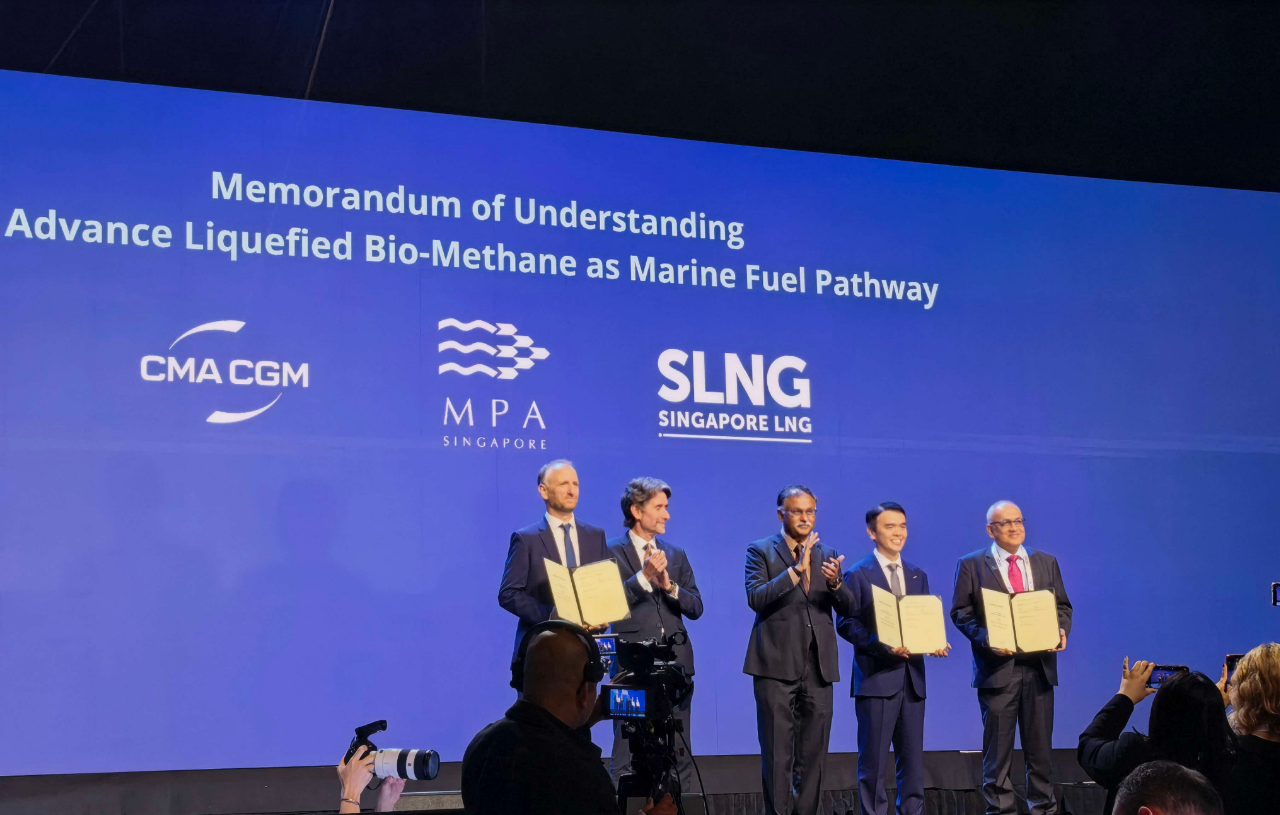
On 14 October, MPA, CMA CGM and Singapore LNG Corporation (SLNG) signed a memorandum of understanding to explore the supply and use of liquefied biomethane as a marine fuel. The work includes assessing how existing gas infrastructure could support supply and how sustainability attributes and emissions savings could be accounted for when biomethane is mixed with natural gas in shared facilities.
Three days later, the approximately 5,000-tonne bioethanol delivery was completed. The two initiatives draw respectively on existing LNG and methanol capabilities to explore additional lower-emission fuel options.
In Xinde Marine News’ assessment, the significance of the ethanol operation lies in the combination of delivery scale, simultaneous cargo handling and practical measurement experience. It also generates data for the standards and procedures that could support further operations.
The next indicators will be repeat deliveries, longer-term procurement commitments and accumulated operating data. These will determine how effectively ethanol can serve ocean-going fleets on a sustained basis. Singapore’s latest operation adds an important Asian supply location to that process and gives shipowners another practical reference as they develop more flexible fuel strategies.


READ MORE
 Sustainability
MPA, CMA CGM and SLNG Join Forces on Bio-LNG Bunkering
 Sustainability
Singapore Offers Up to S$250,000 for Electric Harbour Craft
 Sustainability
Greater Bay Area Launches First Zero-Carbon Container Shipping Route Between Guangzhou and Hong Kong
 Sustainability
PetroChina Expands Multi-Fuel Bunkering in Singapore
 Sustainability
1000Ton! CMB.TECH in World First Commercial STS Green Ammonia Bunkering
 Sustainability
China Sets 2028 Targets for Electric and Methanol-Powered Inland Vessels
 Sustainability
China Merchants Takes Delivery of Third Methanol Dual-Fuel Car Carrier
 Sustainability
Alexander Saverys :Green Ammonia Will Be Cheaper Than Diesel—Sooner Than You Think
 Sustainability
Beihai Delivers First Ammonia-Powered Bulker as Mineral Europa Sets Sail
 Sustainability