


33 Reports and RMB 1.5 Billion in Giving: COSCO SHIPPING Embeds Responsibility Across Its Global Network

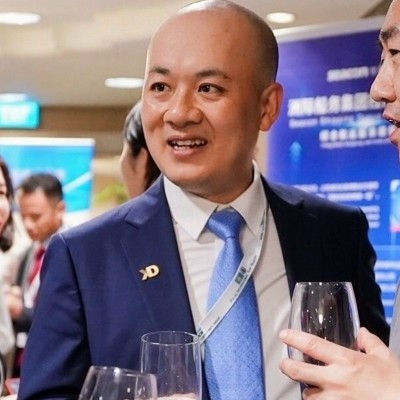
From maintaining resilient global supply chains and accelerating the transition to lower-carbon shipping, to evacuating civilians from Lebanon, protecting marine wildlife in Peru and supporting local communities in Africa, COSCO SHIPPING is expanding the role of corporate responsibility across its worldwide operations.
On 26 August, COSCO SHIPPING held its Social Responsibility Achievements Conference in Beijing, where the group launched its new corporate responsibility brand, “Sailing Together”, and introduced a group-wide “1+N+M” sustainability reporting framework.
The event also marked the collective release of 33 sustainability and social responsibility reports prepared by 24 of the group’s domestic and overseas second-tier subsidiaries. COSCO SHIPPING simultaneously launched its 2025 Green Development Report and its first dedicated Overseas Social Responsibility Report.
The conference came at a significant point in the group’s development. The period from 2016 to 2026 represents the first decade since the restructuring that created today’s COSCO SHIPPING. During those ten years, the company has grown into one of the world’s largest integrated shipping, ports and logistics groups, while gradually incorporating sustainability, environmental performance, employee welfare, overseas compliance and community engagement into its corporate governance and operating strategy.
Senior representatives from China’s State-owned Assets Supervision and Administration Commission, the Ministry of Transport, the China Enterprise Reform and Development Society, academic institutions and sustainability organisations attended the event. COSCO SHIPPING Director, President and Deputy Party Secretary Lin Ji delivered the welcome address, while Executive Vice President Luo Bing introduced the new responsibility brand and reporting system.

From corporate reporting to an operational framework
“Sailing Together” reflects a concept deeply rooted in shipping: people sharing the same vessel must cooperate, support one another and navigate uncertainty together.
For COSCO SHIPPING, the idea extends to customers, employees, business partners, port communities, regulators and other stakeholders across its global network. It also provides a common identity for responsibility programmes that have previously been developed across different business units and geographical markets.
Luo Bing said the group’s sustainability work had progressed over the past decade from dispersed initiatives to a more integrated system, and from primarily domestic programmes to a growing international presence. The new brand is intended to make those activities more coherent, recognisable and closely connected with the company’s long-term business strategy.
Supporting the brand is the new “1+N+M” sustainability reporting framework.
The “1” refers to COSCO SHIPPING’s annual group-level sustainability report, which provides an overview of corporate governance, green development, overseas responsibility, employee welfare, charitable programmes and supply-chain management. The group’s 2025 Sustainability Report received a five-star “excellent” rating from the Chinese Expert Committee on Corporate Social Responsibility Report Rating.
According to the assessment presented at the conference, the report covered 88.08% of the core indicators applicable to the water transport sector, with several categories achieving full coverage. It also disclosed information including employee turnover, workplace accidents and occupational fatalities, alongside three-year comparisons for 49 key indicators such as operating revenue, total profit and research and development expenditure.
The “N” represents specialist reports covering areas such as decarbonisation, overseas operations, supply-chain collaboration and seafarer rights. These reports allow the group to address technically complex or geographically specific issues in greater depth than would be possible in a single annual publication.
The “M” covers sustainability and social responsibility reports issued by subsidiaries in China and overseas. In 2025, 24 second-tier subsidiaries independently prepared and published 33 reports, extending sustainability disclosure from the group’s headquarters into individual companies and operational settings.
For an organisation operating across shipping, ports, terminals, logistics, finance and related maritime services, this reporting structure has a practical governance purpose. Green fuels, vessel safety, seafarer welfare, emissions, overseas compliance and community relations are increasingly interconnected. Weakness in any one of these areas can affect operational resilience, financing, market access and corporate reputation.
By combining group-level oversight, specialist reporting and subsidiary-level implementation, COSCO SHIPPING is building a framework capable of covering a large and geographically diverse maritime network.
Sustainability increasingly linked to competitiveness
Shipping is the infrastructure behind international trade. Its social value becomes particularly visible during periods of disruption, when continuity of transport can determine whether factories receive components, consumers obtain essential products and national economies maintain access to international markets.
COSCO SHIPPING has developed an integrated business model combining shipping, ports and logistics. Through the coordination of vessels, terminals, inland transport, logistics facilities and digital platforms, the group supports cargo flows across a global network. In an environment shaped by geopolitical conflict, extreme weather and supply-chain volatility, operational reliability has become an important part of corporate responsibility.
The group is also positioning decarbonisation at the intersection of sustainability and long-term competitiveness. Lin Ji said vessels powered by new energy sources accounted for 33% of the ships within COSCO SHIPPING’s new orders and newly added capacity in 2025.
The company is pursuing a diversified approach to future marine fuels while upgrading its fleet, electrifying equipment at major terminals and developing greener ports. It has established a green shipping energy fund, developed a carbon-footprint certification platform and completed what it described as the world’s first methanol dual-fuel conversion of a large containership.
COSCO SHIPPING has also been involved in discussions over International Maritime Organization decarbonisation regulations, contributing operational experience and Chinese industry perspectives to the development of global maritime rules.
This engagement is commercially relevant. As emissions regulations become more demanding, shipping companies must align vessel investment, fuel procurement, port infrastructure, carbon accounting and customer services. Sustainability performance increasingly influences chartering decisions, cargo-owner partnerships, access to finance and the ability to operate within highly regulated markets.
The company’s overseas subsidiaries are adapting this approach to local conditions. COSCO SHIPPING North America has received the Sapphire Award from the US National Oceanic and Atmospheric Administration for its environmental and operational practices. In Europe, the group has worked to align its management with evolving European sustainability requirements while developing a PANDA values framework intended to connect Chinese corporate culture with local teams.
In May, the annual sustainability report for COSCO SHIPPING’s European operations was completed with support from the Global Sustainable Transport Innovation and Knowledge Center. The report represented another step in the company’s effort to develop locally relevant disclosure and governance systems in major overseas markets.
A global network with a human role
Six stories shared at the Beijing conference demonstrated how corporate responsibility is applied within COSCO SHIPPING’s daily operations.
One of the most powerful concerned the containership Xin Xiamen and its role in evacuating people from Lebanon in 2024.
At 9:00 pm on 29 September, while sailing in the eastern Mediterranean, the vessel received instructions to terminate its scheduled operation and proceed at full speed to Beirut. COSCO SHIPPING teams in Shanghai, Hamburg, Cyprus and Lebanon began coordinating the mission immediately. Within 30 minutes, they had planned a fast and secure route to the port.
The vessel subsequently encountered disrupted navigation signals, a temporary suspension of entry procedures, a military inspection and armed helicopters operating overhead. Despite the conditions, Xin Xiamen berthed safely in Beirut and embarked 80 people, including elderly passengers, children, a pregnant woman, Chinese citizens from Hong Kong and Taiwan, and foreign family members.
Captain Ren Juncheng recalled that one passenger held his hand and asked whether the vessel was Chinese.
Ren pointed to the national flag and replied: “This ship was built in China and flies the Chinese flag. It is floating national territory. Once you are aboard, you have returned home. We will bring everyone to safety.”
After a 40-hour operation across three countries, the vessel delivered all 80 evacuees safely to Limassol, Cyprus, on 1 October.
The mission illustrated how a commercial shipping network can assume a wider public role during emergencies. The same infrastructure that moves cargo across borders can also become a channel for evacuation, humanitarian assistance and the protection of lives.
Chancay: infrastructure development alongside environmental protection
At Chancay Port in Peru, COSCO SHIPPING’s responsibility work has focused on integrating environmental management into the development and operation of a major infrastructure project.
In 2022, oil pollution associated with an incident following the Tonga volcanic eruption reached waters near the port construction site. Chinese engineers, Peruvian employees and support teams suspended their work and organised an emergency response. They deployed absorbent materials, treated contaminated seabirds and contacted wildlife rescue specialists.
Environmental monitoring had already been incorporated into the project before construction began. The team recorded water quality, dolphin activity and seabird nesting locations, while the design included environmental monitoring points and wildlife corridors.
When Chancay Port officially opened on 14 November 2024, its principal handling equipment was fully electrified and powered by green electricity. The port also introduced closed-loop management of wastewater and emissions, alongside a digital-twin energy platform intended to improve the efficiency of power consumption.
He Zhiyong, one of Chancay’s first Chinese employees and a member of its ecological protection team, shared the story of a seabird rescued during the pollution response. According to He, the bird later returned to nest on rocks near the port.
The story offers a concise measure of the relationship between industrial development and the surrounding environment. Chancay’s contribution to Asia–Latin America trade will be assessed through connectivity and logistics efficiency, while its long-term acceptance will also depend on how effectively the port coexists with local ecosystems and communities.
Building shared values across Europe
Libuse Honcova , Deputy General Manager of COSCO SHIPPING Lines (Central Europe) s.r.o., and Catalin Petre , Deputy General Manager of COSCO SHIPPING Lines (Romania) Co., Ltd., shared how the company’s PANDA values framework is helping employees from different cultural and professional backgrounds work together across Europe.

Honcová explained that employees in the Czech Republic have participated in a national bike-to-work programme for eight consecutive years. They have travelled more than 7,400 kilometres by bicycle and on foot, avoiding an estimated 1,200 kilograms of carbon dioxide emissions.
The programme has also strengthened relationships between colleagues. Employees check one another’s bicycles, help newcomers plan their routes and discuss their personal carbon footprints, turning small individual actions into a shared environmental practice.
Petre introduced COSCO SHIPPING’s cooperation with the Faculty of Transport at the National University of Science and Technology Politehnica Bucharest to develop a university maritime laboratory in Romania. The project brings together Romanian academic expertise, COSCO SHIPPING’s global operational experience and advanced technology from Chinese partners.
The initiative is designed to support maritime education and research in areas including sustainable shipping and green logistics. It also demonstrates how an international shipping company can contribute to local skills, knowledge and talent development while building closer relationships with universities and future maritime professionals.
Together, Honcová and Petre described PANDA as a bridge connecting Chinese and European teams. The framework brings together professionalism, the right attitude, constructive negotiation, determination in the face of difficulties and accountability. Through practical initiatives in local workplaces and communities, these shared values are being translated into measurable environmental and social outcomes.
Two decades of commitment in rural Yunnan
In China, COSCO SHIPPING’s partnership with Yongde County in Yunnan Province has continued for 20 years.
The group began supporting Yongde in 2006, investing in education, local industries and public services. The county was officially removed from China’s list of impoverished counties in May 2020. Over two decades, COSCO SHIPPING has committed RMB 261 million to 442 assistance projects in the area.
Education has received RMB 119 million of that total, supporting the construction or renovation of 49 schools.
One of the most tangible initiatives is the “Voyage of Warmth” programme. Many boarding schools in mountainous areas lacked hot water and standard bathing facilities, leaving students to wash in cold water during winter. Since 2021, COSCO SHIPPING has invested RMB 12.72 million to install hot-water systems at 137 primary and secondary schools, benefiting more than 30,000 students.
Delivering the equipment required practical innovation. Local residents used motorcycles to transport solar panels and water tanks along narrow mountain roads. Where construction conditions were especially difficult, modular bathrooms were manufactured approximately 2,000 kilometres away and transported to the schools for assembly.
Yang Bin, a COSCO SHIPPING official working in Yongde, recalled the day hot water began flowing at a school in a high-altitude area. A young girl cautiously reached towards the water, pulled back when she felt its warmth and then tried again. She turned to those around her and said: “It’s warm.”
COSCO SHIPPING and the local authorities have established a maintenance system involving quarterly visits and annual inspections, helping ensure that the facilities remain operational after installation.
The company’s “Hope Class” programme has also provided tuition, accommodation and living support for students from low-income families. One former participant, Cao Wanjuan, is now studying at Yunnan Normal University. She plans to return to Yongde as a rural teacher, allowing one generation of educational support to create benefits for the next.
From charitable giving to biodiversity protection
The COSCO SHIPPING Charity Foundation was established in 2005 and was among the first non-public fundraising foundations created by a Chinese central state-owned enterprise. Over more than 20 years, it has donated over RMB 1.5 billion and supported more than 1,100 projects.
The foundation draws on the group’s transport capabilities to provide safe, professional and free logistics services for charitable materials sent to countries and regions along the Belt and Road. Its work also includes educational assistance, disability support, medical projects, humanitarian relief and international cultural exchange.
At the Beijing conference, COSCO SHIPPING and the China Conservation and Research Center for the Giant Panda jointly launched the “Captain Panda: Protecting Our Home” public welfare programme.
The initiative will support giant panda research while promoting biodiversity awareness. It includes funding for conservation work, customised enrichment facilities, public education programmes and the use of COSCO SHIPPING’s global network to communicate environmental messages.
The first research area will examine the reintroduction of captive-bred giant pandas into the wild, including their feeding, migration, habitat selection and integration into wild populations. A second area will explore the psychological and emotional benefits associated with giant pandas and potential applications in schools, workplaces and hospitals.
The first ship-shaped enrichment facilities arrived at the panda centre’s Ya’an base in early August. Their design was inspired by COSCO SHIPPING’s new generation of 24,000-TEU methanol dual-fuel containerships, linking the company’s maritime identity with wildlife conservation.
Responsibility as a foundation for international operations
In Guinea, COSCO SHIPPING Bulk’s local affiliate Winning Shipping has supported fishing communities along the Fatala River by donating boats, providing navigation safety training, drilling wells, renovating schools and creating employment opportunities.
Local employee @Touré Saloun described a relationship based on shared knowledge. Chinese colleagues provide technical training, while Guinean employees help their counterparts understand local languages, customs and communities. This kind of long-term localisation supports both community development and the stability of overseas operations.

The examples from Lebanon, Peru, Europe, Yunnan and Guinea show the broad scope of corporate responsibility within a global maritime group. It includes emissions reduction and environmental disclosure, while also covering emergency response, employee development, infrastructure governance, cultural integration and community trust.
COSCO SHIPPING’s new responsibility framework therefore carries a wider strategic implication. The group is seeking to transform operational experience into a consistent management system that can be applied across business units, supply chains and international markets.
During the conference, Fan Jianlin, Vice Chairman of the China Enterprise Reform and Development Society, encouraged COSCO SHIPPING to extend ESG collaboration to cargo owners, ports, logistics providers and financial partners. He also called on the group to translate its experience in green fleets, port decarbonisation and marine protection into technical proposals, industry standards and practical methodologies for international maritime governance.
That direction aligns closely with COSCO SHIPPING’s ambition to become a world-class shipping technology enterprise. Fleet renewal, alternative fuels, digitalisation and port automation will shape its future competitiveness, while transparent governance, stakeholder trust and locally grounded responsibility will help determine how successfully those capabilities can be deployed around the world.
Ten years of integration have given COSCO SHIPPING an extensive network spanning shipping, ports and logistics. Its sustainability programme is adding another dimension to that network: the ability to protect supply chains, respond to emergencies, support communities and participate constructively in the global transition of the maritime industry.
A ship fulfils its purpose by reaching its destination safely. The responsibility of a global fleet extends further—to the cargo it carries, the people who operate it, the communities around its ports and the environment through which it sails.
With “Sailing Together”, COSCO SHIPPING has set out a clear commitment to navigate that wider responsibility alongside its customers, employees, partners and communities worldwide.

READ MORE
 Sustainability
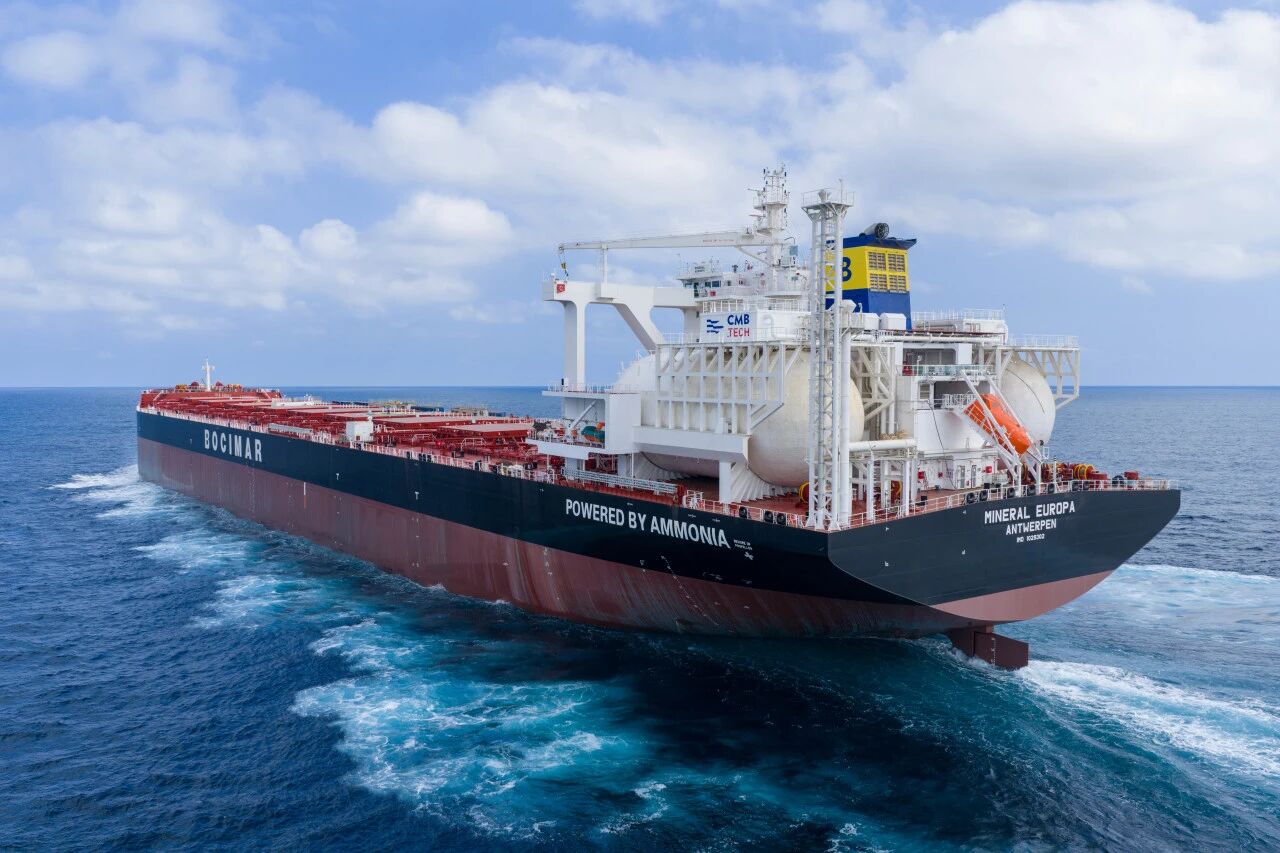
Beihai Delivers First Ammonia-Powered Bulker as Mineral Europa Sets Sail
 Sustainability
World's First Ammonia Dual-Fuel Bulker Delivered in China
 Sustainability
UK & CHINA: NAVIGATING TOGETHER TOWARDS SAFER, GREENER SHIPPING
 Sustainability
Alexander Saverys :Green Ammonia Will Be Cheaper Than Diesel—Sooner Than You Think
 Sustainability
India, EU launch coalition to develop green shipping corridor
 Sustainability
Global fleet of battery-equipped ships surpasses 2,000 vessels
 Sustainability
BIMCO adopts new contract addendum to ease investment in ship energy-saving retrofits
 Sustainability
IMO Report: Ship Fuel Consumption Hits 221 Million Tonnes, Biofuel Use Surges 109%
 Sustainability
Hapag-Lloyd Bunkers Goldwind Bio-Methanol in Busan
 Sustainability