


Seaspan Raises RMB 1.5 Billion in China as Panda Bond Market Opens to Global Shipping
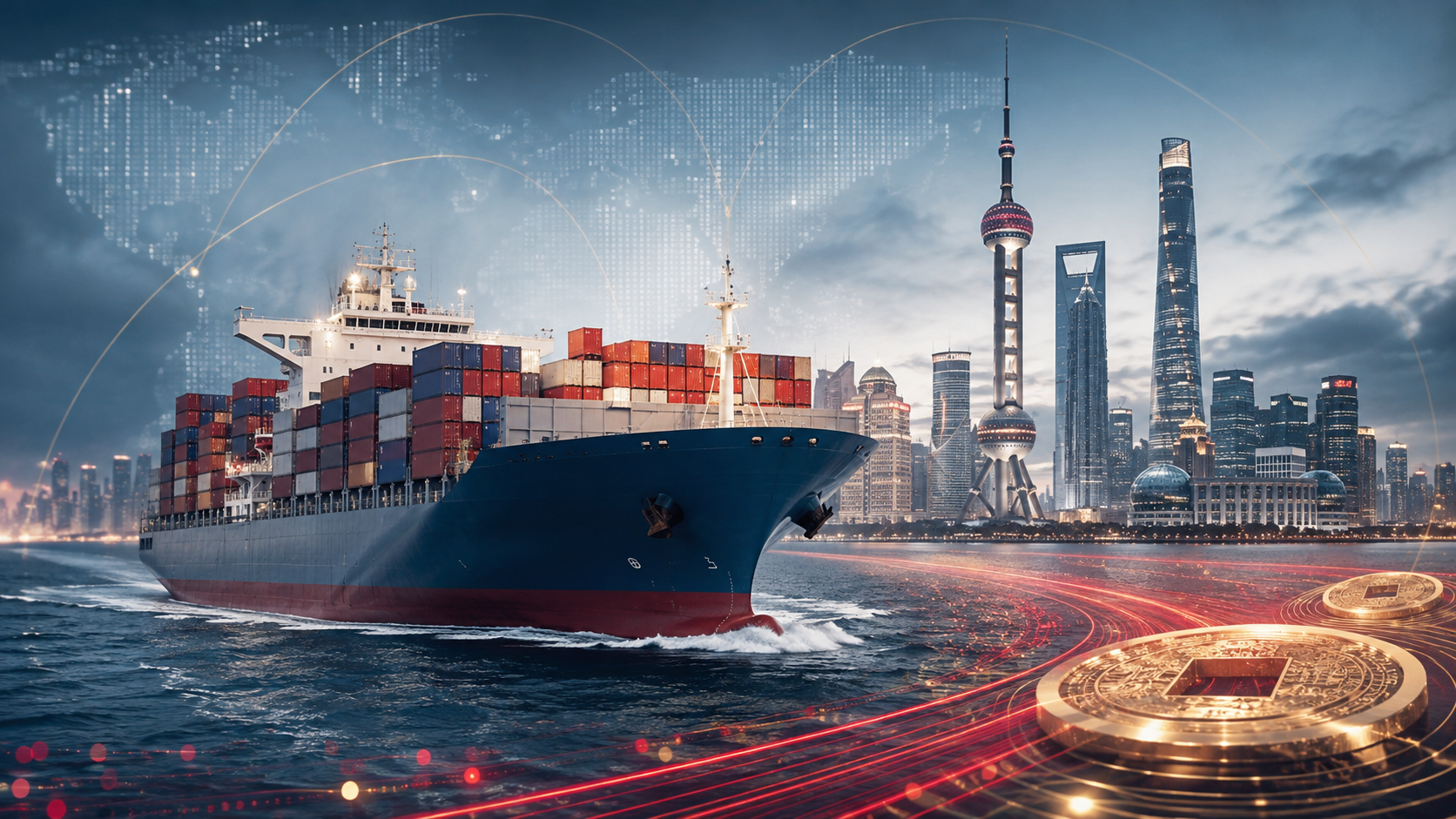

Seaspan has become the first international independent shipowner to tap China’s Panda bond market, raising RMB 1.5 billion ($209 million) at a coupon of just 2.5%. The 2.3-times subscription level points to a broader development: China’s capital markets are beginning to play a more direct role in financing global shipping.
The world’s largest independent containership owner has entered China’s domestic renminbi bond market for the first time.
On July 15, Seaspan Corporation Pte. Ltd. completed a RMB 1.5 billion three-year private placement note, or PPN, carrying a 2.5% coupon. Bank of China acted as lead underwriter and lead bookrunner.
According to Bank of China, the transaction marked the first Panda bond issuance by an international independent shipowner.
For a company operating one of the world’s largest containership fleets, RMB 1.5 billion is not an extraordinary amount of capital.
What deserves more attention are two other numbers:
2.5% and 2.3 times.
Together, they suggest that China’s domestic capital market is beginning to participate more directly in the financing and pricing of international shipping assets.
Pricing landed at the bottom of the range
The initial bookbuilding range for Seaspan’s three-year issue was set at 2.5% to 2.9%.
The final coupon was fixed at 2.5% — the very bottom of that range — while subscriptions reached 2.3 times the amount offered.
For assessing the transaction, the 2.3-times coverage ratio may be at least as important as the headline coupon.
A low renminbi borrowing cost partly reflects China’s broader interest-rate environment. But the combination of strong demand and pricing at the tightest end of the range indicates that domestic institutional investors showed meaningful appetite for Seaspan’s credit and for exposure to international shipping assets.
That said, the 2.5% coupon should not simply be interpreted as Seaspan’s “global cost of funding”.
Panda bond issuers include sovereign-related institutions, development banks, major financial institutions and highly rated corporates, meaning their risk profiles can differ significantly from that of a commercial shipping company.
Seaspan therefore represents a rather different type of issuer.
S&P Global Ratings upgraded Seaspan’s long-term issuer credit rating to BB from BB- in December 2025, with a stable outlook. The rating agency highlighted the company’s contracted revenue base, fleet scale and earnings visibility from long-term fixed-rate charters.
In other words, investors were not buying the debt of a sovereign-backed borrower or a top-tier bank.
They were allocating capital to a major commercial shipowner operating in one of the world’s most cyclical and capital-intensive industries.
That makes the 2.3-times subscription level particularly notable.
From Chinese shipyards to Chinese capital
Seaspan’s decision to raise renminbi funding also needs to be viewed against its increasingly deep relationship with China.
Its connection with China now extends far beyond simply placing vessel orders at Chinese shipyards.
Seaspan owns and operates the world’s largest independent containership fleet. On a fully delivered basis, its fleet comprises more than 220 vessels with aggregate capacity of around 2.4 million TEU, while the company continues to maintain a substantial newbuilding programme.
China has become central to that expansion.
Over the past several years, Seaspan has emerged as one of the most important international customers of Chinese shipyards, placing large containership orders with builders including Hudong-Zhonghua, New Times Shipbuilding, Yangzijiang Shipbuilding and Shanghai Waigaoqiao Shipbuilding.
Some projects have also begun using cross-border renminbi settlement.
That creates the foundations for a potentially important financing loop:
international shipowner — Chinese shipyard — renminbi settlement — renminbi financing.
Bank of China described the Panda bond transaction as creating a complete renminbi cycle covering borrowing, use and repayment.
That wording captures the wider significance of the deal.
Until now, renminbi internationalisation in shipping has largely been associated with trade settlement, port charges, bunker purchases and selected forms of ship finance.
Seaspan has now taken the currency one step further into the direct funding side of an international shipowner’s balance sheet.
If an international owner already has substantial newbuilding expenditure in China, with part of its shipbuilding or supply-chain costs denominated in renminbi, direct RMB borrowing can potentially provide a better currency match between funding and expenditure while reducing some foreign-exchange conversion requirements.
The significance of the RMB 1.5 billion issue therefore lies less in its absolute size than in the fact that renminbi funding is beginning to move along China’s shipbuilding supply chain and onto the balance sheets of global shipowners.
China’s shipping finance is moving beyond Chinese owners
Over the past two decades, China has already become an increasingly important provider of capital to global shipping.
Chinese commercial banks, policy banks and financial leasing companies have financed large numbers of vessels ordered by both domestic and overseas shipowners.
Panda bonds, however, represent a different stage of development.
Traditional bank lending and leasing rely primarily on the balance sheets of financial institutions.
A Panda bond allows an overseas shipowner to access China’s domestic bond market more directly and raise renminbi funding from institutional investors.
The pool of capital therefore expands beyond banks and leasing companies into the broader domestic capital market.
For China’s shipping finance sector, that is an important change.
After becoming the world’s largest shipbuilding nation, China is beginning to test whether its domestic capital markets can also finance the international owners buying those ships.
Bank of China said the Seaspan transaction could provide a replicable reference for other global shipping companies seeking direct RMB financing.
If more Greek, Singaporean, European and other international owners eventually follow, the relationship between China and global shipping could deepen from:
“build ships in China”
to:
“build ships in China, settle in renminbi and raise capital in China.”
China’s shipbuilding strength could then begin to generate greater financial spillover.
Seaspan is entering a rapidly expanding market
The timing of Seaspan’s transaction is also significant.
China’s Panda bond market has expanded rapidly in recent years as policymakers have continued opening the domestic bond market and encouraging wider cross-border use of the renminbi.
In the first half of 2026 alone, Panda bond issuance reached around RMB 160 billion, while additional overseas institutions entered China’s interbank bond market.
By late July, total Panda bond issuance in 2026 had already exceeded the full-year amount recorded in 2025.
The issuer base is also broadening.
The market was once dominated by foreign governments, international development institutions and major financial institutions. As regulations have become clearer and renminbi funding conditions more attractive, a growing number of overseas corporates have also begun entering the market.
That is what makes Seaspan particularly interesting.
It brings into the Panda bond market one of the world’s most capital-intensive, internationally exposed and cyclically volatile industries:
shipping.
The more important question is who comes next
One RMB 1.5 billion private placement does not mean the global shipping finance system has fundamentally changed.
This was a PPN rather than a broadly distributed public bond.
Strong 2.3-times demand is encouraging, but the investor depth of China’s Panda bond market still cannot be directly compared with that of the global US dollar bond market.
Nor should the 2.5% coupon be compared mechanically with dollar borrowing costs.
If the underlying cash flows used for debt repayment are denominated primarily in US dollars, foreign-exchange risk, swap costs and cross-currency funding management will still affect the true all-in financing economics.
The most important question, therefore, is not simply whether Seaspan has found “cheaper money” in China.
It is this:
How many other global shipowners will begin incorporating China’s renminbi capital market into their long-term funding strategies?
If a second and third international owner follow, if transaction sizes increase, if maturities extend from three years toward five, seven or even longer terms, and if RMB funding becomes increasingly linked to Chinese newbuilding programmes and long-term shipping assets, the significance of Seaspan’s transaction will look very different.
China could then begin to form a more complete maritime financing ecosystem:
Chinese shipyards provide the vessels, Chinese financial institutions provide services, Chinese capital markets provide funding, and renminbi is used across financing, payment and repayment.
That does not mean the renminbi is about to replace the US dollar as the dominant currency of global shipping finance.
Nor does it need to.
For renminbi internationalisation, the more important test is whether international companies voluntarily use the currency in real global industries to raise capital, invest, settle transactions and manage their balance sheets.
Viewed from that perspective, Seaspan’s RMB 1.5 billion Panda bond is not remarkable because of its size.
Its importance lies in the door it may have opened.
China’s shipbuilding industry has already gone global. The next question is whether China’s shipping finance can follow it.

READ MORE
 Finance
Shipping’s Risk Equation Is Being Repriced as Finance, Insurance and Contracts Adapt
 Finance
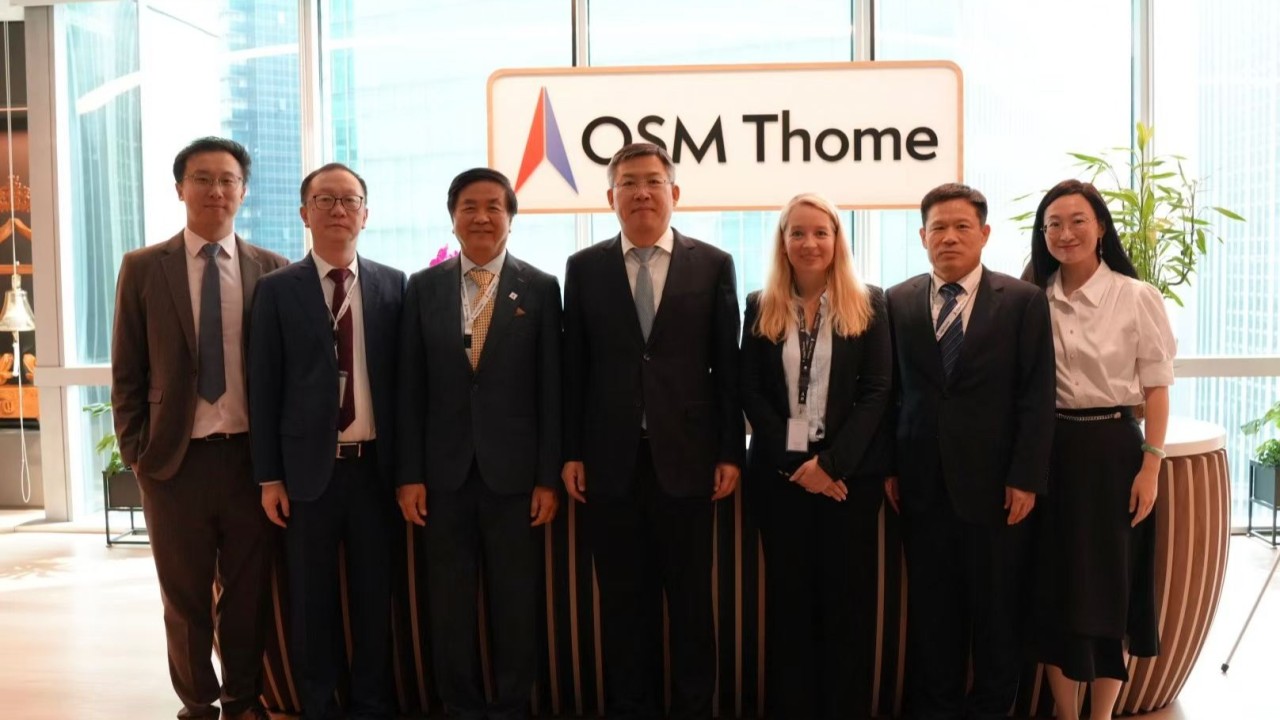
Shandong Shipping and OSM Thome Form Singapore JV
 Finance
From RMB 1.87 Billion to RMB 4.55 Billion: What Changed at COSCO Shipping Energy in One Year?
 Finance
HEIDMAR - Scaling for Growth: Capitalizing on Favorable Market
 Finance
Net Profit Jumps 42% as NJTC Reshapes Its Liquid-Bulk Shipping Network
 Finance
Capital Is Available, but Ship Finance Is Repricing the Risk of Buying the Wrong Vessel
 Finance
Plenty of Capital, Yet Ships Still Struggle for Financing: The Structural Mismatch Reshaping Ship Finance
 Finance
COSCO SHIPPING Specialized Posts $202 Million H1 Profit as Second-Quarter Earnings Double
 Finance
Revenue Tops $200m as Seacon Shipping’s Attributable Profit Jumps 44.7%
 Finance