


Revenue Tops $200m as Seacon Shipping’s Attributable Profit Jumps 44.7%

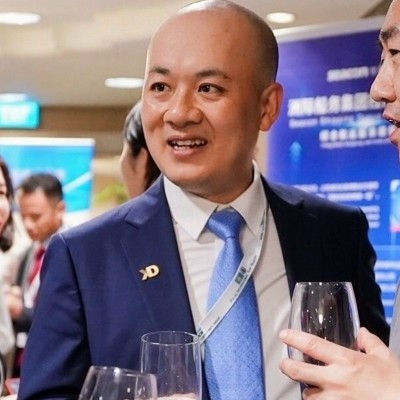
eacon Shipping Group recorded broad-based growth in the first half of 2026, with revenue rising 50.9% to $207.4m and profit attributable to shareholders increasing 44.7% to $28.4m. Stronger shipping earnings, a larger and younger fleet, high vessel utilisation and active asset management indicate that the group’s recent expansion is beginning to translate into improved profitability.
Seacon Shipping Group Holdings Limited has reported a strong set of interim results for the six months ended June 30, 2026, as its enlarged fleet, improving operating efficiency and expanding maritime services platform generated simultaneous growth in revenue, gross profit and earnings.
The Hong Kong-listed shipping and shipmanagement group generated revenue of $207.4m during the period, an increase of 50.9% from $137.4m in the first half of 2025. Gross profit rose at a faster rate of 61.6% to $44.5m, lifting the group’s gross margin from approximately 20.0% to 21.5%.
Operating profit increased 30.3% to $41.0m, while net profit rose 27.9% to $29.5m. Profit attributable to shareholders increased by 44.7%, from $19.6m to $28.4m, and basic earnings per share advanced from $0.039 to $0.057.
EBITDA reached $70.0m, up 54.9% from $45.2m a year earlier, demonstrating stronger cash-generating capacity across the group’s operating platform.
The scale of the improvement becomes clearer when compared with Seacon’s full-year 2025 results. Revenue for the first six months of 2026 was already equivalent to approximately 64% of the group’s revenue for all of 2025. First-half gross profit represented about 82% of the 2025 full-year figure, while net profit and profit attributable to shareholders were equivalent to approximately 71% and 79%, respectively, of the previous year’s totals.
The figures indicate that the investments and vessel deliveries undertaken during Seacon’s fleet expansion phase are increasingly being converted into revenue and earnings.
Shipping services emerge as the main profit engine
Shipping services delivered the largest contribution to Seacon’s earnings growth.
Revenue from the segment increased by 58.3% to $127.5m. Revenue generated by controlled vessels rose 69.1%, from $49.8m to $84.2m, while revenue from chartered-in vessels increased 40.8% to $43.2m.
The expansion of the controlled fleet allowed depreciation, crew wages and other fixed operating costs to be spread across a larger revenue base. As a result, gross profit from shipping services more than doubled, rising from $15.4m to $31.5m. The segment’s gross margin improved from approximately 19.1% to 24.7%.
Profit before tax from shipping services increased 65.9% to $25.2m, accounting for around 85% of Seacon’s consolidated profit before tax. This performance confirms the shipping segment as the group’s primary earnings engine during the period.
Operational efficiency remained high. As of June 30, the average utilisation rate of Seacon’s controlled vessels stood at 96.08%, while the utilisation rate of chartered-in vessels reached 100%.
The group entered into more than 40 charter agreements during the first half, involving approximately 290,000 dwt of capacity. These short- and medium-term charter arrangements enabled Seacon to respond to cargo demand and market movements without committing substantial capital to every incremental vessel.
The improvement in group earnings also had stronger operating support than the headline disposal figures might suggest. Direct gains from vessel sales amounted to approximately $14.8m, compared with $13.7m in the same period of 2025. Against this relatively modest increase in disposal gains, operating profit grew 30.3%, EBITDA rose 54.9% and shipping segment gross profit more than doubled.
Additional fleet capacity, high utilisation and the stronger profitability of controlled vessels therefore provided a substantial part of the earnings momentum.
A larger, younger and more diversified fleet
Seacon continued to expand and renew its fleet during the first half of 2026.
At the end of June, the group controlled 38 vessels and invested in another 15 vessels through joint ventures. The combined portfolio of 53 vessels comprised 32 bulk carriers, 18 oil and chemical tankers, one sulphur carrier and two crew transfer vessels.
Total capacity reached 1.83m dwt, an increase of 23.6% from 1.48m dwt a year earlier. At the same time, the fleet’s average age declined from 5.0 years to just 3.8 years.
During the period, the group received one secondhand vessel and obtained another seven vessels through investment and bareboat-charter arrangements, adding a combined 350,995 dwt of capacity. Six owned or bareboat-chartered newbuildings entered operation, contributing 261,682 dwt.
The introduction of younger tonnage is expected to support lower fuel consumption, reduced maintenance requirements and stronger environmental compliance. These advantages are becoming increasingly valuable as the European Union Emissions Trading System, FuelEU Maritime and other decarbonisation regulations raise the operating cost of less efficient ships.
Seacon and its joint ventures also completed the sale of three vessels during the period. The transactions generated approximately $14.8m in direct disposal gains, together with around $2.3m in attributable profit from an associated company.
The combination of vessel disposals and newbuilding deliveries contributed to the reduction in average fleet age while releasing capital for reinvestment. Seacon’s approach involves continuously evaluating vessel prices, charter markets, technical specifications, financing conditions and expected operating returns before determining whether to retain, acquire or dispose of an asset.
This active fleet management strategy creates three potential earnings streams: operating income from shipping, capital gains from vessel appreciation and fee income from maritime services.
Maritime services continue to expand
Seacon’s integrated maritime services business also recorded substantial top-line growth.
Segment revenue increased 40.5% to approximately $79.9m, primarily due to a larger managed fleet and an increase in vessels operating under lump-sum management arrangements, which typically generate higher service revenue.
The company provides technical management, crew management, commercial support, insurance arrangements, newbuilding supervision, vessel sale-and-purchase support and marine supplies. These services cover the principal stages of a vessel’s lifecycle, from construction and delivery to operation and eventual disposal.
Seacon reported a shipmanagement contract renewal rate of more than 94% during the first half of 2026, reflecting the stability of its customer relationships. According to the company, it was again ranked ninth in Lloyd’s List’s global ranking of leading shipmanagement companies and executives, remaining the only Chinese shipmanagement company among the top ten.
As of June 30, Seacon had been appointed to supervise more than 340 shipbuilding projects. Its experience covers bulk carriers, containerships, multipurpose vessels, oil and chemical tankers, car carriers, LPG carriers, LNG bunkering vessels and offshore wind-related tonnage.
The expansion of the maritime services business also brought higher operating expenses. Profit before tax from the segment declined from $8.1m to $4.6m as crew deployment, marine supplies, overseas offices and staffing costs increased during the development of new business.
The current figures reflect a period in which service revenue and operating capacity are expanding faster than segment profit. Greater sharing of technical, crewing, procurement, maintenance and digital resources across a larger managed fleet could create additional economies of scale over time.
The strategic contribution of maritime services extends beyond fee income. The platform provides Seacon with access to operating data, shipowners, leasing companies, shipyards, crews and technical resources. These relationships can generate future vessel investment, joint-venture and fleet deployment opportunities.
An orderbook covering conventional and green shipping segments
Seacon’s orderbook demonstrates the group’s efforts to diversify beyond its traditional dry bulk base.
As of June 30, the group had 15 owned or bareboat-chartered newbuildings and another 13 vessels under construction through joint ventures. The 28-vessel orderbook comprised 12 bulk carriers, eight chemical tankers, four MR product tankers, three LNG bunkering vessels and one electric containership.
The vessels represent approximately 854,600 dwt and 59,800 cubic metres of additional capacity. Seven were scheduled to enter operation during the second half of 2026, followed by 19 in 2027 and two in 2028.
The chemical tanker and MR product tanker programme broadens Seacon’s exposure to liquid bulk transportation, while the LNG bunkering vessels will take the group into the clean marine fuel supply market. The electric containership adds another specialised vessel type to the portfolio.
Following the reporting date, Seacon placed orders with Tsuneishi Group (Zhoushan) Shipbuilding for two bulk carriers of approximately 26,700 gross tonnes each. The vessels have a combined contract value of $66m and are scheduled for delivery in 2028 and 2030.
The group also completed a refinancing arrangement involving four 18,500-dwt chemical tankers in August. Seacon exercised early purchase options for approximately $107.9m before selling the vessels to leasing companies for a combined $103.4m and chartering them back under ten-year bareboat agreements.
Such arrangements demonstrate how Seacon is using bank lending, financial leasing, joint ventures and sale-and-leaseback structures to secure long-term capacity while managing the amount of equity capital committed to each vessel.
Building an integrated vessel asset platform
Seacon’s strategic direction is centred on an integrated vessel asset platform connecting maritime services, vessel operations, investment, financing and asset recycling.
The group operates with a combination of controlled and chartered-in vessels. Controlled tonnage provides stable capacity, higher margins and exposure to vessel asset appreciation, while shorter-term chartered-in tonnage allows the company to respond to cargo demand without making substantial upfront capital commitments.
Its increasingly diversified fleet reduces dependence on a single vessel type or cargo market. Dry bulk remains the operating foundation, while chemical tankers, product tankers, LNG bunkering vessels and other specialised tonnage provide exposure to higher-value and technically more demanding segments.
Digitalisation is another part of the strategy. Seacon plans to apply its integrated shipping management system and Seacon-AI model to voyage planning, speed optimisation, fuel consumption, predictive maintenance, emissions compliance and risk management.
The group is also developing services related to the EU ETS and FuelEU Maritime, including emissions management and FuelEU compliance pooling. A young fleet, combined with carbon data and technical management capabilities, could strengthen Seacon’s position with multinational charterers and other customers placing greater emphasis on environmental performance.
Seacon now has subsidiaries or offices in China, Singapore, Japan, Greece, Germany and Australia. Its network covers major shipping centres including Shanghai, Qingdao, Ningbo, Xiamen, Hong Kong, Singapore, Tokyo, Athens, Hamburg and Melbourne.
Revenue from the group’s five largest customers accounted for less than 30% of total revenue during the reporting period, limiting its dependence on any single customer, commodity or regional market.
Capital efficiency becomes the next operational priority
Seacon’s total assets increased 8.6% from the end of 2025 to $1.055bn as of June 30, 2026. Total equity rose to $296.7m, while total liabilities increased to $757.9m. The ratio of total liabilities to total assets edged down from 72.2% to 71.9%.
Cash and cash equivalents stood at $52.9m, up 3.8% from the end of 2025. The group reported net current assets of approximately $7.5m and a current ratio of around 1.0.
Borrowings increased only slightly, from $507.1m at the end of 2025 to $509.1m. Lease liabilities, however, rose from $47.9m to $102.5m as Seacon expanded its use of long-term bareboat and financial leasing structures. Total borrowings and lease liabilities consequently reached $611.7m.
Finance costs increased 135.7% to $18.6m, reflecting the larger average interest-bearing liability base associated with fleet growth. The group’s net debt-to-equity ratio stood at 189.3%, compared with 187.5% at the end of 2025.
These figures make capital efficiency a central consideration for the group’s next phase. The timely delivery and commercial deployment of newbuildings, further growth in operating cash flow, refinancing costs and the recycling of capital from vessel sales will all influence future shareholder returns.
Seacon’s first-half results nevertheless provide evidence that its fleet investment and platform strategy are generating a stronger operating return. Revenue, gross profit, EBITDA and profit attributable to shareholders all recorded substantial growth, while the shipping segment delivered higher margins and significantly stronger profitability.
The transition from the fleet expansion phase of 2025 to the earnings growth recorded in the first half of 2026 marks an important development for the company. With a young fleet, a substantial newbuilding programme, a growing shipmanagement platform and increasing exposure to chemical tankers, product tankers and LNG bunkering, Seacon Shipping is positioning itself for a broader role in international shipping and maritime asset management.
Sources: Seacon Shipping’s 2026 interim results and the corresponding Hong Kong Stock Exchange announcement.

READ MORE
 Finance
“We Are Buying Ships”: NORDEN Raises 2026 Profit Guidance for the Fourth Time
 Finance
Cetus Maritime Advances Oslo IPO Plans with $133.6 Million Seacon Deal
 Finance
Overtaken by Shanghai, How Can London Keep Shipowners and Capital?
 Finance
Shanghai links safety records to RMB5m maritime loan
 Finance
Shipowners Have Made a Fortune. How Will They Spend It?
 Finance
HEIDMAR - Scaling for Growth: Capitalizing on Favorable Market
 Finance
Shipping’s Risk Equation Is Being Repriced as Finance, Insurance and Contracts Adapt
 Finance
Shandong Shipping and OSM Thome Form Singapore JV
 Finance
From RMB 1.87 Billion to RMB 4.55 Billion: What Changed at COSCO Shipping Energy in One Year?
 Finance