

Net Profit Jumps 42% as NJTC Reshapes Its Liquid-Bulk Shipping Network
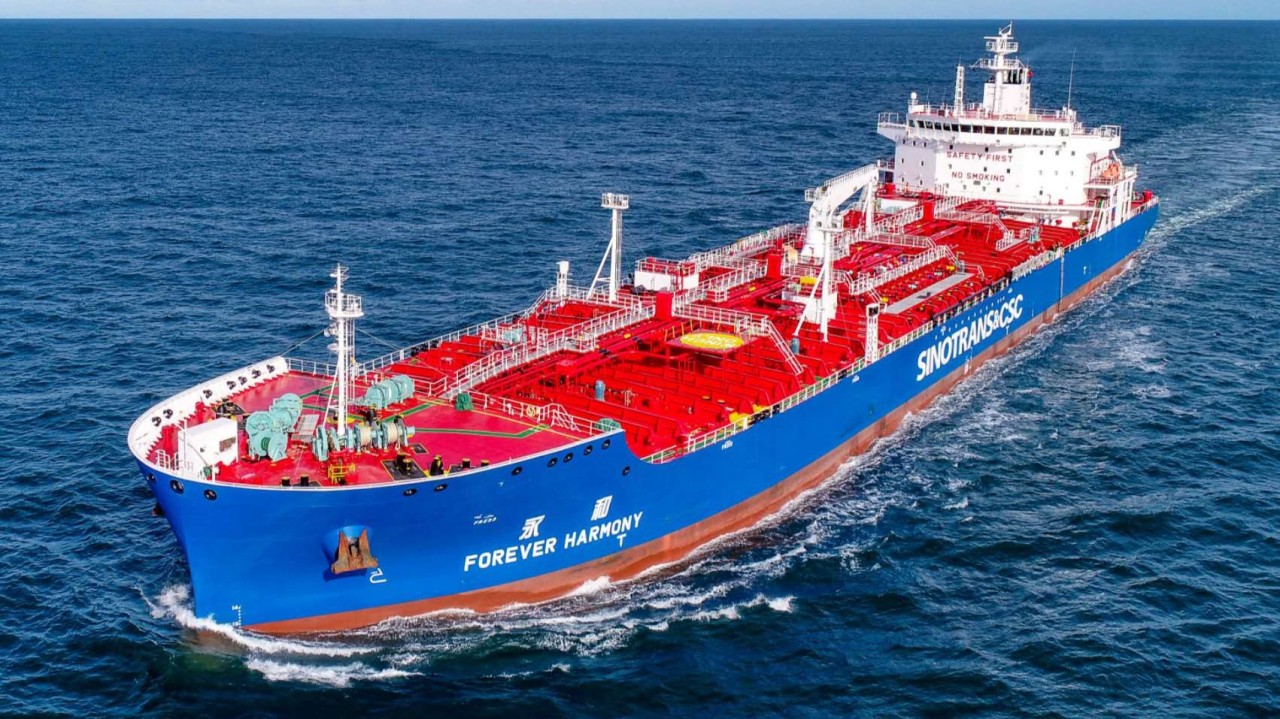

Nanjing Tanker Corporation (NJTC), the Shanghai-listed tanker operator under China Merchants Group, is entering a new phase of fleet renewal and network expansion.
In the first half of 2026, the company reported revenue of RMB 3.309 billion, up 19.37% year on year, while net profit attributable to shareholders rose 42.41% to RMB 812 million. Adjusted net profit, excluding non-recurring items, increased 29.27% to RMB 732 million. At current exchange rates, those figures are equivalent to approximately $493 million in revenue and $121 million in net profit. Yet the earnings recovery tells only part of the story. Alongside a stronger financial performance, NJTC has been selling older MR tankers, committing capital to a broad newbuilding programme, and moving to acquire Nanjing Changjiang Oil Transportation Logistics Co., Ltd. for RMB 683.7 million, or roughly $102 million. Taken together, these moves point to a wider restructuring of the company’s fleet, cargo mix and transport network.
Earnings recover as fleet restructuring accelerates
NJTC’s recent earnings trajectory reflects the cyclical nature of the tanker market. The company posted net profit of RMB 1.921 billion in 2024, before earnings fell to around RMB 1.311 billion in 2025 as the international clean petroleum products market weakened. The trend reversed this year. First-quarter 2026 net profit reached RMB 432 million, up 51.73% year on year, and first-half earnings subsequently rose to RMB 812 million. Revenue growth also outpaced costs: while turnover increased 19.37%, operating costs rose 13.46% to around RMB 2.321 billion, indicating a genuine improvement in underlying operating performance.
Asset disposals also contributed. During the first half, NJTC completed the sale of four MR tankers, generating approximately RMB 78.9 million in asset disposal gains, compared with only RMB 2.4 million in the same period last year. The disposal gains clearly supported reported earnings, but they do not fully explain the improvement: adjusted net profit still increased nearly 30%. The broader pattern is therefore one of simultaneous earnings recovery and asset optimisation. In a tanker market where freight rates, secondhand vessel prices and asset values can move sharply through the cycle, disposing of older tonnage while values remain supportive can release capital and reduce future repair, dry-docking and compliance costs. NJTC’s decision to sell older MR vessels while continuing to order new MRs fits directly into that logic: the company is replacing ageing assets rather than stepping away from the segment that remains central to its commercial position.
A 22-vessel newbuilding pipeline is changing the fleet mix
As of 30 June 2026, NJTC operated 73 vessels with combined capacity of 2.8042 million dwt. The fleet consisted of 24 crude oil tankers, 34 product tankers, 12 chemical tankers and three gas carriers. MR tonnage remains the most recognisable part of the fleet and continues to underpin NJTC’s position in both domestic and east-of-Suez product trades. The company also maintains a substantial presence in domestic and regional crude and fuel oil transportation, while its chemical tanker business ranks among the larger specialist fleets in China and its ethylene transportation activities give it an established position in the gas segment.
The composition of the fleet is now broadening. At the end of June, NJTC had 18 vessels totalling 876,900 dwt under construction: six 65,000-dwt Panamax crude tankers, four 50,000-dwt MR product tankers, two 115,000-dwt LR2 tankers, five chemical tankers and one gas carrier. In July, the company approved a further investment of up to $182.8 million for four 50,000-dwt MR product/chemical tankers at Guangzhou Shipyard International. Including these vessels, NJTC’s disclosed newbuilding programme has expanded to 22 ships.
The significance lies in the range of ship types rather than the headline number alone. NJTC has traditionally been closely associated with the MR sector, but the incoming fleet stretches from smaller stainless-steel chemical carriers through MR tankers and 65,000-dwt Panamax units to 115,000-dwt LR2s. That creates a broader operating ladder across crude oil, refined products, chemicals and gases. Panamax tonnage can reinforce crude and fuel-oil transportation, LR2s provide greater capacity for longer-haul product trades and selected crude movements, while MR vessels remain the core workhorses of the refined-product and oil/chemical business. Smaller specialist vessels allow the company to serve higher-value chemical and gas cargoes. Once delivered, the mix should give NJTC more flexibility across cargoes and geographies and reduce the degree to which overall earnings depend on any single tanker segment.
The newbuilding programme also reflects a more cautious approach to decarbonisation. NJTC has said its new ships are being designed with provisions for future methanol dual-fuel and biofuel systems, while incorporating optimised hull forms, high-efficiency propellers, hydrodynamic energy-saving devices and intelligent energy-management systems. Some of the new MR designs are expected to achieve EEDI performance more than 30% below the relevant baseline. The company is also working with China Classification Society Guangzhou Branch and Guangzhou Shipyard International on a carbon-footprint demonstration project for its new MR vessels. Rather than committing the fleet wholesale to one alternative fuel at a time when the long-term fuel pathway remains unsettled, NJTC is improving baseline efficiency while preserving optionality for future fuel conversion.
The RMB 684 million acquisition is about the Yangtze network
NJTC’s proposed acquisition of Nanjing Changjiang Oil Transportation Logistics is strategically different from its newbuilding programme. The deal, announced on 28 August, would see NJTC pay RMB 683.7 million in cash for 100% of the target company. The business itself is not large enough to transform NJTC’s earnings profile in the near term. At the end of March 2026, Nanjing Changjiang Oil Transportation Logistics had total assets of approximately RMB 974 million and net assets of about RMB 530 million. It generated revenue of roughly RMB 546 million and net profit of RMB 24.3 million in 2025, followed by revenue of around RMB 170 million and net profit of RMB 15.5 million in the first quarter of 2026.
Its value lies in the transport network it brings into the listed company. According to the asset valuation materials, the target company’s vessel assets comprise 99 units with total capacity of around 306,400 dwt: 31 oil tankers, 56 oil barges, 11 tugs or push boats and one LPG carrier. The figure should not be read as 99 conventional self-propelled tankers, nor should it simply be added to NJTC’s 73-vessel ocean-going fleet. The composition is typical of a large inland liquid-bulk transport system, where barges, tugs and push boats operate together as part of an integrated river logistics network.
This distinction also explains why tonnage alone understates the strategic relevance of the acquisition. The target’s 306,400 dwt is only a little over one-tenth of NJTC’s existing 2.8 million-dwt fleet. Yet inland liquid transportation depends on more than carrying capacity. Operating licences, knowledge of Yangtze River routes, established customer relationships, terminal interfaces, barge deployment and long-standing operating procedures are all difficult to recreate quickly. By acquiring those resources, NJTC gains a more direct foothold in the inland section of the liquid-bulk supply chain.
The company already has strong capabilities in ocean-going, coastal and sea-river transportation. Once cargo moves deeper into the Yangtze River system, however, larger seagoing tankers cannot simply continue the voyage. Inland tankers, barges and tug or push-boat combinations are required to complete the transport chain. Bringing Nanjing Changjiang Oil Transportation Logistics into the listed company therefore gives NJTC a way to connect ocean transportation, coastal trades, sea-to-river movements and inland river distribution under a more unified operating structure.
From “oil, chemicals and gas” to “river, sea and ocean”
NJTC describes its business strategy through three linked concepts: coordinated development across oil, chemicals and gas; participation in both domestic and international trades; and direct connectivity across river, sea and ocean transportation. Its recent investments are gradually giving those ideas a more concrete asset base.
On the cargo side, the company is expanding beyond its historical MR focus through LR2s, Panamax tankers, chemical carriers and gas vessels. On the international side, its Singapore operation has become increasingly important. In the first half of 2026, Nanjing Tanker (Singapore) generated revenue of about RMB 1.398 billion and net profit of approximately RMB 414 million, underlining the role of the overseas platform in NJTC’s international business. Its MR Pool also allows the company to expand commercially controlled capacity and share cargo space without relying exclusively on owned vessels.
The Yangtze acquisition extends the third part of the strategy. Ocean-going vessels can handle long-haul movements, MRs and LR2s can serve international and coastal liquid trades, and once cargoes move inland, river tankers, barges and tug systems can take over. For refiners, energy companies and chemical producers, that potentially allows a larger share of the transport chain to be organised through one shipping platform rather than a series of unrelated carriers.
That shift could gradually change the way NJTC’s competitive position is assessed. Fleet size in MR tankers and total deadweight capacity will remain important, but the company’s ability to coordinate multiple ship types, cargoes and transport stages may become increasingly relevant. The objective is no longer simply to carry one parcel from one port to another; it is to control more of the liquid-bulk logistics chain from ocean passage through coastal transfer and into the Yangtze hinterland.
Integration, not acquisition, will determine the value created
The transaction also brings challenges. Part of the inland fleet is relatively old, and a number of barges and tug units are expected to require retirement or replacement over the coming years. NJTC will therefore inherit not only an established inland network but also future capital requirements associated with fleet renewal. In addition, the commercial and operational model of an international tanker fleet is very different from that of a Yangtze barge and tug system. Ocean tanker operations are heavily influenced by voyage economics, freight cycles and global deployment, while inland transportation depends more on stable customer relationships, terminal coordination, route planning and intensive operational and safety management.
The assets can be transferred into the listed company relatively quickly; operational integration will take longer. The potential value of the acquisition will depend on how effectively NJTC links customers, fleet scheduling, commercial management and capital allocation across its existing seagoing operations and the inland network. The RMB 683.7 million price therefore represents the entry point into a broader restructuring process rather than the completion of it.
NJTC enters that process with a relatively strong financial position. At the end of June, cash and cash equivalents stood at around RMB 5.043 billion, while long-term borrowings were only about RMB 371 million. That balance sheet provides room for the company to fund both the acquisition and a substantial newbuilding programme over the next several years. As the 22 new vessels are delivered, older ships are removed and the Yangtze assets are integrated and progressively renewed, the company’s fleet profile and earnings mix could look materially different from today.
For years, NJTC has been best known as a major MR product tanker operator. MR will remain a central part of the business, but the company’s boundaries are widening. LR2s, Panamax tankers, chemical carriers and gas vessels are being added at sea, while inland liquid-bulk resources are being consolidated along the Yangtze. The result is the gradual formation of a transport platform spanning crude oil, refined products, chemicals and gases, and extending from inland river routes to coastal and international markets.
The 42% increase in first-half profit marks an earnings recovery. The larger story is what NJTC is doing with that financial capacity: renewing the fleet, broadening its vessel portfolio and extending control deeper into the liquid-bulk logistics chain.
Currency conversions are approximate and based on an exchange rate of USD 1 = RMB 6.7113 on 7 September 2026.

READ MORE
 Finance
Financing Above 90%: Why Abundant Capital Is Making Shipping Lenders Wary
 Finance
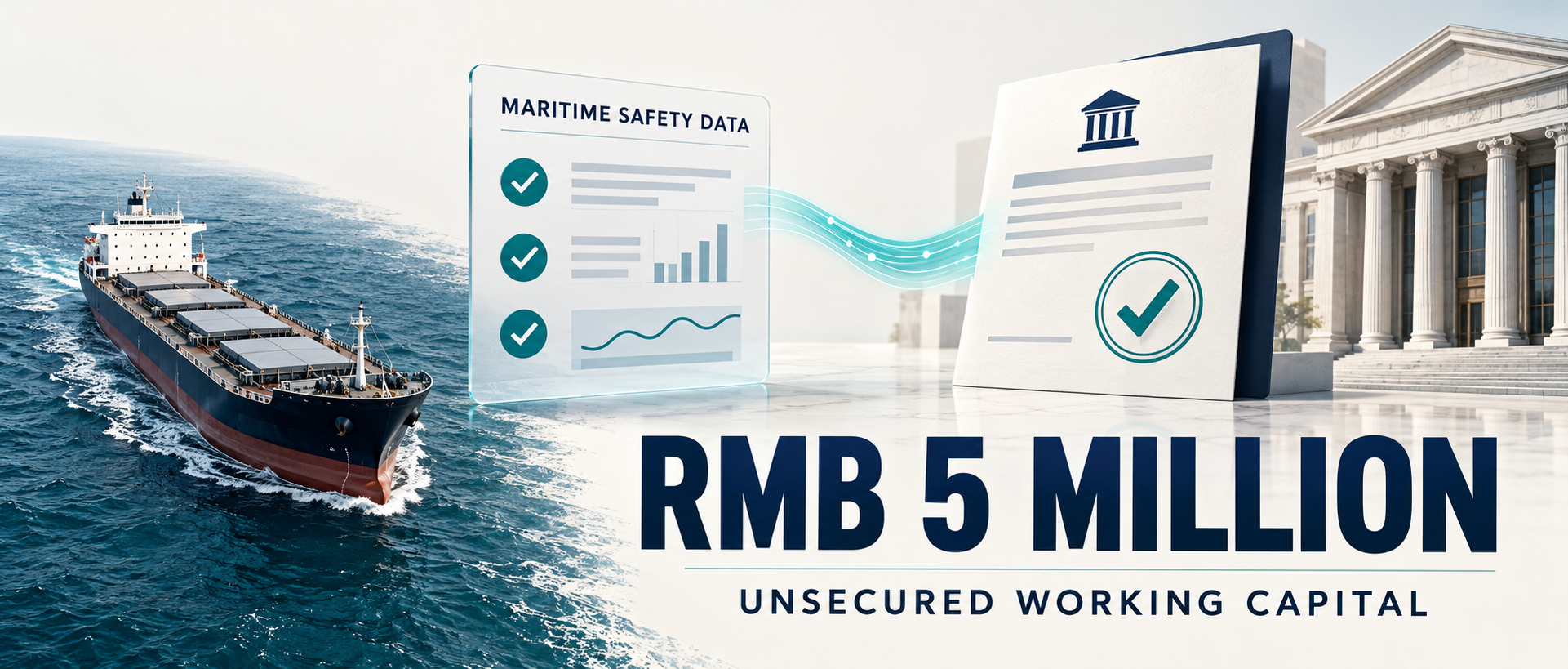
Shanghai links safety records to RMB5m maritime loan
 Finance
“We Are Buying Ships”: NORDEN Raises 2026 Profit Guidance for the Fourth Time
 Finance
Why Is a 40-Year Shipping Investor Expanding into Commodities?
 Finance
Cetus Maritime Advances Oslo IPO Plans with $133.6 Million Seacon Deal
 Finance