

Capital Is Available, but Ship Finance Is Repricing the Risk of Buying the Wrong Vessel


Shipping capital remains plentiful and dollar funding costs have eased from recent highs, but high vessel values, uncertain fuel pathways and changing regulation are forcing lenders and investors to look harder at residual value. At the Xinde Marine Forum Hamburg 2026, the discussion repeatedly returned to three ideas: discipline, optionality and the ability of a ship to retain value when the market changes.
HAMBURG — Access to capital is not necessarily the biggest problem facing shipping investors today.
Choosing the right asset may be much harder.
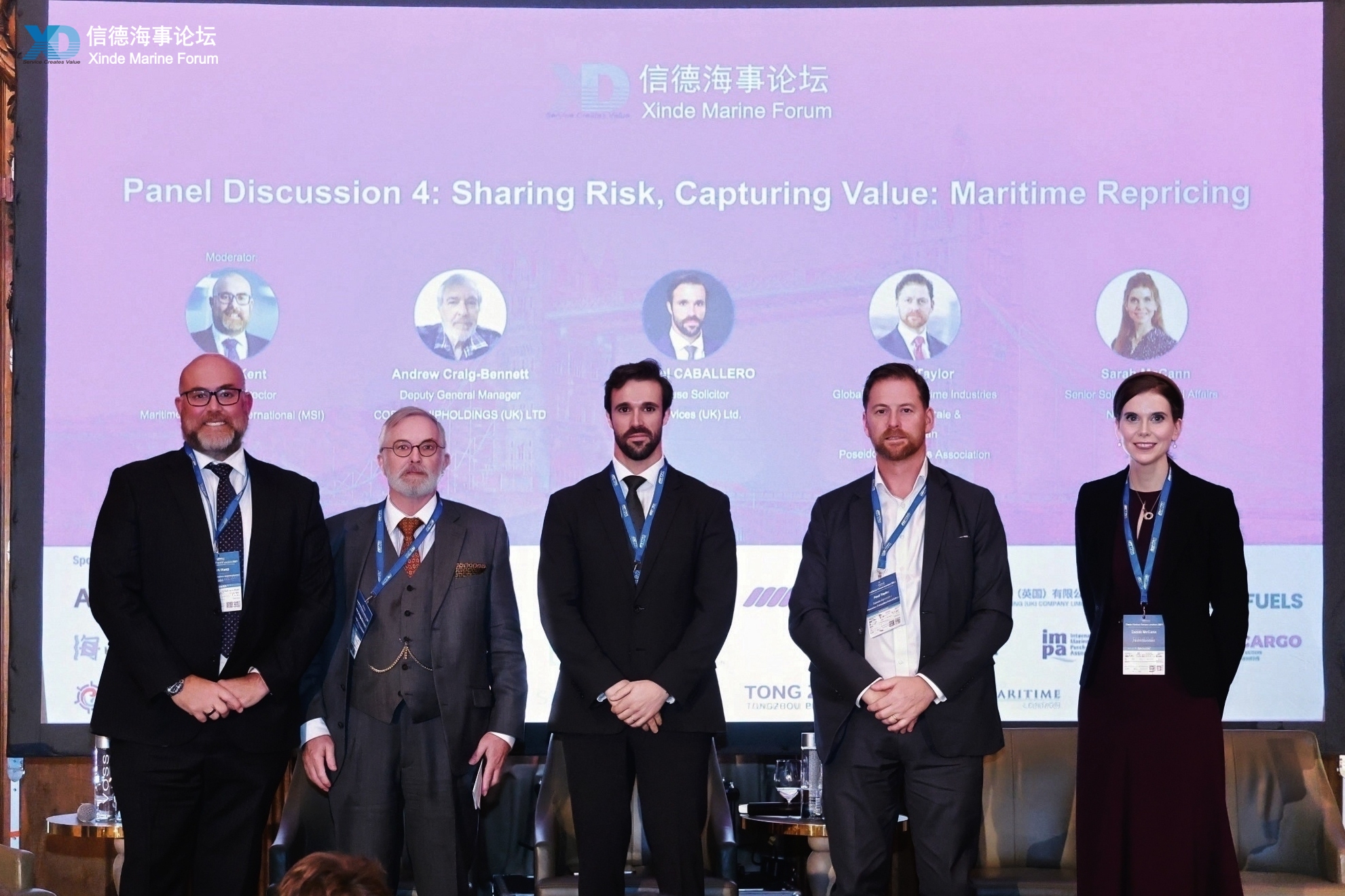
That was one of the clearest messages from the “Shipping Finance and the Repricing of Risk” panel at the Xinde Marine Forum Hamburg 2026, where bankers, shipowners, asset investors and alternative-fuel specialists discussed how shipping risk is changing as vessel prices remain elevated and the industry faces an increasingly complex combination of fuel, technology and regulatory uncertainty.
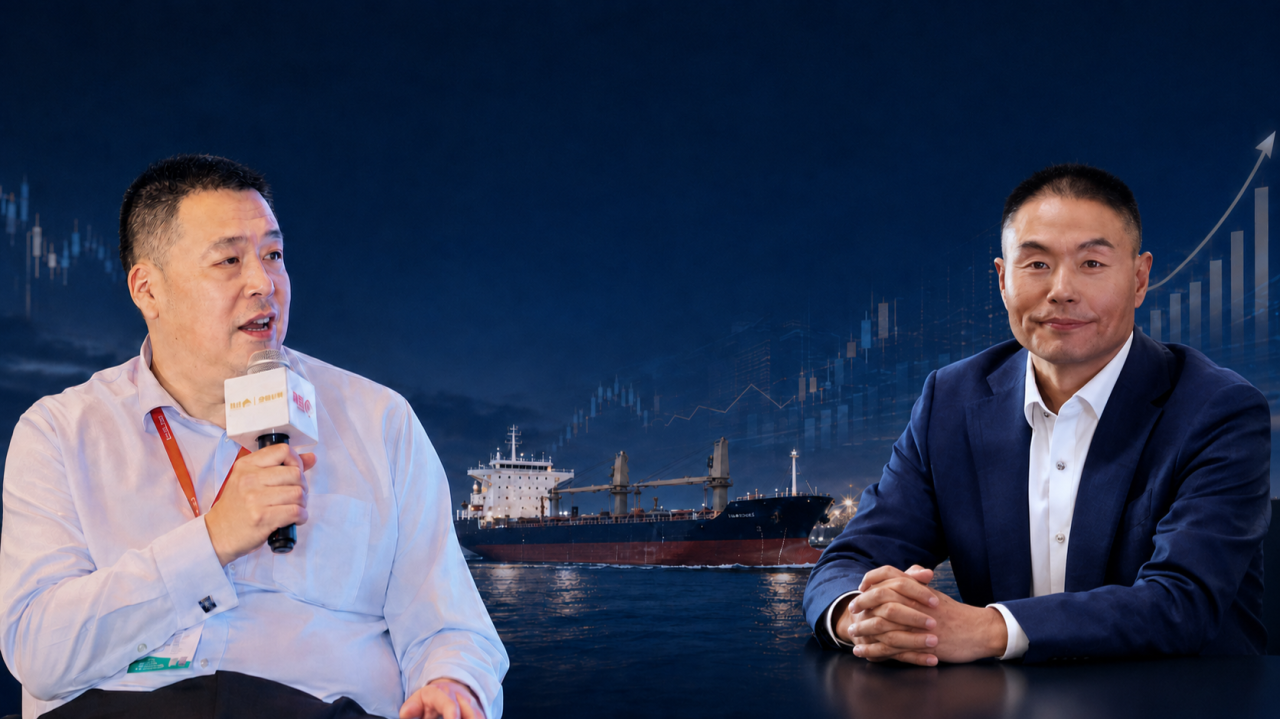
The session was moderated by Jianjun (JJ) Wang, chief executive of Goldsea International Company Limited. Panelists included Aimee Luyue Shen, senior relationship manager in Berenberg’s International Shipping Department; Channing Wang, partner and head of European market at Ebridge Capital; Chris Chatterton, maritime director at the Global Centre for Green Fuels; and Pontus Sergelius, chief investment officer at Seacon Shipping Germany.
Wang opened with a distinctly shipping-market interpretation of risk: disruptions do not always destroy value. COVID-19 produced exceptional container earnings, while the Russia-Ukraine war and other geopolitical changes reshaped tanker trades and tonne-mile demand.
Shipping, in other words, can sometimes monetise disruption if the underlying risk is understood and managed.
But the discussion quickly moved beyond market volatility.
Three words kept resurfacing: discipline, optionality and residual value.
Together, they point to a broader change in ship finance: capital is still looking for maritime assets, but the industry is becoming much more selective about what those assets could be worth five, ten or 20 years from now.
Cheaper funding does not automatically make a vessel a good investment
Dollar financing conditions have eased compared with the peak of the recent interest-rate cycle.
Jianjun (JJ) Wang mentioned, SOFR was running at around 3.6% in late August, with the New York Fed’s 30-day average at 3.65% on August 28.
That matters in a capital-intensive industry where even modest changes in benchmark rates can materially affect vessel-financing costs.

Jianjun (JJ) Wang, chief executive of Goldsea International Company Limited
But Berenberg’s Shen cautioned against making an investment decision simply because borrowing conditions appear more attractive.
A ship-finance decision still needs to be built around the vessel’s long-term earning capacity, expected residual value, operational flexibility and ability to meet future regulatory requirements.
Some shipping companies are in a strong position to invest after several years of healthy earnings and improved balance sheets, she said, but favourable financing conditions alone are not sufficient justification for buying a vessel.
The wider financing market supports that distinction.

Aimee Luyue Shen, senior relationship manager in Berenberg’s International Shipping Department
Berenberg said in an August 24 update that the ship-finance landscape has changed significantly over the past decade as traditional European shipping banks withdrew. Alternative credit investors, private equity and leasing companies have moved into the gap, although conservative senior mortgage financing remains in demand.
The question for many shipowners is therefore no longer simply:Can I raise the money?
It is increasingly:Does this vessel still make sense at today’s price?
Seacon: do not chase “super profits”
Seacon Shipping’s Sergelius put investment discipline at the centre of his approach.
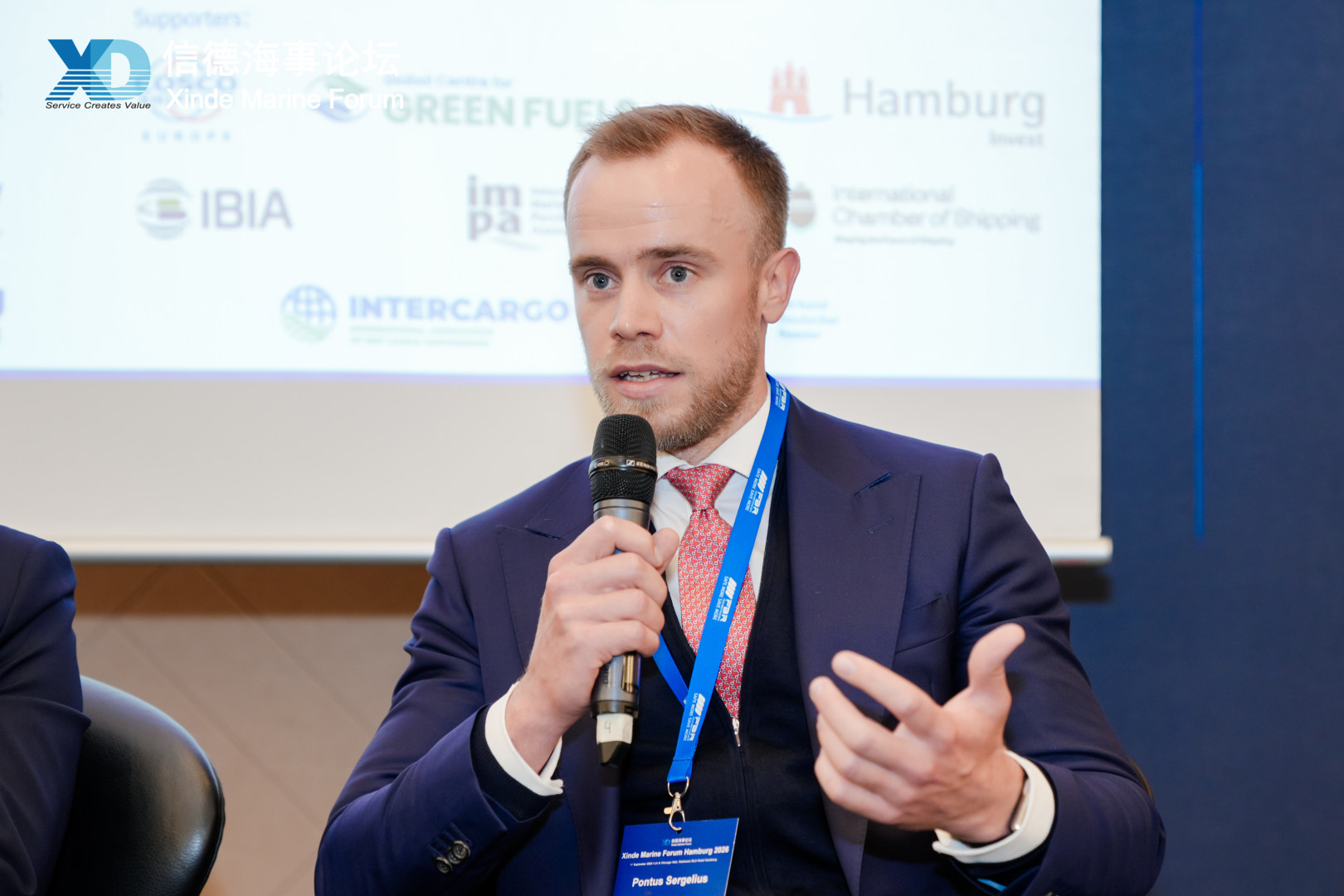
Pontus Sergelius, chief investment officer at Seacon Shipping Germany
Seacon combines shipmanagement, operations and vessel ownership, giving the group exposure across a broad section of the maritime value chain.
But that does not mean every profitable shipping segment belongs in its portfolio.
Sergelius said the company wants to invest where it can use capabilities it already possesses and is prepared to reject opportunities it does not understand well.
He also warned against being carried away by unusually strong earnings generated by geopolitical events.
Shipping companies need to know where they are in the cycle, remain within their areas of expertise and avoid investments that look attractive in the short term but become excessively speculative over a longer horizon.
Seacon’s current fleet strategy illustrates how that approach can still coexist with substantial expansion.
At June 30, 2026, the Hong Kong-listed group controlled 38 vessels and held investments in another 15 vessels through joint ventures, giving it exposure to 53 ships with combined carrying capacity of 1.83 million dwt.
Its average fleet age had fallen to 3.8 years, while 28 vessels remained under construction across directly controlled and joint-venture projects. The company said it adjusts its fleet mix according to customer requirements, market opportunities, environmental rules, cost of capital and expected cash returns.
That is an important distinction.
Expansion is not the investment thesis by itself.
The asset still has to produce an acceptable return.
High ship prices change the equation
Ebridge Capital’s Channing Wang approached the same issue from the perspective of a private maritime asset investor.
He said many mainstream newbuilding and secondhand vessel values are already near historically high levels.
That has made Ebridge cautious about simply following the latest ordering wave.

Channing Wang, partner and head of European market at Ebridge Capital
According to Wang’s remarks at the forum, the firm is investing in and managing around 70 vessels across dry bulk, smaller LPG and offshore assets, yet its current newbuilding programme is relatively modest compared with the scale of the overall portfolio.
Instead, the company continues to watch more specialised areas including semi-submersible heavy-transport vessels and medium-sized PCTCs.
The logic is deliberately counter-cyclical.
Ebridge began operating in 2017, when dry bulk markets and asset values were still depressed and many European banks and funds were reducing their shipping exposure.
Wang argued that private investment capital can sometimes exploit precisely those moments when conventional lenders are reluctant to deploy money.
That produces one of the simplest but most important lessons from the panel:
Lower funding costs cannot compensate indefinitely for overpaying for the asset.
In shipping, the purchase price can matter more than a relatively small difference in loan margin.
The new residual-value question: what will a “green” ship be worth in 2035?
The investment calculation is now more complicated than in previous shipping cycles because owners are not only making a call on freight markets.
They are also making a call on technology.
A vessel ordered in 2026 could still be trading well into the 2040s.
Owners today can choose LNG dual fuel, methanol, ammonia-ready configurations, battery-hybrid systems and a growing range of fuel-ready designs.
But no one can say with confidence which fuel will be widely available in 2035, what it will cost, which bunkering networks will have developed, or how different fuels will be treated by global and regional regulation.
That creates a direct valuation problem.
Wang asked Chatterton how an investor should value an asset when its propulsion technology could become commercially disadvantaged long before the ship reaches the end of its physical life.
Chatterton’s answer was not to try to predict a single winner.
His recommendation was to “assess optionality and value optionality.”
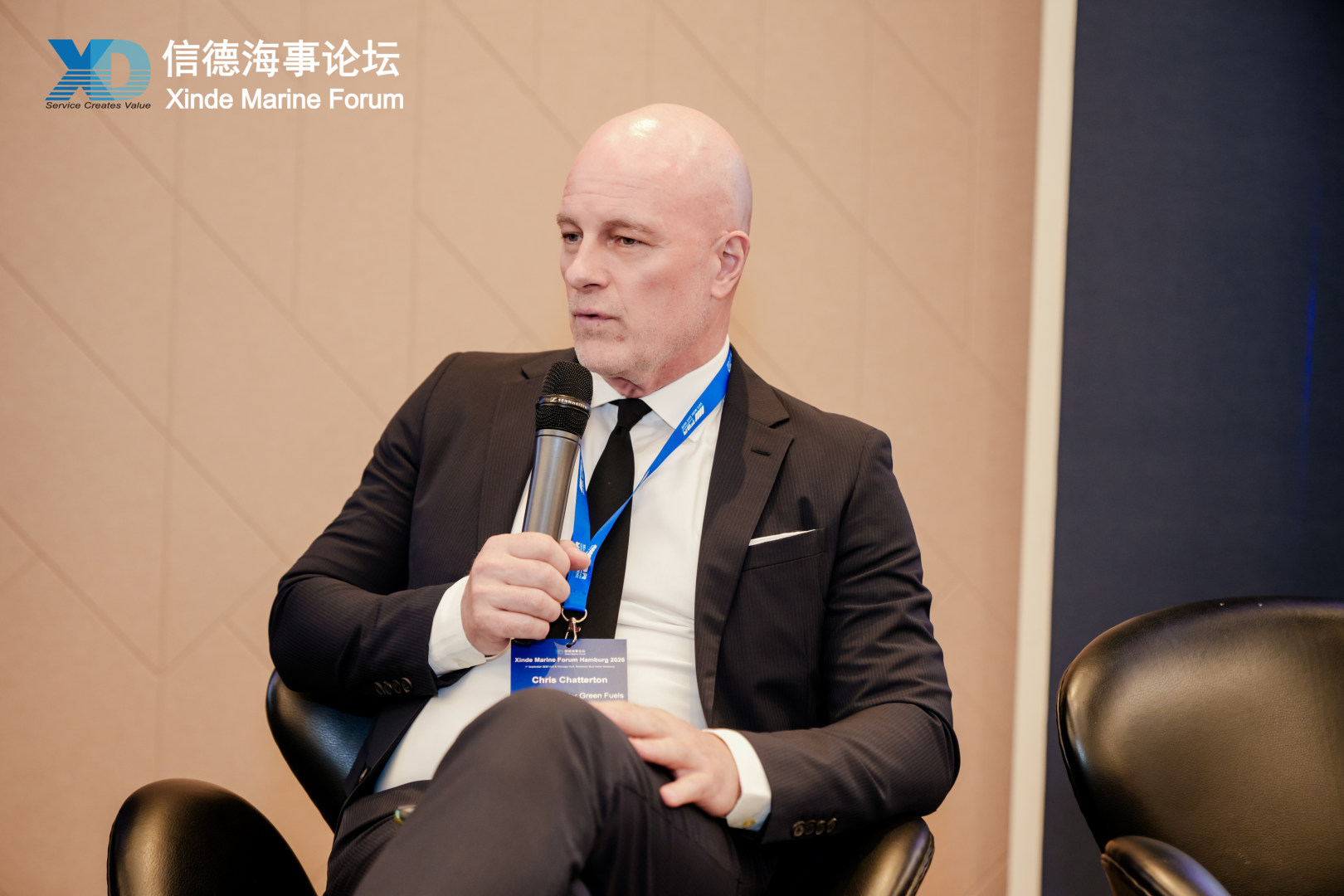 Chris Chatterton, maritime director at the Global Centre for Green Fuels
Investors should consider fuel availability, bunkering infrastructure, technological alternatives and the vessel’s ability to retain different operating options rather than making one irreversible bet on a single future fuel.
A ship is a 20- to 25-year investment, he noted, while nobody can reliably forecast the price of a particular fuel molecule in 2035 or 2040.
The investment question therefore changes from:Which fuel will win?
to:If the original assumption is wrong, what alternatives does the vessel still have?
Banks are beginning to recognise the value of optionality
The same reasoning is beginning to appear in lending decisions.
Shen said Berenberg likes to see vessels with greater operational flexibility, including engines capable of using more than one fuel.
The reason is fundamentally financial.
Such flexibility may support a stronger residual value and could allow a lender to provide higher leverage.
But she added an important qualification: Berenberg does not currently see a clear loan-pricing difference based solely on that feature.
That distinction matters.
Green ship finance is often reduced to a simple formula:
greener vessel = cheaper financing.
The reality described by the bank is more nuanced.
Fuel flexibility may first improve:
-
the pool of future charterers;
-
the ship’s resale liquidity;
-
the expected collateral value;
-
the amount of debt a lender is comfortable providing; and
-
the vessel’s refinancing prospects.
It does not automatically mean a lower lending margin.
The financial value of a lower-emission or fuel-flexible ship is therefore becoming linked to a very traditional shipping-finance concept: residual value.
Fuel risk can become collateral risk
This is why lenders care about what a ship may be able to burn a decade from now.
A vessel is both an operating asset and collateral.
If a future fuel becomes expensive, difficult to source or commercially disadvantaged by regulation, the problem does not stop at the bunker bill.
The ship may attract fewer charterers.
Its trading flexibility may narrow.
The number of potential secondhand buyers may decline.
Its resale value can weaken.
That in turn affects the value of the bank’s collateral and the vessel’s ability to refinance.
The chain looks increasingly like this:
fuel and regulatory risk→ vessel cash flow→ secondhand liquidity→ residual value→ collateral value→ financing terms
That is one of the clearest ways in which shipping risk is being repriced.
Climate considerations are also becoming more deeply embedded in the global lending market.
The Poseidon Principles now have 36 financial-institution signatories representing almost three-quarters of global ship finance. The framework requires participating institutions to assess and disclose the climate alignment of their shipping portfolios.
Berenberg itself is not a Poseidon Principles signatory, Shen noted, but the European institutional investors whose capital it manages still impose ESG requirements.
Environmental performance can therefore affect financing even when a lender is outside a particular industry framework.
Cash flow still comes first
None of this means traditional credit analysis has been replaced by ESG.
Quite the opposite.
Berenberg’s model illustrates how climate considerations ultimately have to sit alongside cash flow, leverage and asset value.
Shen said the bank follows a conservative approach focused on non-recourse asset-based financing and conservative loan-to-value ratios, increasingly investing alongside European institutional capital rather than retaining all exposure on its own balance sheet.
Its relationship with shipping also extends beyond lending.
Berenberg provides maritime cash-management services to around 450 maritime groups worldwide, including owners, operators, ship managers, P&I clubs, brokers and port agencies.
That gives the bank a broad view of how money is actually moving through maritime companies.
The discussion consequently returned to one of the oldest fundamentals in ship finance: cash flow pays the debt.
Propulsion systems can change.
Regulation can change.
Financing structures can change.
But a loan still depends on the asset’s ability to generate enough cash to service it.
Shipping has more sources of capital than before
What is changing rapidly is the range of institutions able to provide that capital.
European shipping banks once dominated much of the market.
Today an owner can potentially combine traditional bank lending with: private credit; institutional capital; Chinese and international leasing;private equity; joint ventures; sale-and-leaseback structures; and public equity.
Berenberg itself is an example of this shift towards institutional money in shipping debt. Its latest shipping-debt material describes a market where alternative credit providers, private equity and lessors have increasingly entered as traditional European banks withdrew.
Seacon demonstrates another dimension of capital flexibility.
Sergelius said being publicly listed gives the company greater transparency and access to international investors.
On the asset side, it also creates another potential transaction tool: shares can be used as acquisition currency rather than relying solely on cash.
That changes the competitive question.
It is no longer simply which shipowner has the largest cash balance.
It is also:Who has the widest range of capital tools?
And:Who can deploy them when the market turns?
Chinese capital is moving beyond simply financing Chinese-built ships
The China dimension of the panel extended well beyond shipbuilding.
Seacon grew from Qingdao into an integrated international maritime group and is now listed in Hong Kong.
Ebridge represents another model.
Channing Wang stressed that the company’s core activity is shipping asset investment, rather than conventional lending. The firm takes direct exposure to vessel values and shipping cycles instead of simply providing debt to owners.
China is simultaneously the world’s largest shipbuilding base and an increasingly important supplier of marine equipment, propulsion systems, renewable energy and potential future marine fuels.
Chatterton argued that this broader industrial base gives China a potentially important position across the shipping energy transition — not only building the vessels, but also producing machinery, engines, renewable power and eventually some of the fuels those vessels may consume.
For capital providers, that broadens the investment problem again.
The commercial viability of a dual-fuel ship may depend not just on the vessel itself, but on whether shipyards, engine makers, fuel producers, bunkering infrastructure and regulation develop together.
The investment is increasingly being made into an ecosystem, not a single piece of steel.
Capital does not automatically create good investments
Wang summed up one side of the market with a simple observation during the panel:
“Money is not the biggest problem. There is a lot of capital in the market.”
The rest of the discussion effectively added the qualification.
Capital availability does not make every vessel attractive.
Lower benchmark rates do not eliminate the risk of paying too much.
A green specification does not guarantee cheaper debt.
And adding fuel options does not guarantee that an asset will retain its value.
For lenders, shipowners and maritime investors, three questions are becoming increasingly difficult to avoid:
Can the vessel’s cash flow service its debt?
If fuel and regulation change, how many operating options will remain?
And five or ten years from now, how many buyers will still want the ship?
Those questions ultimately determine how much debt an asset can support — and how capital should price the risks attached to it.
Shipping finance has always been cyclical.
What has changed is the number of variables that can undermine a vessel’s future value.
In the past, the classic mistake was simply buying too high.
In the next cycle, an owner may get the market right — and still buy the wrong ship.

READ MORE
 Finance
Financing Above 90%: Why Abundant Capital Is Making Shipping Lenders Wary
 Finance
Shanghai links safety records to RMB5m maritime loan
 Finance
“We Are Buying Ships”: NORDEN Raises 2026 Profit Guidance for the Fourth Time
 Finance
Why Is a 40-Year Shipping Investor Expanding into Commodities?
 Finance
Cetus Maritime Advances Oslo IPO Plans with $133.6 Million Seacon Deal
 Finance