


Shandong Shipping and OSM Thome Form Singapore JV
China’s Third-Largest Ocean-Going Shipowner Makes Another Strategic Move in Singapore: Shandong Shipping Forms JV with OSM Thome
Shandong Shipping is taking another step in the internationalization of its business, extending its global footprint beyond the deployment of vessels and overseas commercial operations into the development of a more deeply embedded international ship management and maritime services platform.
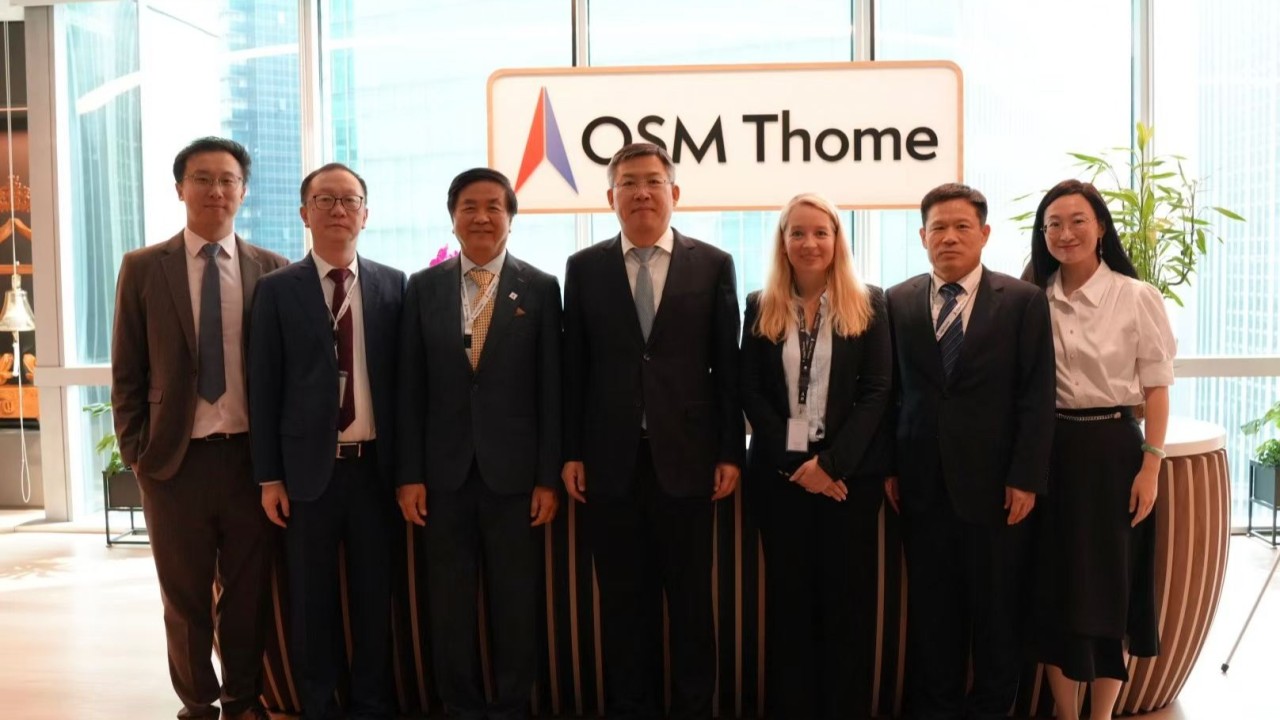
On 16 September, Shandong Shipping Corporation signed a joint venture agreement in Singapore with OSM Thome , one of the world’s largest third-party ship management groups. On the same day, the two sides jointly unveiled the Shandong Shipping Singapore Marketing & Marine Center.
The new joint venture is expected to focus initially on jointly operated ship management and maritime services, while gradually expanding into areas including shipping data analytics, vessel operations management and related marine services. Senior executives from both companies described the agreement as an important milestone in a strategic partnership expected to develop over the next five to ten years.
The deal is significant because the relationship between the two companies did not begin with this agreement. Thome has already been providing ship management services to Shandong Shipping, including technical management for part of its dry bulk fleet. The establishment of a joint venture therefore represents a shift from a conventional owner–third-party manager relationship toward a more integrated, long-term and platform-based partnership.
For Shandong Shipping, whose fleet, newbuilding programme and international business have continued to expand, the implications could eventually extend well beyond the management of a limited number of vessels.
A deeper partnership with one of the world’s largest ship managers
The high-level attendance at the signing underlined the strategic importance attached to the cooperation.
Representing Shandong Ocean Group and Shandong Shipping were Chen Jiangguang, General Manager of Shandong Ocean Group; Duan Yinshan, Deputy General Manager of Shandong Ocean Group; Xu Tao, General Manager of Shandong Shipping; Kong Lingfei, Deputy Director of the Investment and Development Department of Shandong Ocean Group; and Yang Mengjia, Executive Deputy General Manager of Shandong Shipping Tanker Transportation.

OSM Thome was represented by senior executives including COO Asia Lisa Holum, CIO Vassilis Malikides, CFO Frode Garlid, S.O. Lam, Managing Director China Bin Zhou, Managing Director Singapore Ranga Prakash, and Head of Business Development Leiv Rasmussen.
OSM Thome is among the largest players in the global third-party ship management market. Formed through the merger of OSM Maritime and Thome Group in 2023, the company today employs around 31,000 seafarers and shore-based personnel, operates across roughly 20 countries and manages approximately 1,000 vessels across multiple segments, including tankers, bulk carriers, containerships, car carriers, cruise vessels and offshore units.
Its capabilities extend far beyond conventional technical and crewing management. The group is also active in newbuilding supervision, drydocking, procurement, insurance support, crew training, digital fleet management, energy efficiency and decarbonization-related services.
This breadth of capability is especially relevant to Shandong Shipping because the two companies have significant overlap in two of the Chinese owner’s core segments: dry bulk and liquid bulk shipping.
OSM Thome manages a substantial portfolio of bulk carriers and containerships, as well as a large tanker fleet covering chemical tankers, product tankers, crude carriers, shuttle tankers and gas carriers. That gives the company experience in the same operational environments in which Shandong Shipping is continuing to expand.
From outsourcing ship management to building a ship management business together
Shandong Shipping has grown into one of the largest provincial state-owned shipping companies in China and one of the country’s biggest ocean-going shipowners.
According to fleet statistics published by the Shanghai Shipping Exchange, Shandong Shipping operated 88 vessels totalling about 11.25 million dwt at the end of 2025, ranking behind only COSCO Shipping and China Merchants Group among major Chinese shipping groups by ocean-going carrying capacity. The company itself describes its position as China’s third-largest ocean-going shipping enterprise by capacity and the largest provincial shipping company.
Its business structure has developed around ocean transportation as the core, supported by shipping finance and shipping services. Its dry bulk fleet includes very large ore carriers, Newcastlemaxes, Capesizes and Kamsarmaxes, while its liquid bulk business has increasingly expanded into product tankers, chemical tankers and other higher-value segments. Shandong Shipping also already possesses its own ship management and seafarer service capabilities.
Once a fleet reaches more than 10 million dwt, ship management is no longer simply a back-office support function. Safety performance, technical reliability, drydocking, procurement, spares, crewing, insurance, PSC compliance, RightShip performance, SIRE inspections, EU ETS exposure, FuelEU Maritime compliance, CII performance and the technical management of alternative-fuel ships can all directly affect vessel availability, chartering performance and lifetime asset returns.
The technological complexity of Shandong Shipping’s fleet is also increasing. In July this year, the company’s first 325,000-dwt methanol dual-fuel ore carrier was undocked. Compared with conventional vessels, such ships require more sophisticated crew training, fuel management, safety procedures, technical maintenance and operational data monitoring.
Against this background, the formation of a joint venture with OSM Thome can be understood as a move to strengthen global vessel operating capability in parallel with fleet expansion.
Under a conventional third-party management arrangement, an owner pays management fees and delegates technical responsibilities to an external ship manager. A joint venture creates the possibility of much deeper integration around people, systems, procurement, data, standards and customer relationships.
If the new platform eventually begins taking on third-party vessels, its role could move beyond supporting Shandong Shipping’s own fleet and develop into a standalone ship management and maritime services business.
The strategic logic is relatively clear. Shandong Shipping can contribute an owner’s perspective, vessel assets, cargo relationships and access to the Chinese maritime industrial chain. OSM Thome can contribute a mature global ship management framework, international clients, seafarer resources and established operational standards. Together, those capabilities create a potentially competitive platform for serving not only Shandong Shipping but also other Chinese and Asian owners.

Singapore becomes an increasingly important operating hub
The fact that the joint venture agreement was signed together with the unveiling of the Shandong Shipping Singapore Marketing & Marine Center places the cooperation within a broader international strategy.
Shandong Shipping already has a business presence in Singapore. Its subsidiary Xincheng Shipping operates as a Kamsarmax bulk carrier platform from the city-state, using Singapore’s maritime ecosystem to support vessel employment and international market access. The new Marketing & Marine Center suggests that Shandong Shipping is now seeking to concentrate more commercial, operational and marine-management capability in one of the world’s leading shipping hubs.
Singapore has ranked as the world’s leading international maritime centre for many years and hosts more than 200 international shipping groups, alongside dense clusters of banks, insurers, P&I clubs, brokers, classification societies, maritime law firms, arbitration services, ship managers, bunker suppliers and maritime technology companies.
For a Chinese shipowner operating globally, placing part of its commercial decision-making and marine operations in Singapore has direct operational value. Major commodity traders, mining companies, oil majors, shipbrokers, shipping banks and ship management groups are all strongly represented there, while a significant share of dry bulk and tanker trading activity is coordinated from the city.
Operating within the same time zone and commercial ecosystem as customers, charterers, brokers and service providers can shorten decision-making chains and improve responsiveness to rapidly changing market conditions.
There is also significance in locating a “Marketing Center” and a “Marine Center” together.
Commercial decisions and vessel operations are increasingly interconnected. How a charter is structured, how a vessel is routed, what speed it sails, when fuel is purchased, when the ship enters drydock, how energy efficiency is optimized and how operational risks are controlled all ultimately feed into daily TCE performance and lifetime asset returns.
Across the global shipping industry, major owners are increasingly integrating commercial management, technical management, energy efficiency and operational data into a single decision-making framework. Shandong Shipping’s Singapore structure appears consistent with that broader trend.

From operating globally to managing globally
The Shandong Shipping–OSM Thome partnership also carries broader implications for the internationalization of Chinese shipping companies.
The first stage of internationalization is usually fleet globalization: ordering or acquiring ocean-going vessels and deploying them on international trade routes. The next stage requires overseas commercial platforms, financing channels, ship management systems and localized teams that allow operating capability to keep pace with asset growth.
Shandong Shipping has already established dry bulk management and offshore financing platforms in Hong Kong, as well as a Kamsarmax operating platform in Singapore. The new Marketing & Marine Center, combined with a joint venture with an international ship manager overseeing around 1,000 vessels, adds another layer to that overseas operating infrastructure.
The key question now is how broad the joint venture’s eventual business scope will become.
So far, the parties have not disclosed the shareholding structure, the number or types of vessels that will initially be managed, or specific targets for third-party ship management. However, they have made clear that the platform will be used to deepen cooperation in joint ship management, maritime services and emerging markets, while improving efficiency in shipping data analysis, vessel operations and related marine services.
That points to at least three potential directions.
The first is to manage part of Shandong Shipping’s existing and future fleet. The second is to deploy OSM Thome’s international technical and operational systems to support Shandong Shipping’s increasingly large, green and technologically complex vessels. The third is to use the combined resources and brands of both companies to serve third-party shipowners in China and wider Asia.
If the third direction develops meaningfully, the strategic significance of the joint venture would increase considerably. Shandong Shipping would not only be a shipowner and vessel operator, but also a participant in the international ship management and marine services market. Its maritime services business could then evolve from an internal support and cost centre into an externally revenue-generating business platform.
The five-to-ten-year timeframe cited by senior executives on both sides suggests that this should be viewed as a long-term strategic arrangement rather than a limited operational cooperation.
For a shipowner with more than 10 million dwt of capacity and a growing portfolio of large, greener newbuildings, the next stage of competitiveness will increasingly depend on the ability to combine vessel assets, global markets, technical management, seafarers, data and marine services into one efficient operating system.
The agreement signed in Singapore on 16 September can therefore be seen as another building block in that system. Shandong Shipping’s internationalization is moving beyond the question of where its ships trade. It is increasingly about where its commercial teams, management capabilities and maritime service infrastructure are embedded — and Singapore is becoming one of the key nodes in that network.

READ MORE
 Finance
Net Profit Jumps 42% as NJTC Reshapes Its Liquid-Bulk Shipping Network
 Finance
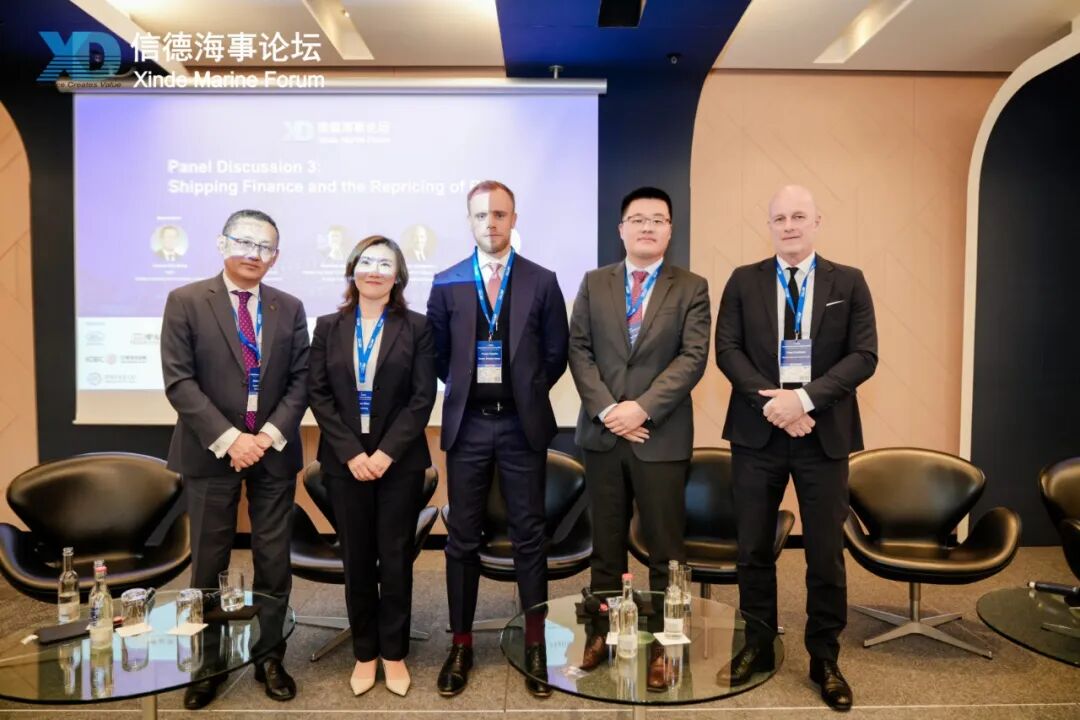
Capital Is Available, but Ship Finance Is Repricing the Risk of Buying the Wrong Vessel
 Finance
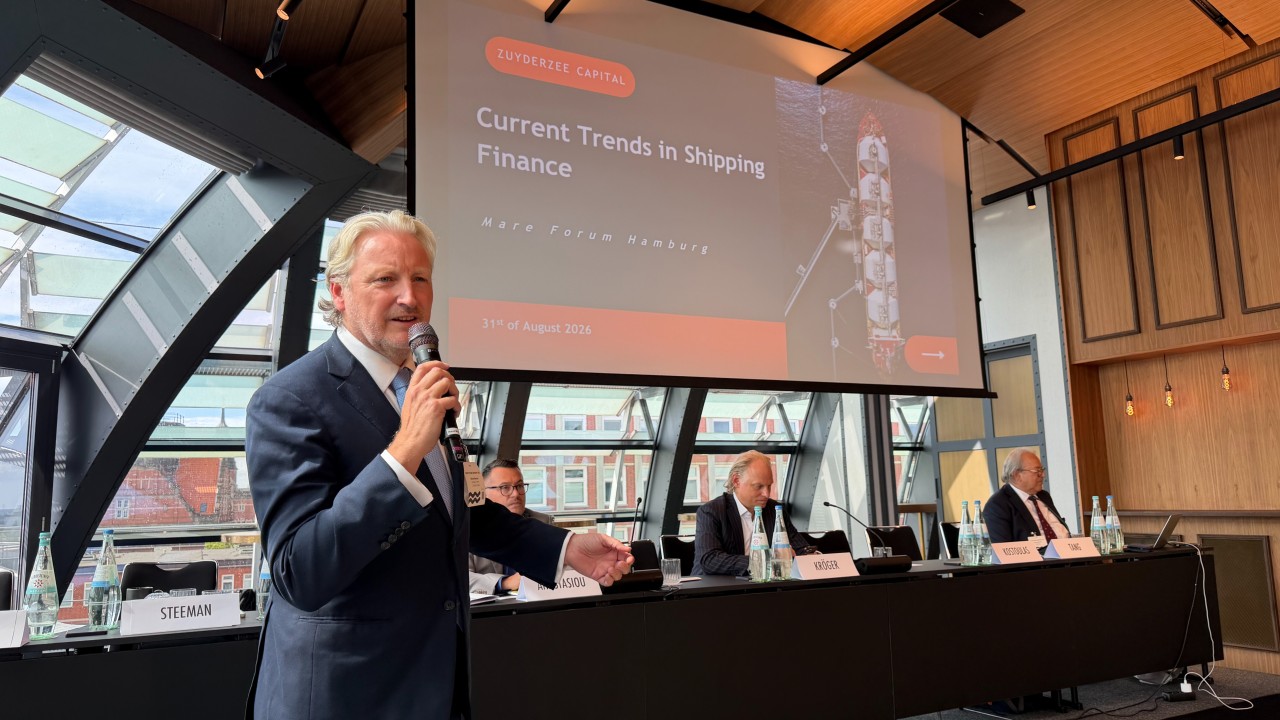
Plenty of Capital, Yet Ships Still Struggle for Financing: The Structural Mismatch Reshaping Ship Finance
 Finance
From RMB 1.87 Billion to RMB 4.55 Billion: What Changed at COSCO Shipping Energy in One Year?
 Finance
COSCO SHIPPING Specialized Posts $202 Million H1 Profit as Second-Quarter Earnings Double
 Finance
Revenue Tops $200m as Seacon Shipping’s Attributable Profit Jumps 44.7%
 Finance
Hengli Heavy Industries Posts RMB 23.5bn Revenue and RMB 3.6bn Net Profit as H1 Orders Reach 207 Ships
 Finance
Sinotrans underlying profit rises 17% as revenue contracts
 Finance
Volumes Fell 0.9%, Yet Profit Rose 23.3%: T.S. Lines Earns US$233 Million in Six Months
 Finance