


Pacific Basin’s H1 Profit Surges 310%, Already Exceeding Full-Year 2025 Earnings
Handysize and Supramax earnings climbed sharply, Q3 contracted rates moved even higher, while the company continued to renew a fleet of around 254 vessels with 10 newbuildings on order
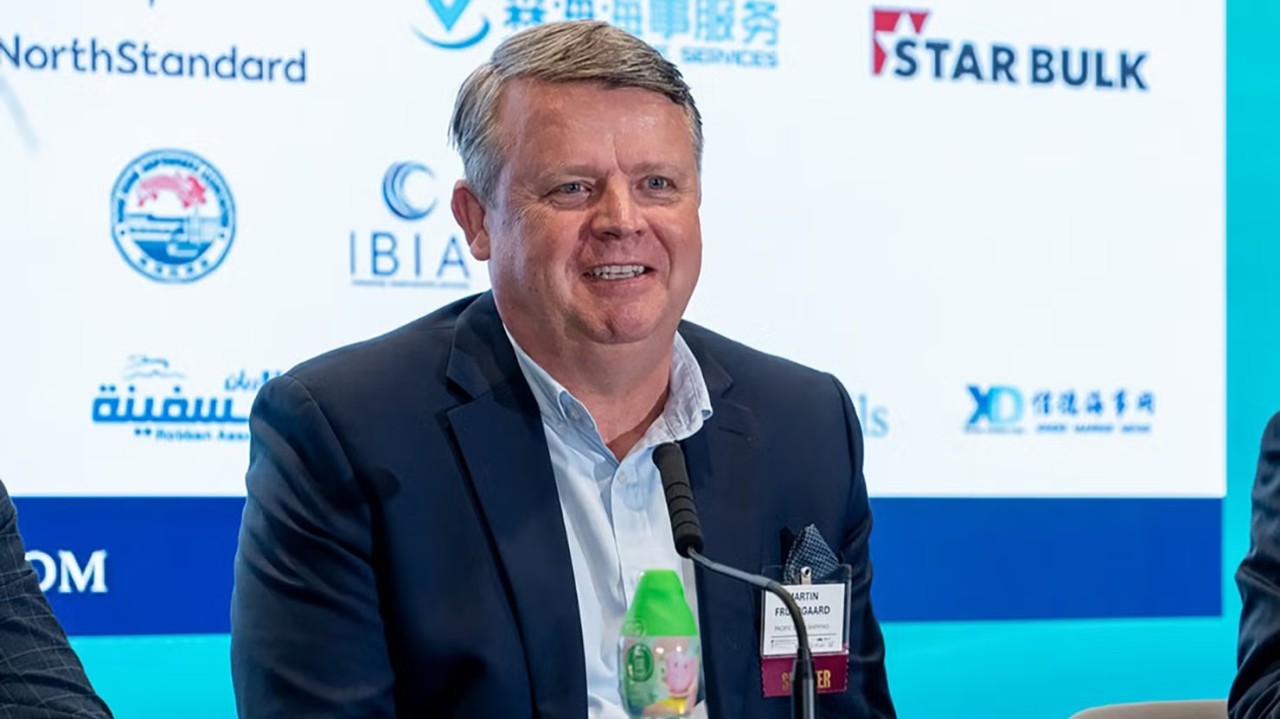

Pacific Basin Shipping Limited delivered a sharp earnings rebound in the first half of 2026 as stronger dry bulk markets, longer sailing distances and improved returns from its core Handysize and Supramax fleet translated into substantially higher profits.
The Hong Kong-listed dry bulk owner and operator reported on August 6 that revenue for the six months ended June 30, 2026 rose 8.5% year on year to US$1.106 billion.
EBITDA increased about 63% to US$197.8 million, compared with US$121.5 million in the same period last year, while underlying profit surged to US$94.9 million from US$21.9 million.
Net profit attributable to shareholders jumped to US$105 million, up around 310% from US$25.6 million a year earlier. Basic earnings per share increased to 16.1 Hong Kong cents from 3.9 Hong Kong cents.
The scale of the rebound is even clearer when compared with Pacific Basin’s full-year 2025 result.
The company earned just US$58.2 million in net profit for all of 2025, meaning its profit in the first six months of 2026 was already around 1.8 times last year’s full-year figure.
Pacific Basin’s board also substantially increased shareholder returns, declaring an interim dividend of HK15.5 cents per share, equivalent to around 100% of net profit excluding vessel disposal gains. The company paid an interim dividend of just HK1.6 cents per share a year earlier.
Handysize and Supramax earnings jump
The improvement was driven primarily by much stronger returns from Pacific Basin’s two core vessel segments.
The company’s Handysize fleet generated an average time charter equivalent, or TCE, rate of US$14,150 per day in the first half, up around 29% from US$11,010 per day in the same period of 2025.
Its Supramax fleet achieved an average TCE of US$16,550 per day, up roughly 35% from US$12,230 per day a year earlier.
Pacific Basin also continued to outperform the wider market.
Its Handysize earnings were around US$1,950 per day, or 16%, above the adjusted 38,000-dwt Baltic Handysize Index benchmark, while Supramax earnings exceeded the 58,000-dwt Baltic Supramax Index by US$2,370 per day, or about 17%.
The company said scrubbers installed on 32 of its core Supramax vessels contributed around US$240 per day to earnings.
Core business contribution before overheads reached US$123.7 million, up 144% year on year, while operating activities contributed a further US$13.4 million, representing a 49% increase. Daily margin from its operating activities averaged US$1,060.
Pacific Basin said its scale and global cargo network allow it to combine relatively scarce backhaul cargoes with fronthaul employment, reduce ballast legs and improve vessel utilisation.
Its fleet also handles parcel cargoes, deck cargoes and other higher-value minor bulk shipments, helping the company consistently outperform benchmark indices.
Costs remained tightly controlled.
The combined cash breakeven levels for its core Handysize and Supramax fleets were around US$6,790 per day and US$6,760 per day, respectively, more than 40% below average market indices during the period.
With realised TCE earnings now above US$14,000 to US$16,000 per day, the gap between revenue and cash breakeven costs has widened considerably, providing a strong operating leverage effect across Pacific Basin’s owned and long-term chartered fleet.
Strait of Hormuz disruption lengthens voyages
The stronger dry bulk market has also been closely linked to geopolitical disruption.
Pacific Basin said dry bulk freight rates strengthened through the first half of 2026 as geopolitical events and trade inefficiencies tightened effective vessel supply.
In particular, disruption surrounding the Persian Gulf pushed freight rates at one stage to their highest levels since the second half of 2022.
During periods when transit through the Strait of Hormuz was severely restricted, Pacific Basin estimated that as much as around 2% of the global non-Capesize dry bulk fleet was temporarily caught up in the affected region.
Exports of fertiliser, cement, clinker and aggregates from the Persian Gulf were also disrupted, forcing some buyers to source cargoes from more distant suppliers.
The resulting longer voyages increased tonne-mile demand and further tightened available vessel capacity.
Pacific Basin transported around 36.5 million tonnes of cargo during the first half of 2026.
Although actual cargo volumes declined as some trade flows were disrupted, average sailing distances increased, supporting overall tonne-mile demand.
Its cargo mix remained focused on minor bulks, with agricultural products and related commodities accounting for 28%, construction materials 27%, energy commodities 17%, metals 16% and minerals 12%.
The company said none of its owned vessels or seafarers had been directly affected by the Persian Gulf situation.
Its bunker procurement and risk-management arrangements also helped mitigate fuel-price volatility, while its largely spot-oriented business model allowed higher fuel and insurance costs to be passed through relatively quickly in stronger freight rates.
Q3 contracted rates climb further
Forward bookings suggest that Pacific Basin’s earnings momentum remained firm entering the second half.
By the end of July, the company had covered around 78% of its third-quarter Handysize days at an average TCE of US$15,810 per day.
Around 82% of its Supramax days were covered at US$18,680 per day.
Both figures are materially above the average rates achieved during the first half of the year.
For the full second half, Pacific Basin had covered 54% of its Handysize days at around US$14,850 per day, while 60% of Supramax days had been covered at approximately US$17,470 per day.
This provides the company with a relatively strong earnings base for the remainder of the year, although Pacific Basin stopped short of offering an unequivocally bullish market outlook.
Citing Clarksons Research, the company noted that dry bulk fleet supply growth could still exceed demand growth in the near term, while geopolitical developments, macroeconomic conditions and environmental regulation remain significant sources of volatility.
At the same time, longer trading distances and reduced trade efficiency could continue to support tonne-mile demand and vessel utilisation.
Around 254 vessels under operation
As of the end of June, Pacific Basin owned 106 Handysize, Supramax and Ultramax dry bulk vessels, together with one long-term bareboat-chartered Capesize vessel.
Including chartered tonnage, the company operated around 254 vessels.
The operating fleet comprised approximately 115 Handysize vessels, 138 Supramax and Ultramax vessels, and one Capesize, with total carrying capacity of around 5 million dwt.
Pacific Basin is also continuing to renew its fleet.
The company currently has 10 newbuildings on order, comprising six Handysize vessels and four Ultramax bulk carriers.
In April, Pacific Basin revised an earlier plan for four 64,000-dwt methanol dual-fuel Ultramax newbuildings in Japan, replacing them with four latest-generation, high-efficiency conventionally fuelled vessels.
The four ships are priced at a combined US$156.8 million, or US$39.2 million each, and are scheduled for delivery between 2028 and the first half of 2029.
At the same time, Pacific Basin retained options for two additional methanol dual-fuel Ultramax vessels.
The company also expanded its 40,000-dwt Handysize newbuilding programme at Jiangmen Nanyang Ship Engineering, or JNS, from four vessels to six.
The six ships have a combined contract value of around US$178.8 million, equivalent to US$29.8 million per vessel.
Pacific Basin said it remains positive on the long-term fundamentals of the geared minor bulk segment, particularly as the global fleet continues to age while shipyard capacity constrains new supply.
The company believes this environment could create further opportunities for financially strong owners to renew their fleets and make counter-cyclical investments.
US$674 million of liquidity
The stronger earnings environment has also reinforced Pacific Basin’s balance sheet.
At the end of June, the company held US$206.5 million in cash and deposits, while borrowings had fallen to US$49.3 million from US$136.5 million at the end of 2025.
Net cash therefore increased to US$157.2 million, compared with US$134 million at year-end.
Pacific Basin also had US$467.1 million of undrawn committed credit facilities, taking total committed liquidity to US$673.6 million.
Operating cash flow for the first half reached around US$143.5 million.
The estimated market value of the company’s owned fleet stood at approximately US$2.07 billion, compared with a net book value of US$1.56 billion, implying more than US$500 million of additional asset value above carrying value.
After navigating one of the weakest dry bulk markets in recent years during early 2025, Pacific Basin is now benefiting from a combination of stronger Handysize and Supramax freight rates, longer trading distances, continued outperformance of market indices and a relatively low cash cost base.
With net profit of US$105 million in the first six months already well above the US$58.2 million earned during the whole of 2025, and third-quarter contracted rates running above first-half averages, the improvement in the dry bulk market is now feeding directly into Pacific Basin’s earnings, cash generation and shareholder returns.


READ MORE
 Finance
Shipping’s Risk Equation Is Being Repriced as Finance, Insurance and Contracts Adapt
 Finance
Shandong Shipping and OSM Thome Form Singapore JV
 Finance
From RMB 1.87 Billion to RMB 4.55 Billion: What Changed at COSCO Shipping Energy in One Year?
 Finance
HEIDMAR - Scaling for Growth: Capitalizing on Favorable Market
 Finance
Net Profit Jumps 42% as NJTC Reshapes Its Liquid-Bulk Shipping Network
 Finance
Capital Is Available, but Ship Finance Is Repricing the Risk of Buying the Wrong Vessel
 Finance
Plenty of Capital, Yet Ships Still Struggle for Financing: The Structural Mismatch Reshaping Ship Finance
 Finance
COSCO SHIPPING Specialized Posts $202 Million H1 Profit as Second-Quarter Earnings Double
 Finance
Revenue Tops $200m as Seacon Shipping’s Attributable Profit Jumps 44.7%
 Finance