


From a 500-DWT Steamer to 184 Ships: How Three Generations Built the Angelicoussis Shipping Group
.
With 162 vessels on the water and another 22 on order, the Angelicoussis Group has developed from a small post-war Greek shipping venture into one of the world’s largest privately owned maritime groups, spanning dry bulk, conventional tankers, LNG carriers and offshore shuttle tankers.
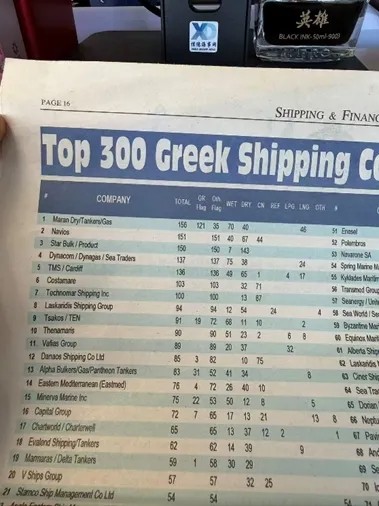
Greece remains the world’s leading shipowning nation, although its precise share of global tonnage varies depending on the statistical methodology applied. The Union of Greek Shipowners estimates that Greek interests controlled 5,798 vessels exceeding 458 million dwt at the beginning of 2026, equivalent to 19.1% of the global fleet by deadweight capacity. Other international datasets apply narrower ownership definitions and produce a share closer to 16%. Either way, Greek owners continue to exert an exceptional influence over the transportation of crude oil, LNG, iron ore, coal, grain and other strategic commodities.
At the centre of that maritime system stands the Angelicoussis Group.
According to the official profile The Athens-based organisation currently operates 162 vessels and has another 22 on order. More than 8,500 people work across its global operations. Its fleet is organised through four principal operating platforms: Maran Dry Management, Maran Tankers Management, Maran Gas Maritime and Stavanger-based Maran Shuttle Tankers. The group describes itself as one of the world’s largest privately owned shipping organisations.
Commercial fleet valuations fluctuate with freight markets, vessel prices and the methodology used to classify ownership and newbuildings. Industry estimates nevertheless place the value of the Angelicoussis fleet comfortably above $16bn. More important than any single valuation is the composition of the portfolio: large dry bulk carriers, crude and product tankers, LNG carriers and technically specialised shuttle tankers serving offshore oil production.

The scale visible today was built over three generations. Each generation made a different contribution.
Antonis Angelicoussis created the company and established its newbuilding culture. His son John transformed a predominantly dry bulk operator into a diversified shipping group, entered the capital markets, returned the business to private ownership and expanded decisively into tankers and LNG. Maria Angelicoussis has preserved the private capital model while adding a fourth business pillar through the acquisition of Altera Shuttle Tankers.
Their history provides a case study in how a family shipping company can combine long-term asset ownership, counter-cyclical investment, technical management and carefully controlled diversification.
Antonis Angelicoussis: from radio officer to shipowner
The group’s foundations were laid by Antonis—also widely referred to in English-language sources as Anthony—J. Angelicoussis, who was born in 1918 in Kardamyla on the Greek island of Chios.
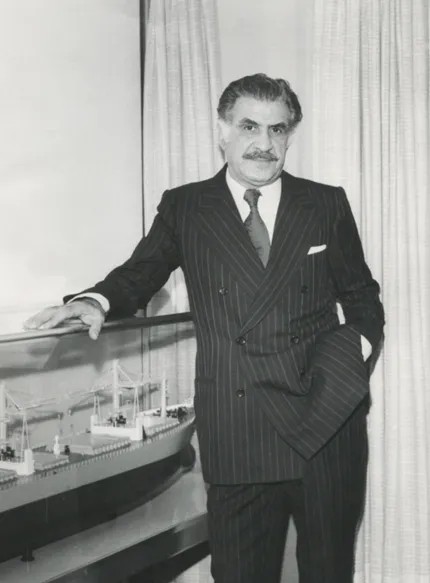
His path into shipowning was far from conventional. He initially went to sea as a radio officer. During the Second World War, he survived two ship sinkings, first off Corfu and later near Haifa. He subsequently worked with the Allied forces in the eastern Mediterranean and was decorated by both the Greek and British governments for his wartime service.
In 1946, he married Maria Papalios. Her brother Nicholas was a small shipowner based in Alexandria and required agency representation in Greece. Antonis consequently joined Dimitris Efthymiou, a friend who operated a small maritime agency in Piraeus. The partnership began in 1947, while Greece was still in the middle of its civil war.
Maria Papalios played an important role in encouraging her husband to move beyond agency work and become a shipowner in his own right.
Historical sources differ slightly over the exact acquisition date of the family’s first vessel. The Greek Shipping Hall of Fame’s biography of Antonis records the purchase in 1953, while its biography of John places the transaction in 1950. What is consistent is that Antonis and two partners acquired the elderly steam cargo ship Astypalea, of approximately 500 dwt, in the early 1950s. The 1,500-ton Parnon followed soon afterwards.
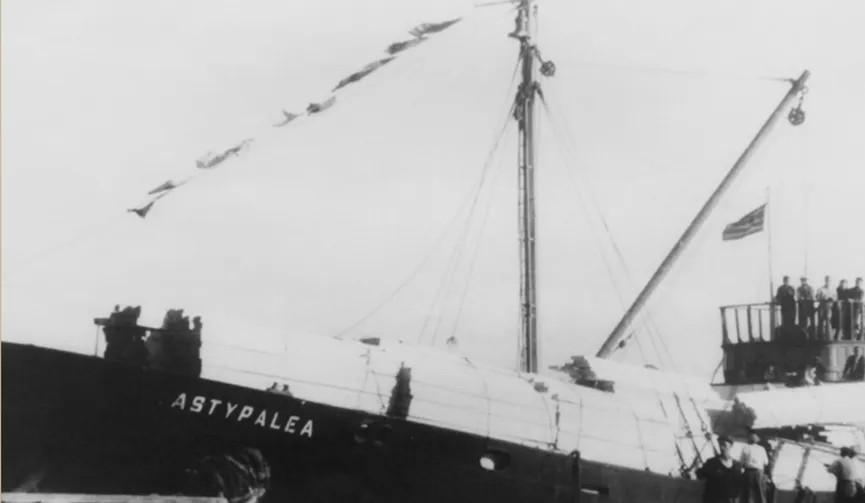
These were small and ageing vessels, but they established the commercial and operational base from which the family business would develop.
Singapore, London and the creation of Anangel
By the middle of the 1950s, the partners had assembled a small fleet. Antonis recognised that the employment prospects for these vessels were stronger in Southeast Asia and moved closer to both the ships and their charterers.
Between 1956 and 1960, he spent much of his time in Singapore. The move was an early indication of the international outlook that would later define the group. Rather than attempting to manage a global fleet entirely from Greece, Antonis positioned himself where the cargoes, charterers and commercial intelligence were concentrated.
During the 1960s, London became another important base. At the time, it remained the commercial centre of much of the Greek-controlled international shipping industry. Antonis joined a circle of Greek owners involved in purchasing cooperatives and the Pegasus Ocean Services organisation.
In 1968, Antonis and Dimitris Efthymiou left Pegasus and established Agelef Shipping Company. Their partnership lasted for about three years. When the two men eventually separated because of different strategic visions, Antonis retained most of the jointly controlled vessels and founded Anangel Shipping Enterprises.
Agelef remained part of the Angelicoussis structure as the group’s London-based chartering, shipbroking and insurance arm.
This reorganisation was more than a change of company names. It gave Antonis direct control over the ships and established the corporate structure from which the modern Angelicoussis Group would emerge.
The IHI era and a 42-ship newbuilding programme
Antonis’ first newbuilding was Afovos, a roughly 65,000-dwt Panamax bulk carrier ordered in 1965 and delivered in 1968 by Japan’s Ishikawajima-Harima Heavy Industries, or IHI.
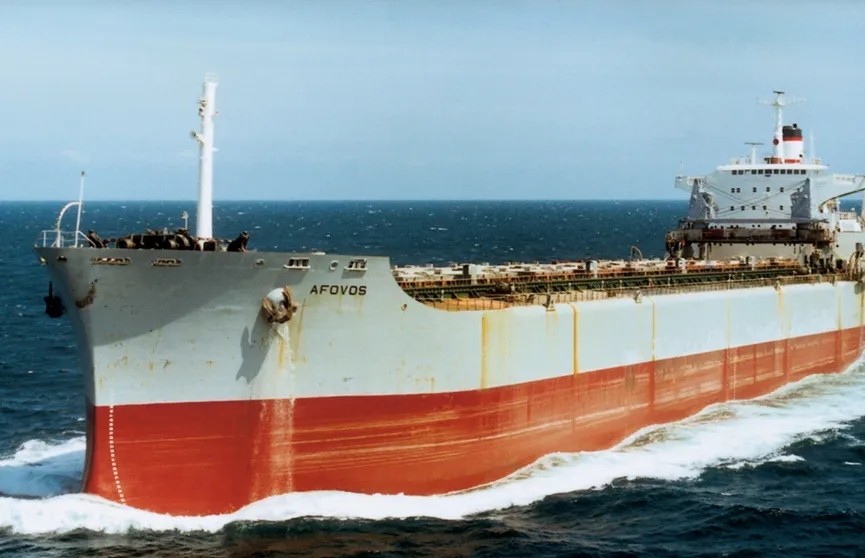
The order marked a turning point. Until then, the business had grown primarily through older secondhand tonnage. Antonis now moved towards series-built new vessels, modern technical standards and greater operational consistency.
Over the following 17 years, he ordered 42 vessels based on designs developed by the influential naval architect George Campbell.
The programme included eleven approximately 14,000-dwt Freedom-type vessels, fourteen 22,000-dwt Fortune ships, followed by Freedom Mark II, Friendship Mark II and Future designs. All 42 dry cargo ships were delivered by 1985 and placed under the Greek flag.
Standardisation produced practical advantages. Sister vessels simplified crewing, technical training, spare-parts procurement and maintenance. Large series also strengthened the owner’s negotiating position with yards, equipment suppliers, financiers and charterers.
Antonis’ commitment to the Greek flag was equally significant. At a time when many internationally trading owners were moving ships to open registries, he continued to support Greek registration, Greek officers and domestic maritime education.
The relationship with IHI eventually collapsed in a dispute concerning commissions allegedly received by another Greek owner on vessels ordered by customers using Campbell designs. Antonis took the Japanese shipbuilder to court. The final judgment was delivered in 1989, shortly after his death, and vindicated the Angelicoussis side. The legal victory nevertheless came at the cost of a permanent rupture: the group did not return to Japanese shipyards for subsequent newbuilding programmes.
South Korea would later replace Japan as the group’s principal Asian shipbuilding partner.
A corporate structure ahead of its time
Antonis was also unusual among shipowners of his generation in his approach to corporate governance.
In 1972, he incorporated Angelicoussis Shipping Group Limited in Bermuda as a holding company for the shipowning subsidiaries. He maintained audited accounts for private shareholders and lending banks and began preparing the organisation for a possible public listing.
The original listing plan was postponed because of an approaching recession, but the underlying structure remained. It created clearer ownership, financial reporting and control across a fleet that was becoming too large to manage as a collection of loosely connected single-ship companies.
Antonis therefore left his successor more than a fleet. He left a modern holding-company structure, established banking relationships, disciplined technical management and an organisational culture that treated newbuildings as long-term industrial assets rather than short-term speculative trades.
John Angelicoussis enters the business
John A. Angelicoussis was born in Piraeus in 1948. He studied at the Athens University of Economics and Business before completing an MBA at the Massachusetts Institute of Technology in the United States.
He joined the family business in 1973 at the age of 25 and worked alongside his father for 16 years. Following Antonis’ death in 1989, John became president and chief executive of the Angelicoussis Shipping Group.
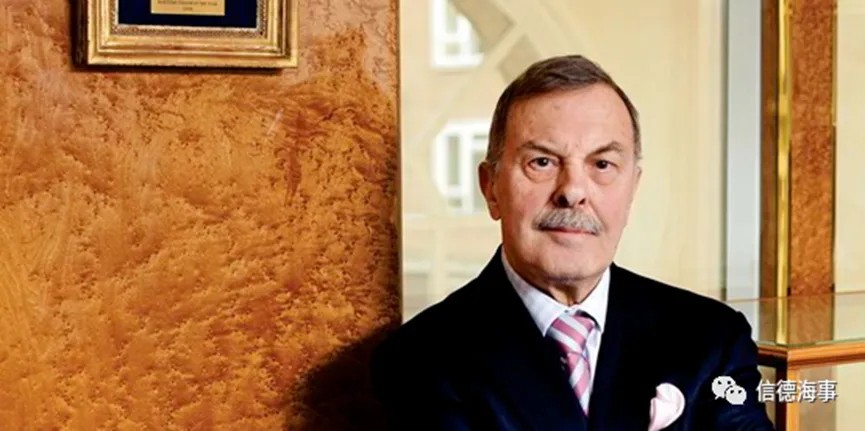
John inherited a respected dry bulk operation but did not simply preserve it. His strategic contribution was to reshape the group’s capital structure and expand it into several of the world’s largest deep-sea shipping markets.
His education in business and finance influenced how he approached both fleet investment and corporate ownership. He understood that shipping required access to capital, but he also recognised that the source of that capital could influence the owner’s ability to make decisions through a full market cycle.
One of the early Greek shipping listings
In 1987, the family realised Antonis’ earlier ambition to access public capital when Anangel-American Shipholdings was floated on the Luxembourg Stock Exchange with American Express Bank as a partner.
In June 1989, the company raised approximately $107m through a secondary public offering and established a Nasdaq listing in the United States. It became one of the earliest Greek shipping businesses to gain direct access to the American equity market.
The listing increased financial capacity and gave the company an international capital-market profile. It also exposed the business to a different system of expectations.
Public investors generally assess companies through quarterly earnings, near-term dividends and regular share-price performance. Shipping assets, by contrast, may operate for 20 to 30 years, while the most attractive time to order or acquire ships is often when current earnings are weak and investor confidence is low.
John increasingly concluded that the time horizon of the public market was not always aligned with the long-cycle economics of shipowning.
Why John took the company private again
The return to private ownership took place progressively.
Following capital raising and changes in the shareholder structure, family-controlled entities increased their ownership of Anangel-American. In February 2002, Superior Navigation, a Liberian company controlled by the Angelicoussis family, launched a cash tender offer of $5 per share for the remaining publicly traded stock.
By March 29, approximately 98.86% of the company’s shares had been tendered and acquired. The process allowed the family to complete the privatisation of Anangel-American and remove the company from Nasdaq.
The decision proved central to the group’s subsequent development.
Private ownership did not remove market risk. The company still faced freight-rate volatility, asset-price cycles, financing costs, shipyard risk and regulatory uncertainty. It did, however, allow the family to determine when to buy, sell, order or retain ships without having to defend every decision against short-term public-market expectations.
That freedom would become especially valuable in LNG shipping, where vessels require large initial capital commitments and may be linked to energy projects extending over decades.
A restructuring within the family
John also addressed the ownership structure inside the Angelicoussis family.
At the beginning of the 2000s, John and his sister Anna Angelicoussis separated their shipping interests. John gained full control of the core Angelicoussis Group, while Anna developed an independent group that would later include Alpha Bulkers, Alpha Gas and Pantheon Tankers.
The separation was commercially important because both sides of the family became major shipowners in their own right. It also avoided a future structure in which two expanding branches of the same family might compete for control over the same corporate assets.
John could now pursue a unified strategy across Anangel and the group’s emerging tanker and gas businesses, while Anna was free to build her own dry bulk, tanker and gas operations.

The move into tankers
In 1992, John established Kristen Navigation to create a dedicated presence in tanker shipping.
A year later, he ordered five Capesize bulk carriers from Hyundai Heavy Industries. At the time, they were among the largest bulk carriers ordered by a Greek owner. The contracts also marked the beginning of the group’s increasingly important relationship with South Korean shipbuilding.
John expanded the tanker business substantially in 2000, placing orders across the Aframax, Suezmax and VLCC segments.
The first newly built VLCC in the group’s modern tanker programme, Maria A. Angelicoussis, was delivered by Daewoo Shipbuilding & Marine Engineering, now Hanwha Ocean. The delivery demonstrated that the group’s post-IHI shipbuilding future would be centred largely on South Korea.
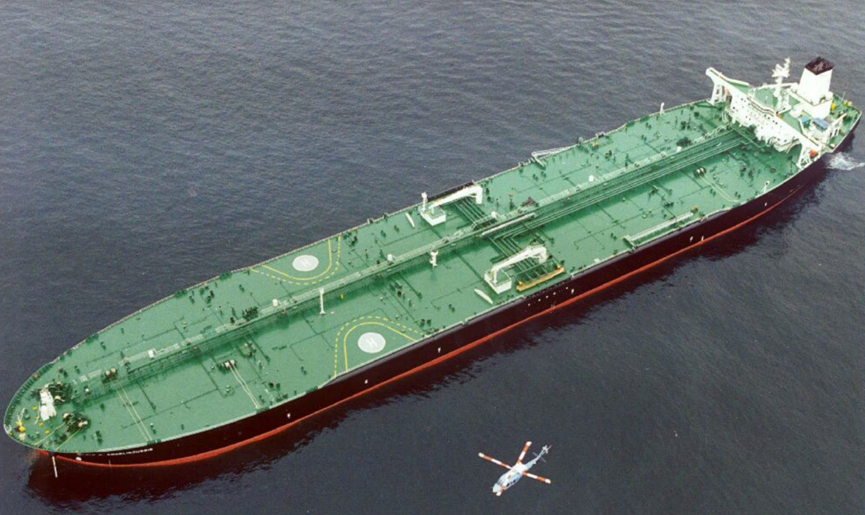
Over time, the partnership with DSME and Hanwha Ocean expanded across crude tankers and LNG carriers. In 2024, the shipbuilder said that its cumulative contracts with the Angelicoussis Group had generated approximately $15bn in revenue, illustrating the scale of one of modern shipping’s longest owner-yard relationships.
The 2003 LNG decision
September 2003 became one of the most important dates in the group’s history.
John ordered the family’s first LNG carrier, Maran Gas Asclepius, and established Maran Gas Maritime as a specialised LNG shipping company. The vessel entered a sector that, at the time, was still far smaller and more contract-driven than it is today.
The decision placed John among the first Greek owners to commit substantial capital to LNG shipping.
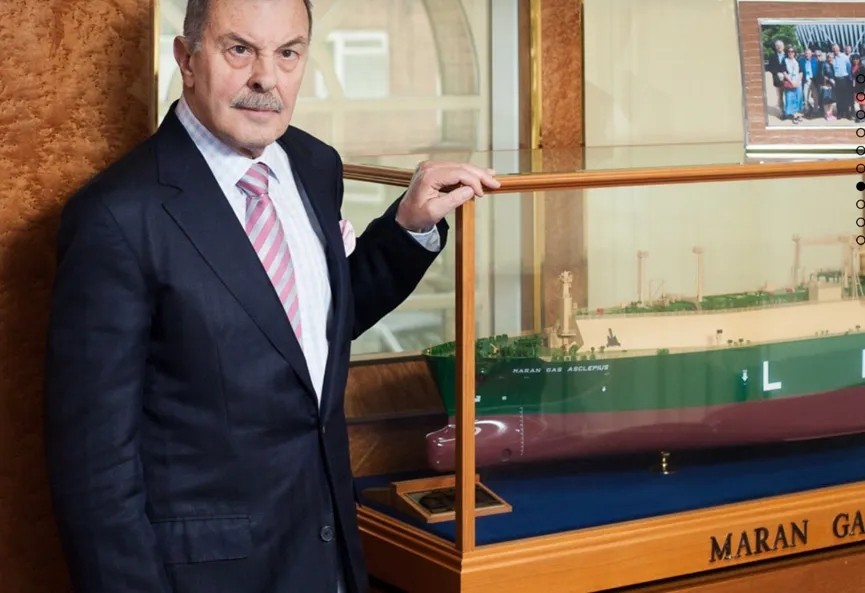
LNG carriers are among the most technically complex commercial ships. Their construction requires specialised containment systems, cargo-handling equipment, cryogenic expertise and close cooperation among owners, shipyards, class societies, equipment suppliers and charterers.
The capital requirement was considerable, but LNG also offered something valuable to a private shipowner: the possibility of combining high-specification assets with long-term charter employment linked to major energy projects.
In 2004, Maran Gas formed Maran Nakilat with Qatar Gas Transport Company. A second LNG joint venture with the Qatari partner followed in 2019. These arrangements connected the fleet directly with Qatar’s expanding role in global LNG exports.
The meaning behind “Maran”
John progressively unified the group’s principal operating companies under the Maran name.
“Maran” combines the names of his mother Maria and his father Antonis, or Anthony. Maran Gas Maritime was followed by the adoption of the name across Maran Tankers Management and Maran Dry Management.
The name provided a common identity for businesses operating in very different markets.
Maran Dry remained rooted in the family’s original dry bulk activities. Maran Tankers became the liquid bulk platform. Maran Gas represented the group’s strategic commitment to LNG.
By the time of John’s death in 2021, the group owned 151 vessels across its three principal sectors and was widely regarded as one of the largest entirely privately controlled shipping organisations in the world.
Maria Angelicoussis: from medicine to shipping
The third generation entered the business through a very different route.
Maria Angelicoussis was born in 1982 and studied medicine in the United Kingdom, including at University College London and the University of Cambridge. She subsequently worked in the British healthcare system before returning to Greece and joining the family company in 2008.
For approximately 13 years, she worked alongside her father and became involved in newbuilding projects, financing, chartering, technical management and broader investment decisions.
That period was essential preparation. When John died in April 2021 at the age of 72, Maria inherited a fleet of more than 150 vessels operating across three capital-intensive sectors. The transition took place without a prolonged leadership struggle or visible disruption to the group’s strategy.
Her medical background also distinguished her from most third-generation shipowners. She had not entered the business immediately after university and had already worked inside another highly regulated and operationally demanding profession.
Taking control during a period of disruption
Maria assumed leadership at a highly volatile moment.
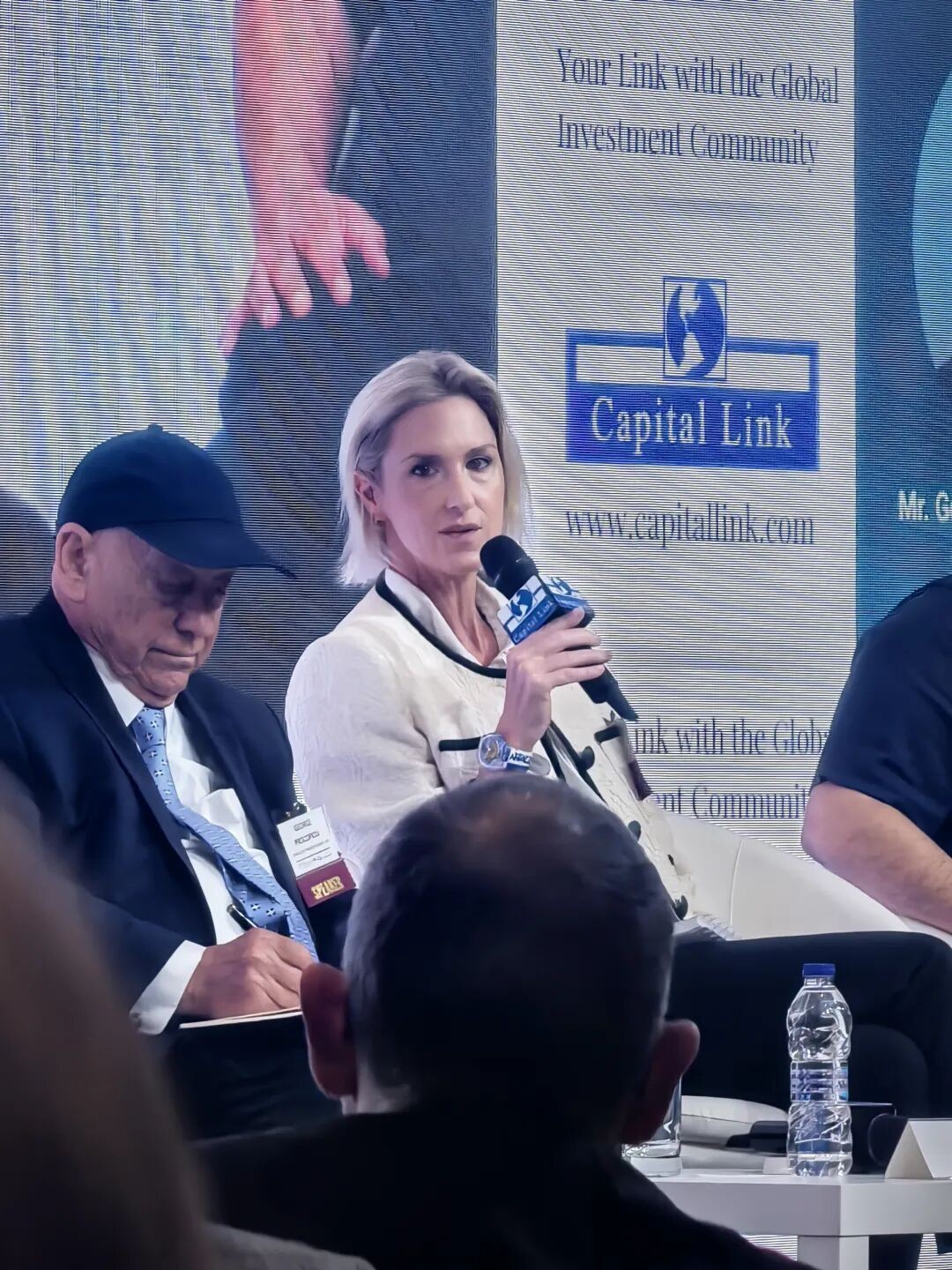
The shipping industry was moving through the consequences of the pandemic, congestion and supply-chain disruption. LNG demand was rising, commodity flows were being reorganised and geopolitical risk was becoming a central operational consideration.
Russia’s invasion of Ukraine in 2022 accelerated Europe’s efforts to reduce its dependence on Russian pipeline gas. It did not immediately eliminate Russian pipeline supply, but it increased European demand for seaborne LNG and reinforced the strategic importance of LNG carriers.
Maran Gas was well positioned for this structural change because John had spent almost two decades building a large, technically advanced fleet and long-term relationships with energy producers, traders and utilities.
The increase in LNG shipping demand also supported vessel values across the sector. Because the Angelicoussis Group is privately held, detailed segment earnings are not publicly disclosed, and it is not possible to quantify precisely how much of the group’s profitability came from LNG. It is nevertheless clear that the LNG fleet became more strategically valuable after Europe’s energy-security shock.
Wealth, influence and a more accurate ranking
Maria’s personal wealth has risen alongside the value of the family’s shipping assets.
Forbes estimated her real-time net worth at approximately $7.5bn as of July 20, 2026. That placed her among the world’s wealthiest shipping entrepreneurs and made her one of the richest people in Greece. She was not, however, the richest Greek in the 2026 Forbes ranking: Vicky Safra and her family remained ahead.
Maria has also risen in the industry’s influence rankings. Lloyd’s List placed her eighth in its 2025 list of the 100 most influential people in shipping, up from 12th in 2024. She was also named Greek Shipping Personality of the Year at the 2025 Greek Shipping Awards.
These rankings are secondary to the operational scale of the business, but they reflect her emergence from the position of successor to that of an influential shipowner in her own right.
Four operating pillars instead of three
The most significant strategic development under Maria has been the addition of a fourth major shipping sector.
Before 2025, the group’s operating structure was built around dry bulk, conventional tankers and LNG carriers. The acquisition of Altera Shuttle Tankers added specialised offshore transportation and created Maran Shuttle Tankers.
The change increased the group’s diversification, but it also moved it into a business with higher technical barriers and a different revenue model from conventional spot tanker trading.
The current group structure consists of Maran Dry Management, Maran Tankers Management, Maran Gas Maritime and Maran Shuttle Tankers. Together, they account for 162 operating vessels, while the group’s orderbook stood at 22 ships in mid-2026.
Because vessels are continually delivered, ordered and sold, sector-by-sector fleet counts can change quickly. This is why older estimates listing approximately 40 bulk carriers, 46 LNG carriers and a larger number of conventional tankers should not simply be added to the 18 shuttle tankers. Some published datasets use beneficial ownership, management or operational control differently, and mixing those methodologies can result in double counting.
The most reliable current top-line figure is therefore the group’s own disclosure of 162 ships on the water and 22 on order.
Maran Gas Maritime: the long-term energy platform
Maran Gas Maritime remains one of the group’s most strategically important businesses.
Its fleet serves an LNG market that has evolved from a collection of largely fixed point-to-point projects into a more flexible global trading system. Cargoes can increasingly be redirected between Asia, Europe and the Americas in response to prices, weather, storage levels and geopolitical events.
Maran Gas combines long-term employment with exposure to this growing flexibility. The approach provides a foundation of contracted revenue while retaining some ability to benefit from stronger market periods.
Long-term charter programmes also demonstrate the scale of energy transported by a single modern LNG carrier. ORLEN, for example, has used 174,000-cbm vessels under ten-year charters with extension options. Ships of this size can complete approximately eight or nine voyages annually between the United States and Europe and carry energy equivalent to roughly eight or nine terawatt-hours of natural gas per year.
For European importers, vessels operating under such contracts are more than freight assets. They form part of the physical infrastructure supporting energy security.
Maran Tankers Management: the conventional tanker core
Maran Tankers Management operates across the large crude and oil-products sectors, with exposure to VLCC, Suezmax and Aframax tonnage.
These ships connect crude-producing regions in the Middle East, the Americas, West Africa and elsewhere with refineries and consuming markets. Earnings are shaped by oil production, refinery demand, sanctions, trade distances, fleet growth and geopolitical disruption.
The company continues to renew its fleet. Its recent programme includes an eight-vessel series of 155,500-dwt dual-fuel Suezmax tankers built by New Times Shipbuilding in China. The third vessel in the series, Maran Menelaus, was delivered in 2026 under the Greek flag.
This programme also illustrates the group’s growing use of Chinese shipyards. While South Korea remains deeply embedded in its tanker and LNG history, Chinese yards are now participating in several of its major dry bulk and tanker renewal projects.
Maran Dry Management: the original business
Dry bulk remains the sector from which the modern group developed.
Maran Dry is concentrated largely in the bigger bulk carrier segments, particularly Capesize and Newcastlemax vessels employed in iron ore, coal and other high-volume commodity trades.
These vessels form a crucial part of the supply chain between mining regions such as Brazil and Australia and major consuming economies in Asia and Europe. Their earnings are sensitive to Chinese steel production, infrastructure investment, mining output, port congestion and the availability of large bulk carriers.
For a group with tanker and LNG exposure, dry bulk adds another distinct set of cargo drivers. It also preserves the continuity between the original Anangel fleet and today’s diversified organisation.
The Ubuntu dual-fuel fleet
One of Maran Dry’s most important recent projects has been its LNG dual-fuel Newcastlemax programme.
In February and April 2023, Shanghai Waigaoqiao Shipbuilding delivered the 190,000-dwt Ubuntu Unity and Ubuntu Community. The vessels were classed by DNV, registered under the Greek flag and described as the first LNG dual-fuel bulk carriers in the Greek market.
Each ship measures approximately 299.8 metres in length and is equipped with Type-C LNG fuel tanks. Their fuel capacity provides an estimated LNG operating range of about 20,000 nautical miles, sufficient for extended intercontinental bulk voyages without frequent refuelling.
The vessels were chartered to Anglo American and formed part of a wider fleet designed to reduce emissions from the mining company’s chartered maritime operations.
Using LNG does not make the ships zero-carbon, and methane emissions remain an important lifecycle concern. Compared with conventional marine fuel, however, the vessels can substantially reduce sulphur oxides and particulate matter while lowering carbon dioxide and nitrogen oxide emissions under appropriate operating conditions.
The Ubuntu series therefore represents a transitional approach: using a fuel and bunkering system available today to improve the performance of assets that may remain in service for more than two decades.
Returning to Capesize newbuildings in China
After a long period without major conventional Capesize orders, Maran Dry returned to the newbuilding market in early 2026 through a programme at Hengli Heavy Industry in Dalian.
The initial market reports described four firm Capesize vessels with two additional options. The programme was subsequently reported in the market as a potential six-ship series.
The order was significant for both sides.
For Maran Dry, it secured modern large bulk carriers at a time when the existing Capesize fleet was ageing and future environmental requirements remained uncertain.
For Hengli, it added another internationally recognised Greek owner to a rapidly expanding customer list and strengthened the yard’s position in large bulk carrier construction.
The decision should not be interpreted as proof that a dry bulk boom is inevitable. Newbuilding orders are influenced by ship prices, financing, available delivery positions, fleet age and long-term cargo expectations. They do, however, indicate that the group sees a continued role for efficient large bulk carriers in global commodity transportation.
Maran Shuttle Tankers: buying an entire operating platform
In November 2024, an Angelicoussis-affiliated company agreed to acquire Altera Shuttle Tankers from Altera Infrastructure, a subsidiary of Brookfield Business Partners.
The transaction was completed on January 16, 2025. On February 17, the business was officially renamed Maran Shuttle Tankers.
The official transaction announcement did not disclose the purchase price. Market reports described the target as a fleet worth approximately $2bn, while other estimates referred to lower transaction values. The safest description is therefore that this was a multibillion-dollar-class fleet acquisition whose precise consideration was not publicly confirmed.
The acquired company owned and operated 18 shuttle tankers deployed in Brazil, the North Sea and offshore eastern Canada. Three additional 154,000-dwt shuttle tankers were already under construction in South Korea for delivery through 2027.
Following the acquisition, Maran Shuttle Tankers became the world’s second-largest operator in the sector, behind Knutsen NYK Offshore Tankers.
Why shuttle tankers are different
Shuttle tankers occupy one of the most technically demanding niches in commercial shipping.
Unlike conventional crude tankers, which generally load at terminals, shuttle tankers frequently collect oil directly from FPSOs or offshore production installations. They must maintain position close to the production unit, often in difficult sea and weather conditions.
To perform this work, the vessels use sophisticated dynamic positioning systems, offshore loading equipment, redundancy arrangements and specially trained crews.
The business also has high barriers to entry. A new operator needs more than ships. It requires technical knowledge, offshore procedures, customer approvals, safety systems and experience operating in complex production environments.
By acquiring Altera’s platform rather than gradually building a shuttle tanker business from the beginning, Angelicoussis obtained vessels, personnel, systems, customer relationships and more than two decades of operational knowledge in a single transaction.
The acquisition also altered the group’s revenue profile. Conventional tanker earnings can move sharply with the spot freight market. Shuttle tankers are more frequently employed through longer service arrangements connected to specific offshore oilfields and production systems.
This provides another source of contracted or semi-contracted income and increases the group’s ability to absorb volatility in other shipping markets.
A practical two-track decarbonisation strategy
The Angelicoussis Group’s environmental strategy combines investment in new vessels with the gradual improvement of ships already in service.
The newbuilding side includes LNG dual-fuel bulk carriers, dual-fuel Suezmax tankers and research into emerging propulsion and carbon-reduction technologies.
The existing fleet is being addressed through repair, maintenance, propulsion upgrades, energy-saving equipment and emissions-control retrofits.
This is commercially important. Even a group with a large orderbook cannot replace more than 160 vessels quickly. Most of the ships that will operate during the 2030s are already on the water today.
Decarbonisation therefore depends not only on ordering new ships, but also on improving the efficiency and operational performance of existing assets.
LNG and hydrogen produced onboard
In November 2022, Maran Dry signed a joint development agreement with RINA and Shanghai Merchant Ship Design and Research Institute for a 210,000-dwt Newcastlemax design using LNG and hydrogen generated onboard.
Under the concept, LNG would be combined with steam to produce hydrogen and carbon dioxide before combustion. The design would capture carbon at the pre-combustion stage and allow the vessel to operate with progressively higher proportions of hydrogen as regulations and economics evolved.
The proposed arrangement was designed to reduce the amount of machinery running at sea and avoid the immediate need to store large quantities of liquid hydrogen onboard or rely on an extensive hydrogen bunkering network.
The vessel could initially be constructed as a conventional dual-fuel ship, with additional reforming and carbon-capture equipment installed when regulatory and commercial incentives justified the investment.
The project remains a development concept, not a proven commercial zero-emission system. Questions would still need to be resolved around energy efficiency, carbon storage, lifecycle emissions, onboard complexity and commercial cost.
Its significance lies in the attempt to create a transition pathway for a vessel with a lifespan extending beyond 2050, rather than assuming that one fuel solution will become immediately available worldwide.
The Seatrium retrofit partnership
In 2024, the group signed a favoured customer contract with Singapore-based Seatrium covering a two-year period with an option for a one-year extension.
The agreement provided for the repair, upgrade and retrofit of approximately 10 to 15 vessels per year, including LNG carriers, tankers and bulk carriers.
The arrangement creates a more industrialised approach to fleet maintenance.
Instead of negotiating every docking and retrofit as an isolated project, the owner and yard can coordinate schedules, technical specifications, information exchange and resource planning across a multiyear programme.
For a fleet of this size, standardised retrofit packages can reduce downtime, improve cost control and allow successful solutions to be repeated across sister ships.
The partnership also demonstrates why large privately controlled fleets have an advantage in the retrofit market. A shipowner with many similar vessels can commit sufficient volume to support dedicated engineering, procurement and yard capacity.
Maria Angelicoussis and the IMO debate
The group’s investment in dual-fuel ships, efficiency technology and retrofit programmes demonstrates that it accepts the need to reduce shipping emissions.
Maria Angelicoussis has nevertheless been among the prominent owners questioning whether international carbon-pricing rules are being designed in a way that reflects the availability, safety and cost of future fuels.
This distinction matters. Opposition to a particular pricing mechanism is not necessarily opposition to decarbonisation. The disagreement concerns how quickly penalties should be introduced, who bears the cost and whether compliant fuels and infrastructure will be available at sufficient scale.
The IMO approved the draft Net-Zero Framework at MEPC 83 in April 2025. The proposed framework combined a global marine fuel standard with a greenhouse-gas pricing mechanism. Formal adoption was originally scheduled for October 2025.
The extraordinary meeting was subsequently adjourned for one year because member states were unable to reach sufficient consensus.
At MEPC 84 in April and May 2026, almost 100 delegations presented views on the framework and several proposals for amendments were submitted. The IMO scheduled the extraordinary session to resume on December 4, 2026, subject to the outcome of MEPC 85.
The regulatory process therefore remains open. The draft framework has been approved but has not yet completed formal adoption.
For owners such as Angelicoussis, the uncertainty complicates investment decisions. A vessel ordered today may be delivered in 2029 or 2030 and operate into the 2050s, while the relative economics of LNG, methanol, ammonia, biofuels, carbon capture and conventional fuel remain unsettled.
The Greek flag as part of the operating model
The group has remained one of the most prominent commercial supporters of the Greek flag.
Historical fleet programmes were deliberately registered in Greece, including the 42 IHI-built dry cargo ships delivered under Antonis. The family continued that policy under John, and several recent newbuildings have also entered service under the Greek flag.
The exact number of Greek-flagged ships changes as vessels are delivered, sold or transferred, so previously reported figures such as 121 ships should not be treated as a permanent fleet total.
The strategic importance of the policy lies in its continuity.
Using the Greek flag supports the domestic maritime administration, creates training positions for Greek cadets and helps preserve a pool of nationally certified officers. It also strengthens the connection between the country’s enormous beneficially owned fleet and its domestic maritime employment base.
For the Angelicoussis Group, flag policy, cadet recruitment and internal training are closely linked.
AGEMAR: a headquarters designed as a maritime institution
The physical expression of the group’s culture is its AGEMAR headquarters in Kallithea, near Athens’ connection to the waterfront.
Designed by architect Rena Sakellaridou, the complex covers approximately 30,000 square metres and consists of two main buildings linked through four underground levels.
Its flowing horizontal lines and white upper structure were conceived as an architectural reference to a ship moving across the horizon. The building received LEED Platinum certification and was shortlisted or nominated for several international architecture and design awards.
The complex is not simply an administrative office.
It contains open-plan workspaces, executive facilities, a company museum, maritime library, amphitheatre, restaurant, roof gardens, crew-related functions, bridge and engine-room simulators, a gym and underground parking.
The separation between the headquarters building and the crew-focused building reflects the structure of a shipping company itself: commercial and technical management ashore on one side, and the people who operate the ships on the other.
By bringing these functions into one campus, the group created what amounts to a small maritime institutional centre rather than a conventional corporate headquarters.
DELPHIC and the internal training system
The DELPHIC Maritime Training Centre was established in 2004 as part of the group’s effort to develop its own supply of qualified seafarers and technical personnel.
The centre provides traditional classroom education alongside bridge and engine-room simulation, operational training and soft-skills development.
Full-mission simulators allow officers to practise navigation, machinery failures, emergency response, difficult weather and port manoeuvring before encountering comparable situations at sea.
This capability is particularly important for LNG carriers, large tankers and shuttle tankers, where errors can have serious safety, environmental and financial consequences.
John Angelicoussis repeatedly emphasised that “what makes this company is its people”. The group continues to present seafarers as the foundation of its operations and places particular emphasis on continuous learning, safety, communication and retention.
A significant proportion of its shore-based technical personnel previously served at sea. That internal movement from shipboard positions into superintendent and management roles preserves operational knowledge and gives shore teams direct experience of the vessels they supervise.
High retention also produces compounding benefits. Officers become familiar with sister ships, company procedures and technical systems, while management gains a clearer understanding of individual competencies and training requirements.
In an industry facing shortages of experienced officers, this internal development system is an important competitive asset.
The Antonios and Ioannis Angelicoussis Foundation
The family’s social activities were formalised through the Antonios and Ioannis Angelicoussis Foundation.
John decided in 2010 to establish a charitable organisation supporting Greek society. The foundation was formally established in February 2013 as a private-law charitable entity.
Its activities focus principally on healthcare, education and support for vulnerable social groups.
Since its establishment, it has supported hospitals, schools, children and other organisations providing care and social services in Greece.
This work continues a broader tradition in Greek shipping, where internationally generated maritime income has often been reinvested in domestic education, healthcare and public institutions.
For the Angelicoussis family, philanthropy is also connected to its Greek flag and training policies. All three reflect an effort to keep the group’s global shipping activities linked to Greece’s maritime and social infrastructure.
The strategic logic behind the group
The Angelicoussis Group’s central commercial logic is not simply to own as many ships as possible.
Its model is based on combining scale with exposure to several different shipping cycles.
Dry bulk responds to industrial production, raw-material demand and mining trade. Conventional tanker earnings depend on oil supply, refinery flows, sanctions and voyage distances. LNG carriers are connected to gas production, energy security and long-term infrastructure. Shuttle tankers serve offshore oilfields under technically demanding operating arrangements.
These markets can weaken or strengthen at different times.
Diversification does not guarantee that one sector will always offset another. During a global financial crisis or major credit contraction, asset values across several markets can fall simultaneously. A broad portfolio nevertheless reduces the group’s dependence on a single cargo, chartering model or vessel type.
The four operating businesses also share technical, financial and organisational capabilities. The group can use its scale in shipbuilding negotiations, financing, insurance, training, procurement and retrofit programmes while maintaining specialist operating teams for each market.
Private ownership and patient capital
The second defining characteristic is private control.
Because the group is not publicly listed, its detailed accounts, segment earnings and capital allocation are not disclosed in the same way as those of listed shipping companies. That reduces external transparency.
It also gives management greater freedom to take a long-term view.
The family can retain liquidity in strong markets, place orders during weaker periods and accept that a newbuilding or acquisition may take years to demonstrate its full value.
This model is particularly suited to shipping, where the lowest asset prices often occur when current earnings are poor and external investors are reluctant to provide capital.
John’s decision to privatise Anangel-American can therefore be understood as more than a corporate transaction. It created the institutional conditions for the group’s later expansion.
Maria’s acquisition of an entire shuttle tanker platform followed the same logic. Rather than waiting for the new sector to contribute immediately to quarterly earnings, the group acquired a strategic operating capability with a multidecade horizon.
Three generations, three different contributions
Antonis established the foundations.
He moved from agency work and small secondhand ships into standardised newbuildings, created a modern holding structure and built a reputation around technical quality, the Greek flag and seafarer education.
John transformed those foundations.
He accessed international capital markets, took the company private again, resolved the family ownership structure and expanded decisively into large tankers and LNG carriers. By the time of his death, the company had become a three-sector global shipping group with 151 vessels.
Maria has extended the model.
She has maintained the focus on fleet renewal, strengthened the group’s use of Chinese as well as Korean shipyards, continued investing in dual-fuel technology and retrofits, and created a fourth operating pillar through Maran Shuttle Tankers.
The result is a fleet of 162 operating ships and 22 newbuildings serving four of the world’s most strategically important maritime markets.
Conclusion: built to survive the long cycle
The Angelicoussis Group did not grow from a 500-dwt steamer into a fleet of 184 operating and ordered ships through one successful market bet.
Its expansion has been cumulative.
Newbuilding experience gained in Japan created technical discipline. The move to South Korea opened the way to larger tankers and LNG carriers. More recent orders in China have widened the group’s shipyard network. Public equity provided capital-market experience, while privatisation restored strategic autonomy. LNG created exposure to long-term energy infrastructure, and shuttle tankers added offshore logistics and a more specialised contractual earnings base.
The family has also invested in systems around the vessels: audited governance, technical management, headquarters infrastructure, simulation, seafarer training, Greek cadet development and long-term yard relationships.
Shipping remains cyclical, capital intensive and exposed to forces no owner can fully control. Freight markets will fall as well as rise. Fuel regulations will change. Some technologies will fail to achieve commercial scale. Geopolitical disruption will continue to alter routes, insurance costs and cargo flows.
The Angelicoussis response has been to build an organisation capable of absorbing those changes.
Its greatest advantage is therefore not simply fleet size or private wealth. It is the ability to combine patient capital, operational knowledge, sector diversification and control over investment timing.
From Astypalea to Maran Shuttle Tankers, three generations of the family have followed the same underlying principle: shipping risk cannot be eliminated, but it can be managed through discipline, scale, technical capability and the freedom to think beyond the next quarter.

READ MORE
 People
What John Lee’s Speech Signals for Hong Kong’s Maritime Industry over the Next Five Years
 People
PIL Names Wan Chee Foong as Next CEO: A New Chapter Driven by Ports, Logistics and Strategy
 People
DNV’s Norbert Kray: China’s Shipbuilding Edge Now Extends Far Beyond Cost and Scale
 People
Asia is no longer just driving shipping growth – it is shaping the industry’s future
 People
Exclusive Interview with Hapag-Lloyd’s Rajiv Ghose: How Gemini’s 90% Schedule Reliability Is Reshaping Shipping Resilience
 People
Martin Roolvink has been appointed Managing Director of Bernhard Schulte Shipmanagement (Deutschland),
 People
Tung Chee-hwa Dies at 89: From Shipping Executive to Hong Kong’s First Chief Executive
 People
India Declares Its Maritime Ambition in Hamburg: Becoming a Global Shipping and Shipbuilding Power
 People
Euroseas Ltd.: Sustained Earnings, Disciplined Growth and Further Upside
 People