


Tung Chee-hwa Dies at 89: From Shipping Executive to Hong Kong’s First Chief Executive
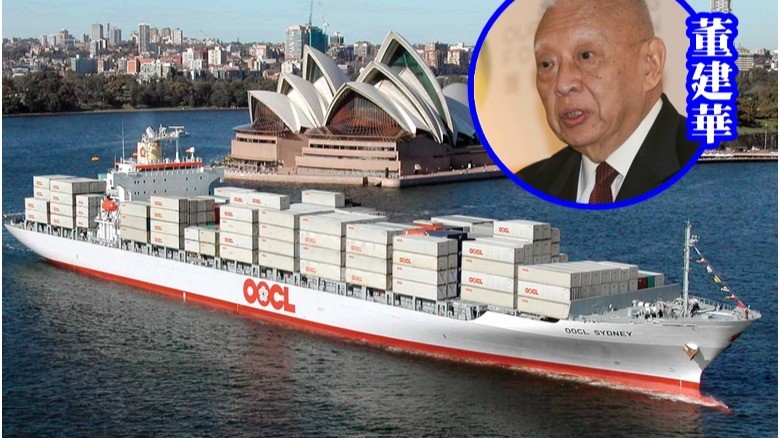
Tung Chee-hwa, the first Chief Executive of the Hong Kong Special Administrative Region and a former Vice Chairman of the National Committee of the Chinese People’s Political Consultative Conference, died peacefully on September 8, 2026, at the age of 89.
A statement issued by Tung Chee-hwa’s office in the early hours of September 9 confirmed his death, saying that he passed away peacefully with close family members by his side. The statement described him as a man of integrity, deep commitment to his country and lifelong dedication to public service.
For Hong Kong, Tung will be remembered above all as the city’s first Chief Executive after the resumption of Chinese sovereignty in 1997. For the international shipping community, however, he was also a major figure in the history of one of Hong Kong’s best-known shipping groups.
Long before entering public office, Tung spent decades in the maritime industry. He was the eldest son of shipping magnate C.Y. Tung, founder of the group that eventually developed into Orient Overseas International Limited, or OOIL, and its container shipping arm, Orient Overseas Container Line, or OOCL. Following his father’s death in 1982, Tung Chee-hwa took over the leadership of OOIL and remained at the helm for 14 years, until he entered the race to become Hong Kong’s first Chief Executive in 1996.
According to OOCL’s official corporate history, Tung Chee-hwa led OOIL from 1982 until 1996, when his younger brother Tung Chee-chen succeeded him as chairman.
A life rooted in shipping
Tung Chee-hwa was born in Shanghai in 1937, with his ancestral home in Zhoushan, Zhejiang. His family moved to Hong Kong in 1947.
His connection with shipping began well before he entered the family business. According to his official biography published by the CPPCC, Tung graduated from the University of Liverpool in 1960 with a Bachelor of Science degree in marine engineering. He subsequently worked in the United States before returning to Hong Kong in 1969 to participate in the family business.
That background was closely aligned with the ambitions of his father, C.Y. Tung, one of the most prominent Chinese shipping entrepreneurs of the 20th century.
OOCL’s official history records that C.Y. Tung sought to build a Chinese merchant fleet capable of competing internationally. In 1947, ships associated with the group sailed to the Atlantic coast of the United States and to Europe, and the business later expanded into scheduled passenger and cargo services.
As containerisation transformed global shipping, the group moved early into the new business model. OOCL states that in 1969 Orient Overseas Container Line began developing container services and became one of the early Asian carriers to offer scheduled container shipping between the Far East and the US West Coast.
By the time Tung Chee-hwa assumed leadership in 1982, he was therefore inheriting more than a traditional shipowning business. He was taking charge of an international maritime group already in the middle of the global transition from conventional shipping towards containerised liner transportation.
Taking control in 1982 — at the beginning of a severe shipping crisis
Tung Chee-hwa became head of OOIL following the death of C.Y. Tung in 1982.
The timing could hardly have been more difficult.
The early and mid-1980s were among the most painful periods in modern shipping history. Freight markets weakened sharply, vessel supply exceeded demand across multiple sectors and heavily leveraged shipping companies came under intense financial pressure.
The Tung shipping group, which had expanded aggressively during the preceding decades, was highly exposed to that downturn.
Contemporary reporting provides a clearer picture of the scale of the financial problem than many later retrospective accounts.
In January 1987, the Journal of Commerce reported that a restructuring involving approximately US$2.7 billion of debt across the Tung shipping group had been put in place after around 16 months of negotiations and restructuring efforts. The report quoted Tung Chee-hwa as saying that the process had reduced debt and strengthened the group’s capital base, while leaving its container business in a stronger and more competitive position.
A 1994 retrospective by the South China Morning Post similarly described the company as having come close to collapse under the weight of about US$2.7 billion in debt before undergoing a major financial restructuring, selling non-core assets and rebuilding its balance sheet.
The distinction is important: the figure of US$2.7 billion refers to the scale of debt being addressed across the broader Tung shipping interests, rather than to a single loan or to the liabilities of today’s OOIL as a standalone listed entity.
Tung Chee-hwa therefore did not inherit a shipping company operating in a favourable cycle. He took over during a period when the survival of the group itself was under pressure.
The US$120 million rescue financing — and why the history requires careful wording
The rescue of Orient Overseas during the mid-1980s has generated numerous versions over the years, particularly concerning the role of Chinese financial institutions, Hong Kong business figures and the structure of a roughly US$120 million financing arrangement.
The most reliable way to describe the episode is to separate the different elements.
In October 1996, during the period when Tung Chee-hwa was seeking to become Hong Kong’s first Chief Executive, the South China Morning Post reported that Tung had confirmed Beijing’s participation in the 1985 bailout of his shipping interests.
The newspaper described one important component of the rescue as a US$120 million syndicated loan intended to support Orient Overseas Holdings during the crisis.
A later South China Morning Post report in March 1997, citing an investigation by the Far Eastern Economic Review, said that Bank of China had provided close to half of the US$120 million rescue financing. That remains a media-reported account rather than an official corporate disclosure by OOIL or the bank itself, and it should therefore be treated as such.
Other retrospective reports have associated the US$120 million figure with Hong Kong businessman Henry Fok and with an investment or capital injection completed in 1986. Some accounts describe the arrangement as a “loan”, others as a “bailout”, “investment” or “capital injection”.
Those differences in terminology and timing matter.
The restructuring of Orient Overseas was not a single transaction completed on one date by one investor. It was a multi-year process stretching across the mid-1980s and involved debt negotiations, asset disposals, financing arrangements, capital restructuring and support from different financial and business interests.
For that reason, it is misleading to reduce the episode to the often-repeated claim that one individual “saved OOCL with US$120 million”.
A more accurate conclusion is that Orient Overseas and the broader Tung shipping group underwent a major restructuring during the mid-1980s, while financial institutions and business interests from both mainland China and Hong Kong participated in the rescue process.
The US$2.7 billion debt figure and the US$120 million financing figure represent two entirely different dimensions of that restructuring: the former describes the approximate scale of debt being addressed, while the latter refers to one important element of the external financial support.
Rebuilding the company around container shipping
The crisis did not end the Orient Overseas story.
Following the restructuring, the group progressively concentrated more heavily on container liner shipping and adopted a more cautious approach to leverage, liquidity and capital allocation.
A 2000 profile by FinanceAsia noted that the experience of the 1980s restructuring had a lasting influence on OOIL’s conservative financial philosophy. The company’s later reputation for maintaining substantial liquidity and controlling leverage can be understood partly in the context of that earlier crisis.
Tung’s 14 years at OOIL also coincided with a period when container shipping was becoming increasingly dependent on information technology, network coordination and operational efficiency.
OOCL’s own corporate history records substantial investment in IT during this period. The company began major information-system investment at its Hong Kong headquarters in 1983, introduced cargo-documentation processing systems in 1984, expanded its global computer network and electronic-data-interchange capabilities in the late 1980s, and invested around US$12 million in upgrading its information systems in 1992.
Those investments should not be attributed solely to Tung personally, because OOCL’s official records describe them as company initiatives rather than decisions of an individual executive. But they all took place during his tenure and formed part of the company’s evolution from a traditional shipping group into a modern container liner operator.
By the time Tung left the company in 1996, Orient Overseas had emerged from the severe financial crisis of the previous decade and was increasingly defined by container shipping rather than by the broad, diversified shipping empire associated with his father’s generation.
From shipping executive to Hong Kong’s first Chief Executive
While leading the family shipping business, Tung Chee-hwa became increasingly involved in public affairs.
His official CPPCC biography records that he served as a member of the Hong Kong Basic Law Consultative Committee from 1985. In 1992, he became one of the first Hong Kong Affairs Advisers appointed by the Hong Kong and Macao Affairs Office of the State Council and Xinhua’s Hong Kong branch, and he also served on Hong Kong’s Executive Council.
In 1995, he became a vice-chairman of the Preparatory Committee for the Hong Kong Special Administrative Region.
On December 11, 1996, Tung was elected the first Chief Executive of the Hong Kong SAR. He was formally appointed by the State Council on December 16 and took office on July 1, 1997.
His move into public office also marked the end of his direct management role at Orient Overseas. OOCL’s official history records that his younger brother Tung Chee-chen took over as chairman of OOIL in 1996.
Tung Chee-hwa later stepped down as Chief Executive in March 2005. He subsequently served as Vice Chairman of successive National Committees of the Chinese People’s Political Consultative Conference.
In 2019, he was awarded the national honorary title of “Outstanding Contributor to the Cause of ‘One Country, Two Systems’”. Xinhua, in its official profile of the award recipients, cited his contribution as Hong Kong’s first Chief Executive to the implementation of the “One Country, Two Systems” framework and the Basic Law.
Orient Overseas enters the COSCO SHIPPING era
Orient Overseas continued to develop after Tung Chee-hwa left corporate management.
In 2018, COSCO SHIPPING Holdings completed its acquisition of OOIL, bringing the company founded by C.Y. Tung and later led by Tung Chee-hwa and Tung Chee-chen into the COSCO SHIPPING group.
OOCL has retained its own brand and continues to operate as one of the world’s major container shipping and logistics companies.
Viewed across nearly eight decades, the company’s history also reflects several distinct chapters in the development of Chinese international shipping.
C.Y. Tung built the original global shipping network and pushed Chinese-owned merchant shipping onto international routes. Orient Overseas entered container shipping in 1969. Tung Chee-hwa took control in 1982 and guided the group through the most severe financial crisis in its history. Tung Chee-chen succeeded him in 1996. In 2018, OOIL became part of COSCO SHIPPING.
Tung Chee-hwa occupies a central position in that sequence.
A shipping man before a statesman
Tung Chee-hwa’s public career ultimately became far more prominent than his commercial one, but his maritime background was neither incidental nor brief.
He studied marine engineering. He worked in international industry. He returned to Hong Kong to join the family shipping business. He then spent 14 years leading one of Asia’s major shipping groups through an exceptionally difficult period in the global maritime cycle.
The challenge he faced was not simply one of expanding a fleet or growing market share. It involved managing a heavily indebted international shipping group through collapsing freight markets, complex creditor negotiations, asset disposals and corporate restructuring.
The company survived, restructured and ultimately developed into the container shipping group that later became part of COSCO SHIPPING.
For that reason, Tung Chee-hwa’s place in maritime history cannot be reduced to his status as the son of shipping magnate C.Y. Tung.
He was himself a shipping executive who managed a major international maritime business through crisis and transformation, and he represented the second generation of leadership that connected the era of the Tung family’s traditional shipping empire with the modern container-liner company that OOIL and OOCL would later become.
Before he became Hong Kong’s first Chief Executive, Tung Chee-hwa was a shipping man.
His life ultimately spanned shipping, business and public service. With his death on September 8, 2026, Hong Kong lost its first Chief Executive, while the maritime community also lost a figure whose career was deeply intertwined with one of the most important chapters in the history of Hong Kong shipping.

READ MORE
 People
Paolo Moretti Be Named as RINA Group CEO
 People
DP World Promotes Jason Varsamidis to Lead Asia Pacific as Logistics Network Expands
 People
G2 Ocean Names SK Lim CEO as Arthur English Takes the Helm at Gearbulk
 People
COSCO SHIPPING Chairman Wan Min Identifies Four Shifts Reshaping Global Shipping
 People
Global Maritime Leaders Arrive in Manila as Seatrade Maritime Crew Connect Global 2026 Opens
 People
Asia is no longer just driving shipping growth – it is shaping the industry’s future
 People
What John Lee’s Speech Signals for Hong Kong’s Maritime Industry over the Next Five Years
 People
PIL Names Wan Chee Foong as Next CEO: A New Chapter Driven by Ports, Logistics and Strategy
 People
DNV’s Norbert Kray: China’s Shipbuilding Edge Now Extends Far Beyond Cost and Scale
 People