


What John Lee’s Speech Signals for Hong Kong’s Maritime Industry over the Next Five Years
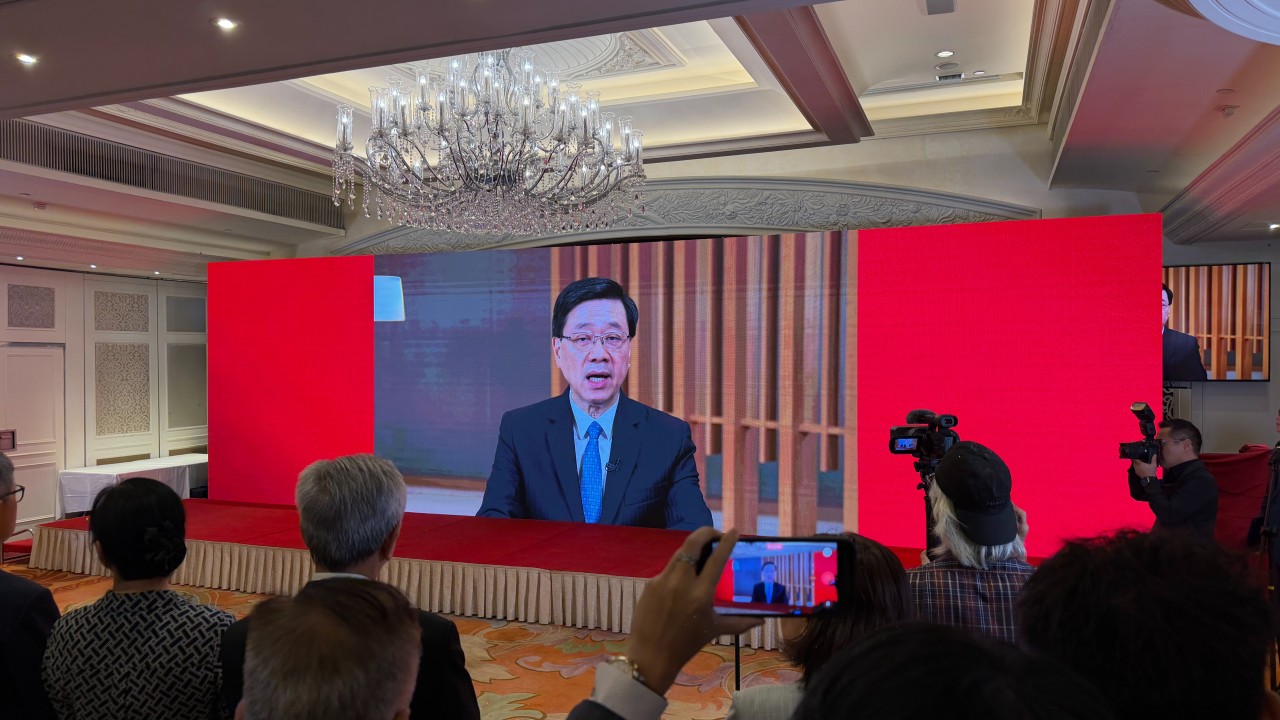
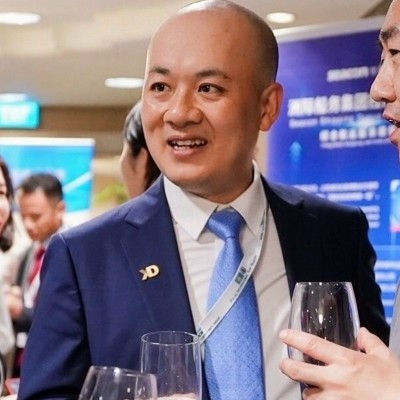
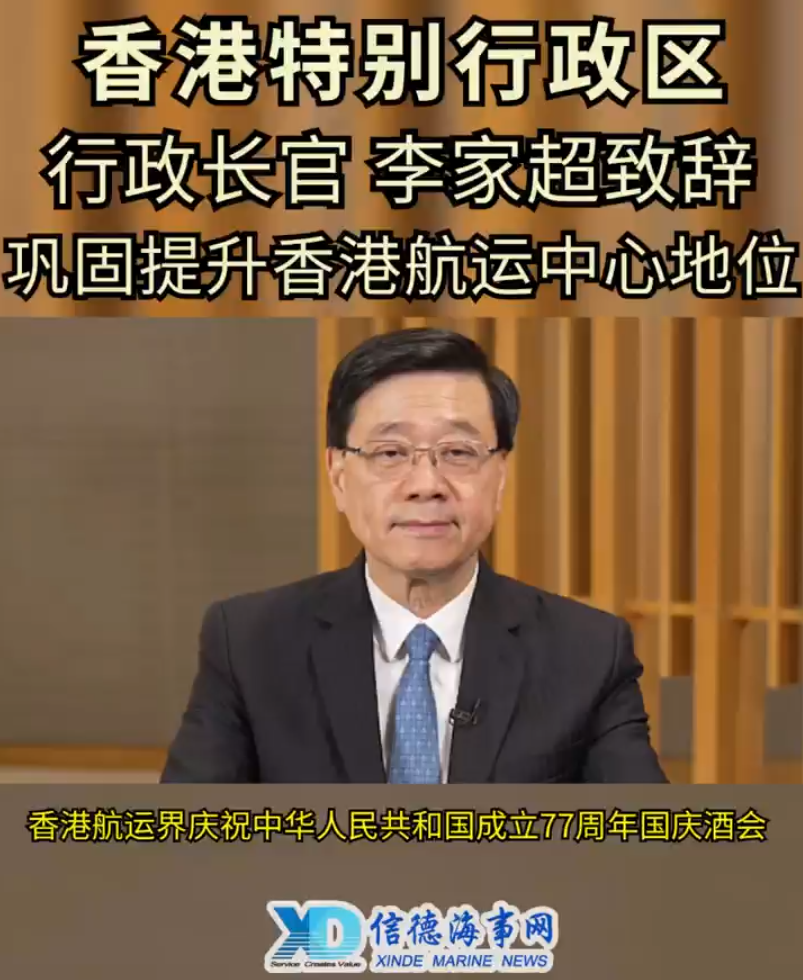
On September 22, Xinde Marine News attended the National Day reception held by Hong Kong’s maritime community, where Chief Executive John Lee delivered a video address. He summed up the city’s maritime priorities in three actions: stabilise container throughput, increase value and strengthen collaboration. Hong Kong, he said, must accelerate its transition from a port measured by volume to one recognised for the value it creates. His remarks covered maritime tax concessions, commodity trading, ship registration, finance and insurance, as well as the modernisation of the Kwai Tsing container terminals and the provision of shore power. Together, they point to a broader question: what role does Hong Kong intend to play in the global shipping industry beyond handling cargo
The pressure on the physical port is clear. Hong Kong handled 12.99 million TEU in 2025, down 5.1% year on year. Throughput fell another 3.0% in the first half of 2026, to 6.38 million TEU. Yet Hong Kong remains fourth in the 2026 Xinhua-Baltic ranking of international maritime centres. Its port volumes and its wider maritime capabilities are moving on different trajectories. Lee’s speech, read alongside Hong Kong’s first Five-Year Plan for 2026–2030 and the 2026 Policy Address, sets out how the government intends to address both.
Stabilising volumes starts well beyond the terminal gate
A value-driven maritime centre still needs a competitive port. For cargo owners and liner operators, the decision to route containers through Hong Kong depends on service frequency, transit time, reliability and the cost of the entire journey. Improvements at the quay alone will have limited effect if cargo cannot reach the port efficiently from its hinterland.
Hong Kong’s Five-Year Plan therefore places considerable emphasis on a rail-sea-land-river intermodal network. It calls for stronger feeder links with other Greater Bay Area ports, closer co-operation between Kwai Tsing and Shenzhen’s Yantian Port, and further work on cross-boundary trucking and direct river-sea transport. The objective is to make Hong Kong a more practical gateway for cargo originating far beyond the immediate Pearl River Delta.
The Policy Address offers a concrete example. Scheduled freight trains from Chongqing and Chengdu connect with Yantian, where a feeder service links cargo onwards to Hong Kong. According to the government, the combined arrangement can shorten transport from the Chengdu-Chongqing region to Hong Kong from two to four weeks to approximately three days. The commercial test will be whether rail departures, feeder sailings, customs processes and ocean-vessel calls remain aligned often enough for shippers to depend on that timetable. If they do, Hong Kong could draw on a substantially larger cargo hinterland.
This also gives Greater Bay Area port co-operation a clearer operational purpose. Mainland ports can provide inland access and regional distribution, while Hong Kong contributes international connections and maritime services. The arrangement will succeed where it reduces end-to-end time and cost for customers—and where that advantage is strong enough to retain or attract liner calls.
Creating value from the decisions behind each shipment
Lee linked high-value maritime services to Hong Kong’s role in China’s maritime development. Two proposed tax measures are central to that effort: improvements to concessions for maritime services and a half-rate tax concession for physical commodity trading. An amendment bill has been introduced to the Legislative Council; the new concessions should therefore be understood as proposals under legislative consideration, rather than benefits already in force.
The business logic extends beyond the location where a cargo is loaded. A commodity trader based in Hong Kong may arrange purchases, charter vessels, secure finance, buy insurance and manage contractual disputes involving voyages across multiple regions. Attracting trading headquarters and operating centres could create recurring demand for those services, even when individual shipments pass through other ports. Hong Kong’s ambition is to capture more of the commercial activity organised around ships and cargoes, while continuing to compete for the cargo itself.
Ship registration forms another part of the strategy. Lee referred to a “dual-flag” arrangement, but the Policy Address uses the more precise English term dual registration arrangement. Its explanatory note says an original owner registration would be suspended while a demise charter registration is undertaken at another ship registry. It does not describe a vessel simultaneously operating under two active flags. The proposed flexibility is intended to accommodate different commercial operating models and make Hong Kong’s registry more attractive to shipowners. Whether it draws additional vessels—and associated demand for ship management, finance and insurance—will depend on the final rules and their practical use by the industry.
Lee also highlighted the relationship between Hong Kong’s financial and maritime sectors. The government wants ship finance, contracts governed by Hong Kong law, insurance and maritime arbitration to work together as a service ecosystem. A newbuilding, for example, requires decisions about construction finance, delivery, employment, insurance and risk throughout its operating life. The Policy Address identifies marine insurance and ship finance as immediate areas for further work and calls for an increase in the underwriting capacity of the industry’s marine specialty risk pool. The depth and competitiveness of the products that emerge will matter as much as the policy framework itself.
Green shipping needs a fuel supply chain as well as routes
The green transition was prominent in Lee’s address, and the supporting policy documents distinguish between two kinds of corridor. A Green Energy Corridor concerns the supply of maritime fuel: Mainland cities would supply green fuels for bunkering or trading in Hong Kong. A green shipping corridor concerns their use on a route between trading ports. Hong Kong plans to announce its first corridor of each type in 2026. The distinction matters because a route can only deliver sustained emissions reductions if suitable fuel, storage, bunkering arrangements and credible emissions accounting are available along it.
The government envisages fuel production, storage and transport in South China, with Hong Kong serving as a bunkering and trading centre for international shipping. Planning and statutory procedures for green-fuel storage facilities at Tsing Yi South are due to begin in 2027, with tenders planned for early 2028. The Five-Year Plan sets three targets for 2030: five Green Energy Corridors, a 30% reduction in carbon emissions from the Kwai Tsing container terminals against a 2021 baseline, and 7% of Hong Kong-registered vessels taking up green maritime fuels. These are targets to be delivered over the coming years, alongside infrastructure and commercial arrangements that are still being developed.
The port’s own operations will have to change as well. Lee said the government would work with terminal operators on a smart and green development roadmap for Kwai Tsing, support shore-power facilities and examine port-dues incentives to encourage international liners to use them. The Policy Address also envisages more autonomous electric vehicles and remotely operated cranes. For a liner operator, the practical questions will be whether shore power is available at the right berth, compatible with its vessels, straightforward to use and commercially viable. Those details will shape Hong Kong’s appeal to fleets seeking lower-emission port calls.
Connecting port data with trade and logistics
Digitalisation offers another way to increase the value generated by the port. More than 8,000 enterprises have registered with Hong Kong’s Port Community System, according to the Policy Address. It also reports more than 20 cases in which companies obtained trade finance using trusted cargo-flow data from the system. The next steps include expanding cargo tracking for offshore trade and connecting more logistics users. If banks, insurers and trading firms can reliably use shipment information, the port community system could support financial and supply-chain decisions alongside the physical movement of containers.
Physical logistics capacity is also part of the plan. Approximately 32 hectares have been reserved at Hung Shui Kiu/Ha Tsuen for a modern logistics cluster, with ready-to-develop sites expected to be released progressively from 2027–28. The government is seeking market feedback on how the cluster should be developed. Its contribution to the maritime strategy will depend on the activities it attracts and how well they connect with cross-boundary transport, port operations and higher-value trade services. A proposed maritime academy, meanwhile, is intended to help build the specialist workforce these businesses will require.
Lee’s three priorities are closely connected. Hong Kong needs efficient cargo connections to sustain its port network; that network supports opportunities in trading and maritime services; and those services give shipowners and cargo interests additional reasons to do business in the city. Green-fuel supply and reliable logistics data could strengthen each part of the system. Over the next five years, progress will be visible in tangible outcomes: more dependable cargo flows, functioning fuel and shore-power infrastructure, shipowners making use of the revised registry, and finance and insurance business won through Hong Kong. Those results will determine how far the city’s shift from volume to value can go.

READ MORE
 People
DNV’s Norbert Kray: China’s Shipbuilding Edge Now Extends Far Beyond Cost and Scale
 People
Exclusive Interview with Hapag-Lloyd’s Rajiv Ghose: How Gemini’s 90% Schedule Reliability Is Reshaping Shipping Resilience
 People
Martin Roolvink has been appointed Managing Director of Bernhard Schulte Shipmanagement (Deutschland),
 People
PIL Names Wan Chee Foong as Next CEO: A New Chapter Driven by Ports, Logistics and Strategy
 People
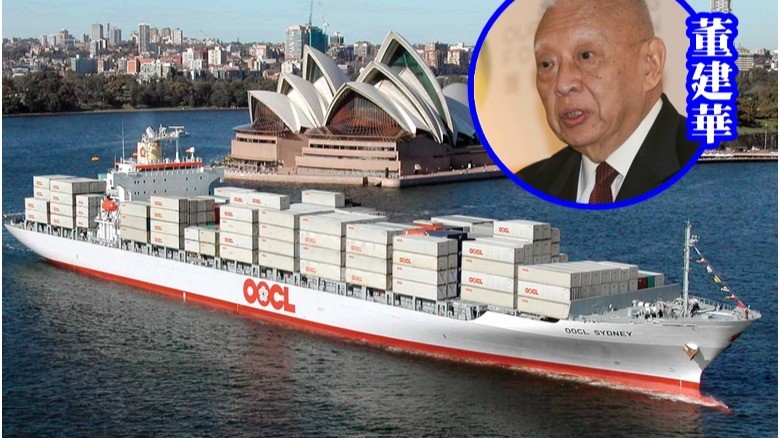
Tung Chee-hwa Dies at 89: From Shipping Executive to Hong Kong’s First Chief Executive
 People
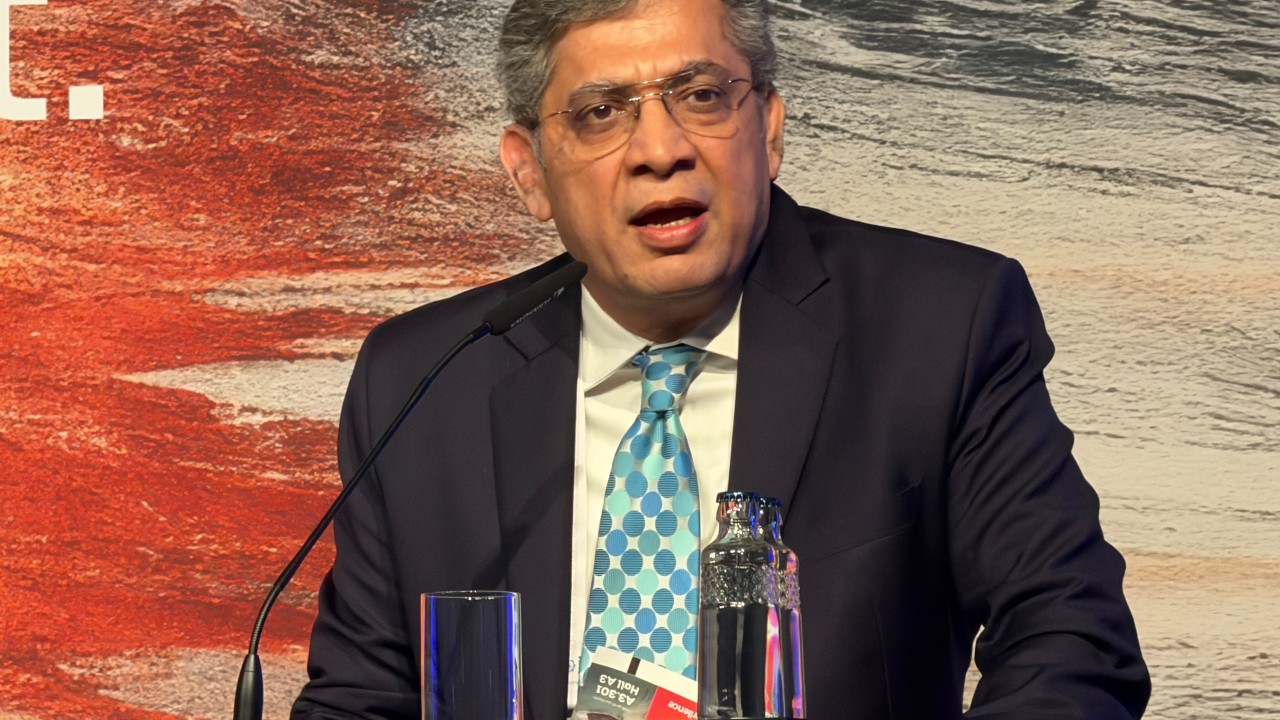
India Declares Its Maritime Ambition in Hamburg: Becoming a Global Shipping and Shipbuilding Power
 People
Euroseas Ltd.: Sustained Earnings, Disciplined Growth and Further Upside
 People
Nautical Institute (Singapore) Conference 2026 Brought Seaworthiness and the Future of Seafarers to Centre Stage
 People
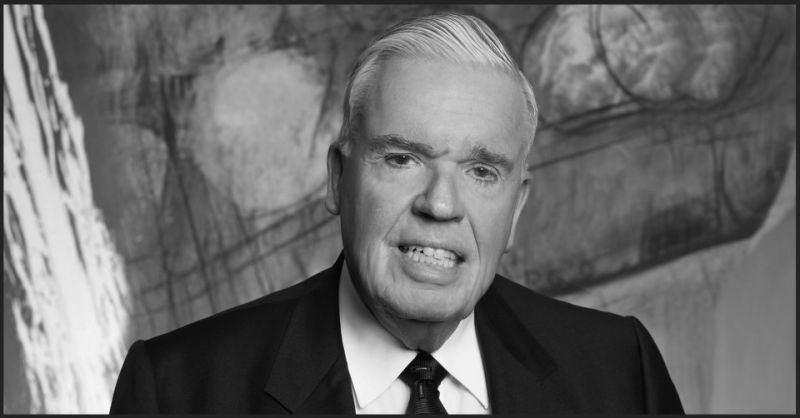
Klaus-Michael Kühne, one of the most influential figures in global shipping and logistics, has died at the age of 89
 People