


India Declares Its Maritime Ambition in Hamburg: Becoming a Global Shipping and Shipbuilding Power
€7 billion in policy support, a demand pipeline of more than 400 vessels and a target of 4.5 million GT in annual shipbuilding capacity
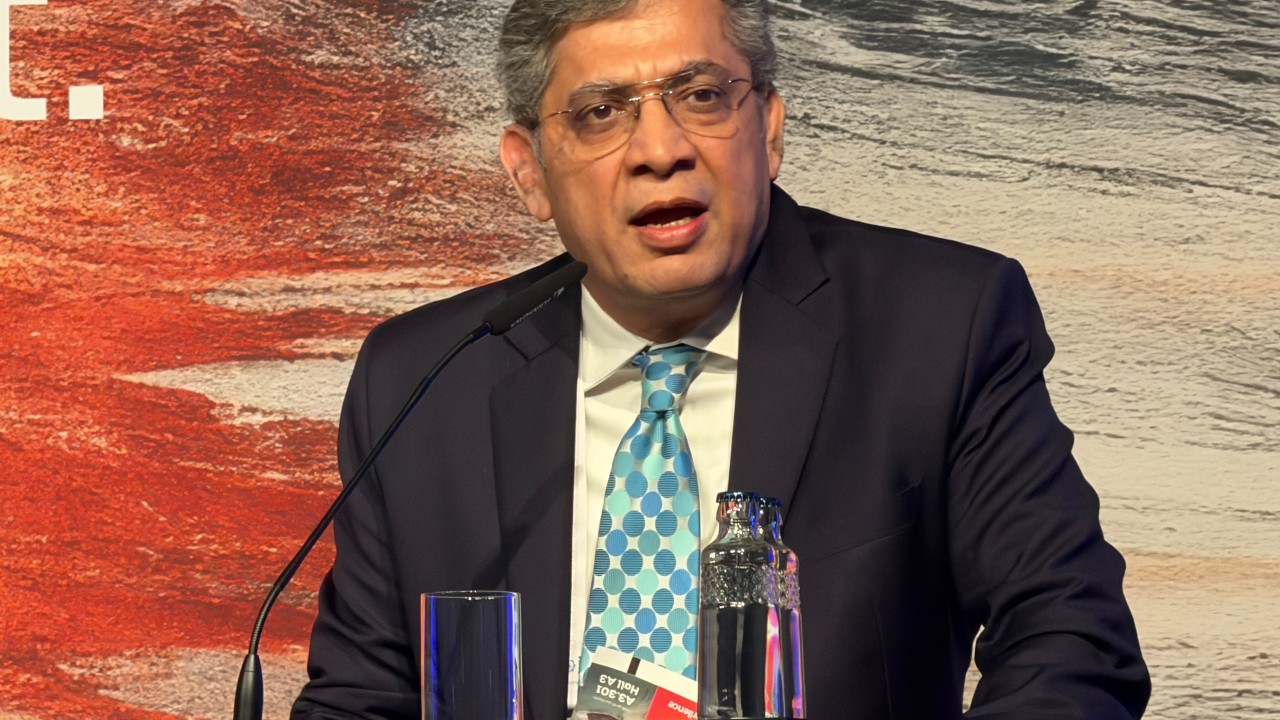
At the opening of SMM 2026 in Hamburg, India delivered one of the clearest statements yet of its long-term maritime ambitions.
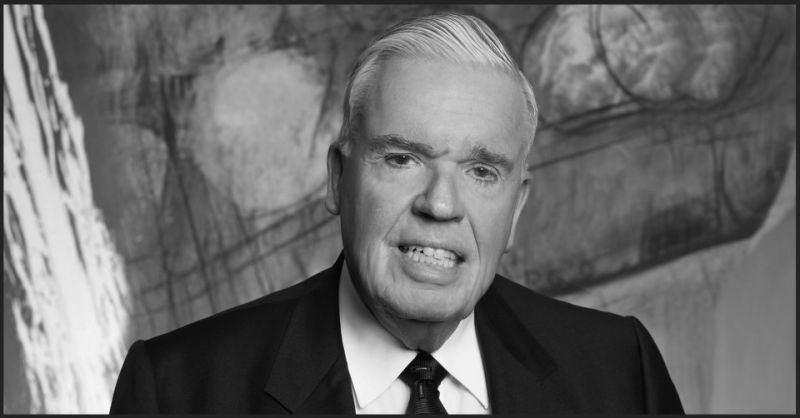
@Vijay Kumar, Secretary of India’s Ministry of Ports, Shipping and Waterways, set out a strategy to transform the country into a major global shipping and shipbuilding power. His address was backed by a series of striking figures: India plans to increase its annual shipbuilding capacity from around 1 million gross tonnes to 4.5 million GT; deploy a comprehensive maritime and shipbuilding support package worth approximately €7 billion; and aggregate public-sector vessel requirements into a demand pipeline of more than 400 ships involving investment of around €20 billion.
The national targets are equally ambitious. India wants to enter the world’s top ten shipbuilding nations by 2030 and move into the top five by 2047.
India was also represented by a national pavilion at SMM for the first time in 2026. Announcing these plans in Hamburg — one of the world’s most important meeting points for shipowners, shipyards, marine equipment suppliers and green technology companies — carried a clear message. India is seeking international capital, vessel orders, manufacturing investment and technology partnerships to support its next phase of maritime industrial expansion.
From 1 Million to 4.5 Million GT
Kumar placed India’s shipbuilding ambitions on two timelines. The first milestone is 2030, when the country aims to rank among the world’s ten leading shipbuilding nations. The second is 2047, the target year of India’s Maritime Amrit Kaal Vision 2047, under which the country intends to enter the global top five.
The increase from approximately 1 million to 4.5 million GT of annual capacity would represent a four-and-a-half-fold expansion. Achieving that scale will require far more than adding dry docks and construction berths. India will need a much broader industrial ecosystem covering ship design, marine equipment, engines, steel processing, automation, logistics, financing, classification, skilled labour and project management.
India intends to accommodate much of the additional capacity through large integrated shipbuilding clusters. According to Kumar, these clusters will bring shipyards, equipment manufacturers, technology providers, logistics companies, financial institutions and training resources together within coordinated industrial zones.
Five greenfield shipbuilding clusters have already received approval in principle, he said, involving more than 1 million GT of additional capacity. India’s central and state governments are expected to cooperate on land, infrastructure, taxation and public services.
During the subsequent discussion, Kumar said land for some projects could be made available at a “nominal cost”. The precise terms will depend on individual state policies and project agreements, but the statement illustrates how aggressively India intends to compete for international shipbuilding investment.
A €7 Billion Policy Package
The approximately €7 billion package highlighted by Kumar refers to the ₹697.25 billion programme approved by India’s Cabinet in September 2025. It combines shipbuilding subsidies, maritime investment funds, shipyard infrastructure support, project risk coverage, ship recycling incentives and legal reforms.
Around ₹247.36 billion has been allocated to the extended Shipbuilding Financial Assistance Scheme, the Shipbreaking Credit Note mechanism and the establishment of a National Shipbuilding Mission.
A further ₹250 billion will support the Maritime Development Fund, providing long-term capital and interest incentives for vessels, shipyards, repair facilities, ports and related maritime infrastructure. Another ₹199.89 billion has been allocated to greenfield shipbuilding clusters, brownfield capacity expansion, risk coverage and capability development.
Large vessels have also been granted infrastructure status in India, a move designed to improve access to long-term and lower-cost financing.
The framework addresses several constraints that have historically limited India’s commercial shipbuilding sector: expensive finance, long project cycles, first-of-a-kind construction risk, insufficient supporting industries and limited continuity of demand.
Most of the specific financial schemes are scheduled to run until 2036, while India’s wider maritime strategy extends to 2047. Maintaining policy continuity between those two timelines will be crucial. Shipowners, shipyards and equipment manufacturers make investment decisions over ten, twenty or even thirty years, and they will require confidence that the policy environment will remain predictable.
Aggregating Demand for More Than 400 Vessels
One of the biggest risks in any large shipbuilding expansion is constructing new capacity without securing a continuous flow of orders. India is attempting to address that problem by aggregating vessel demand from state-owned enterprises and other public-sector entities.
Kumar said this process had created a pipeline of more than 400 vessels, representing approximately €20 billion in potential investment. A more specific component already identified by the Indian government involves oil and gas public-sector companies, which are expected to require more than 110 India-built vessels over the coming decade.
It is important to distinguish this demand pipeline from a firm shipbuilding orderbook. The 400-plus vessels represent identified requirements and a foundation for policy coordination. Individual projects will still have to pass through technical planning, budget approval, tendering, financing and contract execution.
Nevertheless, demand aggregation could provide significant industrial advantages. It may support greater vessel standardisation, series construction and more predictable utilisation of shipyard capacity. Equipment manufacturers and engine suppliers would also be able to assess future volumes with greater confidence before committing to local production.
For a country attempting to expand shipbuilding capacity rapidly, a visible and consistently released domestic order pipeline may ultimately be more valuable than the physical construction of additional docks. India is using national demand to provide the initial workload for its future shipbuilding base.
Output Up 40%, With Exports Accounting for More Than 80%
India also wants to demonstrate that its strategy is beginning to produce tangible market activity.
According to Kumar, India’s shipbuilding output increased by approximately 40% in the previous year. Under the Shipbuilding Financial Assistance Scheme, a pipeline of more than 100 vessels worth over €1 billion had been created within one year. Export orders accounted for more than 80% of that value.
“We are already building for the world,” Kumar told the audience.
The growth rate is impressive, although it partly reflects India’s relatively low starting base. The pipeline of more than 100 vessels will also need to be assessed against eventual contract signing, construction progress and delivery.
The high export share is nevertheless an important signal. India does not intend to sustain its shipyards exclusively through government and domestic demand. Its strategy is to use national requirements to establish scale, improve industrial capabilities and then compete for international orders.
The long-term success of that export strategy will depend on delivery performance, construction quality, productivity, classification acceptance, after-sales support and competitive financing. Subsidies can reduce an initial price disadvantage, but they cannot permanently substitute for reliable execution.
Localisation From Pumps and Valves to Marine Engines
Kumar repeatedly used the term “ecosystem” and specifically referred to pumps, valves, engines and other critical marine components. India wants its capacity expansion to stimulate domestic marine equipment manufacturing instead of creating an industry that mainly assembles imported systems into locally built hulls.
Projects receiving financial support are required to meet minimum domestic value-addition thresholds. International suppliers seeking to participate in India’s order growth will therefore need to consider local manufacturing, joint ventures, technology partnerships, supply-chain development and long-term service capabilities.
The invitation to foreign companies comes with a clear industrial objective: India will offer market access and policy support while seeking to retain a larger share of maritime manufacturing value within the country.
Europe is one of the principal partners India is targeting. European companies retain world-class capabilities in ship design, automation, propulsion systems, engines, digital technology, green shipping solutions and specialised marine equipment. India, meanwhile, offers a long-term policy framework, a large engineering talent pool, visible anchor demand, industrial land, renewable energy resources and an expanding manufacturing base.
In the early stages, marine equipment production and technology cooperation may be easier to implement than the large-scale transfer of complete shipbuilding operations. As the first clusters mature, the scope could expand into joint design, licensed production and collaborative construction for third-country markets.
Up to 25% Financial Support for Green Vessels
India has incorporated the green transition directly into its shipbuilding assistance structure.
Under the 2025 framework, conventional vessels valued below ₹1 billion — equivalent to ₹100 crore — may receive financial assistance of 15%. Conventional vessels above that threshold may qualify for 20%, while green-fuel, hybrid and specialised vessels can receive assistance of up to 25%.
Kumar emphasised that green vessels would qualify for the highest level of support. The policy is designed to absorb part of the higher capital expenditure associated with new propulsion technologies and encourage India’s future shipbuilding capacity to accommodate alternative fuels.
India expects scale, automation and modern shipyard infrastructure to reduce construction costs. The differentiated subsidy structure is intended to guide the resulting capacity towards methanol, ammonia, hydrogen and other emerging fuel technologies.
Financial assistance can improve the economics of building green vessels, but it cannot independently resolve questions surrounding fuel availability, lifecycle emissions certification, global carbon regulation and long-term fuel prices. India’s ability to convert its low-cost renewable energy resources into dependable and certified marine fuels will determine how much commercial demand the green shipbuilding incentives can generate.
Turning Ship Recycling Value Into Newbuilding Demand
India is also attempting to connect vessel construction, operation, repair, recycling and replacement within a single industrial cycle.
Kumar said India accounts for approximately 35% of global end-of-life vessel recycling and has more than 100 facilities compliant with the Hong Kong International Convention for the Safe and Environmentally Sound Recycling of Ships.
Indian government data subsequently placed the country’s 2025 share at 35.4%, with 2.99 million GT of vessels recycled during the year. A total of 115 recycling facilities had achieved Hong Kong Convention compliance.
India is also seeking the inclusion of its qualified recycling yards on the European Union’s approved list. Compliance with the Hong Kong Convention does not automatically mean that a facility has already received approval under the EU Ship Recycling Regulation.
The Shipbreaking Credit Note is the critical link in India’s circular maritime model. When a vessel is responsibly recycled at an eligible Indian facility, the owner may receive a credit note equivalent to 40% of the vessel’s fair scrap value. The credit can be transferred and combined, remains valid for three years and may be used to offset up to 5% of the contract price of a new vessel constructed at an Indian shipyard.
The mechanism creates potential benefits across several parts of the industry. Recycling yards gain access to more ships, domestic shipbuilders receive additional demand, and part of the residual value of ageing vessels is reinvested in India’s maritime manufacturing system.
Ship repair is another component of the lifecycle strategy. Expanding repair and conversion capacity could extend the operational lives of existing vessels while providing shipbuilding clusters with a more stable stream of engineering and service revenue.
Three Hydrogen Hubs and Preparations for Methanol and Ammonia Bunkering
During the question-and-answer session, Kumar brought ports and energy infrastructure into the shipbuilding strategy.
Three Indian ports have been identified as hydrogen hubs, he said, while port infrastructure is being prepared for methanol and ammonia bunkering. India aims to become a producer of green fuels, a bunkering location and a builder of the vessels that will consume those fuels.
If successfully implemented, this combination could help address the familiar chicken-and-egg problem in shipping’s energy transition. Public and commercial fleets could create initial demand; ports would provide bunkering locations; energy projects would gain an offtake base; and shipyards could select propulsion technologies according to the fuels expected to become available.
A considerable amount of work remains between policy announcements and commercial-scale supply. Safety regulations, storage facilities, transport systems, lifecycle emissions certification, fuel-price support and long-term offtake agreements will all affect implementation.
Kumar’s speech established the direction of travel. The scale and timetable of the first hydrogen, methanol and ammonia projects will show how quickly that vision can become an operational fuel network.
Why India Chose Hamburg to Address Europe
Kumar described Europe as a global centre for shipbuilding technology, marine equipment, design, automation and green solutions.
He issued invitations at three levels. European shipyards could invest in India’s new shipbuilding clusters. European shipowners could place newbuilding demand with Indian yards. Equipment manufacturers could establish production and supply networks in India, serving both Indian and international markets.
The proposed partnership also contains an element of competition. Europe wants to retain its capabilities in complex vessels, high-end equipment and systems integration. India intends to use international collaboration to accelerate localisation, expand its industrial base and increase its share of export orders.
The most practical areas of cooperation could include high-value marine equipment, alternative-fuel propulsion, digital shipyards, vessel design, quality management, workforce training, project finance, repair and compliant ship recycling.
Companies considering investment will need to evaluate the delivery of land and infrastructure commitments, coordination between central and state governments, local-content requirements, intellectual property protection, shipyard productivity and contractual responsibility.
India is presenting an opportunity of considerable scale, although implementation standards may vary significantly between locations and projects.
The First Deliveries Will Determine the Outcome
Annual capacity of 4.5 million GT and entry into the world’s top five shipbuilding nations are highly demanding objectives.
Government funding and low-cost land can accelerate the construction of shipyard capacity. Demand aggregation can improve order visibility. Rankings, however, will ultimately be determined by vessels delivered on time, at the required quality and in full compliance with classification and regulatory standards.
The conversion of public-sector requirements into funded contracts will be a critical indicator. So will consistency between central and state-level policy, improvements in shipyard productivity, supply-chain quality, the balance between localisation and international participation, and the development of commercially viable green fuels.
At the conclusion of his address, Kumar said India already had its own “crystal ball” in the form of the Maritime Amrit Kaal Vision 2047.
In Hamburg, that vision was translated into an industrial invitation supported by capital, capacity targets, identified vessel demand and specific avenues for international cooperation.
India wants to occupy a much larger position in the global shipbuilding landscape. It also intends to connect shipbuilding, shipping, repair, recycling, ports and green energy within a single maritime industrial system.
Whether India can develop from one of the world’s largest ship-recycling centres into a major shipbuilding nation, green-fuel supplier and marine equipment manufacturing base will be decided by the performance of its first new clusters, its first large-scale contracts and, above all, its first deliveries.

READ MORE
 People
What John Lee’s Speech Signals for Hong Kong’s Maritime Industry over the Next Five Years
 People
PIL Names Wan Chee Foong as Next CEO: A New Chapter Driven by Ports, Logistics and Strategy
 People
DNV’s Norbert Kray: China’s Shipbuilding Edge Now Extends Far Beyond Cost and Scale
 People
Asia is no longer just driving shipping growth – it is shaping the industry’s future
 People
Exclusive Interview with Hapag-Lloyd’s Rajiv Ghose: How Gemini’s 90% Schedule Reliability Is Reshaping Shipping Resilience
 People
Martin Roolvink has been appointed Managing Director of Bernhard Schulte Shipmanagement (Deutschland),
 People
Tung Chee-hwa Dies at 89: From Shipping Executive to Hong Kong’s First Chief Executive
 People
Euroseas Ltd.: Sustained Earnings, Disciplined Growth and Further Upside
 People
Nautical Institute (Singapore) Conference 2026 Brought Seaworthiness and the Future of Seafarers to Centre Stage
 People