


Crew Kidnapped, US$500,000 Ransom Paid: The Global Maritime Kidnap-for-Ransom Map Is Being Redrawn
.
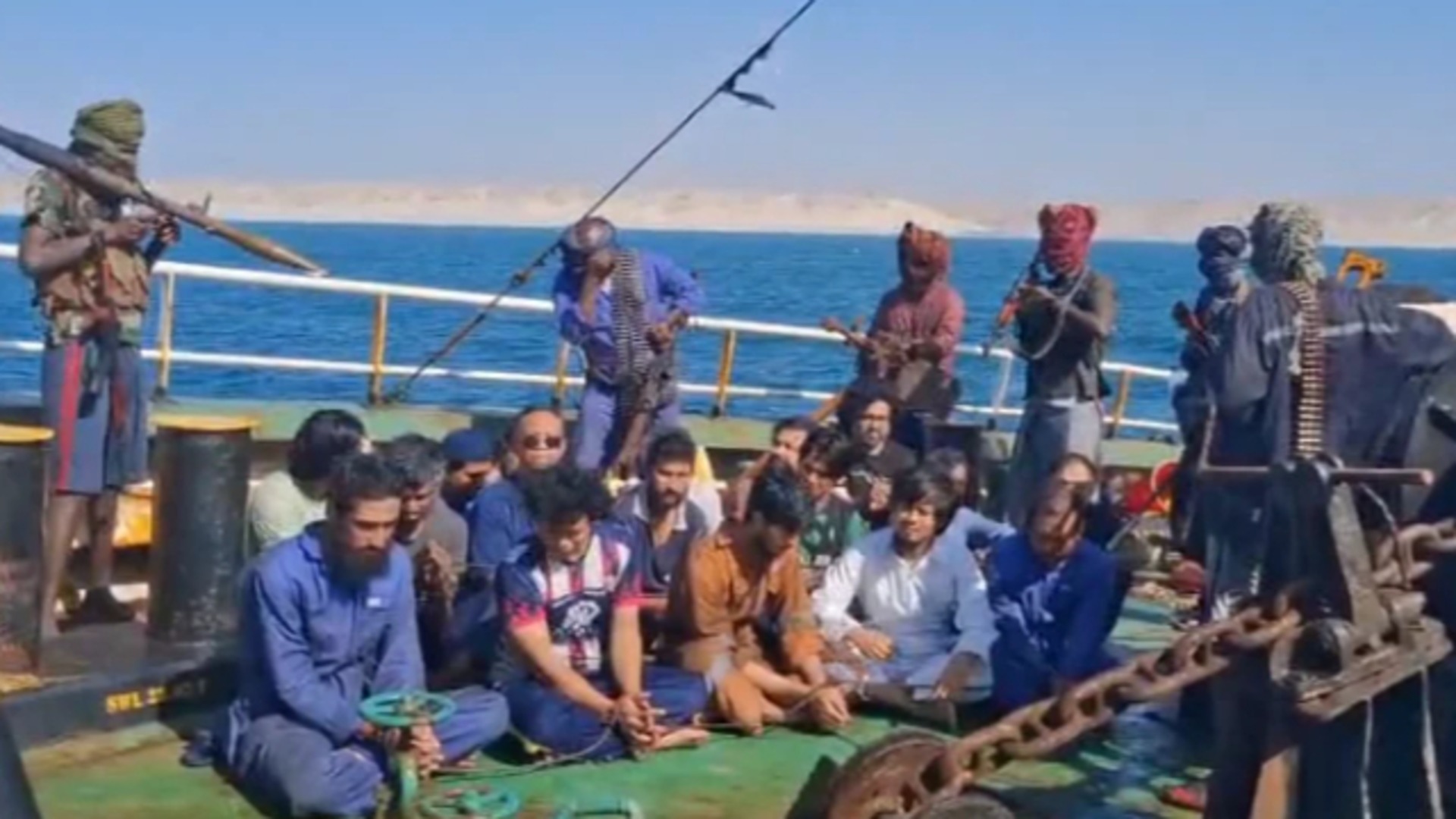

Two seafarers were abducted from a bulk carrier off Port-au-Prince, Haiti, in May 2026 and were later released following the reported payment of a US$500,000 ransom.
The incident offers a warning that the maritime kidnap-for-ransom threat is spreading beyond the locations traditionally associated with piracy. Established kidnapping economies in coastal cities are increasingly capable of extending their operations into ports, anchorages and nearby waters, placing commercial vessels and crews within reach of organised criminal groups.
A new analysis published by maritime security company Ambrey on 16 July examined 16 years of onshore abductions, forced disappearances and offshore ransom-related incidents. After adjusting the data to reflect the population living within 25 kilometres of the coastline, Ambrey identified Haiti as having the highest population-adjusted rate of kidnap for ransom worldwide.
Trinidad and Tobago, Ecuador, Nigeria, Cameroon and Somalia were also identified as major hotspots.
Ambrey’s central conclusion is that previous attacks against vessels provide only part of the risk picture. In several locations, the maritime threat is connected to a broader criminal environment ashore, where groups already possess the personnel, weapons, transport networks, detention sites and negotiation channels required to conduct kidnapping operations.
When such networks operate close to ports and anchorages, vessels and seafarers may become attractive targets.
Haiti records the world’s highest coastal kidnapping rate
The immediate context for Ambrey’s analysis was the May 2026 kidnapping of two crew members from a bulk carrier off Port-au-Prince.
The seafarers were reportedly released after the payment of a US$500,000 ransom.
Haiti has faced a prolonged deterioration in security, driven by armed gang activity, weakened government authority and the collapse of public order across parts of the country. Armed groups have expanded their control in and around Port-au-Prince, disrupting roads, logistics corridors and port operations.
Several maritime authorities have already responded to the deteriorating operating environment.
The Republic of the Marshall Islands Registry requires vessels flying its flag and calling at Haitian ports to operate at International Ship and Port Facility Security Code Security Level 2.
The United States Coast Guard has also imposed Conditions of Entry on vessels arriving from Haiti after determining that the country was not effectively implementing the ISPS Code.
International Group P&I clubs have issued loss-prevention guidance warning that gang violence and worsening security around Port-au-Prince are disrupting port activities and increasing the exposure of vessels and crews.
Ambrey’s combined onshore and offshore dataset found that Haiti recorded 3.57 kidnap-for-ransom incidents per 100,000 people living within 25 kilometres of the coast, the highest rate identified in the study.
The findings suggest a clear connection between the kidnapping of seafarers and Haiti’s broader onshore criminal environment. Ports, anchorages and nearshore waters are becoming areas through which insecurity ashore can spread into the maritime domain.
Emerging risks in the Caribbean and South America
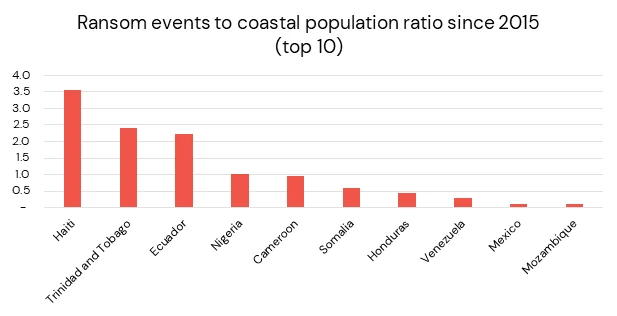
Beyond Haiti, Trinidad and Tobago and Ecuador also recorded high population-adjusted rates of kidnap for ransom. Ambrey used Pettitt change-point analysis to assess structural changes in annual incident patterns. Ecuador was the only country in the study to show a statistically significant structural increase in kidnap-for-ransom activity.
This suggests that the rise in ransom-related crime in Ecuador extends beyond short-term volatility and may represent a more sustained change in the country’s security environment.
Ecuador has experienced a sharp expansion in organised crime, gang violence and narcotics trafficking. Guayaquil and its surrounding region form one of the country’s most important logistics, port and export centres, while also sitting within transport corridors contested by criminal organisations.
The report nevertheless emphasised that risks can differ substantially between ports in the same country.
The area surrounding Ecuador’s newer port facilities at Posorja recorded fewer incidents than nearby Guayaquil. For shipowners and operators, this underlines the limitations of relying only on national risk ratings. Assessments need to consider individual ports, anchorages, surrounding urban areas, crew transport routes and shore-leave arrangements.
Trinidad and Tobago also displayed operational signals of increasing kidnapping activity. The country occupies an important position in the Caribbean energy trade and hosts oil and gas production, processing and transshipment infrastructure.
Further expansion of criminal activity ashore could therefore have direct implications for port operations, offshore energy facilities and seafarer security.
Honduras was also identified as requiring enhanced monitoring. Although the detected change did not meet conventional statistical significance thresholds, Ambrey said operational reporting indicated that kidnapping dynamics may be worsening.
West Africa remains a major area of concern
Nigeria ranked fourth globally in Ambrey’s population-adjusted analysis.
The result reflects Nigeria’s longstanding exposure to piracy, armed robbery and the kidnapping of seafarers. Ambrey assessed that the country’s high risk level is primarily the product of persistent criminal capability rather than a recent structural increase.
Piracy incidents in the Gulf of Guinea have declined from their previous peaks following regional security initiatives, international naval involvement and greater investment in Nigerian maritime security.
However, the underlying criminal networks, access to weapons, illegal oil trading structures and coastal governance weaknesses have not disappeared.
A reduction in recorded attacks does not necessarily mean that the operational capability to conduct kidnappings has been dismantled. If enforcement weakens or commercial opportunities increase, maritime abductions could return.
Cameroon also demonstrated a pronounced geographical concentration of risk.
Ambrey found that activity was concentrated in the Anglophone South-West Region bordering Nigeria. This area lies close to the offshore oil and gas terminals of the Rio del Rey Basin.
Far fewer ransom-related incidents were recorded around Douala.
This geographical difference has direct operational relevance. A vessel calling at Douala may face a materially different threat environment from one serving a remote offshore terminal or operating close to the Nigerian border.
Maritime kidnappings are re-emerging off Somalia
Somalia also appeared among the countries with comparatively high kidnap-for-ransom rates.
Ambrey found that areas controlled by Al-Shabaab showed elevated levels of abduction and forced disappearance. However, explicit references to ransom were disproportionately concentrated in the Bari region of Puntland in northeastern Somalia.
Most of those reports were piracy-related.
The pattern creates greater exposure for vessels passing northeastern Somalia and for ships calling at ports such as Garacad.
Ambrey highlighted the renewed pattern of maritime kidnapping off Somalia since 2023.
For more than a decade, international naval patrols, ship-protection measures and the use of privately contracted armed security personnel significantly reduced the operating space available to Somali pirate groups.
The disruption in the Red Sea, the diversion of naval resources and continuing governance limitations inside Somalia have created more favourable conditions for piracy networks to re-emerge.
The risk was further illustrated by an incident on 17 July involving the Tanzania-flagged, 10,960-dwt oil and chemical tanker ASANA.
The vessel was reportedly boarded by armed men in the Gulf of Aden after departing Mukalla, Yemen. It subsequently issued a distress signal and altered course while under the control of the boarders, heading towards the Somali coast.
Latest reports indicated that around seven suspected Somali pirates had taken the vessel towards waters near Qandala in Puntland, northeastern Somalia.
Yemeni maritime authorities assessed that the incident displayed characteristics consistent with piracy, vessel hijacking and the detention of crew for ransom.
At the time of writing, ASANA remained under the control of armed personnel. The number, nationality and condition of the crew had not been independently confirmed, while international naval forces in the region were continuing to monitor the situation.
The incident reinforces Ambrey’s warning that historical piracy capability can reappear when coastal criminal networks, operational opportunity and accessible maritime targets converge.
Northern Mozambique presents a distinctly different risk profile
Kidnap-for-ransom exposure in Mozambique is also highly localised.
Ambrey found greater evidence of risk around Mocímboa da Praia in Cabo Delgado than in other parts of the country.
Mocímboa da Praia lies close to northern Mozambique’s major natural gas development areas and has been heavily affected by armed conflict, insurgent activity and population displacement.
By comparison, the larger ports of Beira and Maputo were assessed as having relatively low kidnap-for-ransom exposure.
The difference illustrates why voyage security assessments should extend below the national level. Mozambique’s southern commercial ports and its conflict-affected northern coastline present fundamentally different security environments.
Shipowners, charterers and managers need to account for local governance, militant capability, access routes, port security arrangements and proximity to unstable areas.
Venezuelan ports also show uneven exposure
Ambrey’s analysis also compared coastal locations in Venezuela.
Maracaibo appeared more exposed to kidnap-for-ransom risk than La Guaira and was assessed as highly likely to be more exposed than Barcelona and the nearby Jose oil terminal.
Maracaibo remains one of Venezuela’s principal oil industry centres. Economic deterioration, criminal activity and illicit trading in the surrounding region may increase the exposure of vessels, crews and port-service personnel.
The Jose terminal is one of Venezuela’s most important crude export facilities. Although its surrounding area may present a lower kidnapping risk than Maracaibo, operators still need to consider sanctions exposure, political instability, port controls, local transportation arrangements and wider security conditions.
Risks can differ sharply between ports in the same country
One of the most operationally significant findings in the Ambrey report is the highly uneven distribution of incidents within individual countries.
Port-au-Prince displayed greater exposure than Cap-Haïtien in Haiti.
Guayaquil recorded more incidents than the area surrounding Posorja in Ecuador.
Cameroon’s South-West Region, close to Nigeria and the Rio del Rey offshore facilities, showed greater exposure than Douala.
Mocímboa da Praia in northern Mozambique presented a higher risk than Maputo and Beira.
Maracaibo appeared more exposed than La Guaira and the Jose terminal area in Venezuela.
These differences mean that broad national risk ratings may be too imprecise for operational decision-making.
A commercial vessel calling at a well-protected national gateway port may face a very different threat from a ship serving a remote oil terminal, anchoring near a gang-controlled coastline or arranging crew changes through an unstable urban area.
Effective security planning therefore needs to examine specific terminals, anchorages, pilot stations, launch-boat routes, crew-transfer arrangements, hotels and road corridors.
Existing industry designations may lag behind changing risks
Ambrey also highlighted differences between the way maritime organisations currently classify Haiti.
Flag administrations, maritime authorities and insurers have recognised the country as an elevated operational security risk and introduced measures such as higher ISPS security levels, Conditions of Entry and loss-prevention advisories.
However, neither the International Bargaining Forum nor the International Transport Workers’ Federation currently designates any location in the Western Hemisphere as a High Risk Area.
The divergence reflects the different purposes of individual risk frameworks.
Flag states and maritime authorities focus on ship security, port compliance and the implementation of international regulations.
Insurers examine exposure to loss of life, vessel damage, detention, kidnapping, ransom payments and liability.
IBF and ITF designations are linked more directly to seafarer employment conditions, compensation and contractual entitlements.
Because the objectives and indicators differ, formal industry designations may not adjust at the same speed as the underlying security environment.
For shipowners, official High Risk Area lists remain important, although they should be supplemented by real-time intelligence and port-specific assessments.
Onshore crime can act as an early warning for maritime threats
Traditional maritime security assessments frequently rely on records of piracy, armed robbery, vessel hijacking and crew abduction.
Such data remains valuable, though it mainly describes threats that have already materialised at sea.
Ambrey’s analysis indicates that onshore kidnapping economies, organised criminal activity, government weakness and insecurity near ports can provide earlier warning of emerging maritime risks.
A coastal area with a mature kidnapping market may already contain the infrastructure required for maritime abductions.
Criminal organisations may possess armed personnel, vehicles, boats, safe houses, detention sites, negotiators, financial intermediaries and established ransom-payment channels.
When those organisations operate close to a port or anchorage, seafarers can become high-value targets. Foreign crews may be perceived as having access to shipowner resources, insurance coverage and international crisis-response networks capable of raising substantial ransom payments.
The May incident off Haiti demonstrates how quickly an onshore gang threat can extend into coastal waters.
Similar patterns could emerge in other locations where kidnapping is already widespread, port security is weak and criminal groups operate near maritime infrastructure.
Shipowners need to refine voyage security assessments
Ambrey advised companies calling at the identified countries and port cities to conduct more detailed analysis of where individual incidents occurred.
Country-level assessments should be supported by port-specific intelligence.
Shipowners and operators should consider obtaining kidnap-and-ransom insurance and reviewing crisis-management plans, response consultants, internal decision-making structures and communications procedures.
Voyage planning may require enhanced ship-security measures, including tighter access controls, additional deck watches, restrictions on non-essential visitors, greater supervision of service craft and limitations on shore leave.
At higher-risk ports, crew changes should be planned carefully. Operators need to assess airport transfers, road routes, hotels, launch services and the reliability of local agents and security providers.
Companies should also conduct kidnap-for-ransom scenario exercises involving management teams, intelligence providers, insurers, crisis-response consultants and relevant internal stakeholders.
Such exercises can test decision-making authority, ship-to-shore communications, family liaison procedures, media handling, ransom-negotiation protocols and business continuity arrangements.
Masters and crews should receive port-specific security briefings before arrival. These should cover local threat patterns, restricted areas, emergency contacts, suspicious-approach procedures and the actions expected during an attempted boarding or abduction.
The maritime kidnap-for-ransom map is changing
The Gulf of Guinea and Somali waters remain familiar areas of kidnap-for-ransom concern for international shipping.
Ambrey’s analysis shows that greater attention is now required in Haiti, Ecuador, Trinidad and Tobago and other parts of the Caribbean and Latin America.
The geography of maritime kidnapping is expanding, while the groups behind the threat are becoming more varied.
Some incidents are conducted by traditional pirate organisations. Others involve gangs, insurgents, armed groups or organised criminal networks whose main operations are based ashore.
Weak governance, social instability, limited port security, economic deterioration and proximity between criminal groups and maritime infrastructure can all accelerate the spread of the threat from land to sea.
For shipping companies, future risk assessments will need to cover the entire operating chain: approach to port, anchorage, cargo operations, crew movement ashore and departure.
The global maritime kidnap-for-ransom map is already being redrawn. Companies that integrate onshore criminal intelligence into voyage planning will have a stronger chance of identifying emerging threats before they develop into attacks against vessels and crews.

READ MORE
 Safety
US Says It Disabled Hong Kong-Owned Bulker off Oman
 Safety
Attacked Just 42Days After Delivery: George Prokopiou’s 115,000-Dwt Tanker Hit in Hormuz
 Safety
Five Seafarers Reported Dead as Puntland Retakes Hijacked Tanker Honour 25
 Safety
Middle East war leaves mounting toll on merchant shipping
 Safety
China-U.S. Consensus Highlights Free Navigation: No Country or Entity Should Impose Transit Fees on International Waterways
 Safety
1 seafarer killed, Fatal attack in the Strait of Hormuz: Capesize bulker CAPE DAO hit by unknown projectile
 Safety
25 Crew Abandon MSC Container Ship in the South China Sea — All Rescued, Vessel Still Adrift
 Safety
MSC Hermes III Adrift Unmanned in South China Sea After 25 Crew Abandon Ship
 Safety
Dangerous Goods Container Fire Reported at NPCT1 Terminal in Jakarta
 Safety