


Breaking: Two Filipino Seafarers Killed; Saudi Bahri's Flagship VLCC Hit in Strait of Hormuz, 11 Supertankers Reflagged to Liberia
On September 2 local time, Bahri, the national shipping company of Saudi Arabia, issued a statement confirming that its Very Large Crude Carrier (VLCC) MV SIDR was involved in a security incident in the southern channel of the Strait of Hormuz, resulting in the deaths of two Filipino seafarers.

On September 2 local time, Bahri, the national shipping company of Saudi Arabia, issued a statement confirming that its Very Large Crude Carrier (VLCC) MV SIDR was involved in a security incident in the southern channel of the Strait of Hormuz, resulting in the deaths of two Filipino seafarers.
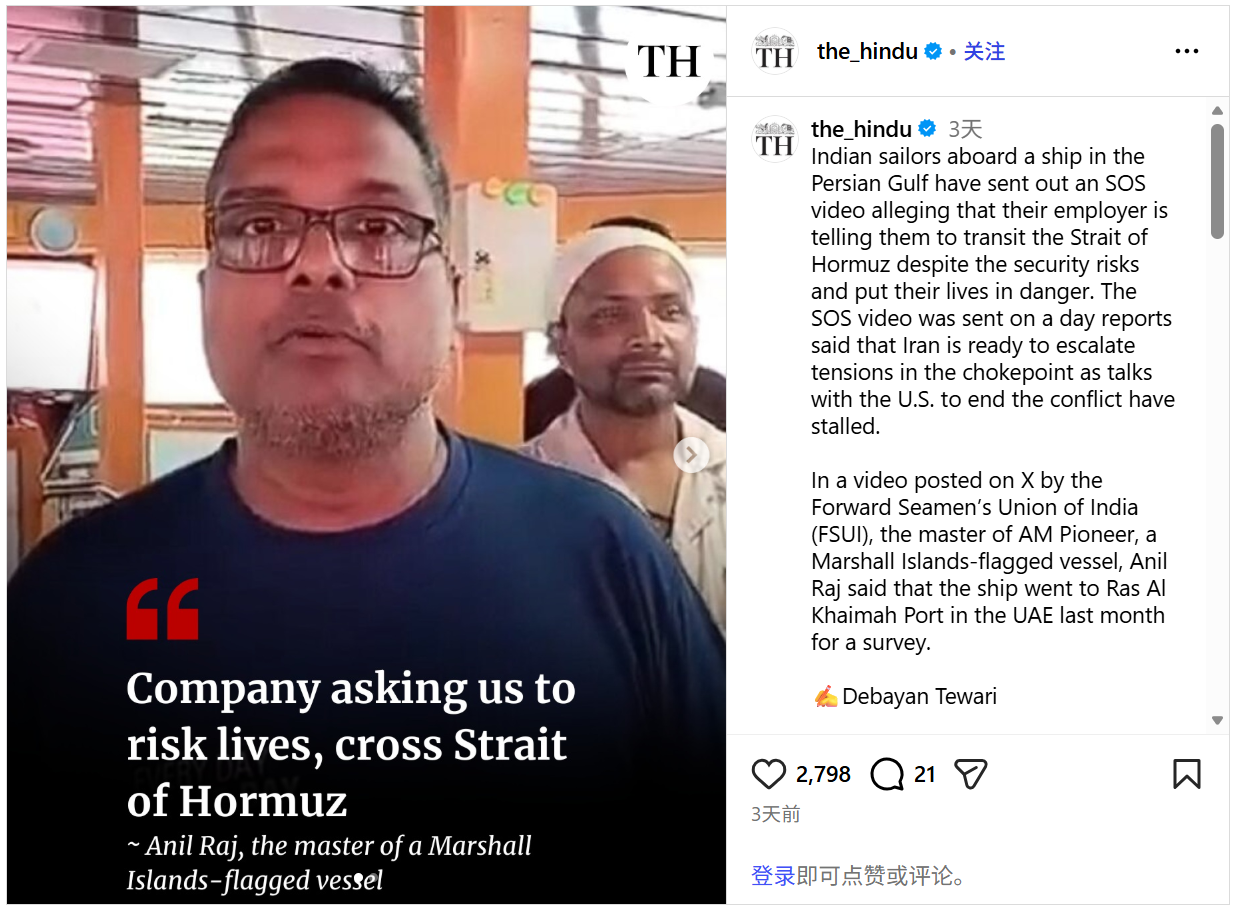
Meanwhile, Xinde Marine has learned that Bahri has quietly completed the renaming and reflagging of 11 VLCCs to the Liberian registry, and these vessels will be dedicated to shuttle operations in the Strait of Hormuz.
Incident Timeline: A Fatal Strike in the Strait at Night
According to Bahri’s official statement, MV SIDR (IMO 9854715, 300,759 DWT, built in 2019) was transiting the southern channel of the Strait of Hormuz at approximately 23:40 local time on August 31 (20:40 GMT) when the incident occurred.
“It is with deep sorrow that we confirm the tragic loss of two Filipino seafarers in this incident,” the statement read. Bahri noted that the company is in constant contact with the vessel, fully cooperating with relevant authorities in the investigation, and has reached out to the families of the deceased to provide necessary support.

The United Kingdom Maritime Trade Operations (UKMTO) later issued Incident Alert No. 126, confirming receipt of a delayed report of a security incident involving a tanker in the Strait of Hormuz that caused two casualties. UKMTO stated that no environmental pollution had been reported so far, that authorities were conducting investigations, and advised vessels transiting the area to exercise caution and report any suspicious activity.
Vessel tracking data shows MV SIDR was struck approximately 16.6 nautical miles northeast of Khasab Port, Oman. Almost within the same time window, another Liberian-flagged VLCC, MV Senegal Prosperity, operated by Sinokor, was reportedly hit by three projectiles about 17 nautical miles east of Khasab. Both vessels had loaded roughly 2 million barrels of crude oil at Saudi Arabia’s Juaymah crude terminal prior to the incident.

Alarming Statistics: 72 Incidents, 21 Seafarer Fatalities
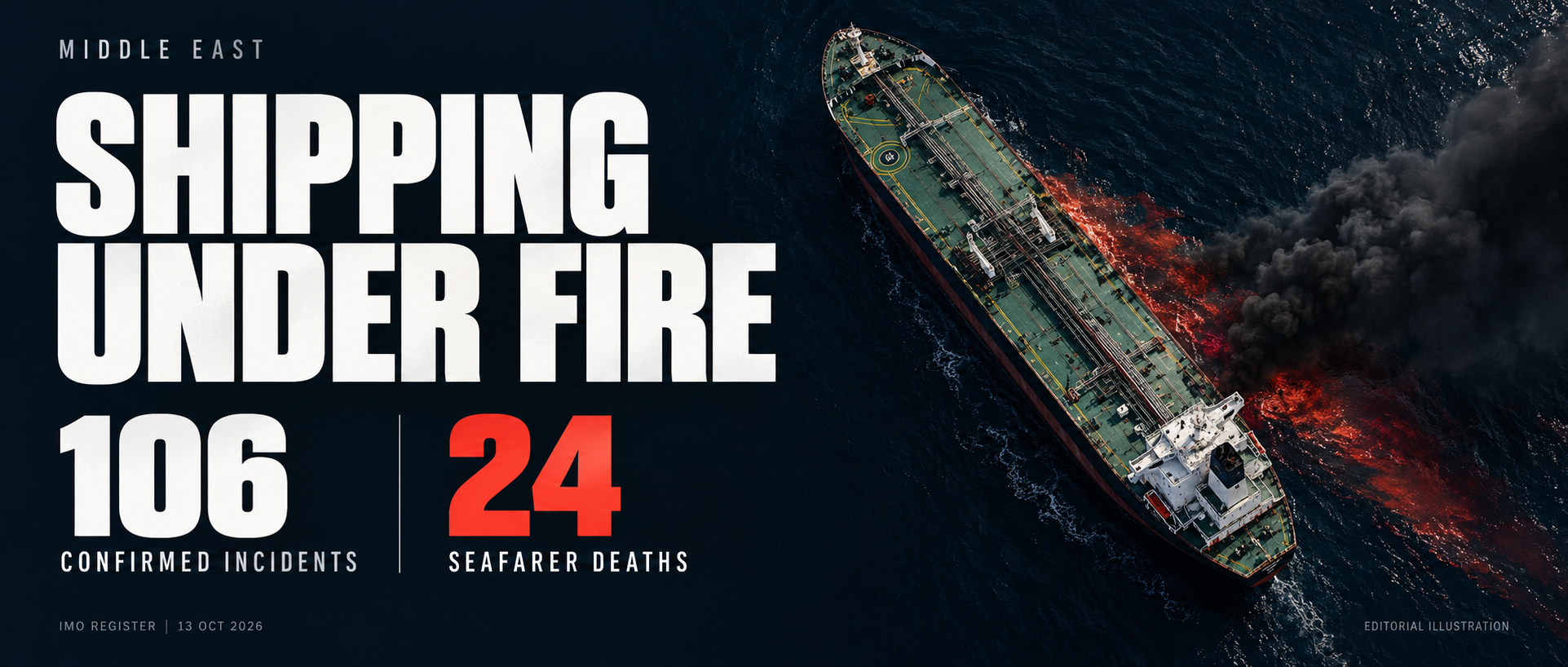
According to data from the International Maritime Organization (IMO), as of September 2, 2026, the total number of confirmed security incidents in the region had reached 72, and the confirmed death toll among seafarers had risen to 21.
The figure continues to climb. Since the escalation of regional conflicts, the Strait of Hormuz — the energy choke point that carries about 20% of global oil trade — has become one of the most dangerous working waters for seafarers worldwide.
Notably, a large number of tankers are currently transiting the strait in “Dark Transit” mode. Data from the EU’s Sentinel-1 satellite shows around 150 vessels are currently anchored off the coast of Oman awaiting ship-to-ship transfers, compared with only about 40 in January this year.
Fleet Restructuring: Bahri Rebflags 11 VLCCs to Liberia
Coinciding with the disclosure of the SIDR incident, Bahri has recently completed the renaming of 11 VLCCs and reflagged them from the Saudi Arabian flag to the Liberian flag.
Sources indicate these reflagged vessels are all relatively older VLCCs. Following renaming, they will be dedicated to crude oil shuttle operations in the Strait of Hormuz and Gulf region.
The move carries special implications amid the current situation:
- Risk isolation: Spinning off older tonnage from Saudi Arabia’s national fleet and reflagging them under a flag of convenience can, to a certain extent, reduce the symbolic target value of the vessels as “Saudi national assets,” while creating a buffer in terms of insurance, claims and legal liability.
- Operational flexibility: As the world’s second-largest ship registry, Liberia offers greater flexibility in vessel registration, crewing and operational compliance, making it easier for ships to carry out high-frequency short-haul shuttle missions in high-risk waters.
- Supply security: Data shows Bahri currently has 16 VLCCs deployed off the coast of Oman, with another 3 en route. Against the backdrop of surging uncertainty over strait transit, maintaining a dedicated shuttle fleet to support the short-haul link from loading terminals inside the Gulf to floating storage/transfer points off Oman has become a key tactical arrangement for Saudi Arabia to ensure the continuity of crude oil exports.
As of the first quarter of 2026, Bahri owned a total of 50 VLCCs, accounting for approximately 5% of the global VLCC fleet, and serves as the core shipping platform for Saudi Aramco’s crude oil sales on a CIF (Cost, Insurance and Freight) basis.
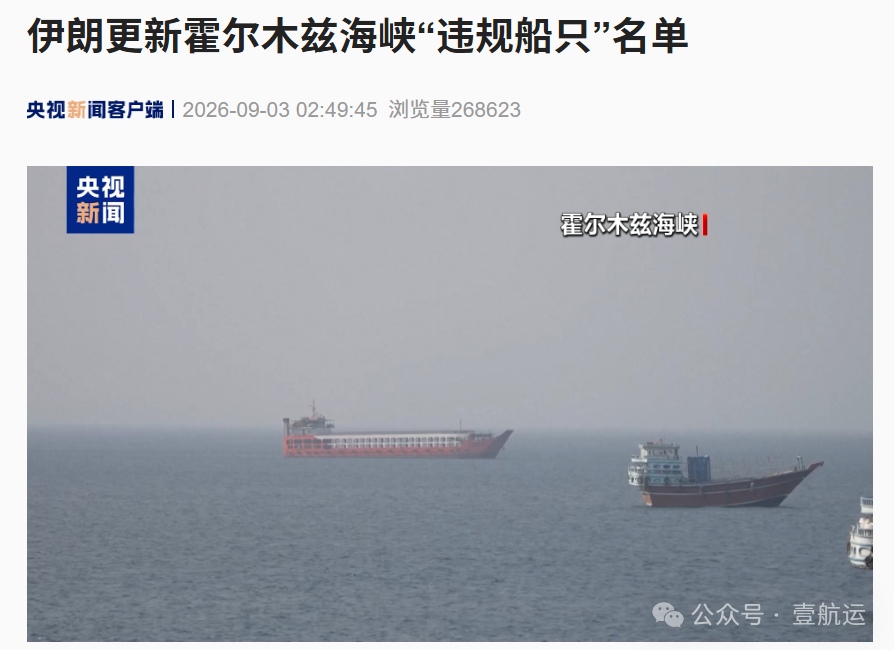
On September 2 local time, Iran’s Persian Gulf Strait Authority updated its list of “violating vessels,” adding 11 ships and bringing the total number of vessels on the list to 57.
In its latest bulletin, UKMTO once again emphasized: “Vessels are advised to exercise caution when transiting the area and report any suspicious activity.” For every seafarer still on duty in the Strait of Hormuz, behind this routine reminder lies a very real test of life and death.


READ MORE
 Safety
US Says It Disabled Hong Kong-Owned Bulker off Oman
 Safety
Attacked Just 42Days After Delivery: George Prokopiou’s 115,000-Dwt Tanker Hit in Hormuz
 Safety
Five Seafarers Reported Dead as Puntland Retakes Hijacked Tanker Honour 25
 Safety
Middle East war leaves mounting toll on merchant shipping
 Safety
China-U.S. Consensus Highlights Free Navigation: No Country or Entity Should Impose Transit Fees on International Waterways
 Safety
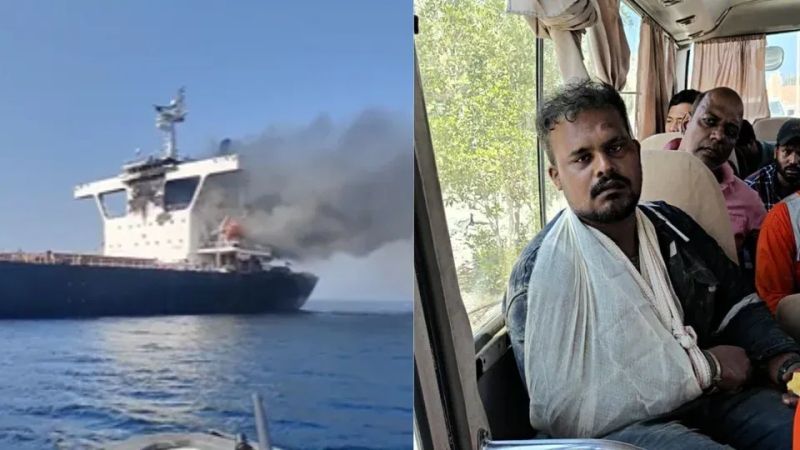
1 seafarer killed, Fatal attack in the Strait of Hormuz: Capesize bulker CAPE DAO hit by unknown projectile
 Safety
25 Crew Abandon MSC Container Ship in the South China Sea — All Rescued, Vessel Still Adrift
 Safety
MSC Hermes III Adrift Unmanned in South China Sea After 25 Crew Abandon Ship
 Safety
Dangerous Goods Container Fire Reported at NPCT1 Terminal in Jakarta
 Safety