


Illness Linked to 81% of Crew Death Claims in Britannia Review
A review of nearly 3,000 crew claims handled by Britannia P&I Club over two policy years found that illness, rather than occupational injury, accounted for the large majority of fatalities. Cardiovascular conditions alone represented 58% of illness-related death claims, highlighting a health risk that conventional onboard safety programmes may not fully address.

Shipping has spent decdes building systems to prevent falls, machinery accidents, enclosed-space fatalities and man-overboard incidents.
But a new claims analysis from Britannia P&I Club suggests that for fatal crew cases in its own portfolio, the bigger threat was not an accident at all.
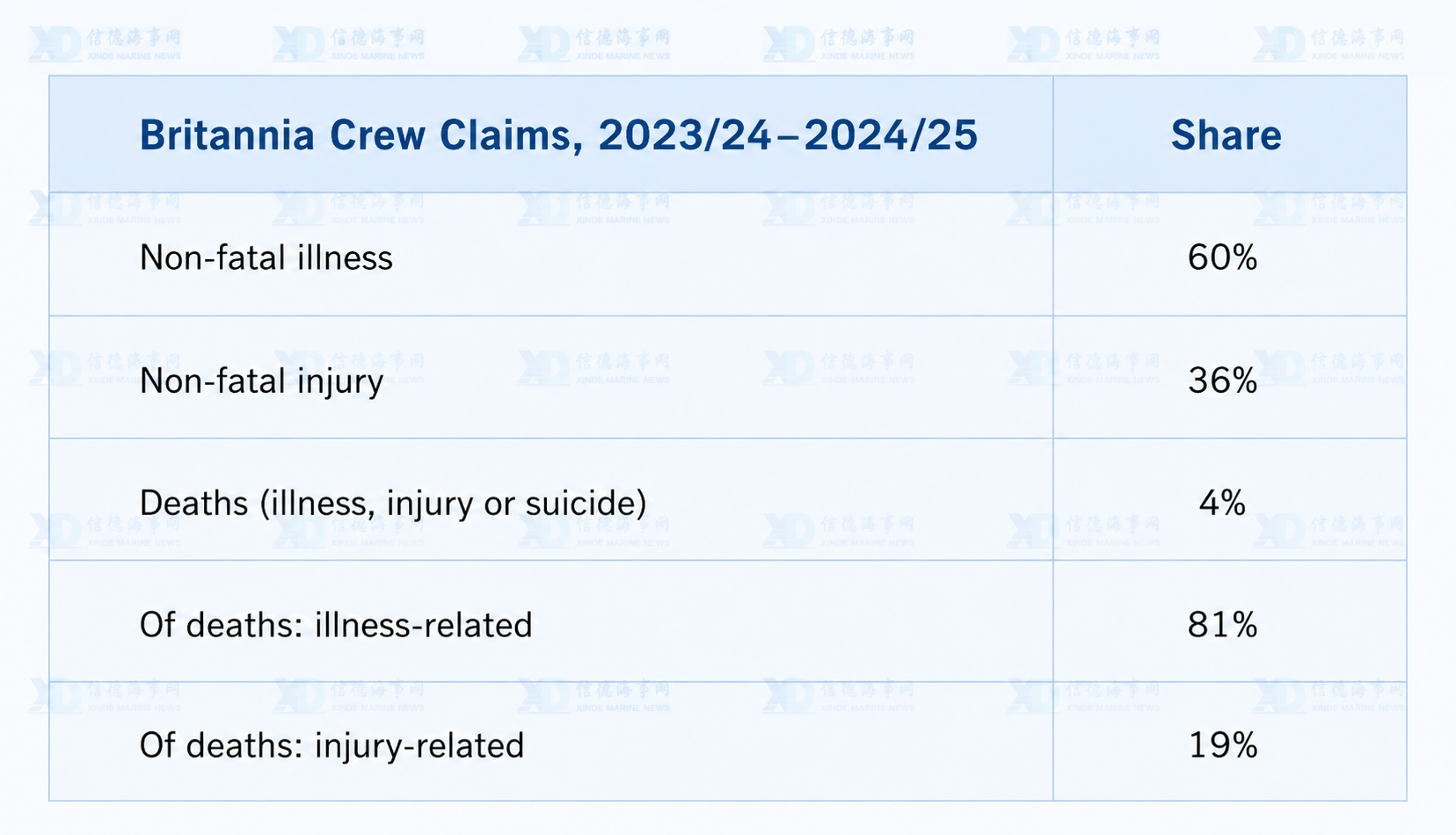
Britannia reviewed nearly 3,000 crew-related claims from the 2023/24 and 2024/25 policy years. Non-fatal illness accounted for 60% of the claims, non-fatal injury for 36%, while deaths from illness, injury or suicide represented the remaining 4%.
Within the fatality sample, the imbalance was much sharper: 81% of deaths were illness-related and 19% resulted from injuries. Among illness-related deaths, circulatory conditions — principally heart attacks and other cardiovascular problems — accounted for 58%.
The figures do not mean that 81% of all seafarer deaths worldwide are caused by illness.
Britannia makes clear that its dataset covers claims expected to exceed the applicable deductible and therefore does not represent every medical incident reported to the club. It is an insurance claims sample, not a global mortality study.
Even with that limitation, the findings raise a difficult question for shipowners and managers: has maritime safety management become better at controlling the risks created by the job than the health risks carried by the people doing it?
Illness dominates the claims picture
Britannia’s two-year dataset shows a broadly 60:40 split between illness and injury claims.
Abdominal conditions were the largest illness category, accounting for about 23% of cases. Genitourinary conditions represented 10%, while circulatory problems accounted for about 9% of illness claims.
That last figure becomes much more significant when fatalities are examined.
Circulatory illnesses accounted for only around 9% of illness claims, but 58% of illness-related deaths. Britannia said cardiovascular cases were more evident among seafarers aged over 50, consistent with the wider relationship between ageing and cardiovascular disease.
This is an important distinction for crew risk management.
A condition does not have to be one of the most frequently reported illnesses to represent one of the most serious threats to life.
A different type of maritime risk
Traditional occupational accidents usually have a relatively identifiable event chain.
A crew member falls from height, becomes trapped in machinery, is struck by equipment or enters an unsafe enclosed space. Investigators can examine permits to work, personal protective equipment, procedures, supervision and risk assessments.
Chronic and acute medical conditions do not fit as neatly into that model.
Hypertension, cardiovascular disease, diabetes, obesity or other health problems can develop over years. A seafarer may be medically fit when joining a vessel but experience deterioration during a long contract — or an existing risk may only become apparent when an acute event occurs.
The operating environment then matters.
A heart attack ashore may occur within reach of an ambulance, emergency department and specialist cardiac treatment. A similar event hundreds of nautical miles from the nearest suitable port creates a completely different medical challenge.
The ship may need telemedical advice, a deviation, helicopter evacuation where available, or an emergency port call. The time between the onset of symptoms and definitive treatment can be considerably longer.
Britannia has previously highlighted hypertension and other chronic conditions as issues requiring active management at sea, including adequate medication supplies, monitoring and early contact with telemedical providers when symptoms or readings deteriorate.
That shifts part of the safety discussion from preventing an accident to identifying deterioration before it becomes an emergency.
Medical fitness is only the first line of defence
The maritime industry already has an established regulatory framework for medical fitness.
Under Regulation 1.2 of the Maritime Labour Convention, 2006, seafarers must hold a valid medical certificate showing that they are medically fit to perform their duties before starting work on board. The MLC framework operates alongside the medical fitness requirements contained in the STCW regime.
STCW also requires seafarers designated to provide medical first aid or take charge of medical care on board to demonstrate specified standards of competence.
But medical certification and continuous health management are not the same thing.
A pre-employment medical examination, or PEME, establishes fitness at a particular point in time. It cannot by itself ensure that blood pressure remains controlled several months later, that a seafarer continues taking medication correctly, or that warning signs of a serious condition are recognised early.
Britannia’s conclusion therefore points not only towards enhanced pre-employment testing but also towards improved onboard health practices.
For ship managers, that potentially means looking at a longer chain of intervention: identifying higher-risk crew before joining, managing existing conditions during contracts, ensuring medicines remain available, monitoring basic health indicators where appropriate, and improving the speed at which symptoms are escalated for professional medical advice.
The commercial consequences extend beyond medical bills
Crew illness is also an operational and insurance issue.
A serious medical case may require a ship to deviate from its voyage, arrange an unscheduled port call, organise evacuation or repatriation and bring in a replacement seafarer.
For a shipowner, the resulting cost can involve considerably more than hospital treatment.
There may be lost sailing time, additional bunker consumption, port expenses, travel and accommodation, crew replacement costs and P&I claims. Severe cases can also affect safe manning if the vessel cannot immediately replace the incapacitated crew member.
Britannia’s dataset itself is influenced by this financial threshold: relatively minor conditions that can be treated during a routine port call may never exceed a member’s deductible and therefore may not appear in the claims data.
The report gives dental cases as an example. They can be common in telemedical assistance data but relatively uncommon in P&I claims because many are treated as outpatient cases without costs high enough to generate a reimbursable claim.
That is another reason why the report should be read as a picture of significant insured events, rather than a complete epidemiological record of seafarer health.
Accidents remain a major safety problem
The dominance of illness among fatalities should not be interpreted as evidence that conventional accident prevention has become less important.
Britannia recorded 17 injury-related deaths, of which six involved crew going overboard. That means man-overboard incidents accounted for more than one-third of injury fatalities in the sample.
The club said many involved falls overboard during heavy weather. Other fatal injury categories included asphyxiation, falls from height, personnel being struck by objects, electric shock and explosion.
Britannia continues to emphasise controls around overside work, working at height, electrical systems and enclosed spaces, including permits to work, appropriate PPE, isolation procedures and avoiding external deck work in adverse weather where possible.
The report therefore does not present shipowners with a choice between health management and occupational safety.
It points towards two overlapping risk systems: the physical hazards created by shipboard work, and the physical and psychological condition of the people carrying it out.
Gard data points to the same two-sided problem
Another major marine insurer, Gard, provides a useful comparison, although the datasets and methodologies are not directly interchangeable.
Gard’s 2026 Crew Claims Report drew on around 3,000 P&I crew claims from 2025, including a detailed review of roughly 400 injury cases.
Its injury analysis found that the first three months on board, particularly the first month, carried elevated injury risk. Injuries were concentrated between 08:00 and 10:00, and most occurred during planned, routine operations rather than exceptional events. Experienced seafarers were also frequently involved.
Maintenance, cargo operations and mooring therefore remain areas where familiarity does not necessarily remove risk.
Gard’s earlier 2025 report, meanwhile, showed a pattern strikingly similar to Britannia’s latest findings on fatalities.
Gard said 83% of crew fatalities registered in 2024 were illness-related. It also reported a 25% increase in the frequency of crew death claims when comparing the three post-pandemic years with the three years before the pandemic.
Britannia’s 81% and Gard’s 83% should not be combined into a global statistic. Their fleets, claims thresholds, periods and methodologies differ.
But two major P&I insurers independently finding that illness accounted for the large majority of crew fatalities is difficult for the industry to dismiss as an isolated statistical anomaly.
Mental health remains harder to measure
Britannia also identified 11 suicide cases, including unexplained missing-overboard cases that the report classified as presumed suicides.
Younger seafarers appeared disproportionately represented, particularly those aged 20–29. Britannia explicitly cautioned, however, that the dataset was too small to support firm conclusions, although it said a similar pattern appeared in a broader four-year dataset.
Mental health presents an additional measurement problem because claims data may capture only the cases that reach a formal medical, casualty or insurance process.
Britannia said mental health cases remain under-reported and identified stigma, limited awareness, restricted communications on board and difficulty seeking help as potential barriers. Stress-related problems may also present through physical symptoms rather than being recorded primarily as mental-health conditions.
Gard has raised similar concerns. Its 2025 report found that recorded suicides among crew exceeded fatal accidents that year, reinforcing calls for earlier intervention and stronger mental-health support at sea.
From safety management to people-risk management
The practical implication is not that shipowners should simply add more medical checks.
It is that medical fitness, occupational safety, fatigue, mental wellbeing and onboard healthcare may need to be treated as parts of the same risk-management system.
Consider a seafarer with poorly controlled hypertension.
In isolation, this is a health issue. But if the same crew member is fatigued, working an intensive watch schedule and participating in mooring or machinery operations, personal health can also become an operational safety variable.
The same interaction applies in the other direction. Gard’s finding that injury risk is elevated shortly after joining a vessel may involve familiarisation, workload, working relationships and adaptation to a new environment — factors that can affect both physical and psychological wellbeing.
This is where the distinction between “crew welfare” and “ship safety” becomes increasingly difficult to maintain.
A crew member’s sleep, stress level, physical condition and access to medical support can affect judgement, situational awareness and the ability to perform routine operations safely.
What shipowners may need to examine
Britannia’s report does not demonstrate that current medical fitness systems are failing, nor does it establish that a specific intervention would have prevented a particular proportion of deaths.
What it does provide is a clearer indication of where owners and managers may need better information.
Cardiovascular screening is one area. For crew with identifiable risk factors, companies may want to examine whether pre-employment testing is being connected effectively with health management during the contract.
Chronic disease management is another. Ships need practical arrangements for crew who rely on regular medication, including sufficient supplies for possible contract extensions and a clear route for obtaining professional advice if their condition changes.
Early recognition also matters. The value of telemedical maritime assistance services, or TMAS, depends partly on how quickly the ship seeks advice rather than waiting until a condition has become critical.
And then there is data.
Britannia said it intends to develop its claims analysis further, including more detailed examination of claim types by crew rank.
Adding reliable information on age, rank, vessel type, nationality, time on board and underlying medical history — while protecting seafarer privacy — could eventually allow insurers and ship managers to distinguish much more clearly between general health trends and risks associated with particular working patterns.
For now, the most useful message from the Britannia and Gard reports is more specific than simply saying that the industry should “care more about wellbeing”.
Crew safety cannot be measured only by how many people avoid falls, machinery injuries or enclosed-space accidents.
If illness continues to account for roughly four-fifths of fatal crew claims in major P&I datasets, the performance of screening, chronic-disease management, telemedicine and early intervention deserves to be examined alongside the traditional indicators of occupational safety.
The next question is whether future claims data shows that balance beginning to change.


READ MORE
 Safety
US Says It Disabled Hong Kong-Owned Bulker off Oman
 Safety
Attacked Just 42Days After Delivery: George Prokopiou’s 115,000-Dwt Tanker Hit in Hormuz
 Safety
Five Seafarers Reported Dead as Puntland Retakes Hijacked Tanker Honour 25
 Safety
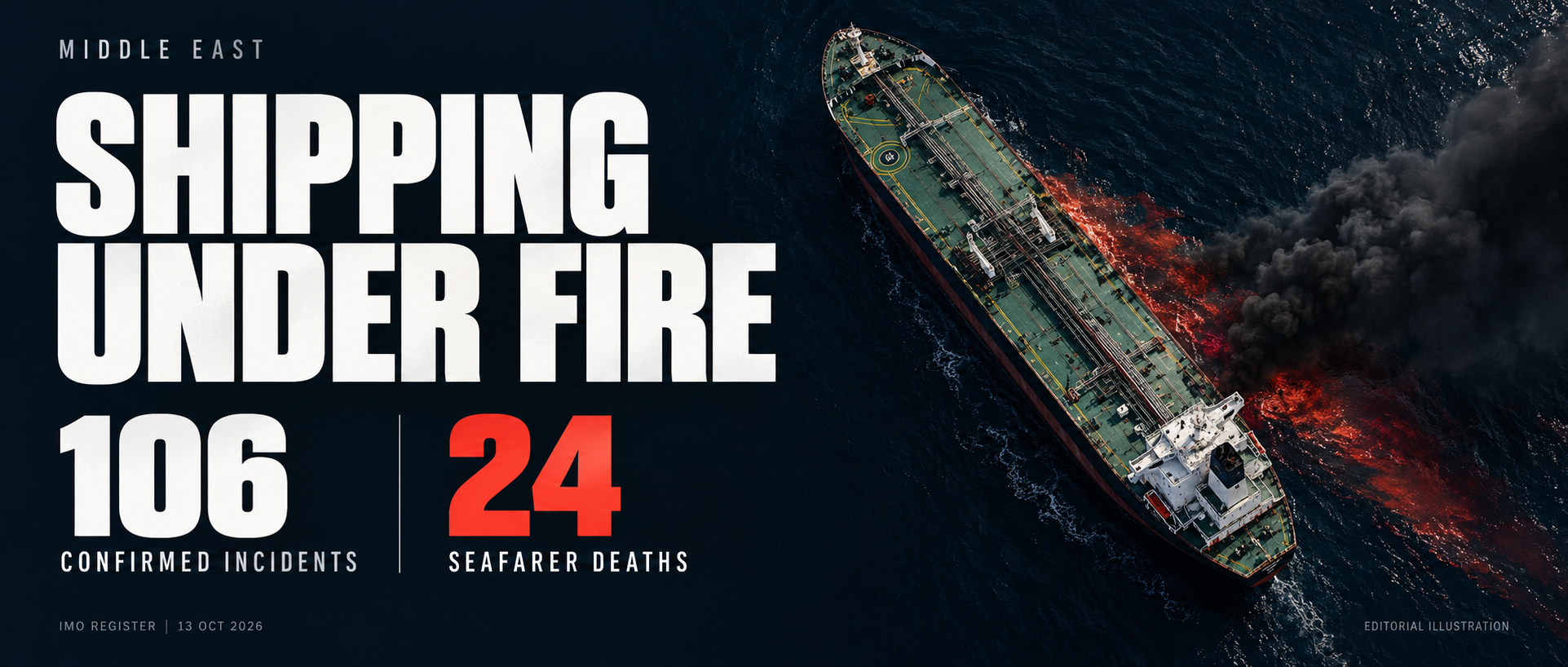
Middle East war leaves mounting toll on merchant shipping
 Safety
China-U.S. Consensus Highlights Free Navigation: No Country or Entity Should Impose Transit Fees on International Waterways
 Safety
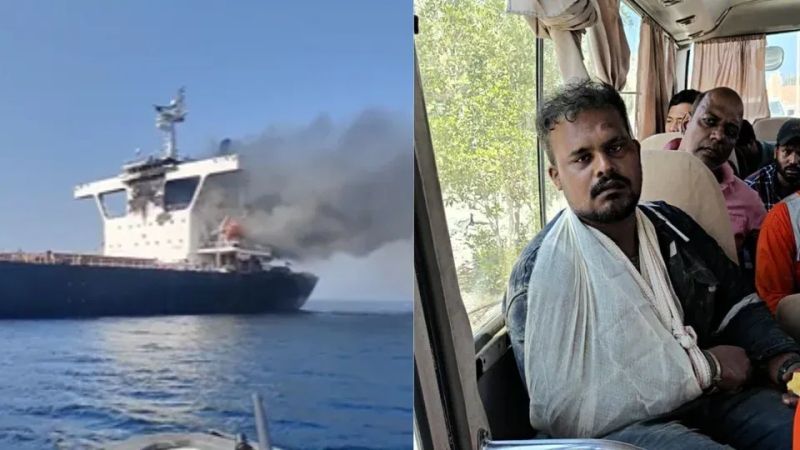
1 seafarer killed, Fatal attack in the Strait of Hormuz: Capesize bulker CAPE DAO hit by unknown projectile
 Safety
25 Crew Abandon MSC Container Ship in the South China Sea — All Rescued, Vessel Still Adrift
 Safety
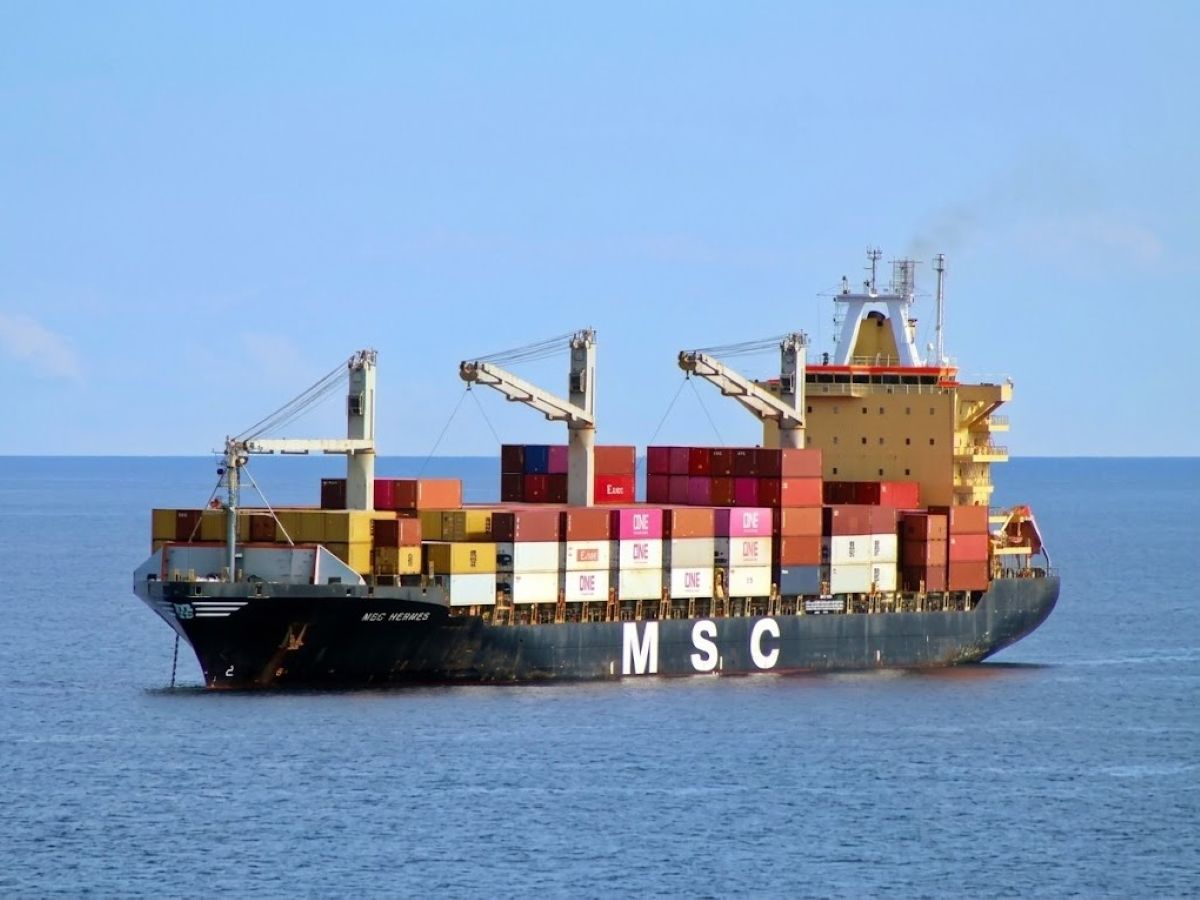
MSC Hermes III Adrift Unmanned in South China Sea After 25 Crew Abandon Ship
 Safety
Dangerous Goods Container Fire Reported at NPCT1 Terminal in Jakarta
 Safety