


Too Many Newbuilding Orders, but Not Enough Main Engines.....
The global containership orderbook remains exceptionally large. But another bottleneck is now moving into focus: shipyards may still be able to build hulls, while main engines and critical equipment may no longer be available on the same timetable.
According to Alphaliner , the global cellular containership orderbook is now close to 13 million TEU, standing at around 12.98 million TEU across 1,592 vessels. That represents 38.3% of the existing cellular fleet. After record contracting in 2025, ordering momentum has continued into the first half of 2026.
The profile of the orderbook has also changed significantly. Since July 2025, 74% of new containership orders have been for vessels below 6,500 TEU, compared with less than 30% in the corresponding period a year earlier. Several clusters have emerged, including around 1,200 TEU, 1,800 TEU Bangkokmax, around 3,100 TEU, and the 5,000-6,500 TEU range. Nearly 130 vessels have been ordered in the 5,000-6,500 TEU segment.
This shift is important because the current ordering boom is no longer limited to large mainline tonnage. It has moved deeply into the mid-sized and regional vessel segments, where demand from liner operators and non-operating owners remains strong.
Yet the more orders are placed, the more attention has to move from contracted capacity to executable capacity.
Yards Can Build the Hulls, But Engines Are Harder to Secure
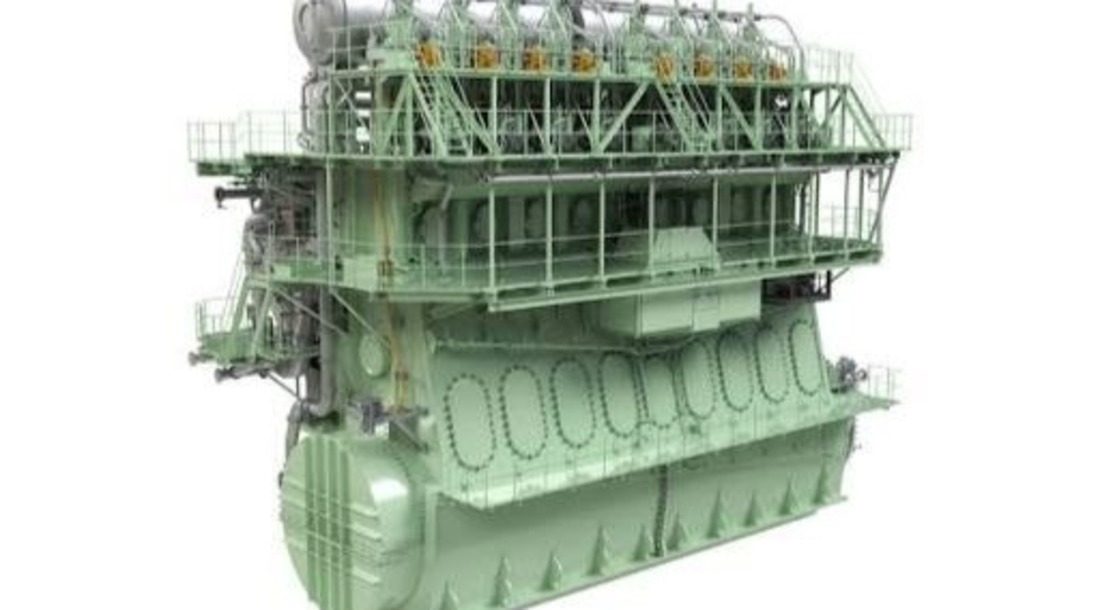
Alphaliner reported that a number of newbuilding projects for mid-sized containerships of around 6,000 TEU have stalled in recent months because of a lack of timely main engine building slots.
Some second- and third-tier Chinese yards have been offering to build containerships to international specifications. With the charter market for mid-sized tonnage still strong, some owners were able to obtain tentative charter backing for relatively near-term deliveries, including vessels scheduled for 2028.
However, a practical problem has emerged. Some yards could have built the hulls on time, but were unable to procure large diesel main engines. As a result, certain yards reportedly had to walk away from initial offers or pause projects.
This shows how the newbuilding cycle is changing. Hull construction capacity can be scaled more quickly than main engine production capacity. A shipyard may have a berth, dock or slipway available, but the project can still be delayed if the engine, fuel system, pumps, auxiliary machinery, automation systems or other critical components are not secured.
For modern containerships, main propulsion is usually supplied through specialized engine workshops. Large two-stroke engines are generally built under licence from established designers such as WinGD, Everllence, formerly MAN B&W, or Japan Engine Corporation. Expanding this industrial base is not as quick as expanding steel fabrication or hull assembly capacity.
In a tight newbuilding market, the first visible constraint is often shipyard capacity. The next constraint may be the supply chain behind the shipyard.
The Orderbook Does Not Always Equal On-Time Delivered Capacity
This issue also echoes a point raised recently during shipping discussions at the 10th Capital Link Maritime Leaders Summit – Greece.
Capital Tankers Corp. CEO Jerry Kalogiratos reminded the market that some recent newbuilding orders may face delivery uncertainty. His point was practical: not every order has been placed by owners with a long operational track record, and the shipbuilding supply chain remains tight in key areas such as engines, pumps and critical equipment.
The implication is clear. The headline orderbook should not be read as a simple forecast of capacity that will arrive exactly on schedule.
For shipping markets, the orderbook remains an essential indicator. It tells us what has been contracted. But in the current environment, supply analysis also needs to ask more detailed questions.
Who placed the order? Which yard will build the ship? Has the main engine been secured? Are auxiliary engines, pumps and key systems available? Is financing in place? Is there a real charter or cargo requirement behind the vessel? Does the owner have the operational and technical capability to execute the project?
These questions now matter almost as much as the orderbook number itself.
A 6,000 TEU vessel ordered by an established owner at an experienced yard, with engines and equipment already locked in, carries a very different delivery risk profile from a similar-sized order placed by a new entrant at a yard still building up containership credentials.
The industry therefore needs to move from orderbook size analysis to orderbook quality analysis.
Engine Shortage Has Happened Before
A tight engine market is not entirely new.
Alphaliner noted that back in 2007, when the containership orderbook-to-fleet ratio reached an extreme level of around 60%, engines were also in short supply. In some exceptional cases, such as certain German-built Aker CS 2100-type vessels, owners even opted for two four-stroke engines driving a single propeller through a gearbox, instead of using a conventional single low-speed engine.
The market has not yet seen a broad return to such alternative propulsion arrangements. But the pressure to secure tonnage is already visible in other ways.
In the 3,000-3,800 TEU segment, Alphaliner recently highlighted the conversion of an 82,000 dwt Kamsarmax bulk carrier into a fully cellular containership. The converted vessel can carry 3,607 TEU, including 200 reefer plugs.
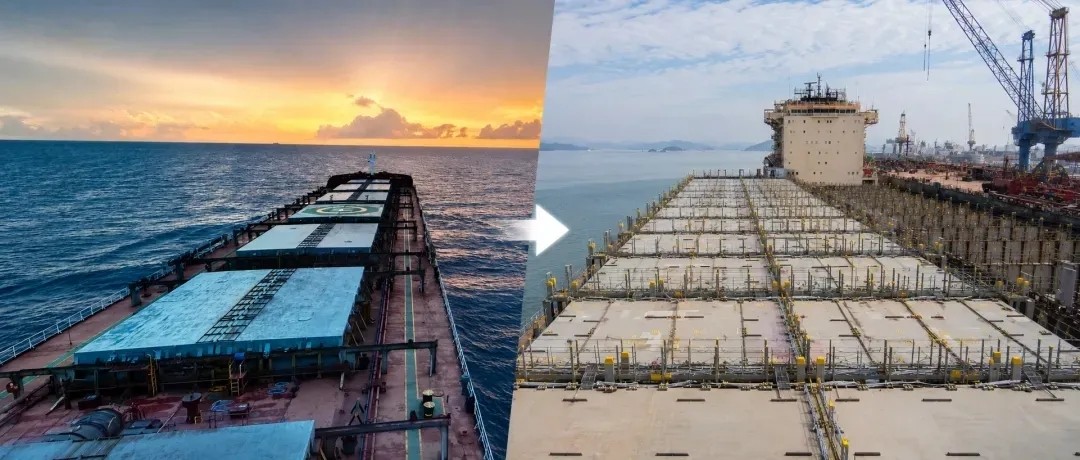
Such conversions are unusual. Their return shows how strong the demand for mid-sized container tonnage has become. If main engine supply continues to delay newbuilding projects, existing vessels and unconventional capacity solutions may remain more attractive for longer.
AI Data Centers Are Also Competing for Diesel Generators
The bottleneck is not limited to main engines.
Alphaliner also reported that some shipowners have recently encountered tighter supply and higher prices for auxiliary diesels and generator sets. One reason comes from outside shipping: the rapid growth of artificial intelligence and data centers.
AI requires massive computing power and data storage. This has triggered a boom in data center construction around the world. These facilities require reliable backup power, and many use large industrial diesel generator sets in the 1-4 MW range. Suppliers include Caterpillar, Cummins and MTU.
Marine diesel generator sets have become attractive for this market because of their proven reliability and modular configuration. Alphaliner cited an Amazon data center in Virginia using no fewer than 93 diesel generator sets of 2,500 kW each. Around 2,500 kW is a popular size for data centers and mining sites because the power unit can fit inside a sound-attenuated 40-foot ISO container, making transport and deployment easier.
This has a direct impact on shipping.
Shipowners ordering newbuildings are no longer competing only with other shipowners for auxiliary engines and generator sets. They are also competing with data centers, mining projects and other industrial power users.
The result is longer lead times and rising prices in a part of the supply chain that many market participants used to treat as secondary.
Real Delivery Capability Is Becoming More Important
On paper, the containership newbuilding market remains very active.
Large vessels ordered during the post-pandemic wave and the early-2024 ordering period are still moving through the delivery pipeline. Alphaliner expects capacity in the 18,000 TEU-plus segment to almost double over the next three years once these ships have been delivered. At the smaller end, the fleet is ageing, and there is a genuine renewal need in feeder and regional tonnage.
Demand also remains strong. Red Sea diversions, geopolitical disruption, regional trade growth, port constraints and network reshaping have all increased interest in flexible mid-sized tonnage. The charter market remains firm, with limited prompt availability across many vessel sizes. For larger units, prompt supply is extremely scarce.
This is exactly the kind of market in which delivery risk deserves more attention.
When new orders accumulate quickly, shipyard capacity fills up, equipment lead times stretch, and external sectors such as AI data centers absorb diesel generator capacity, delays become a realistic part of the supply outlook.
For owners, this means newbuilding strategy has to start with supply chain certainty. A shipyard quote alone is no longer enough. Main engine slots, auxiliary engines, fuel systems, pumps, automation and integration capability all need to be examined early.
For charterers, future capacity planning also requires more scrutiny. If a long-term charter depends on a vessel still under construction, the real delivery risk of that vessel should be assessed carefully.
For shipyards, this cycle will create differentiation. Yards with strong supplier relationships and proven project execution capability will have a clear advantage. Yards with limited equipment procurement power may find it harder to convert commercial offers into actual deliveries.
For equipment makers, the strategic importance of main engines, auxiliary diesels and generator sets is rising sharply. In the past, market attention was often focused on shipyard slots. Now, engine and equipment capacity may become an equally important factor in determining how quickly new tonnage enters the market.
The Orderbook Is Large, But the Engine Still Has to Arrive
The shipping market is entering a more complex phase.
The orderbook is large. Charter markets remain strong. Fleet renewal demand is real. Shipyard capacity is tight. Asset prices remain elevated. But the execution chain behind newbuildings is becoming more fragile.
A vessel order is only the beginning. The engine has to be built. The auxiliary machinery has to be delivered. The shipyard has to integrate the systems. The owner has to complete financing. The charter and commercial plan have to remain valid through the construction period.
Any weakness in this chain can turn a contracted vessel into a delayed vessel.
That is why Jerry Kalogiratos’ warning is important. The orderbook does not automatically translate into on-time delivered capacity.
Alphaliner’s latest findings now provide a concrete example. Some mid-sized containership projects around 6,000 TEU have stalled because large diesel main engines could not be procured in time. At the same time, auxiliary diesels and generator sets are being pulled into another fast-growing sector: AI-driven data centers.
The message for shipping is simple.
Newbuilding orders are abundant. But engines and critical equipment are becoming a real supply-side constraint.
In the next phase of the cycle, the key question may not only be how many ships have been ordered.
It will also be whether they can get their engines on time.

READ MORE
 Shipbuilding
Union Maritime Adds Nine Ships Across Five Segments as Newbuild Programme Reaches 79
 Shipbuilding
Fujian Guohang Plans RMB2.49bn Fleet Expansion into LR2 Tankers and Heavylift
 Shipbuilding
Swire Buys Four Heavy-Lift Ships in Latest Strategic Shift
 Shipbuilding
DAB Group Enters Shipowning With First Ultramax Pair Ordered in China
 Shipbuilding
French Space Logistics Owner Selects China’s GSI for Next-Generation Ro-Ro Vessel Project
 Shipbuilding
Will Newbuilding Prices Still Be This High a Year From Now?
 Shipbuilding
Guohang Enters Tankers with RMB 2.49bn Fleet Plan
 Shipbuilding
Henghui Reportedly Orders Up to Four Heavy-Lift Ships at ZPMC
 Shipbuilding
24 Firm Orders + 16 Options: Ren Yuanlin Accelerates Yangzijiang Maritime’s ‘Financial Shipowner’ Strategy
 Shipbuilding