


25% vs 11%: China Pulls Ahead of Greece in Fleet Scale as Global Shipping Enters a “Two-Model” Era
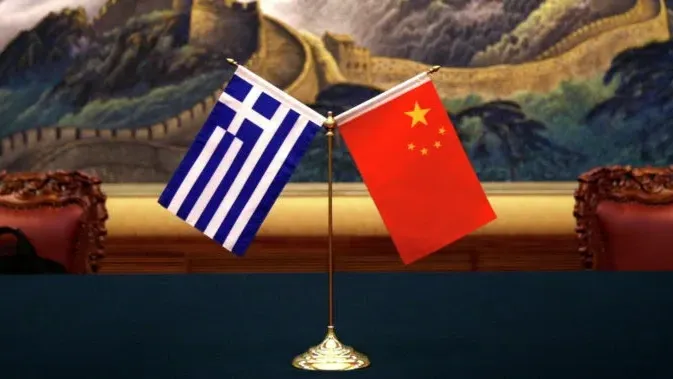

China has overtaken Greece in terms of the number of vessels under beneficial ownership, emerging as the world’s largest shipowning nation by this measure. But in an industry as market-driven, cyclical and capital-intensive as shipping, does having the largest fleet necessarily translate into market dominance?
That is the question raised by French shipbroking house BRS in its Weekly Dry Bulk Newsletter published on 25 June 2026. In its “Topic of the Week”, titled “Does Scale Equal Dominance?”, BRS compared the development models of Chinese and Greek shipowners and reached a more nuanced conclusion.
China’s rapidly expanding fleet is reshaping the global shipowning landscape, but Greece’s influence has not declined in proportion to its change in ranking. Instead, the two countries increasingly represent two different models of maritime power — one built around trade scale, industrial capacity and strategic support, and the other around global commercial networks, asset management and flexible deployment.
China now accounts for around a quarter of the global fleet
Using beneficial ownership as its measure — referring to the underlying entity that effectively controls and benefits from a vessel regardless of registered ownership — BRS estimates that Chinese-controlled vessels now account for around 25% of the global fleet by vessel numbers, well ahead of Greece at approximately 11%.
The expansion has been especially visible in dry bulk shipping and tankers.
According to BRS, China’s rise has been supported by a combination of enormous trade demand, industrial policy and sustained capital investment.
In 2025, China accounted for approximately 40.5% of global seaborne bulk commodity imports. At the same time, its merchandise exports reached around $3.77 trillion, equivalent to roughly 14% of global goods exports.
That enormous cargo base gives Chinese shipping companies a structural advantage few other shipowning nations can replicate.
Fleet expansion therefore serves more than a purely commercial purpose. BRS argues that China’s growing maritime capacity is also closely linked to securing import supply chains, supporting export logistics and strengthening control over strategically important transportation capacity.
The expansion is also deeply connected with China’s broader industrial strategy.
Since the second half of 2024, COSCO Shipping’s so-called “Hundred Ships Plan” has accelerated, with the group aiming to significantly expand carrying capacity through the construction of around 100 large vessels.
State-owned capital plays a major role in this process.
Citing data from the Union of Greek Shipowners, BRS said around 44% of Chinese-controlled tonnage belongs to state-owned enterprises, while state-owned companies account for approximately 64% of China’s newbuilding orders.
The competitiveness of Chinese shipowners is therefore being built on several foundations at once: cargo access, economies of scale, industrial capacity, capital strength and policy support.
Greece’s strength lies in the global market
The Greek model is fundamentally different.
While Chinese-controlled shipping remains closely tied to the country’s trade flows and strategic requirements, Greek shipping has traditionally been built around international cross-trading, third-party transportation and tramp shipping.
Greece itself does not possess a domestic cargo base remotely large enough to support a fleet of its current size. Yet Greek owners have remained among the world’s dominant maritime investors for decades.
According to figures cited by BRS, Greek owners control around 5,800 vessels, including approximately 2,766 bulk carriers, representing about 22% of the global dry bulk fleet.
The Greek-owned merchant fleet exceeds 458 million dwt, equivalent to around 19.1% of global fleet capacity. Most strikingly, more than 98% of Greek-controlled capacity is deployed in third-country trades.
This helps explain why Greek shipping influence cannot be measured simply by the number of vessels controlled.
The real competitive assets of Greek owners include long-established relationships with charterers and commodity traders, access to international finance, deep links with the global brokerage community, expertise in buying and selling ships, and an ability to shift tonnage rapidly between regions and cargo flows.
The port-call comparison presented on page three of the BRS report illustrates this difference clearly. Chinese-controlled dry bulk tonnage is significantly more concentrated in the Asia-Pacific region, while Greek-controlled bulkers are more evenly distributed across Africa, the Middle East, South Asia, Europe and the Americas.
China is more closely aligned with its own enormous trade ecosystem. Greece remains more globally dispersed.
Losing the No. 1 ranking does not mean Greece is shrinking
Greece’s loss of the top position in fleet scale should not be interpreted as a retreat from shipping.
Its dry bulk fleet is still expanding.
BRS notes that the growth rate of the Greek-controlled dry bulk fleet has slowed from 5.4% in 2016 to around 3.2% today, but this reflects an active strategy of fleet renewal rather than a shortage of capital or a withdrawal from the market.
Greek owners have been particularly active sellers of older tonnage.
In 2025, the average age of dry bulk vessels sold by Greek owners was around 19 years. With secondhand prices remaining elevated over the previous two years, many owners took advantage of the market to dispose of older ships that had already recovered much of their original investment cost.
Asian buyers have been major participants in this recycling of maritime assets — and Chinese buyers have stood out.
According to BRS, around 39% of secondhand bulk carriers sold by Greek owners in 2025 were acquired by Chinese buyers.
This has created a particularly interesting market cycle.
Greek owners sell mature tonnage into a strong secondhand market, Chinese investors absorb part of that older capacity, and Greek owners then reinvest heavily in modern ships — many of them ordered from Chinese shipyards.
55% of Greek dry bulk capacity was built in China
Competition between China and Greece in shipownership exists alongside deep cooperation in shipbuilding.
Measured by deadweight tonnage, around 55% of the Greek-controlled dry bulk fleet was built at Chinese shipyards.
Greek owners currently have around 133 bulk carriers under construction in China, representing 14.7% of the Chinese dry bulk orderbook.
That makes Greek owners the second-largest customer group for Chinese dry bulk shipyards, behind Chinese owners themselves, who account for approximately 41.3% of the orderbook. Only 19 vessels in the Greek bulk carrier orderbook are currently being built outside China.
These figures reveal a relationship far more complex than a simple “China versus Greece” narrative.
Chinese owners are expanding rapidly on the back of trade, capital and industrial policy. At the same time, Chinese shipyards have become one of the most important platforms through which Greek owners renew and modernise their fleets.
Older Greek ships are increasingly sold into Asian markets, including China, while a new generation of more efficient vessels is being delivered from Chinese yards back to Greek shipowners.
The result is an increasingly integrated maritime relationship spanning newbuilding, secondhand transactions, financing, equipment supply and vessel operations.
Does fleet scale equal market dominance?
In dry bulk and tramp shipping, scale alone does not automatically translate into market control.
These markets remain highly fragmented, competitive and liquid, with large numbers of small and medium-sized owners participating. Ships can be redeployed relatively quickly between regions, cargoes and trading patterns.
Under these conditions, operational capability, asset allocation and market flexibility can matter as much as — and sometimes more than — absolute fleet size.
BRS points out that Greek owners have maintained their resilience through a fragmented but highly specialised ownership structure, flexible fleet deployment and the ability to reallocate vessels dynamically between regions and cargo flows.
This is particularly important in cyclical markets.
Greek shipowners have historically been highly active in buying ships when asset prices are depressed, ordering newbuildings when timing and yard slots are attractive, and selling mature assets when secondhand values rise.
That approach has allowed them to remain deeply embedded in the transportation of energy products, minerals and grains even as their global ranking by vessel numbers has changed.
Global shipownership is shifting from ranking competition to structural differentiation
The rise of the Chinese fleet reflects the growing ability of a major manufacturing and trading power to control more of the maritime transportation resources required to support its economy.
The enduring strength of Greek shipping comes from somewhere else: a global commercial network built over decades, strong asset-management capabilities, international financing relationships and the ability to reposition vessels rapidly across markets.
China’s comparative strengths lie in cargo access, capital scale, industrial capacity and policy support.
Greece’s strengths lie in global operating experience, asset trading, commercial decision-making and cross-regional flexibility.
BRS therefore argues that China’s overtaking of Greece should not be interpreted as a corresponding decline in Greek maritime leadership.
More accurately, it marks a transition in the global shipowning landscape from a relatively simple competition based on fleet rankings toward a structural differentiation between two distinct fleet models.
One model is increasingly driven by scale, trade integration and industrial coordination.
The other remains rooted in global third-party shipping, commercial agility and active asset management.
That distinction is likely to become increasingly important.
Future leadership in global shipping will be difficult to assess using vessel numbers or deadweight tonnage alone. Fleet scale will remain important, but long-term influence will increasingly depend on the ability to secure cargo, manage capital cycles, control operating costs, deploy vessels flexibly and adapt assets to geopolitical disruption and the energy transition.
From this perspective, the China-Greece relationship is simultaneously competitive and complementary.
They compete for fleet scale, market share and maritime influence. Yet they are also increasingly intertwined through shipbuilding, secondhand transactions and the broader maritime supply chain.
The interaction between these two very different shipping models may become one of the defining themes of the next phase of global maritime development.


READ MORE
 Shipbuilding
Union Maritime Adds Nine Ships Across Five Segments as Newbuild Programme Reaches 79
 Shipbuilding
Fujian Guohang Plans RMB2.49bn Fleet Expansion into LR2 Tankers and Heavylift
 Shipbuilding
Swire Buys Four Heavy-Lift Ships in Latest Strategic Shift
 Shipbuilding
DAB Group Enters Shipowning With First Ultramax Pair Ordered in China
 Shipbuilding
French Space Logistics Owner Selects China’s GSI for Next-Generation Ro-Ro Vessel Project
 Shipbuilding
Will Newbuilding Prices Still Be This High a Year From Now?
 Shipbuilding
Guohang Enters Tankers with RMB 2.49bn Fleet Plan
 Shipbuilding
Henghui Reportedly Orders Up to Four Heavy-Lift Ships at ZPMC
 Shipbuilding
24 Firm Orders + 16 Options: Ren Yuanlin Accelerates Yangzijiang Maritime’s ‘Financial Shipowner’ Strategy
 Shipbuilding