


Turkish Shipping Newcomer Bets $420m on China With 12 Ultramax Newbuildings

A Turkish shipping company established less than a year ago is rapidly building a modern Ultramax bulk carrier fleet in China.
Istanbul-based Aqmaris Gemi has exercised options for two additional 64,500-dwt Ultramax bulkers at Wuhu Shipyard, while also placing a separate order for eight 64,000-dwt Ultramaxes at Nantong Xiangyu Shipbuilding & Offshore Engineering, according to the latest market information.
The latest move takes Aqmaris’ Ultramax newbuilding programme in China to 12 vessels.
Based on brokers’ estimates of around $35m per ship, the total investment could reach approximately $420m.
Aqmaris currently has only two vessels in operation.
If all 12 newbuildings are delivered as scheduled, its Ultramax fleet could therefore expand from two ships today to 14 vessels, representing nearly 900,000 dwt of capacity.
For a shipping platform established only in 2025, the pace of expansion is striking.
Ten More Ships Added, All at Chinese Yards
Aqmaris’ first publicly reported newbuilding deal with a Chinese shipyard came in January this year.
On 6 January 2026, Wuhu Shipyard signed a contract with Aqmaris for two firm plus two optional 64,500-dwt Dolphin-class Ultramax bulk carriers.
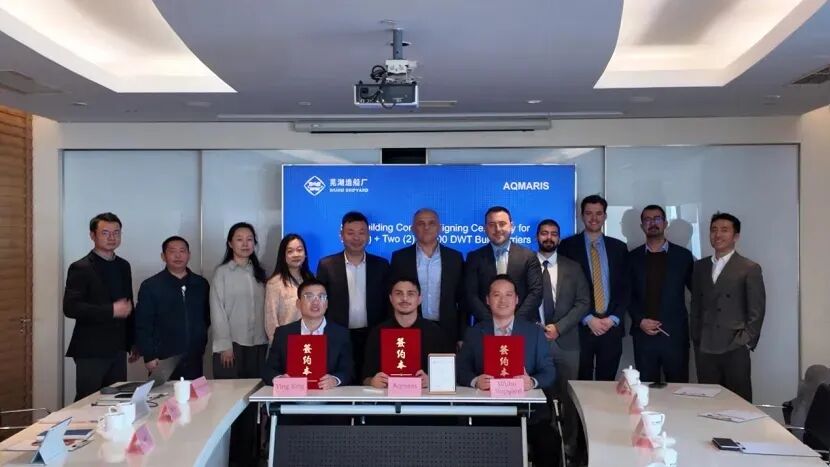
The original firm pair is scheduled for delivery during 2028.
The latest market information indicates that Aqmaris has now exercised the two options, with the additional vessels due for delivery in the first quarter of 2029.
The Wuhu series has therefore expanded to four firm vessels.
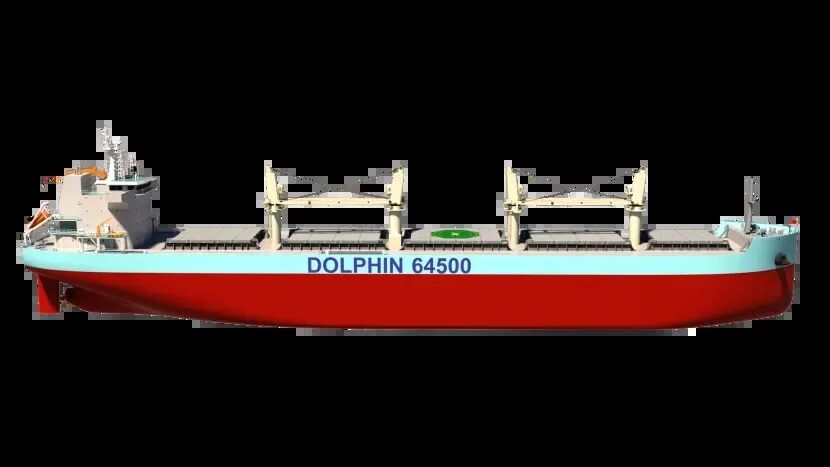
The ships are based on Wuhu Shipyard’s latest 64,500-dwt Dolphin Ultramax design. The design is intended to comply with IMO Tier III emission requirements and EEDI Phase 3 standards, while supporting high-voltage shore power and battery-system integration.
Wuhu Shipyard has also highlighted hull-form optimisation, efficient propulsion systems, energy-saving devices and intelligent energy-management systems as key features of the design.
Aqmaris has meanwhile placed a much larger separate order at Nantong Xiangyu.
According to several shipping sources, the company has contracted eight 64,000-dwt Ultramax bulk carriers at the yard.
Four are expected to be delivered during 2028, with the remaining four scheduled between January and September 2029.
At an estimated $35m per vessel, the Nantong Xiangyu contract alone could be worth around $280m.
Together with the four ships at Wuhu Shipyard, Aqmaris has now secured 12 Ultramax newbuildings in China.
| Shipyard | Vessel type | Number | Delivery | Estimated price |
|---|---|---|---|---|
| Wuhu Shipyard | 64,500-dwt Ultramax | 4 | 2028–Q1 2029 | Around $35m each |
| Nantong Xiangyu | 64,000-dwt Ultramax | 8 | 2028–Sep 2029 | Around $35m each |
| Total | 12 | 2028–2029 | Around $420m |
The contract values have not been officially disclosed by Aqmaris or the yards, and the figures above are based on market estimates.
Its Existing Fleet Also Comes From China
The scale of the orderbook contrasts sharply with Aqmaris’ current operating fleet.
Public corporate records show that Aqmaris Gemi İşletmeciliği Anonim Şirketi was established in Istanbul on 25 August 2025.
Its publicly listed operating fleet currently consists of just two 2026-built Ultramax bulk carriers, Zeynep and Emine.
Both were also built in China, at COSCO Shipping Heavy Industry’s Zhoushan facility.
The approximately 64,000-dwt Zeynep joined the fleet in January this year, followed by sister vessel Emine in April.
Both ships are approximately 200 metres long and 32 metres wide and are based on a modern Dolphin-class Ultramax design.
They are understood to comply with IMO Tier III and EEDI Phase 3 requirements and to be prepared for high-voltage shore power and battery-system integration.
This means that virtually all of Aqmaris’ publicly identified core fleet assets — both existing vessels and newbuildings — are being supplied by Chinese shipyards.
If the entire current orderbook is delivered, Aqmaris could control a 14-ship Ultramax fleet with an exceptionally young age profile.
Aqmaris Is New, but the Shipping Background Is Not
Although Aqmaris itself is a newly established company, the shipping experience behind the platform is far from new.
Turkish maritime media has linked Aqmaris to Cenk Bekmezci, the son of Ali Bekmezci, formerly associated with established Turkish shipping company Beks Denizcilik.
Beks had already developed into a sizeable Turkish shipowning platform. Turkish media reported in 2024 that it controlled around 44 ships, including 28 tankers.
That background helps explain how Aqmaris has been able to move so quickly into a multi-hundred-million-dollar newbuilding programme soon after its establishment.
A more accurate description of Aqmaris is therefore not a newcomer to shipping in the literal sense, but rather a newly created shipping platform backed by an established maritime family and accumulated industry experience.
Its fleet strategy is also notable.
Instead of first building scale through older secondhand tonnage and then gradually renewing the fleet, Aqmaris has concentrated capital on modern vessels built in 2026 and newbuildings scheduled for delivery in 2028 and 2029.
The result could be a highly standardised fleet with very low average age, similar technical specifications and improved operating efficiency.
Chinese Leasing Capital Is Also Involved
There is another Chinese element behind Aqmaris’ Wuhu programme: financing.
The Wuhu newbuildings are understood to be backed by Yingxing Financial Leasing, a leasing platform established in late 2023 with participation from Wuhu Shipyard and local state-backed investment funds.
The company has been developing newbuilding finance leases and sale-and-leaseback transactions for shipping assets.
Its registered capital was initially RMB200m and was increased to RMB400m in January 2026.
By the end of 2025, Yingxing Financial Leasing said it had implemented 28 ship-financing projects with a total contracted value of around RMB8bn.
The model is straightforward.
An overseas owner selects a vessel design and shipyard, while a Chinese leasing platform provides financing support and the shipowner operates the vessel over the long term.
Wuhu Shipyard has already been extending this combination of shipbuilding and financing to other international owners.
In 2025, Wah Kwong Maritime Transport established a joint venture with Yingxing Financial Leasing and signed for up to 12 64,500-dwt Ultramax bulkers at Wuhu Shipyard.
Aqmaris’ order further demonstrates how Chinese yards are increasingly competing for international orders with more than ship prices and available berths.
Design capability, construction, delivery performance and access to financing are increasingly being packaged into an integrated solution.
That model can be particularly attractive to fast-growing owners seeking to deploy hundreds of millions of dollars into new tonnage within a short period.
Why Put All 12 Ships Into Ultramaxes?
Another notable feature of Aqmaris’ strategy is its strong concentration on a single vessel segment.
There is a clear commercial rationale behind the decision.
Ultramax bulk carriers in the 63,000-dwt to 65,000-dwt range are typically geared vessels capable of carrying grain, coal, ores, steel products, fertilisers and a wide range of minor bulk commodities.
Because they carry their own cranes, they are less dependent on highly developed shore-side cargo-handling infrastructure.
Compared with Capesize and Kamsarmax vessels, Ultramaxes can access a much larger number of regional ports.
Compared with Handysize and conventional Supramax ships, they provide greater cargo capacity and better unit transportation economics.
This makes the segment suitable for both long-haul Atlantic and Pacific trades and regional business in Southeast Asia, the Indian Ocean, the Middle East and Africa.
For a newly established shipping platform, a standardised Ultramax fleet can also reduce complexity in technical management, spare-parts procurement, crewing and vessel operations while still providing broad cargo and geographic flexibility.
Chinese shipyards have built particularly strong serial-production capabilities in this segment.
Nantong Xiangyu Has Already Delivered 100 Ultramaxes
Aqmaris’ decision to place eight vessels at Nantong Xiangyu also reflects the yard’s scale in the Ultramax market.
On 3 July 2026, Nantong Xiangyu delivered its 100th Ultramax bulk carrier.
It took the yard around seven years to move from delivery of its first Ultramax in 2019 to the 100-vessel milestone.
Over the same period, construction time for the series was reduced from around 15.5 months to less than seven months at its fastest.
Its 63,800-dwt “Jixiang” Ultramax series has accumulated orders for around 168 vessels from 38 shipowners across 10 countries and regions.
Across all vessel types, Nantong Xiangyu has reportedly secured 285 orders, delivered 153 ships and holds an orderbook of 132 vessels totalling close to 9m dwt.
The yard’s contracted backlog is worth more than RMB30bn, with deliveries extending into 2030.
Other overseas owners, including Bangladesh’s Akij Resource and Greece’s Goldenport, have also continued to order Ultramaxes at the yard.
Current market indications place newbuilding prices for 61,000-dwt to 64,500-dwt bulkers at roughly $34.5m, broadly in line with the approximately $35m valuation attached to the Aqmaris deals.
Mature designs, serial-production capability, relatively predictable delivery schedules and competitive pricing remain important advantages for Chinese yards in this segment.
From Two Ships to 14
The headline number in Aqmaris’ latest move is 12 newbuildings.
But the more important story is how the fleet is being assembled.
Its two existing ships were both built in 2026.
The next 12 are concentrated in a 2028–2029 delivery window.
Virtually all are within the 64,000-dwt to 64,500-dwt Ultramax segment.
Every vessel is being built in China, and part of the programme is supported by Chinese leasing capital.
If completed as planned, Aqmaris will emerge with a modern and highly standardised fleet of around 14 Ultramaxes.
For Aqmaris, the next challenge will increasingly shift from securing berths and financing to building sufficient cargo coverage, chartering arrangements, operating capacity and financial discipline to support such rapid fleet growth.
For China’s shipbuilding industry, the programme provides another example of a broader competitive shift.
Chinese yards are increasingly winning international orders through a combination of proven designs, serial construction capability, competitive pricing and domestic maritime finance.
A newly established overseas shipping platform has been able to lock in 12 newbuildings at two Chinese shipyards within less than a year and effectively place the core of its future fleet in China.
Aqmaris’ rapid expansion therefore offers another useful case study of how China’s shipbuilding and maritime-finance ecosystem is competing for the next generation of global shipowners.

READ MORE
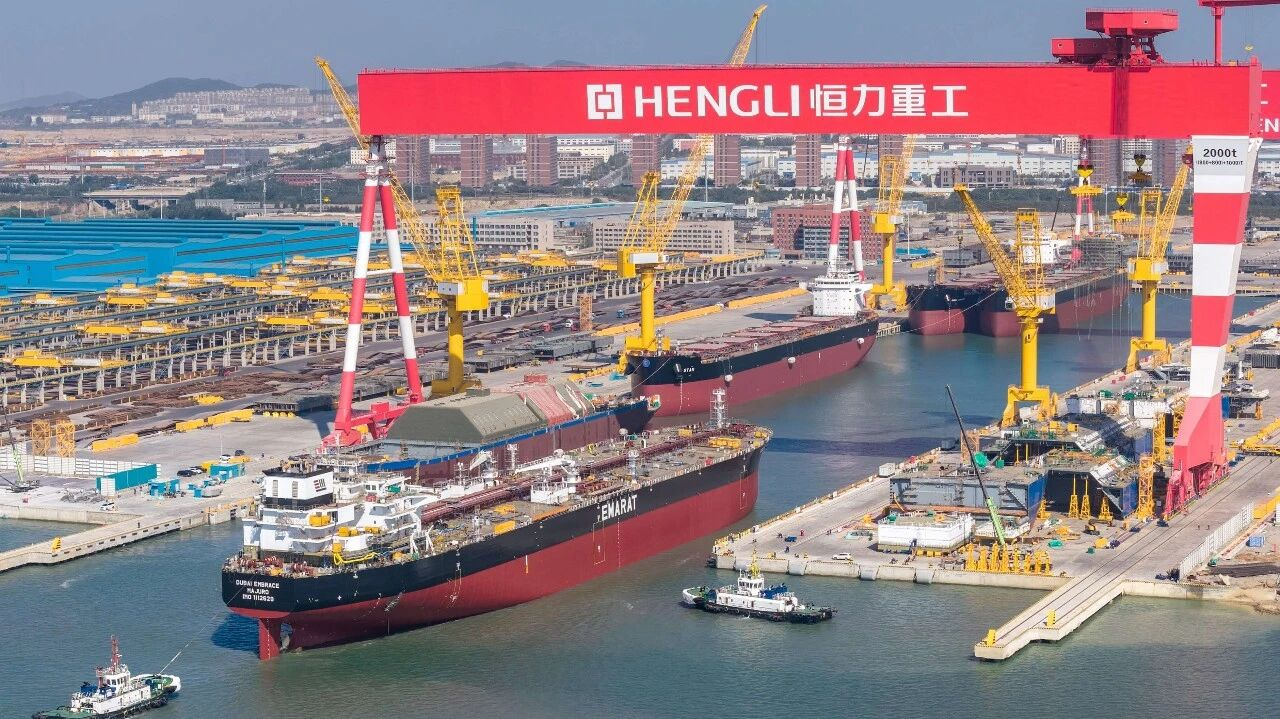 Shipbuilding
Hengli Heavy Industries moves five newbuildings from world’s largest dock in latest production milestone
 Shipbuilding
$3.1 Trillion in Revenue, $824 Billion in New Ships: Is Shipping Buying the Wrong Tonnage?
 Shipbuilding
Maersk’s $5bn Newbuilding Push Signals a Shift Back Toward Fleet Growth
 Shipbuilding
24 Firm Orders + 16 Options: Ren Yuanlin Accelerates Yangzijiang Maritime’s ‘Financial Shipowner’ Strategy
 Shipbuilding
185 Ships and Counting: How Union Maritime Is Building Its Next Fleet in China
 Shipbuilding
Ren Yuanlin: Shipbuilding Still Has 8–10 Years of Strong Growth Ahead
 Shipbuilding
CULines Steps Up Fleet Expansion with First 14,000 TEU Newbuildings
 Shipbuilding
CMA CGM linked to $3bn Yangzijiang megamax programme
 Shipbuilding
Advantage Tankers adds MR2 quartet as product tanker orderbook builds
 Shipbuilding