


Just Sold Four, Now Ordering Six More: Ren Yuanlin’s Capital Recycling Model Gathers Pace
Just days after selling four newbuilding bulkers, Ren Yuanlin is back in the market buying ships.
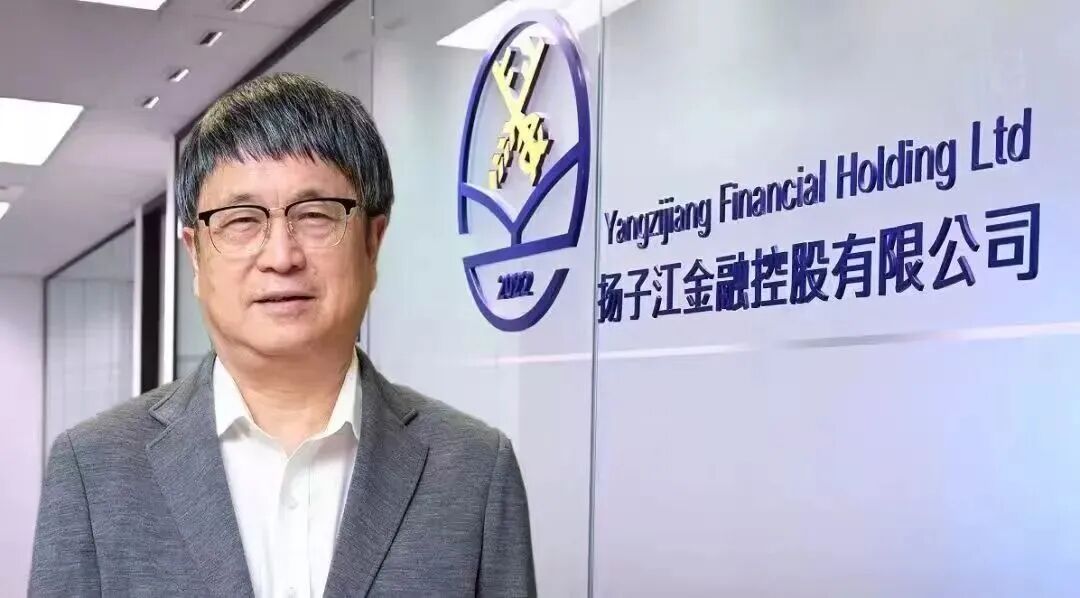

According to TradeWinds, citing several shipbuilding sources on 10 August, Yangzijiang Maritime Development, led by Ren Yuanlin, has moved again to expand its tanker investment portfolio with an order for six product tankers at Jiangsu Haifeng Shipbuilding.
The latest package is said to comprise four 50,000-dwt MR product tankers and two 115,000-dwt LR2s, with deliveries scheduled between 2028 and 2029.
Neither party has formally disclosed the contract price. Based on recent market levels for comparable vessels in China, however, the total investment is expected to exceed $320 million.
The timing is particularly notable.
Just four days earlier, on 6 August, Yangzijiang Maritime announced the sale of four 40,000-dwt Handysize bulk carrier newbuildings currently under construction at Qidong Qianyao Heavy Industry. The vessels are scheduled for delivery between April 2027 and May 2028.
At the same time, the company disclosed another figure that deserves even more attention:
Over the past nine months, Yangzijiang Maritime has signed agreements to sell 12 newbuildings with a total contract value of around $500 million.
Buying ships while selling ships has become one of the clearest features of Yangzijiang Maritime’s strategy.
And the company is increasingly looking less like a conventional shipowner.
Twelve Newbuildings Sold in Nine Months — Yet the Orderbook Keeps Growing
Looking at Yangzijiang Maritime’s activities over the past year, the logic behind the strategy becomes much clearer.
In November 2025, the company announced the sale of four 49,800-dwt MR product tankers for a total consideration of $180 million, equivalent to about $45 million per ship.
The vessels were later identified by market sources as the four MR newbuildings acquired by US-listed Scorpio Tankers.
Scorpio simultaneously sold four 2014-built MR tankers and acquired the newbuildings at around $45 million each, effectively using the resale market to renew part of its fleet.
Yangzijiang Maritime, meanwhile, continued to expand its newbuilding exposure.
In January 2026, the company announced plans with co-investors for up to 16 newbuildings in China, spanning approximately 40,000-dwt Handysize bulkers, 49,800-dwt MRs and 114,000-dwt LR2s.
On 16 April, the company then announced an investment in eight 319,000-dwt VLCCs.
On the very same day, Yangzijiang Maritime also announced the sale of another four 49,800-dwt MR newbuildings.
Just 11 days later, it added another 10 newbuildings to its portfolio:
four 114,000-dwt LR2s;
four 49,800-dwt MRs;
and two 40,000-dwt bulk carriers.
At the time, the company said the latest investments would bring its maritime asset portfolio to 105 vessels, including 53 newbuildings under construction.
Now, the market is linking Yangzijiang Maritime to another four MRs and two LR2s.
TradeWinds, citing shipping sources, estimates that following the latest deal, the company may now be involved in around 76 newbuildings worth more than $2.5 billion, covering vessel types ranging from Handysize bulkers to VLCCs.
Taken at face value, those numbers might suggest that Yangzijiang Maritime is simply building a very large fleet.
That would miss an important part of the story.
Many of these vessels may never be intended for long-term ownership by Yangzijiang Maritime in the first place.
Ren Yuanlin Is Building a Ship Asset Business
Yangzijiang Maritime has been unusually explicit about its business model.
In its 2025 annual report, the company explained in some detail how it approaches newbuilding investments.
Yangzijiang Maritime looks for competitively priced newbuilding opportunities by leveraging its knowledge of the Chinese shipbuilding market and working with investment partners.
One area of focus is Chinese second- and third-tier yards that possess capable production facilities but do not command the same international profile, orderbook premium or market pricing as leading yards.
According to Yangzijiang Maritime, some of its newbuilding contracts can be secured at prices up to around 20% below prevailing quotations from top-tier Chinese shipyards.
Price, however, is only the starting point.
This is where Ren Yuanlin’s decades of shipbuilding experience become especially important.
Yangzijiang Maritime deploys its own technical teams to the yards to participate in construction supervision and quality control.
The company also prefers proven, repeatable vessel designs and participates in the procurement of key marine equipment.
In other words, it does not simply place a low-cost order at a lesser-known yard and wait for delivery.
Instead, Yangzijiang Maritime effectively brings part of the technical management, supply-chain control and project oversight normally associated with more established yards into the project itself.
The shipyard provides the physical production capacity.
Yangzijiang Maritime contributes technical judgement, project management and capital.
Once the vessel is under construction, the company can then decide how best to monetise the asset.
Its annual report sets out several options.
A ship can be pre-sold or resold before delivery.
It can be sold when market pricing becomes attractive.
Or it can be retained and chartered out to generate recurring income.
When Yangzijiang Maritime announced another 10 newbuilding investments in April, Ren Yuanlin also said the company would continue to assess leasing, chartering and pre-delivery resale opportunities.
By the time the company announced the sale of four Handysize newbuildings on 6 August, the logic had become even clearer.
Yangzijiang Maritime said it aimed to originate attractive maritime investments, acquire or build assets at competitive costs, and then monetise them through vessel sales, charter income and capital management.
Once an asset is sold, the released capital can be redeployed into new opportunities.
That creates a clear cycle:
secure the berth — place the order — oversee construction — control cost and quality — sell or charter the vessel — recycle the capital — invest again.
The frequent buying and selling of ships are therefore not contradictory.
They are two sides of the same business.
Why Ren Yuanlin Can Make This Model Work
This is also the key to understanding why Yangzijiang Maritime can pursue such a strategy.
Traditional shipowners often place considerable value on shipyard reputation, delivery track record, financing acceptance and experience with international customers.
Leading yards therefore command a natural premium.
Ren Yuanlin comes from a very different background.
Having spent decades in shipbuilding, he understands vessel design, equipment procurement, production management, construction costs, shipyard capacity and delivery risk at a granular level.
That gives Yangzijiang Maritime the ability to work with yards that some international owners may be less comfortable approaching directly, while using its own technical and project-management resources to reduce execution risk.
The company’s advantage, therefore, is not simply that it has capital available to order ships.
A more important capability is its ability to judge what a vessel should cost to build, and which yard is capable of delivering it at that cost.
When the actual construction cost sits below the future market value that shipowners are willing to pay for the asset, an investment opportunity emerges.
The current shipbuilding cycle makes this even more relevant.
Chinese yard capacity remains tight, newbuilding prices are elevated, and delivery slots at many leading yards now extend into 2029 and 2030.
Against that backdrop, the ability to secure a vessel for delivery in 2027, 2028 or 2029 carries value of its own.
A berth has increasingly become a scarce asset.
For Yangzijiang Maritime, therefore, it is not only buying a ship.
It is also buying a future delivery window and an embedded option on the vessel’s value.
Scorpio and TORM Are Validating the Model
Ultimately, the model only works if there are established owners willing to acquire these assets.
So far, the market appears to be providing that validation.
Scorpio is the clearest example.
In November 2025, Scorpio announced the acquisition of four MR newbuildings at around $45 million per ship while selling four 2014-built MRs.
For Scorpio, this was a fleet-renewal transaction.
It sold older tonnage and replaced it with modern, more efficient vessels.
For Yangzijiang Maritime, however, the same deal represented the monetisation of a newbuilding asset before delivery.
One company had secured the yard slot and organised the construction.
Another stepped in when it needed modern tonnage.
The vessel had not yet been delivered, but the asset transaction had already taken place.
Danish product tanker owner TORM has also been active in the MR resale market, acquiring newbuildings scheduled for delivery in 2027 and 2028 as it continues to modernise its fleet.
That reflects a broader reality in the tanker market:
many established owners want new ships, but it has become increasingly difficult to secure sufficiently early delivery positions at top-tier yards.
That creates opportunities for investors that locked in capacity earlier.
Shipyard slots, vessels already under construction and modern tonnage approaching delivery can all become tradeable assets.
Yangzijiang Maritime is positioning itself directly in the middle of that market.
From MR to LR2 — and Now VLCC
Another increasingly visible trend is the growing weight of tankers within Yangzijiang Maritime’s investment portfolio.
MR was one of the first segments in which the model gained traction.
Then came LR2.
In April this year, the company formally moved into VLCCs.
Yangzijiang Maritime announced an investment in eight 319,000-dwt VLCCs scheduled for delivery between 2028 and 2030.
The market subsequently linked the company with Scorpio Tankers in relation to those VLCC investments.
Scorpio has separately disclosed that it has committed minority equity to a joint venture involving eight VLCC newbuildings under construction in China.
This suggests Yangzijiang Maritime is now attempting to replicate a model already tested in the MR sector across larger and significantly more capital-intensive vessel classes.
At the same time, the latest MR and LR2 orders show that the company is still expanding in product tankers, where the investment model is already relatively mature.
The broader MR newbuilding market has also strengthened this year.
Fleet ageing, tighter environmental regulations, energy-efficiency requirements and replacement demand are all pushing more capital towards modern product tankers.
But as delivery positions at leading yards move further out, a modern tanker with a comparatively early 2027, 2028 or 2029 delivery can become increasingly valuable.
That is precisely the type of opportunity Yangzijiang Maritime is trying to capture.
A “Shipowner” That Looks Less and Less Like a Traditional Shipowner
Yangzijiang Maritime was spun off from Yangzijiang Financial Holding and listed on the Mainboard of the Singapore Exchange in November 2025.
From the outset, the company positioned itself as more than a shipowner.
Its ambition is to operate as an investment management platform across the wider maritime value chain.
That ambition is now becoming much easier to see.
The company can invest in vessels.
It can originate newbuilding projects.
It can bring in co-investors.
It can arrange financing.
It can charter vessels out.
And it can sell them before delivery.
Shipyards, shipowners, charterers and capital are increasingly being connected through the same platform.
Ren Yuanlin’s biggest asset may therefore not simply be capital.
Decades of shipbuilding experience are being converted into a different kind of maritime investment capability.
The ability to judge construction costs, assess yards, understand vessel design and equipment, control project execution, value delivery slots and read the shipping cycle are all being combined within one model.
That is why Yangzijiang Maritime appears to move so quickly between buying and selling ships.
Four vessels sold.
Six more ordered.
And there is every reason to expect more transactions of this kind.
For Yangzijiang Maritime, owning more ships does not necessarily mean keeping all of them.
The ships themselves are the assets it invests in, manages and trades.

READ MORE
 Shipbuilding
Union Maritime Adds Nine Ships Across Five Segments as Newbuild Programme Reaches 79
 Shipbuilding
Fujian Guohang Plans RMB2.49bn Fleet Expansion into LR2 Tankers and Heavylift
 Shipbuilding
Swire Buys Four Heavy-Lift Ships in Latest Strategic Shift
 Shipbuilding
DAB Group Enters Shipowning With First Ultramax Pair Ordered in China
 Shipbuilding
French Space Logistics Owner Selects China’s GSI for Next-Generation Ro-Ro Vessel Project
 Shipbuilding
Will Newbuilding Prices Still Be This High a Year From Now?
 Shipbuilding
Guohang Enters Tankers with RMB 2.49bn Fleet Plan
 Shipbuilding
Henghui Reportedly Orders Up to Four Heavy-Lift Ships at ZPMC
 Shipbuilding
24 Firm Orders + 16 Options: Ren Yuanlin Accelerates Yangzijiang Maritime’s ‘Financial Shipowner’ Strategy
 Shipbuilding