


Can a Ship Be Sold in Pieces? A $1,000 Ticket to Becoming a Digital “Shipowner”
Shipfinex and ADI are preparing to open a pipeline of around 35 vessels worth $500 million to fractional investment. The structure could lower the entry barrier to maritime assets, but legal ownership, vessel risk and liquidity remain far more complicated than the headline suggests.

A product tanker or bulk carrier worth tens of millions of dollars has traditionally been accessible only to shipowners, banks, leasing companies and specialist maritime funds.
That may be starting to change.
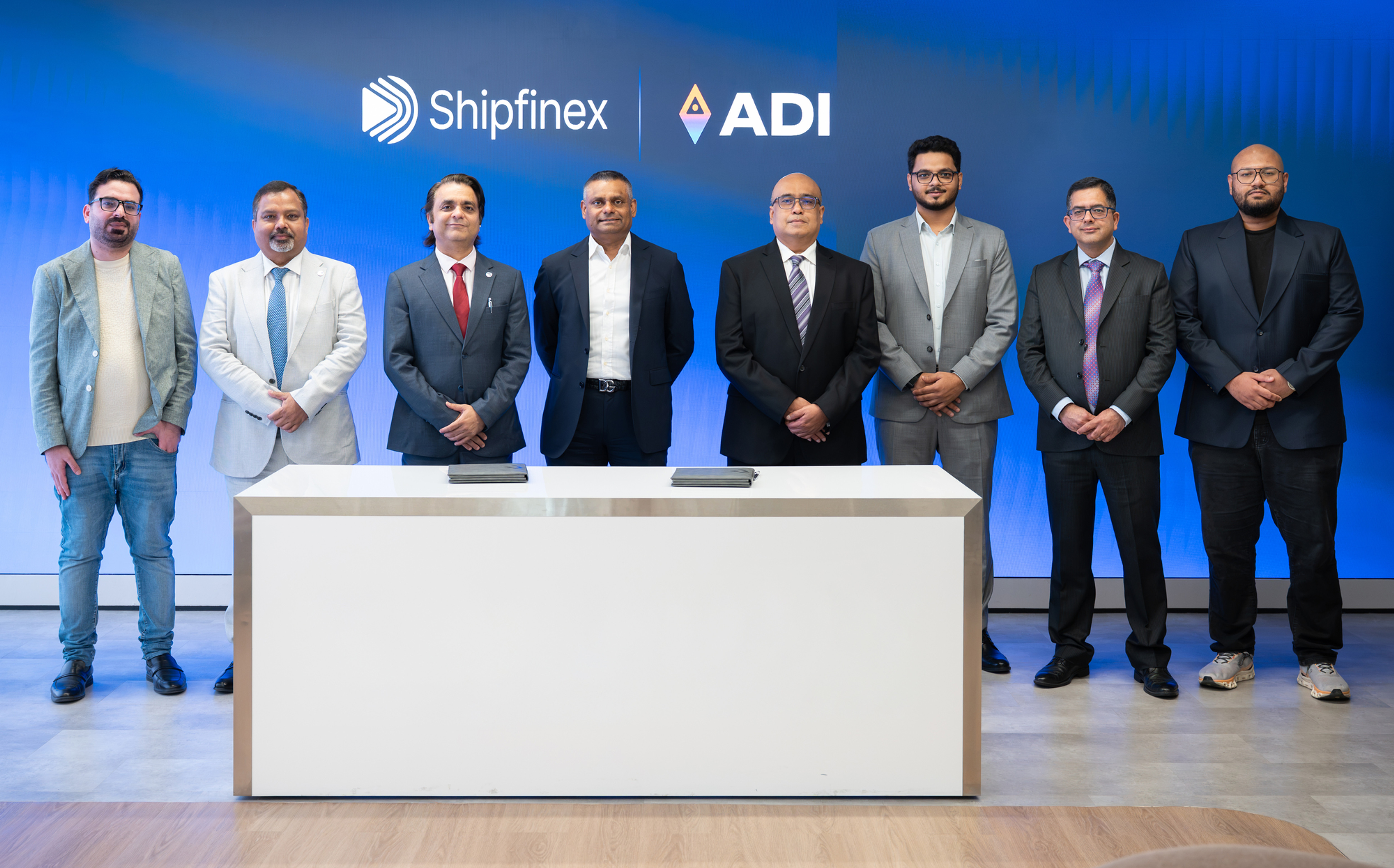
Dubai-based maritime investment platform Shipfinex has entered into an exclusive strategic partnership with ADI Foundation to develop and scale an institutional-grade maritime asset tokenisation programme.
According to TradeWinds and the companies’ official announcement, the initial pipeline comprises around 35 vessels with a combined value of approximately $500 million. The assets are understood to include MR product tankers, Kamsarmax bulk carriers and other commercial vessels.
Shipfinex has previously marketed access to ship investments from as little as $1,000. Subject to identity checks, anti-money-laundering requirements, investor eligibility rules and local regulations, an individual investor could therefore acquire a small economic interest in an asset that would normally be far beyond their reach.
The word “shipowner”, however, requires quotation marks.
A token investor would not normally appear as an owner on the vessel’s certificate of registry and would not directly control its chartering, crewing, maintenance or operation. What the investor acquires is generally an economic or beneficial interest linked to a vessel-owning special-purpose vehicle, the underlying ship or its charter income.
The entry ticket may be falling. The complexity of ship investment remains.
A $500 Million, 35-Vessel Pipeline
Under the partnership, Shipfinex will originate, issue and structure eligible maritime assets, while ADI Chain will provide the blockchain, distribution and settlement infrastructure for the resulting digital instruments.
The maritime asset tokens developed under the programme are expected to be issued through a regulated route and made available exclusively on ADI Chain.
If the entire pipeline proceeds, its scale would be comparable to the asset base of a mid-sized international shipowner. Yet the word “pipeline” is important. It refers to assets under consideration or preparation, rather than 35 vessels that have already been tokenised and placed with investors.
The companies have not yet publicly identified the individual vessels, their ages, shipyards, charterers, leverage levels, employment arrangements or proposed issuance dates.
Shipfinex refers to its existing digital instruments as Maritime Asset Tokens, or MATs. The basic concept is to standardise and digitise an economic interest connected to a ship, then divide that interest into smaller investment units.
A single vessel could theoretically be represented by hundreds of thousands or millions of digital units. Investors purchasing a portion of those units could participate in the vessel’s distributable operating income and, depending on the structure, its residual value when sold.
Shipfinex currently displays an In-Principle Approval from Dubai’s Virtual Assets Regulatory Authority for broker-dealer services, under reference IPA/26/01/002.
An in-principle approval does not have the same status as a full operational virtual asset service provider licence. Whether an individual product may be issued, where it can be marketed and which investors can participate will depend on the final legal structure, regulatory permissions and the laws of each target jurisdiction.
As of the publication of this article, Shipfinex had not publicly completed an MAT issuance, and its proposed secondary market was not yet operational. The $500 million programme therefore remains at the structuring and operational-readiness stage.
What Does the Investor Actually Own?
Understanding vessel tokenisation requires a clear distinction between registered ownership and economic ownership.
Under Shipfinex’s existing platform terms, an eligible vessel would generally be placed in a dedicated special-purpose vehicle, or SPV. The SPV would hold the vessel’s registered title, while the token would represent a fractional beneficial interest connected to the SPV or the underlying asset.
The structure can be summarised as follows:
Vessel → single-ship SPV → digital tokens → eligible investors
The vessel generates charter or freight income. After operating expenses, financing costs and reserves have been deducted, distributable earnings may flow through the SPV to token holders in accordance with the relevant offering documents.
Even if a vessel is divided into one million tokens, the certificate of registry will generally continue to show a single registered owner: the SPV.
A person buying 1,000 tokens would therefore not become a co-owner of record under the vessel registration system. The investor would hold the rights defined by the SPV documents, token terms, shareholder agreement and offering memorandum.
Depending on the project, these rights could include:
-
A share of distributable vessel earnings;
-
A share of the residual proceeds following a vessel sale;
-
Limited voting rights over specified major decisions; and
-
Access to financial, operational or valuation information.
Token holders would not usually make day-to-day decisions over chartering, crewing, insurance, maintenance, bunkering or technical management.
The Shipfinex–ADI programme also appears broad enough to cover several types of maritime instruments. Future products could represent vessel-related economic interests, asset-backed credit or income linked to charter contracts.
Not every maritime token will therefore resemble equity in a shipowning company. Some could function more like debt instruments or securitised cash-flow products, with different repayment priorities and risk profiles.
Shipfinex’s existing documentation describes MATs as permissioned ERC-3643 tokens. These are identity-linked and subject to transfer restrictions. A holder’s wallet must be whitelisted, and transfers may only take place between eligible participants.
This is materially different from an anonymous cryptocurrency that can be transferred freely between any two wallets.
The platform’s current documents describe MATs deployed on Polygon, with USDC used for settlement. Under the new partnership, future instruments are expected to be issued and distributed on ADI Chain, potentially with settlement options involving US dollars, UAE dirhams and compliant stablecoins.
The final arrangements will depend on the documentation for each issuance.
How Charter Income Becomes an Investment Return
A token does not create income by itself. The underlying return still comes from the vessel’s commercial performance and asset value.
A ship may earn revenue through voyage charters, time charters, bareboat charters or long-term contracts of affreightment.
A vessel employed under a long-term charter may offer relatively predictable gross income. A ship operating in the spot market will have greater exposure to freight-rate volatility.
Gross charter income is not the same as the amount available for distribution.
The vessel may incur expenses including crew wages, technical management, maintenance, insurance, lubricants, stores, spare parts, class fees, drydocking, taxes and administrative costs. If the SPV has bank debt or another form of secured financing, interest and principal payments may rank ahead of distributions to token holders.
Only after these costs, debt obligations and required reserves have been accounted for can the remaining amount potentially be distributed to investors.
Distribution frequency, calculation methods and settlement arrangements should be set out in the documentation for each vessel.
Valuation is another critical component. Under Shipfinex’s existing rules, a vessel’s initial value is generally assessed using the average of a VesselsValue model valuation and an estimate provided by a shipbroker that is a member of the Baltic Exchange.
If the two valuations differ by more than 5%, an additional independent broker valuation may be obtained.
This approach can help establish a reference value, but vessel prices remain sensitive to freight markets, age, shipyard, engine specification, drydocking status, energy efficiency, regulatory exposure and buyer demand.
A valuation report reflects a view at a particular point in time. It does not guarantee the price at which a ship can eventually be sold.
Shipfinex’s current fee schedule shows a primary-market fee of 1.25% of the subscription amount for the investor, with a further 1.25% payable by the asset owner or SPV.
Vessel management fees, SPV administration, legal costs, audit expenses and other project-specific charges would need to be assessed separately.
Investors are likely to have two principal exit routes.
The first would be a sale of tokens through a secondary market. Shipfinex has previously indicated that secondary trading could be introduced in the fourth quarter of 2026, subject to regulatory and operational readiness. That market is not yet live, and its eventual trading depth remains unknown.
The second route would be the sale of the underlying vessel. After repaying mortgages, transaction expenses and other senior liabilities, the remaining proceeds could be distributed to token holders according to the project terms.
Neither route provides guaranteed liquidity.
Blockchain infrastructure can make ownership records and settlement more efficient. It cannot create a buyer when market demand is absent. Investors may have to hold the token for an extended period, while a decline in vessel values could result in an exit price below the original investment.
A Lower Entry Barrier Does Not Remove Shipping Risk
Ships are large, cyclical and operationally complex assets. Dividing a vessel into smaller investment units reduces the capital required from each investor. The same vessel and market risks are then shared among a larger number of participants.
MR tankers and Kamsarmax bulk carriers operate in different markets. Their earnings are influenced by oil-product flows, coal and grain demand, fleet supply, congestion, seasonal patterns and geopolitical disruption.
Charter rates can change sharply over relatively short periods.
Counterparty risk also remains. A long-term charter may reduce direct exposure to the spot market, but a charterer can still delay payment, renegotiate terms or default.
Ships may suffer mechanical failures, collisions, groundings, pollution incidents, sanctions exposure, detention or prolonged off-hire. Insurance can cover certain losses, but deductibles, exclusions, claims delays and insufficient coverage may affect the final recovery.
The SPV’s capital structure requires particular scrutiny.
A mortgage lender will generally rank ahead of equity-like token holders. Crew wages, salvage claims, port charges and certain other maritime claims may also create maritime liens with priority over other interests.
The amount ultimately available to investors will depend on whether the token represents equity, debt or another contractual claim, and where that claim sits in the repayment hierarchy.
Governance is equally important. Where hundreds or thousands of investors hold small economic interests in one vessel, the documents must establish who can appoint or replace the ship manager, approve major repairs, extend a charter or authorise the sale of the vessel.
Holding a large number of digital tokens does not necessarily provide direct influence over the ship’s operation.
There are also stablecoin, wallet, smart-contract and blockchain risks. Under Shipfinex’s current model, settlement in USDC creates exposure to the stablecoin issuer, conversion channels and changes in the regulatory treatment of digital assets.
Lost private keys, compromised accounts, smart-contract vulnerabilities and network failures could also cause losses or delays.
Investors must distinguish between platform-level regulatory approval and approval of a specific product. An in-principle approval, a full operating licence and authorisation to distribute an individual investment product are separate regulatory stages.
These products would generally not receive bank deposit protection and may fall outside conventional investor compensation arrangements. Shipfinex’s own risk disclosure warns that investment values and returns can fluctuate and that investors may lose part or all of their capital.
Any projected yield should therefore be treated as a scenario rather than a promise. Actual returns will depend on charter income, operating costs, financing leverage and the vessel’s eventual sale price.
How Does Tokenisation Compare with Chinese Ship Finance?
China already has a substantial ship-finance ecosystem built around bank lending, financial leasing, ship funds, asset-backed securities and shipowners’ own capital.
Tokenisation overlaps with some of these structures. Its distinctive features lie mainly in the size of the investment units, digital record-keeping, transfer mechanisms and potential investor reach.
Financial leasing
Under a conventional financial-leasing structure, the leasing company is generally the registered owner of the vessel. The shipping company operates the asset under a finance lease, operating lease, bareboat charter or sale-and-leaseback arrangement and makes scheduled rental payments.
This structure reduces the shipowner’s upfront capital requirement. Participation, however, remains concentrated among banks, leasing companies and established shipping groups.
Ship funds
A ship fund may acquire a vessel through a dedicated company and appoint professional managers to oversee financing, chartering and asset disposal.
Its economic logic is relatively close to an SPV-based maritime token. Investors may participate in both operating income and the residual value of the ship.
Traditional ship funds usually have large minimum investment sizes, limited investor numbers and relatively complicated transfer procedures. Tokenisation seeks to divide those interests into smaller units while introducing digital registration and settlement.
Asset-backed securities
Ship asset-backed securities usually rely on lease rentals, receivables or other identifiable future cash flows as the underlying assets.
Investors acquire securities supported by those cash flows and typically occupy defined positions in a repayment waterfall. They do not necessarily participate directly in any appreciation in the vessel’s market value.
In 2017, COSCO Shipping Leasing launched a ship-leasing asset-backed securities programme with an issuance size of approximately RMB1.2 billion, illustrating how lease income can be transformed into standardised capital-market products.
Maritime asset tokens
A maritime token could digitise SPV equity, vessel income rights, charter receivables or vessel-backed debt. Its economic character may therefore resemble a ship fund in one transaction and an asset-backed security in another.
The blockchain mainly provides a technical layer for recording, dividing, transferring and settling those interests. It does not change the quality of the ship, charter or borrower beneath the product.
For China, the model raises several useful questions: whether vessel disclosure can become more standardised, whether charter cash flows can be monitored more transparently and whether the transfer of ship-investment interests among professional investors can become more efficient.
Direct marketing to mainland Chinese retail investors, however, faces clear regulatory restrictions.
In February 2026, the People’s Bank of China and other authorities issued a notice addressing risks related to virtual currencies and real-world asset tokenisation.
The notice states that conducting unauthorised RWA tokenisation activities in mainland China, including issuance, trading and related services, may constitute illegal financial activity. An overseas licence would not automatically permit a product to be marketed to investors in mainland China.
Hong Kong is exploring a more defined regulated route.
In April 2026, the Hong Kong Securities and Futures Commission issued a circular setting conditions for the secondary trading of tokenised SFC-authorised investment products. The framework includes requirements covering licensed intermediaries, market making, net asset value, liquidity and investor protection.
This does not provide automatic approval for vessel tokens. Each product would still need to be assessed according to its legal form, underlying assets and intended investors.
For Chinese ship finance, maritime tokenisation is therefore more immediately relevant as an overseas regulatory experiment and product-design case study. It could eventually inform cross-border ship funds, professional-investor transfers and digital asset administration, while widespread mainland retail distribution remains a distant prospect.
Can the $500 Million Fleet Become a Live Investment Platform?
According to Petrofin’s 2026 global ship-finance research, the global fleet and orderbook were valued at approximately $2.166 trillion at the end of 2025.
The top 40 ship-financing banks held approximately $300.6 billion in loans, while lending by all banks was estimated at around $425 billion. Including leasing, export credit and alternative finance, total global ship finance was estimated at approximately $680 billion.
These figures show the scale of the asset class and the concentration of maritime capital among banks, leasing companies, shipowners and specialist investors.
The difference between fleet value and outstanding ship finance should not be interpreted as a simple financing gap. A substantial share of vessel value is funded through owner equity, retained earnings and other forms of capital.
Shipfinex is targeting part of this equity and alternative-finance market.
By reducing investment size, digitising ownership records and simplifying settlement, tokenisation could connect ship assets with a wider pool of capital.
The quality of the underlying vessel will still determine whether the investment works.
Investors will need to know the ship’s age, builder, engine specification, charterer, remaining charter period, leverage, technical manager, operating performance, disclosure standards and repayment ranking. They will also need a credible route to liquidity.
The $500 million, 35-vessel portfolio remains a pipeline. The project will only become fully testable when the first vessels, SPVs, charter contracts, financing arrangements, distribution rules and exit mechanisms are publicly documented and opened to eligible investors.
At that point, $1,000 may indeed buy an individual investor a small economic interest in a commercial vessel.
Becoming a digital “shipowner”, however, means sharing the downside as well as the income. Freight-rate weakness, off-hire, charterer default and falling vessel values cannot be tokenised away.

READ MORE
 Shipbuilding
Union Maritime Adds Nine Ships Across Five Segments as Newbuild Programme Reaches 79
 Shipbuilding
Fujian Guohang Plans RMB2.49bn Fleet Expansion into LR2 Tankers and Heavylift
 Shipbuilding
Swire Buys Four Heavy-Lift Ships in Latest Strategic Shift
 Shipbuilding
DAB Group Enters Shipowning With First Ultramax Pair Ordered in China
 Shipbuilding
French Space Logistics Owner Selects China’s GSI for Next-Generation Ro-Ro Vessel Project
 Shipbuilding
Will Newbuilding Prices Still Be This High a Year From Now?
 Shipbuilding
Guohang Enters Tankers with RMB 2.49bn Fleet Plan
 Shipbuilding
Henghui Reportedly Orders Up to Four Heavy-Lift Ships at ZPMC
 Shipbuilding
24 Firm Orders + 16 Options: Ren Yuanlin Accelerates Yangzijiang Maritime’s ‘Financial Shipowner’ Strategy
 Shipbuilding