


Up to 12 Ships: Varamar Enters Ship Ownership as a New Player in the Multipurpose Vessel Market

Varamar Enters Ship Ownership as Multipurpose Shipping Moves Into a New Renewal Cycle
Xinde Marine News — Antwerp-based multipurpose and breakbulk operator VARAMAR has taken its first step into ship ownership, marking a notable shift for a company that has long built its business around chartered tonnage, cargo relationships and global logistics execution.
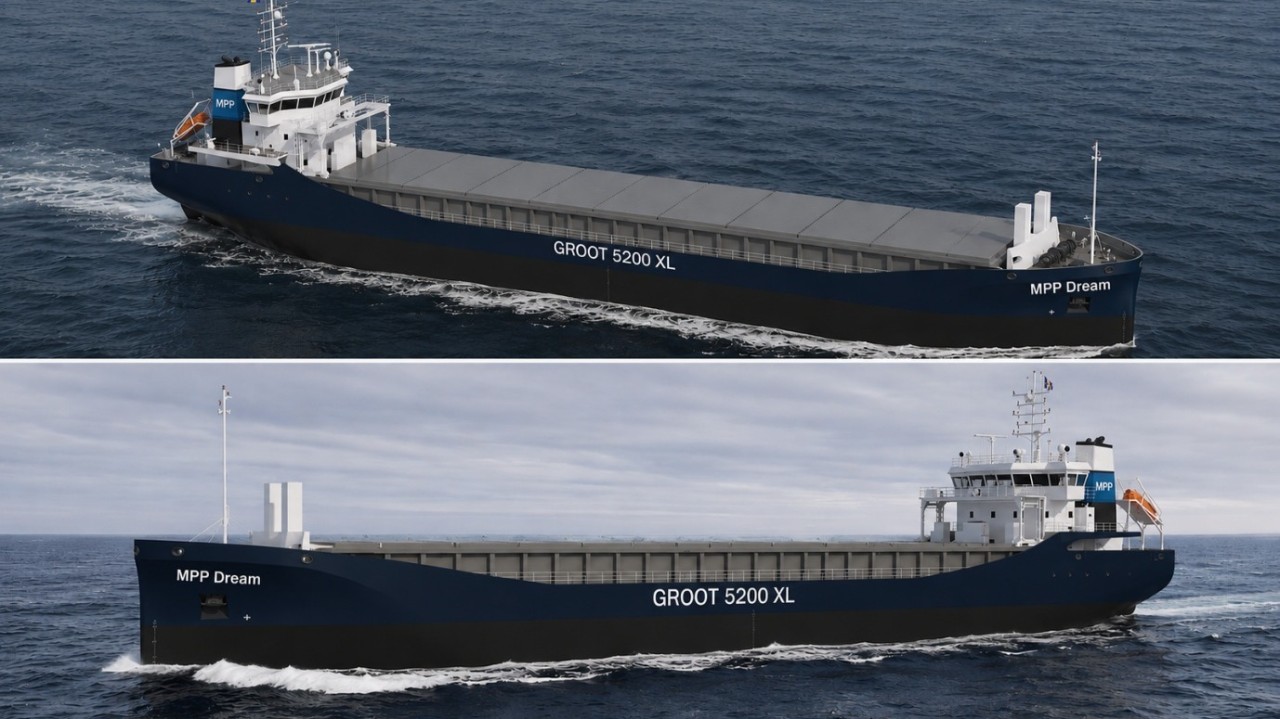
According to market sources, Varamar has acquired four modern 5,200 dwt multipurpose vessels. The ships are scheduled to enter service between late 2026 and early 2027 and will form the foundation of the company’s first owned fleet.
In addition, Varamar has reached a preliminary agreement for a further 4+4 modern 7,200 dwt geared tween-deck vessels based on the well-known Octopus design. If the full programme proceeds, Varamar could eventually be linked to up to 12 multipurpose vessels under its owned fleet strategy.
For a company that has traditionally relied on third-party tonnage, this is more than a simple fleet addition. It represents a strategic move from an asset-light operating model towards a more integrated structure combining cargo generation, commercial operation and controlled tonnage.
From asset-light operator to shipowner
Founded in 2009 by Alexander VARVARENKO , Varamar has developed into a global multipurpose, breakbulk and project cargo shipping operator. The company has long been active in the transportation of breakbulk cargo, dry bulk, heavy and oversized cargo, ro-ro cargo and containerised cargo, serving customers across Europe, the Americas, Africa, the Middle East and Asia.
For more than 17 years, Varamar’s strength has largely come from its commercial network, cargo base and ability to match diverse cargo requirements with suitable vessels from the charter market. This model has given the company flexibility, especially in periods when vessel availability was sufficient and charter costs remained manageable.
However, the supply structure in the multipurpose and general cargo shipping market has been changing.
A significant part of the global multipurpose and breakbulk fleet is ageing. At the same time, newbuilding activity in this segment has remained relatively limited compared with container shipping, tankers, gas carriers and other larger mainstream sectors. Modern, fuel-efficient and operationally flexible multipurpose vessels have become increasingly valuable as cargo owners continue to require reliable transport capacity for project cargo, steel products, forest products, industrial equipment, energy components and infrastructure-related cargoes.
Varamar’s acquisition of four 5,200 dwt multipurpose vessels should be viewed against this background.
The four ships are described as modern box-shaped, tween-deck, gearless multipurpose vessels. Their cargo hold configuration and operating flexibility make them suitable for a range of breakbulk, project, parcel bulk and other non-containerised cargoes. Once delivered into service, the vessels are expected to be included in the D-Type fleet and commercially managed by MPP Shipping.
MPP Shipping is a multipurpose shipping pool and commercial management platform that brings together vessels from independent owners and investors. Through pooled commercial management, the platform aims to improve vessel utilisation, market coverage and operating efficiency.
For Varamar, this structure allows the company to combine the benefits of ownership with the broader commercial reach of a specialised multipurpose vessel pool.
A market entering a renewal window
Varamar’s move also reflects a wider trend in the multipurpose and breakbulk shipping market.
For many years, newbuilding investment in the multipurpose vessel sector has lagged behind other shipping segments. This has been particularly evident in smaller and mid-sized multipurpose vessels, general cargo vessels and project cargo-capable tonnage. As a result, parts of the existing fleet are becoming older and less competitive in terms of fuel efficiency, environmental performance, cargo configuration and operational reliability.
For cargo owners and logistics providers, vessel availability, schedule reliability and cargo-specific suitability are becoming more important. Project cargoes, energy equipment, industrial modules, steel products, forest products and infrastructure cargoes often require ships with suitable holds, flexible loading options, port adaptability and predictable deployment.
Relying entirely on the spot charter market can make it difficult to secure the right ship at the right time, especially when cargoes are time-sensitive or require specific vessel characteristics.
Owned tonnage can help an operator improve long-term capacity control, reduce exposure to volatile charter markets and provide customers with more stable transport arrangements. For a global multipurpose operator such as Varamar, having a base layer of controlled tonnage can strengthen its position with long-term customers, project cargo clients and industrial shippers.
This is one of the key changes now taking place in the multipurpose market: commercial operators are placing greater value on capacity certainty.
Over the past year, the sector has seen a number of fleet renewal and newbuilding moves involving open-hatch multipurpose vessels, heavy-lift multipurpose vessels, smaller geared tween-deckers and more specialised designs aimed at wind energy, industrial equipment and project cargoes. Chinese shipyards have played a particularly important role in this new wave of multipurpose vessel orders, underlining the gradual structural renewal of the sector.
The 5,200 dwt vessels selected by Varamar sit in a flexible small-to-mid-sized segment. Ships of this size can serve regional routes, short-sea trades, smaller ports and project-related cargo flows. Compared with larger project carriers, they offer stronger port flexibility, cargo switching capability and commercial deployment options.
Expansion may go further
The four 5,200 dwt vessels are only the first step in Varamar’s owned fleet plan.
The company has also reached a preliminary agreement for an additional 4+4 modern 7,200 dwt geared tween-deck vessels of the Octopus design. Compared with the initial 5,200 dwt gearless ships, the larger geared vessels would provide a wider operating profile.
The key difference is lifting capability. Geared multipurpose vessels can reduce dependence on shore-based cargo handling equipment and are particularly useful in trades involving ports with limited infrastructure, irregular project cargo flows and complex loading requirements.
For cargoes such as industrial machinery, infrastructure equipment, energy project components and certain oversized breakbulk shipments, onboard lifting capacity can be a significant commercial advantage.
Varamar has also indicated that it is seeking strategic investors and long-term partners to participate in the ownership and development of the next-generation fleet. This suggests that the company’s expansion plan is not limited to a one-off acquisition, but may develop into a longer-term asset platform around the multipurpose shipping market.
Such a model has practical relevance in today’s market. The multipurpose sector is relatively specialised, and investment in this asset class requires strong cargo support and commercial execution. Cooperation among specialist operators, investors and commercial management platforms can help spread asset risk, improve vessel utilisation and strengthen fleet deployment across different regions and cargo segments.
Repricing of breakbulk and multipurpose tonnage
Multipurpose and breakbulk shipping has always been a specialised but essential part of global seaborne trade. The cargoes served by this market are often difficult to standardise. They include steel, pulp, timber, industrial bulk cargoes, heavy machinery, wind energy components, construction equipment, factory modules and infrastructure project cargoes.
In recent years, container ships, LNG carriers, car carriers and tankers have attracted much greater attention from capital markets and shipowners. By comparison, new investment in multipurpose vessels has remained limited.
That imbalance is now becoming more visible. As older vessels approach replacement age, environmental regulations tighten and project cargo demand remains resilient, modern multipurpose vessels may become increasingly scarce.
For cargo owners, reliable tonnage reduces project delay risk. For operators, controlled tonnage strengthens service stability and customer stickiness. For investors, modern multipurpose vessels may gain additional asset value as the fleet renewal cycle accelerates.
Varamar’s move into ship ownership is a clear example of this trend. By owning vessels directly, the company can gain more control over base capacity, improve customer service and strengthen execution for long-term and project-based cargo movements.
The strategy also brings new risks. The multipurpose shipping market remains exposed to global economic cycles, infrastructure investment, energy project timing, industrial trade flows and competition from dry bulk, container and specialised heavy-lift sectors. Owning ships gives Varamar greater control, but also increases its exposure to asset, operating and market risk. The commercial success of the vessels will depend on utilisation, cargo mix, route planning and market timing.
Even so, the broader signal is clear.
Under the combined pressure of an ageing fleet, limited newbuilding supply and rising customer demand for reliable capacity, the multipurpose and breakbulk vessel market is entering a new phase of adjustment.
The era in which flexible chartering alone could cover most operating needs is beginning to change. Companies that can combine customer relationships, global operating networks and modern controlled tonnage may be better positioned in the next stage of the multipurpose market.
Varamar’s first move into ship ownership may appear to be a four-vessel acquisition. In reality, it points to a wider repricing of modern multipurpose tonnage and a renewed focus on capacity control in a market that has long been under-invested.


READ MORE
 Shipbuilding
Union Maritime Adds Nine Ships Across Five Segments as Newbuild Programme Reaches 79
 Shipbuilding
Fujian Guohang Plans RMB2.49bn Fleet Expansion into LR2 Tankers and Heavylift
 Shipbuilding
Swire Buys Four Heavy-Lift Ships in Latest Strategic Shift
 Shipbuilding
DAB Group Enters Shipowning With First Ultramax Pair Ordered in China
 Shipbuilding
French Space Logistics Owner Selects China’s GSI for Next-Generation Ro-Ro Vessel Project
 Shipbuilding
Will Newbuilding Prices Still Be This High a Year From Now?
 Shipbuilding
Guohang Enters Tankers with RMB 2.49bn Fleet Plan
 Shipbuilding
Henghui Reportedly Orders Up to Four Heavy-Lift Ships at ZPMC
 Shipbuilding
24 Firm Orders + 16 Options: Ren Yuanlin Accelerates Yangzijiang Maritime’s ‘Financial Shipowner’ Strategy
 Shipbuilding