


Erasmus Shipinvest and CULines Join Forces on 2+2 1,900 TEU Newbuildings at Huangpu Wenchong
A feeder boxship order that brings together an asset owner, a liner operator and a proven Chinese ship design
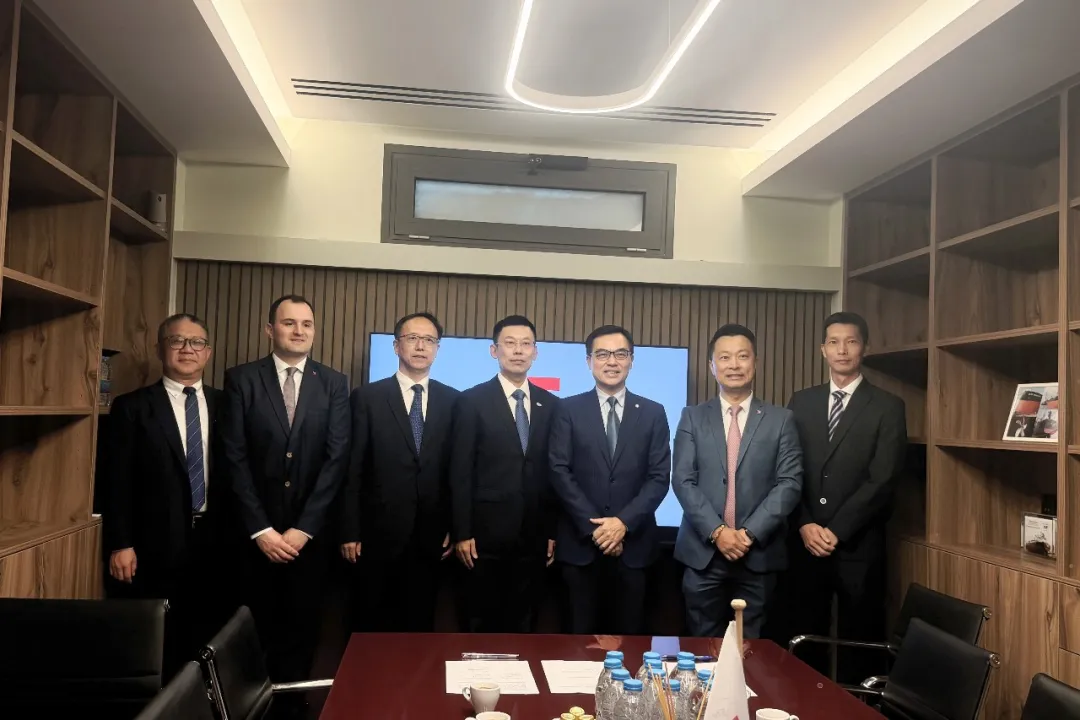
XINDE MARINE NEWS understands that CSSC Huangpu Wenchong Shipbuilding, together with China Shipbuilding Trading, has signed a contract with Greece’s Erasmus Shipinvest Group and CULines for the construction of 2+2 1,900 TEU containerships.
The contract was signed on 3 June, marking another important feeder containership order for Huangpu Wenchong. It also brings together two companies that have both recently built closer ties with the yard: Erasmus Shipinvest, led by Zhongyi (John) Su and now expanding its fleet rapidly, and CULines, which is rebuilding and strengthening its regional and medium-haul liner network.
According to Huangpu Wenchong, the latest order follows its earlier cooperation this year with Erasmus Shipinvest on 1,800 TEU feeder containerships and with CULines on 6,400 TEU containerships. The new 2+2 order therefore points to a deeper relationship among the three parties.
In Xinde Marine News’ view, this order is particularly interesting because of the structure behind it. Erasmus Shipinvest appears to be closer to the role of vessel investor and tonnage provider, while CULines is closer to the liner operator with actual service deployment needs. Huangpu Wenchong, meanwhile, is providing a mature 1,900 TEU feeder containership design.
This is a combination of a shipowner platform, a liner operator and a proven Chinese feeder containership product.
John Su continues to expand through Chinese shipyards
For Erasmus Shipinvest, this is not an isolated newbuilding move.
Over the past few months, John Su has noticeably accelerated his newbuilding activity at Chinese yards. Xinde Marine News previously reported that Erasmus Shipinvest placed an order at Jiangsu New Hantong Ship Heavy Industry for 4+4 82,000 dwt Kamsarmax bulk carriers. The company then moved ahead with a 2+2 1,800 TEU feeder containership project with Huangpu Wenchong and China Shipbuilding Trading.
More recently, Xinde Marine News also confirmed with John Su that Erasmus Shipinvest had ordered up to six 2,400 TEU feeder containerships at Taizhou Sanfu Ship Engineering. That order is understood to comprise four firm vessels plus two options.
If the latest 2+2 1,900 TEU order involving CULines is included, Erasmus Shipinvest’s newbuilding programme in China has expanded further. Its Chinese newbuilding portfolio now covers Kamsarmax bulk carriers and several feeder containership sizes, including 1,800 TEU, 1,900 TEU and 2,400 TEU designs.
This is consistent with what John Su told Xinde Marine News in an earlier interview.
He said Erasmus Shipinvest currently controls around 70 vessels and has more than 20 newbuildings on order. He also made clear that a three-digit fleet, or a fleet of around 100 vessels, is a target for the coming years.
However, Su also stressed that the company is not pursuing fleet size for its own sake. He said Erasmus must continue to perform its obligations, repay debt, provide reliable service and maintain high operating standards as it grows.
That explains why the company’s recent expansion has been closely linked to disciplined asset selection, long-term employment considerations and trusted shipyard relationships.
Erasmus Shipinvest had traditionally ordered newbuildings mainly in Japan. Su previously told Xinde Marine News that Japanese yard capacity had become tight and delivery slots had moved further out. This pushed the company to reassess Chinese shipyards.
But price and delivery slots are not the only reasons.
Su has repeatedly emphasised that Chinese shipbuilding has changed significantly compared with 10 or 20 years ago. Many Chinese yards now have strong hardware, improved efficiency, better management and more mature products.
For Erasmus Shipinvest, the key factors are quality, delivery reliability, business ethics, management credibility and the yard’s long-term commitment to shipbuilding.
In feeder containerships, Huangpu Wenchong has clearly become an important partner for Erasmus Shipinvest. The company had already signed a 2+2 1,800 TEU feeder project with the yard. Its participation in this latest 1,900 TEU order further suggests that Erasmus Shipinvest’s confidence in Huangpu Wenchong’s feeder designs and execution capability is deepening.
CULines’ participation points to real operating demand
The other important name in this order is CULines.
CULines has gone through a major network adjustment in recent years. During the pandemic, the company entered transpacific and European services and became one of the most closely watched Chinese private liner operators. After the container market corrected sharply, it returned to a more stable focus on regional and specialised services.
Recent moves show that CULines has not stopped expanding. It is now adding capacity and rebuilding its network in a more selective way.
This year, CULines has been active in the Middle East, Red Sea, Mediterranean and North Africa trades. Xinde Marine News previously reported that CULines launched new China–Middle East and China–Khor Fakkan express services. It has also optimised its South China–Taiwan service, allowing South China export cargoes to connect more quickly via Taiwan to the Middle East, Red Sea, East Mediterranean and North Africa networks.
At the same time, CULines is also strengthening its owned or controlled fleet.
In April, CULines signed an order with Huangpu Wenchong for four 6,400 TEU containerships. The vessels are designed for conventional fuel operation. They are about 240 metres long, 42.8 metres wide, have a deadweight of around 80,310 tonnes, a nominal capacity of 6,406 TEU and 1,150 reefer slots. The design is suitable for Asian regional trunk routes as well as medium-haul services to the US West Coast, Red Sea, East Africa and East Mediterranean.
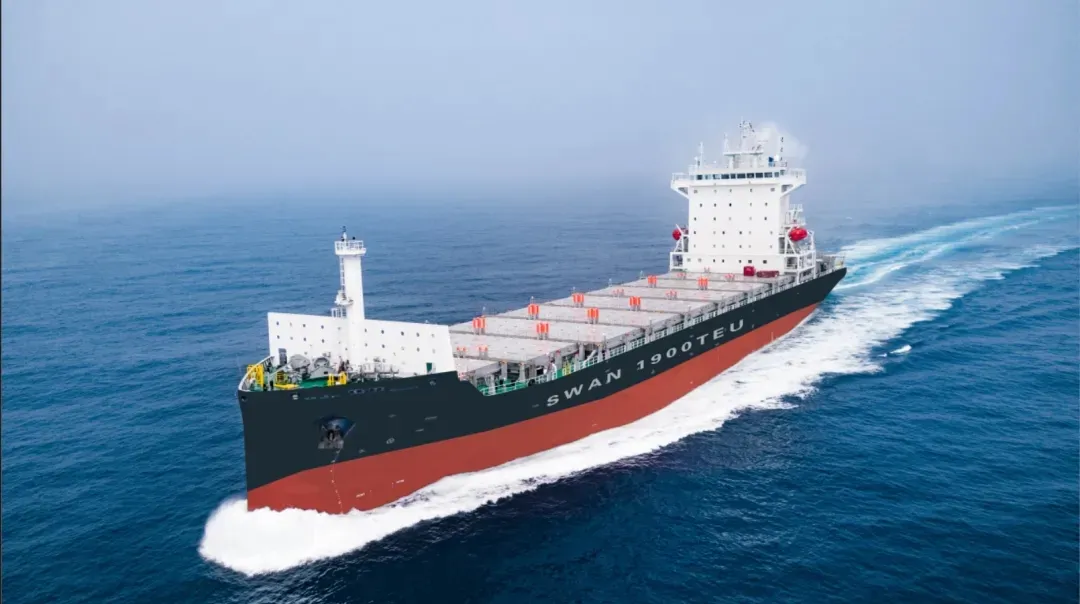
CULines already has a solid operating history with Huangpu Wenchong. The yard previously delivered four 1,900 TEU containerships and two 2,700 TEU containerships to the company. Those vessels have been recognised by CULines for fuel consumption, loading efficiency and overall performance, and have become part of its core operating fleet.
This makes CULines’ participation in the latest 1,900 TEU order commercially logical.
First, CULines has already operated Huangpu Wenchong’s 1,900 TEU class vessels. A proven ship type is easier to repeat than an unfamiliar design.
Second, CULines is rebuilding a network that requires both medium-sized ships and feeder ships. The 6,400 TEU ships can support regional trunk and medium-haul services, while the 1,900 TEU vessels are better suited to regional feeder services, multi-port rotations, hub-and-spoke connections and network flexibility.
For a liner operator, medium-sized ships and feeder ships have to work together. Larger ships alone cannot build a complete network.
This helps explain why CULines has participated in a 1,900 TEU feeder order shortly after placing a 6,400 TEU order.
The logic of tonnage provision and liner operation
Xinde Marine News understands that this order likely reflects a “tonnage provision plus liner operation” model.
Erasmus Shipinvest’s strengths lie in asset investment, ship management and long-term shipowner platform capability. Over the past few years, John Su has expanded the company across dry bulk, feeder containerships, multipurpose vessels and small gas carriers. The group has also developed stronger internal ship management and asset allocation capabilities.
CULines’ strengths are different. It has liner services, cargo relationships, slot sales, regional network organisation and actual operating demand.
These two sets of capabilities are complementary.
For Erasmus Shipinvest, cooperation with a liner company can give new feeder containerships a clearer employment path from the ordering stage. This helps reduce the risk of speculative ordering. It also fits Su’s repeated view that young vessels and newbuildings should usually be supported by stable employment arrangements to protect financing safety and performance obligations.
For CULines, cooperation with a shipowner platform can provide more stable, tailored and long-term tonnage without relying entirely on its own balance sheet. In the feeder and regional liner markets, the right vessel size, the right delivery window and the right cost structure can be more important than simply adding capacity.
This type of cooperation is becoming more common in today’s shipping market. Liner companies need more stable access to ships, but they do not necessarily need to own every vessel directly. Shipowners need employment visibility and prefer to work closely with operators that have routes, customers and cargo flows.
This order puts both sides into the same commercial structure.
A Dalian Maritime University connection
There is also a personal and industry background worth noting.
John Su is an alumnus of Dalian Maritime University. The leadership of CULines also has a Dalian Maritime University background. Xinde Marine News understands that earlier this year, Su had already mentioned that Erasmus Shipinvest was in discussions with CULines.
Of course, a newbuilding order ultimately depends on commercial logic, vessel specifications, employment arrangements, financing terms and shipyard performance. Alumni connections cannot replace commercial judgment.
But shipping is an industry built on trust, long-term relationships and performance credibility. A shared maritime education background and a familiar industry network can help parties move more quickly into serious discussions.
This is particularly relevant when a deal involves newbuilding investment, long-term vessel employment, future operating arrangements and the sharing of asset risk.
From this perspective, the participation of both Erasmus Shipinvest and CULines in this order can be seen as a deeper cooperation attempt between a shipowner platform and a liner operator.
Huangpu Wenchong’s “Honghu” feeder series gains further momentum
The vessels under the latest order are part of Huangpu Wenchong’s self-developed “Honghu” feeder containership series.
Huangpu Wenchong has built a strong position in the feeder containership market in recent years. The “Honghu” series has become an important brand for the yard in the global feeder segment. According to the yard, since the brand entered the Greek market in 2025, it has continued to gain recognition from local and international shipowners.
Huangpu Wenchong has also been very active recently in both feeder and medium-sized containerships.
OceanV Maritime has now fully firmed up two batches of “Honghu” 1,900 TEU feeder containerships at the yard, totalling eight vessels. Erasmus Shipinvest has already moved ahead with a 2+2 1,800 TEU feeder project. CULines has signed for four 6,400 TEU containerships. The latest 2+2 1,900 TEU order involving Erasmus Shipinvest and CULines further expands Huangpu Wenchong’s customer base in the feeder segment.
Feeder containerships are not simple ships. They require a strong balance among loading efficiency, fuel consumption, port adaptability, reliability, delivery performance and operating track record.
Huangpu Wenchong’s advantage lies in the fact that it has built an integrated capability covering design, construction, delivery and operational feedback. For CULines, which has already operated Huangpu Wenchong-built vessels, and Erasmus Shipinvest, which is accelerating its feeder containership expansion, a mature design and delivery certainty are important reasons behind the order.
What the order means for the three parties
For Erasmus Shipinvest, this order further strengthens its feeder containership expansion and pushes John Su’s 100-vessel target closer to reality. By participating in an order with CULines, Erasmus gains a clearer operating scenario and customer foundation for its newbuildings. This supports its transition from an opportunity-driven shipowner into a more systematic shipping asset platform.
For CULines, the 1,900 TEU vessels can support regional feeder services and network connections. Together with its 6,400 TEU newbuildings, CULines is building a more balanced fleet structure: medium-sized ships for regional trunk and medium-haul routes, and feeder vessels for regional connections and network flexibility. For a liner operator rebuilding links to the Middle East, Red Sea, East Mediterranean and North Africa, this type of vessel has clear operational value.
For Huangpu Wenchong, the order further consolidates its leading position in the global feeder containership construction market. The participation of both a Greek shipowner platform and a Chinese liner operator also shows that its design can meet the needs of asset owners and actual operators at the same time.
More broadly, the order shows that Chinese shipyards are becoming more competitive in mature niche vessel segments. In the past, international owners often turned to Chinese yards first for capacity and pricing. Today, in certain segments, Chinese yards are increasingly winning orders through proprietary designs, series production experience, delivery reliability and proven operating performance.
A new type of relationship behind a feeder order
At first glance, the 2+2 1,900 TEU contract is another feeder containership order won by Huangpu Wenchong during the Greek maritime exhibition.
But the relationship behind it is more important.
John Su is bringing Chinese shipyards deeper into Erasmus Shipinvest’s long-term fleet expansion system. CULines is using more selective vessel deployment to rebuild and strengthen its liner network. Huangpu Wenchong is using the “Honghu” series to consolidate its feeder containership brand.
The three parties each have clear needs.
Erasmus Shipinvest needs quality assets and long-term employment visibility. CULines needs stable, suitable and controllable tonnage. Huangpu Wenchong needs to place its mature feeder designs into more international customer portfolios and actual operating scenarios.
That is why this order makes sense.
In a more complex shipping market, more newbuilding orders will be shaped by a combination of customers, routes, financing, shipyards, vessel types and long-term cooperation.
The cooperation among Erasmus Shipinvest, CULines and Huangpu Wenchong is a clear example of that trend.

READ MORE
 Shipbuilding
DAB Group Enters Shipowning With First Ultramax Pair Ordered in China
 Shipbuilding
Union Maritime Adds Nine Ships Across Five Segments as Newbuild Programme Reaches 79
 Shipbuilding
Fujian Guohang Plans RMB2.49bn Fleet Expansion into LR2 Tankers and Heavylift
 Shipbuilding
X-Press Feeders CEO Shmuel Yoskovitz : “When You Own Your Own Vessels, You Control Your Destiny”
 Shipbuilding
Swire Buys Four Heavy-Lift Ships in Latest Strategic Shift
 Shipbuilding
French Space Logistics Owner Selects China’s GSI for Next-Generation Ro-Ro Vessel Project
 Shipbuilding
Will Newbuilding Prices Still Be This High a Year From Now?
 Shipbuilding
Guohang Enters Tankers with RMB 2.49bn Fleet Plan
 Shipbuilding
Henghui Reportedly Orders Up to Four Heavy-Lift Ships at ZPMC
 Shipbuilding