


MSC Expands Its Car Carrier Fleet and Orderbook to 43 Ships

MSC Group is expanding its investment in vehicle shipping, with subsidiary Global Car Carriers (GCC) combining 21 vessels in service with 22 newbuildings ordered from Chinese shipyards. The programme takes the Oslo-based owner’s fleet and orderbook to 43 ships and extends deliveries through 2030. It marks a substantial increase in MSC’s commitment to supplying car carrier tonnage, following its acquisition of the former Gram Car Carriers in 2024.
The 43-ship figure includes vessels yet to be delivered. Future sales and fleet renewal decisions will determine the number eventually in service. What is already clear is the scale of the investment: GCC’s newbuilding programme now exceeds its existing fleet by ship count, with most of the new vessels offering greater capacity than those currently trading.

From Acquisition to Fleet Expansion
MSC entered the business through its wholly owned subsidiary SAS Shipping Agencies Services Sàrl, which launched a cash offer for Gram Car Carriers in April 2024. The offer valued the company’s equity at approximately NOK7.643 billion, equivalent to about $700 million at the time. SAS completed the offer on 24 July 2024 with approximately 97.81% of the shares and announced the compulsory acquisition of the remainder the following day, taking full ownership of the specialist shipowner.
The acquisition gave MSC an established fleet, commercial relationships and experience in owning and managing vessels for the car carrier charter market. The transaction announcement identified potential benefits from combining Gram’s expertise with MSC’s global logistics footprint. MSC already owned two 6,700-CEU car carriers at the time and transported substantial volumes of vehicles in containers, providing an existing connection to the automotive trade.
Xinde Marine’s coverage has tracked the subsequent move from acquisition to newbuilding investment. By July 2026, GCC was listing 12 LNG dual-fuel pure car and truck carriers (PCTCs): eight of 8,600 car-equivalent units (CEU) and four of 7,000 CEU. The programme reached 20 ships in September. Two further orders at Zhoushan Changhong International Shipyard then lifted the total to 22, as reported by Xinde Marine News on 20 October and detailed in the November edition of Signal Ocean RoRo.
Five Chinese Shipyards and Deliveries Through 2030
GCC’s fleet register lists the newbuildings as Viking NB 1 through Viking NB 22. The programme comprises eighteen 8,600-CEU ships and four 7,000-CEU vessels, with combined nominal capacity of 182,800 CEU. The latest additions, Viking NB 21 and Viking NB 22, are scheduled for delivery from Changhong International in 2030. Their contract prices have not been disclosed.

Four vessels are scheduled for delivery in 2028, followed by nine in 2029 and nine in 2030. Signal Ocean RoRo puts GCC’s existing fleet at 21 ships, with capacities ranging from 2,000 to 7,000 CEU. The new programme will therefore change both the scale and composition of the fleet, increasing its exposure to larger vessels serving deep-sea trades.
China Merchants’ Yizheng and Weihai facilities account for 14 of the orders. Using several yards gives GCC access to different construction slots and spreads exposure to individual building schedules. It also requires close coordination of specifications, equipment supply, supervision and delivery standards across a sizeable programme.
A Tonnage Provider at the Centre of the Strategy
GCC’s business model is central to understanding MSC’s expansion. The company owns car carriers and supplies them under charter arrangements to global and regional vehicle-shipping operators. Those operators organise transport services, manage route networks and contract with automotive customers. GCC’s investment therefore gives MSC a larger position in the supply of shipping assets and the associated charter income.
For an operator, chartering a modern PCTC can support growth or fleet replacement without committing the full initial cost of a newbuilding. For GCC, the commercial task is to secure employment that generates an adequate return on the capital invested in the vessel. The strength and duration of those contracts will help determine how much of its future income is protected from movements in the charter market.

MSC’s wider shipping and logistics network offers scope for commercial coordination with the automotive business. However, the disclosed newbuilding programme does not establish that all 22 ships will operate in a global PCTC network under the MSC brand. Their deployment will depend on the charter arrangements GCC concludes, including the choice of operators and the trades they serve.

Established Shipyard Relationships Extend Into PCTCs
The Changhong order extends an existing MSC shipbuilding relationship into another vessel segment. Signal Ocean RoRo identifies the pair as the yard’s first PCTC contract, following its cooperation with MSC on containership construction. For GCC, Changhong adds another source of newbuilding capacity; for the yard, the contract introduces the specific requirements of vehicle carriers, including extensive cargo decks, internal vehicle flows and loading ramps.
The decision to place the entire programme in China also reflects the country’s established delivery base. Höegh Autoliners’ 2025 annual report, citing industry fleet data, recorded 76 deep-sea PCTC deliveries that year, of which 62 were built in China, or approximately 81%. GCC is drawing on that industrial capacity while extending MSC’s relationships with Chinese builders.
According to Signal Ocean RoRo, the eighteen 8,600-CEU vessels use the second-generation LNG dual-fuel hybrid platform developed by Shanghai Merchant Ship Design and Research Institute (SDARI). A common design can support consistency in construction and create opportunities to share spare parts, training and maintenance practices. Individual equipment packages, building contracts and charter terms will still shape each vessel’s economics.
Cargo Flexibility and Fuel Options Support Charter Appeal
SDARI particulars linked from GCC’s website describe an 8,600-CEU-class vessel measuring 199.95 metres in length and 38 metres in breadth, with approximately 72,000 square metres of vehicle deck area. Five liftable decks and a 200-tonne stern-quarter ramp provide flexibility for trucks, construction machinery and other high-and-heavy cargo alongside passenger vehicles. That flexibility can broaden the range of operators and trades the ships can serve.
The platform incorporates LNG dual-fuel propulsion, a battery system of approximately 500 kWh, shore-power capability and provisions for future conversion to ammonia fuel. Everllence announced on 15 June 2026 that four GCC vessels being built at China Merchants Jinling would receive its 6S60ME-GI Mk10.7 engines, manufactured by CSSC Engine Co., Ltd. in Qingdao.
For ships entering service between 2028 and 2030, these specifications will influence fuel costs, operating flexibility and their appeal when initial charters expire. Fuel availability, maintenance requirements and any future conversion costs will remain part of the investment calculation. The design’s stated capacity is approximately 8,580 CEU, conventionally described as an 8,600-CEU class. Actual cargo intake will vary with vehicle dimensions and the mix of freight carried.
Demand Growth Meets an Expanding Supply of Ships
The investment comes during growth in both vehicle shipments and vessel supply. Höegh Autoliners estimated that global deep-sea light-vehicle shipments increased by approximately 10% in 2025, with Chinese exports a major driver. In its second-quarter results released in August 2026, the operator said demand was being supported by Chinese exports of vehicles and high-and-heavy cargo, while the July charter price index was approximately 60% above its first-quarter level.
At the same time, its annual report put the global deep-sea PCTC fleet at 773 ships at the end of 2025, with 76 newbuildings delivered during the year and only two vessels leaving the fleet. The firm orderbook stood at 139 ships. Other owners are continuing to invest: Signal Ocean RoRo reports that Norwegian Car Carriers added four 7,100-CEU vessels at Longkou CIMC Raffles, taking that series to eight. BYD has also outlined plans to add ten ships beyond its initial eight-vessel programme, although the detailed construction and contractual arrangements remain to be clarified.
For GCC, the relevant market will be the one its ships enter from 2028 onwards. Vehicle export destinations, overseas manufacturing by carmakers, voyage distances, port productivity and the retirement of older vessels will all affect the balance between demand and available capacity. Strong charter conditions in 2026 provide evidence of current demand, but the returns on ships delivered later in the decade will depend on the contracts secured and the market prevailing at that time.
Charter Coverage Will Determine the Next Phase
The charterers, employment periods and hire rates for the two Changhong newbuildings have not been disclosed. Securing creditworthy customers on longer contracts before delivery would improve revenue visibility. Retaining more open exposure would give GCC greater participation in future market rates, together with the associated volatility.
Acquisition cost, financing, operating expenses and the ability to recharter the ships will ultimately determine investment returns. MSC has moved from buying an established specialist owner to backing a fleet programme large enough to reshape that business. As the first four newbuildings approach delivery in 2028, progress on charter coverage and construction will show how effectively the enlarged portfolio can translate into sustained earnings and a stronger position supplying tonnage to the global vehicle-shipping industry.

READ MORE
 Car Carriers
GCC takes car carrier orderbook to 22 with Changhong deal
 Car Carriers
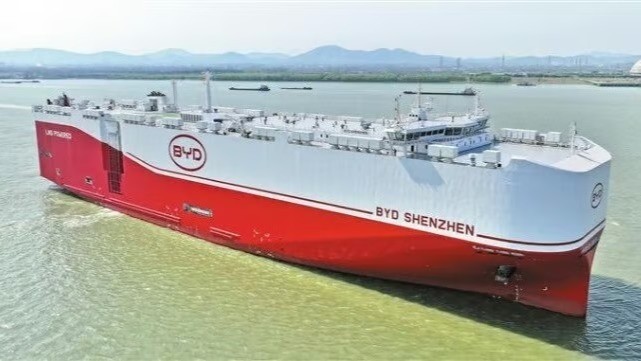
BYD Has Bought another 10 More Ships, Says Stella Li,Executive Vice President of BYD
 Car Carriers
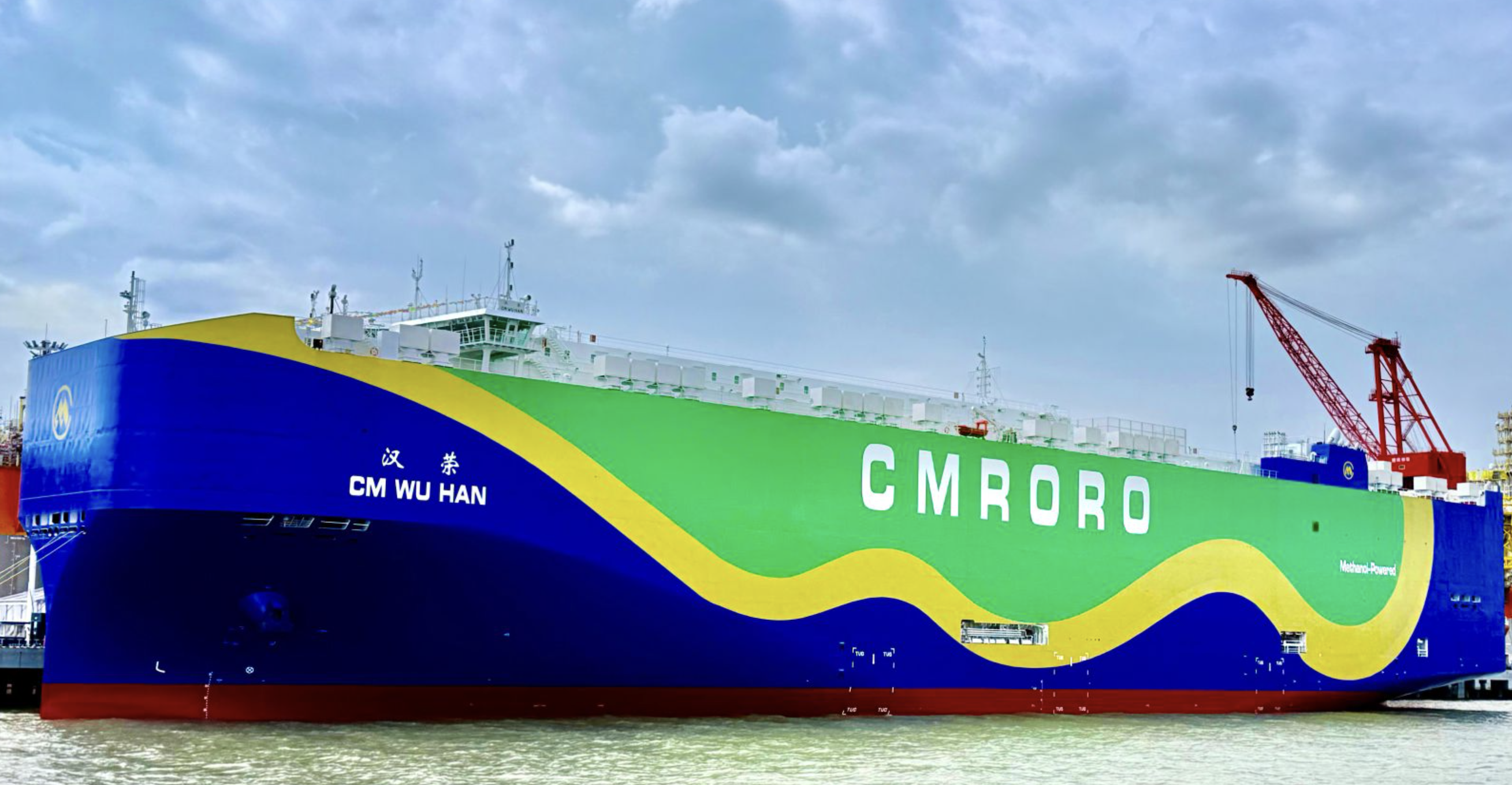
China Merchants Takes Delivery of Methanol Dual-Fuel Car Carrier CM WUHAN
 Car Carriers
NYK and K LINE plan four ammonia-fuelled car carriers for 2030
 Car Carriers
Ningbo Ocean Shipping Plans Two More PCTCs to Expand Its Car Carrier Fleet
 Car Carriers
Another Chinese Shipowner Enters PCTC Market — and Another Chinese Yard Moves into 5,000-CEU Construction
 Car Carriers
Up to 26 PCTC! Höegh Autoliners Signs 6 More Aurora Car Carriers with China Merchants
 Car Carriers
917 Chinese Vehicles Arrive at Chancay as COSCO SHIPPING Expands Rack-Based Auto Logistics
 Car Carriers
BYD Orders Another 10 x 9,200 CEU-CEU Car Carriers?
 Car Carriers