

Ningbo Ocean Shipping Plans Two More PCTCs to Expand Its Car Carrier Fleet
Proposed leases of up to 20 years, with a combined rental ceiling of $480 million, signal a move towards long-term controlled capacity as the Chinese operator broadens its international shipping business.
Ningbo Ocean Shipping Co., Ltd. is preparing to add two 7,000-CEU LNG dual-fuel pure car and truck carriers (PCTCs) through a long-term leasing arrangement with a financial leasing company.
In an announcement dated 9 October, the Shanghai-listed shipping company said it or a subsidiary would pursue the project with a lease term of no more than 20 years and aggregate rental payments capped at $480 million. The two vessels would provide a combined 14,000 car equivalent units of capacity. The board approved the proposal on 8 October, but shareholder approval is still required. Interest rates, rental amounts and payment schedules will be determined by the definitive agreements.
The proposal comes just two months after Ningbo Ocean launched its first car carrier service. Having entered the market with an existing vessel on a two-year time charter, the company is now seeking a more durable capacity base. The significance lies in both fleet development and financing: a long-term arrangement with a financial lessor could allow Ningbo Ocean to build an operating fleet under its control while spreading the initial funding requirement over time.
Seen alongside its European debut, overseas corporate platforms and management’s public statements, the plan represents another step in the company’s international expansion. Car carriers are adding a new connection between Chinese manufacturers and overseas markets to a business built primarily around container and dry bulk shipping.
From a European debut to a longer-term fleet
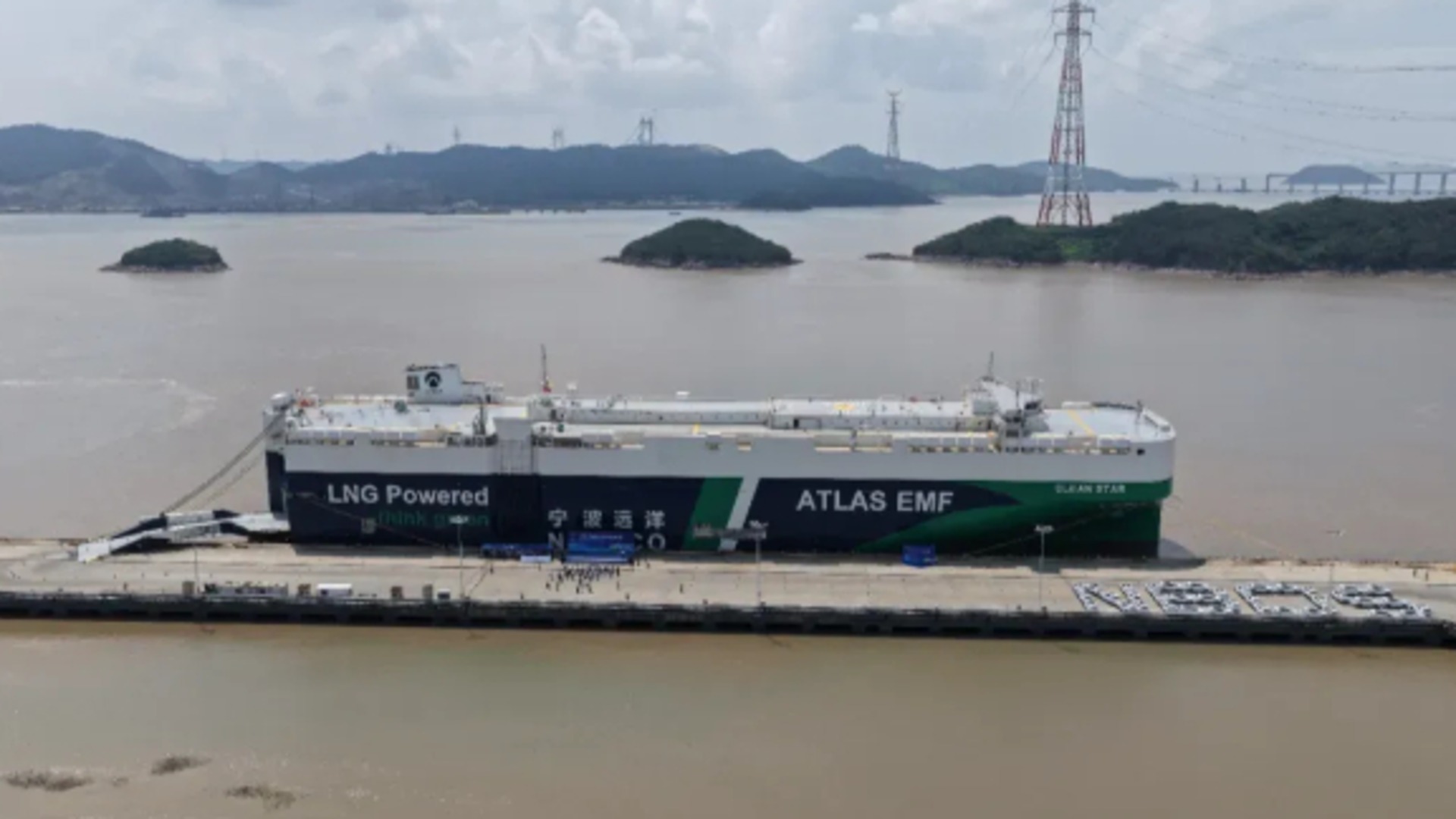
On 5 August, Ningbo Ocean held its inaugural ro-ro service ceremony at Meixi Ro-Ro Terminal in the Meishan port area of Ningbo-Zhoushan Port.
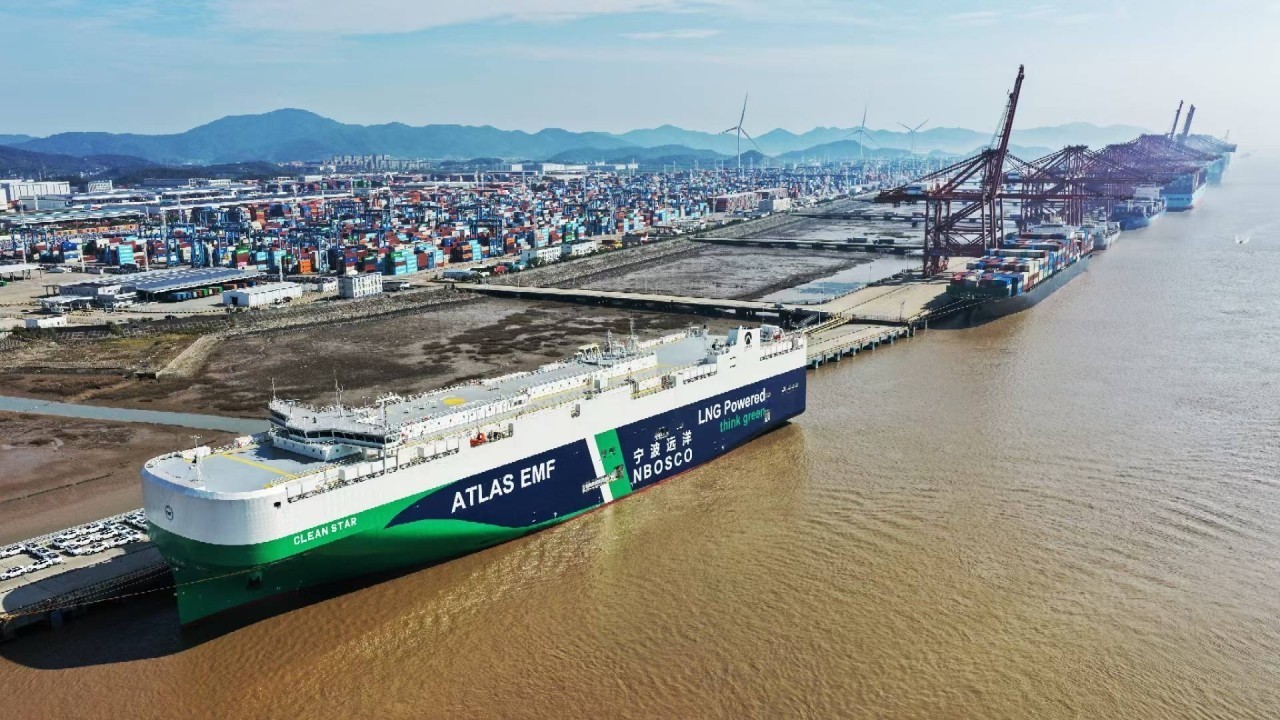
The 7,000-CEU LNG dual-fuel carrier CLEAN STAR departed for Europe after loading more than 5,400 new energy vehicles. Its itinerary included Gioia Tauro in Italy and Barcelona in Spain. As Xinde Marine News previously reported, the sailing introduced ro-ro transport to Ningbo Ocean’s business portfolio and extended its network to continental Europe.
Built by Yantai CIMC Raffles, CLEAN STAR was backed by Greek shipowner Atlas Maritime and Danish maritime investment firm European Maritime Finance (EMF). EMF disclosed a two-year time charter at $80,000 per day, expected to generate approximately $56 million in gross charter revenue for the vessel investment. That figure represents charter receipts, rather than Ningbo Ocean’s transport revenue or profit.
The initial charter enabled Ningbo Ocean to secure commercial access to a large, modern car carrier and begin serving the Europe-bound vehicle trade. The latest proposal would give the company a much longer planning horizon for its next stage of development.
For a car carrier operator, dependable access to ships is closely linked to dependable service. Vehicle manufacturers need confidence in space availability, sailing schedules, loading ports and overseas delivery arrangements. As customer relationships and cargo volumes develop, the duration of vessel availability becomes an important factor in the continuity of a route.
Ningbo Ocean’s proposal therefore points to a shift towards establishing a lasting capacity base for its ro-ro business.
The announcement does not identify the two vessels, their build years, delivery dates or source. Whether the project will involve newbuildings remains to be disclosed. Those details will also determine how the additional capacity can be integrated with the company’s existing service.
Car carriers within a broader international strategy
The car carrier initiative forms part of a wider effort to broaden Ningbo Ocean’s shipping services.
In its 2025 annual report, the company set out a vision of becoming an integrated shipping service provider that leads in Asia and connects with global markets. Its 2026 operating plan placed greater emphasis on value creation, alongside strengthening its core shipping business, renewing the fleet, advancing digitalisation and developing international activities through its Japanese and Singapore platforms.
At the company’s annual and first-quarter results briefing in May, chairman Chen Xiaofeng emphasised deepening the core shipping business and improving integrated logistics services, while continuing to develop container shipping, dry bulk transport and shipping support activities.
General manager Chen Sheng reported that Ningbo Ocean had carried 5.85 million TEU of containers and 27.05 million tonnes of bulk cargo in 2025, while pursuing more diversified business opportunities. Together, the statements describe an expansion built around the company’s existing shipping capabilities and customer base.
Fleet investment and overseas organisation have already begun to support that direction. In January, Xinde Marine News reported that Ningbo Ocean was using its Singapore platform to establish project companies for the construction and operation of four 4,300-TEU containerships. The shipbuilding contracts had a combined value of RMB1.6392 billion. The parallel development of vessels and overseas entities is building both the asset base and organisational infrastructure for international business.
By the end of the first half of 2026, Ningbo Ocean operated 109 containerships and 43 routes serving 53 major ports at home and abroad. It was increasing capacity on Japanese and Southeast Asian services and advancing its plans for Indian routes. Following its entry into ro-ro shipping in August, the company described its global service framework in terms of a first-class fleet, overseas entities and diversified cargoes.
These elements reinforce one another. Fleet upgrades expand transport capabilities; overseas entities support market development and local service; additional cargo segments broaden the customer base.
Vehicle shipping connects all three. It gives Ningbo Ocean an opportunity to serve Chinese automotive exporters on ocean routes that its previous business mix did not cover.
Container shipping remains a substantial foundation for the company. The addition of car carriers opens another avenue for growth and brings new demands in customer development, vessel operations and overseas service delivery.
Zhejiang’s automotive exports provide a regional foundation
Ningbo Ocean’s expansion also reflects a wider effort to develop Zhejiang’s vehicle export logistics.
Public information released by Zhejiang’s transport authorities in August called for a locally based ro-ro fleet centred on Ningbo Ocean, encouraging companies to charter or purchase vessels and work with vehicle manufacturers to secure long-term shipping space. The plans also envisaged developing Australia–New Zealand and North American services alongside the European route, with the aim of attracting more vehicle export cargo to Ningbo-Zhoushan Port.
This approach links fleet development with cargo organisation. Predictable shipping capacity helps manufacturers manage overseas deliveries. Regular ocean sailings help ports attract export volumes. For the operator, the port’s ability to consolidate cargo and the manufacturers’ transport requirements are essential to sustaining vessel utilisation.
The regional export figures illustrate the potential cargo base. In the first half of 2026, Zhejiang exported 370,000 new energy vehicles, up 110% year on year. Ningbo-Zhoushan Port handled 167,000 NEVs exported by ro-ro vessel, an increase of 92.8%.
Zhejiang is also pursuing improvements to ro-ro berths, vehicle storage yards and rail connections, with a target of reaching 27,000 vehicle parking spaces in its yards by 2027. These are shoreside storage spaces, distinct from the carrying capacity of the vessels.
Ningbo Ocean is controlled by Ningbo Zhoushan Port Co., Ltd., giving the shipping business a direct connection with the port’s development. In commercial terms, coordinated access to ships, terminals, storage yards, inland transport and cargo owners could help turn individual export shipments into regular route business.
Export growth and regional policy support provide favourable conditions. Sustained operations will depend on securing customers, cargo volumes and viable freight rates. The latest announcement does not disclose whether the proposed vessels are backed by long-term transport contracts.
A growing export market meets a wave of new ships
Ningbo Ocean is increasing its commitment to car carriers during a period of rapid change in both demand and supply.
According to the China Association of Automobile Manufacturers, China exported 5.096 million vehicles in the first half of 2026, up 65.3% year on year. NEV exports reached 2.355 million units, an increase of approximately 120%. These figures cover vehicle exports by all transport modes and should not be treated as volumes carried entirely by PCTCs.
At the same time, ships ordered during the earlier market upswing are entering service.
Xinde Marine News previously cited research from AXSMarine’s AXSRoRo showing 75 PCTC deliveries in 2025. At the time of that report, deliveries were forecast at 67 vessels in 2026 and 50 in 2027. With relatively few older ships leaving the fleet, the market’s ability to absorb the additional capacity remains an important consideration.
Yet a larger global fleet does not immediately satisfy every operator’s requirements on every route. In its September report on renewed car carrier ordering, Xinde Marine News tracked further fleet commitments by several owners, with some deliveries extending into 2029 and 2030.
For a new entrant such as Ningbo Ocean, total global capacity is only one measure of market conditions. The availability of ships suited to the intended routes, their delivery timing, loading capabilities and charter costs all influence whether a service can be established and sustained.
The two-year CLEAN STAR charter provides a concrete example of the cost of securing modern tonnage at the company’s market entry. The proposed long-term project involves a different commercial horizon.
A two-year charter covers a relatively short market window. An arrangement lasting up to 20 years may span several shipping cycles. Over that period, Chinese vehicle export growth, trade patterns, production in destination markets and the supply of new ships may all change.
Long-term vessel commitments therefore require a corresponding ability to develop customers, sustain routes and generate cash flow through changing market conditions.
Financial leasing and the substance of fleet control
Ningbo Ocean says the proposed leases are intended to match the capacity requirements of its ro-ro business, strengthen core routes and reduce the large initial capital expenditure associated with investing in ships.
The identity of the proposed counterparties, the potential duration and the stated funding rationale suggest a project combining ship finance with long-term capacity development.
Under a conventional ship finance lease, the lessor provides financing and holds legal title to the vessel. The shipping company takes possession and uses the ship, often through a bareboat arrangement under which it assumes responsibility for operating and commercially deploying the vessel.
If Ningbo Ocean adopts that structure, the project would expand its own controlled operating fleet in economic terms. The financial leasing company would primarily provide funds and hold legal ownership, while Ningbo Ocean or its subsidiary would run the shipping business.
Route deployment, cargo development, crewing and ship management would be undertaken or arranged by the operator according to the contract. The lessor’s legal ownership would coexist with the shipping company’s long-term operational control.
This distinction matters when assessing the strategy. A ship financed through a lease can become core capacity for the operator even while it remains legally owned by the financing party. The arrangement can support fleet development in much the same way that other forms of ship financing support an owner-operator’s investment programme.
The final structure, however, has not yet been disclosed. Financial leasing companies can also undertake operating leases, and the counterparty’s identity alone does not establish the contractual allocation of rights and responsibilities. The announcement does not specify a bareboat arrangement, an end-of-term purchase option or an eventual transfer of ownership.
For now, the proposal is best understood as a plan to secure long-term controlled capacity, with the precise financing and ownership provisions awaiting the definitive contracts.
The $480 million figure is the ceiling for aggregate rental payments over the lease period for both vessels. It is not a disclosed ship purchase price. The financing cost, payment profile and relationship between the rentals and operating expenses remain to be clarified.
Spreading the initial funding requirement creates continuing payment obligations. Transport income must still cover the relevant lease or financing payments, fuel, port charges and operating costs. The value of long-term control will depend on stable cargo, vessel utilisation and route cash flow.
Fleet growth will be judged by the returns it produces
Ningbo Ocean’s stated shift towards value creation gives the car carrier project a clear commercial benchmark.
In the first half of 2026, the company generated revenue of RMB3.445 billion, up 17.66% year on year, while net profit attributable to shareholders fell 9.28% to approximately RMB343 million.
Its September results briefing showed that operating costs had increased by 19.73%, faster than revenue. The overall gross margin declined from 17.69% to 16.24%, while vessel charter costs, fuel expenses and foreign exchange losses affected performance. The ro-ro business began in August, so these first-half figures describe the company’s position before its entry into car carrier operations.
The figures underline the need to convert additional scale into stronger unit economics and earnings. The same principle will apply to the proposed PCTCs.
Long-term capacity needs sustained cargo support. The alignment between manufacturers’ shipping requirements, service commitments and lease payment obligations will influence the resilience of the business.
Car carrier operations also require specialist capabilities in loading, stowage, lashing, cargo damage prevention and destination delivery. Ningbo Ocean will need to combine its established vessel operating experience with those requirements. As its geographical reach grows, overseas agency coverage, customer service and the handling of operational disruptions will become increasingly important.
For LNG dual-fuel vessels intended for long-term service, fuel economics, energy efficiency and future technical adaptability will also shape operating decisions. The announcement confirms the propulsion configuration, while the full specifications remain undisclosed.
Shareholders are scheduled to consider the leasing proposal on 26 October. Subsequent disclosures on vessel sourcing, delivery schedules, contract terms and cargo commitments should allow a more complete assessment of the project.
From its first European ro-ro sailing in August to its long-term capacity proposal in October, Ningbo Ocean is translating its international ambitions into a new transport business.
Its port connections, established container operations and overseas platforms provide a foundation for that expansion. The strategic value of the additional car carriers will ultimately depend on the company’s ability to build vehicle transport services that are reliable, sustained and profitable.

READ MORE
 Car Carriers
Up to 26 PCTC! Höegh Autoliners Signs 6 More Aurora Car Carriers with China Merchants
 Car Carriers
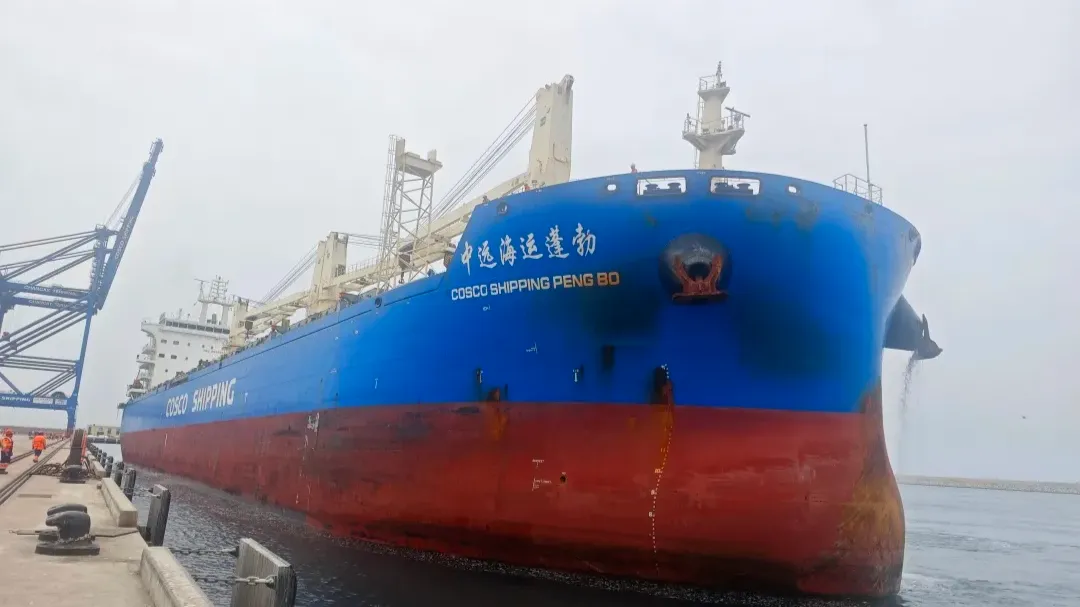
917 Chinese Vehicles Arrive at Chancay as COSCO SHIPPING Expands Rack-Based Auto Logistics
 Car Carriers
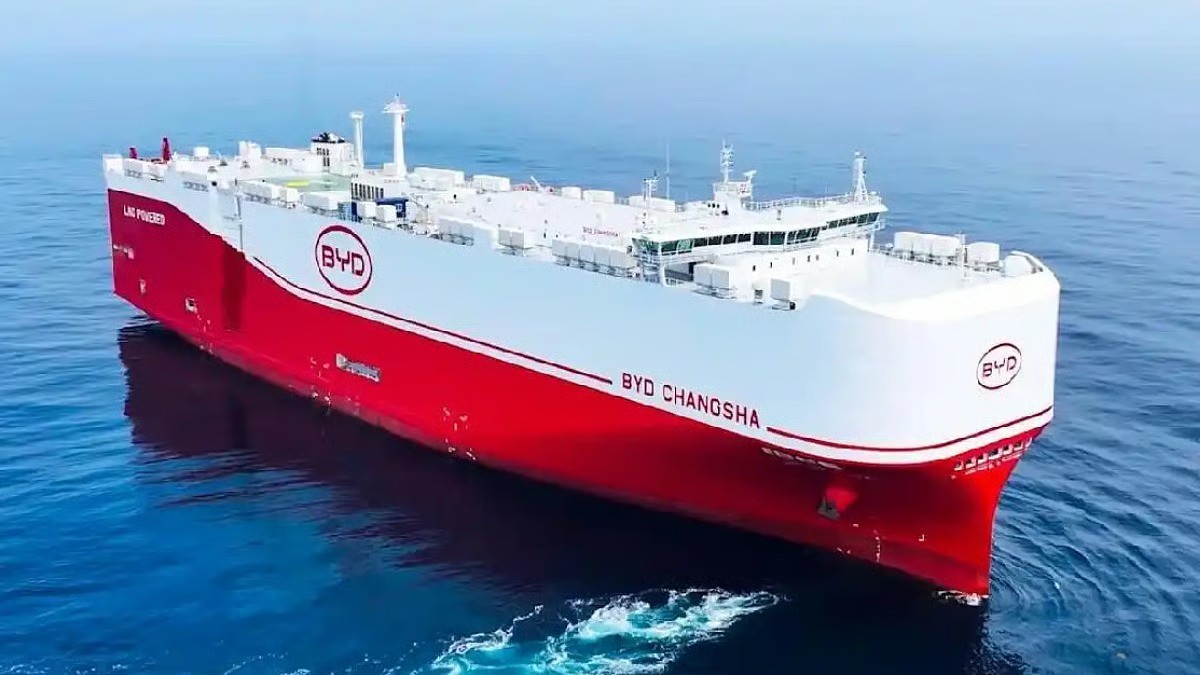
BYD Orders Another 10 x 9,200 CEU-CEU Car Carriers?
 Car Carriers
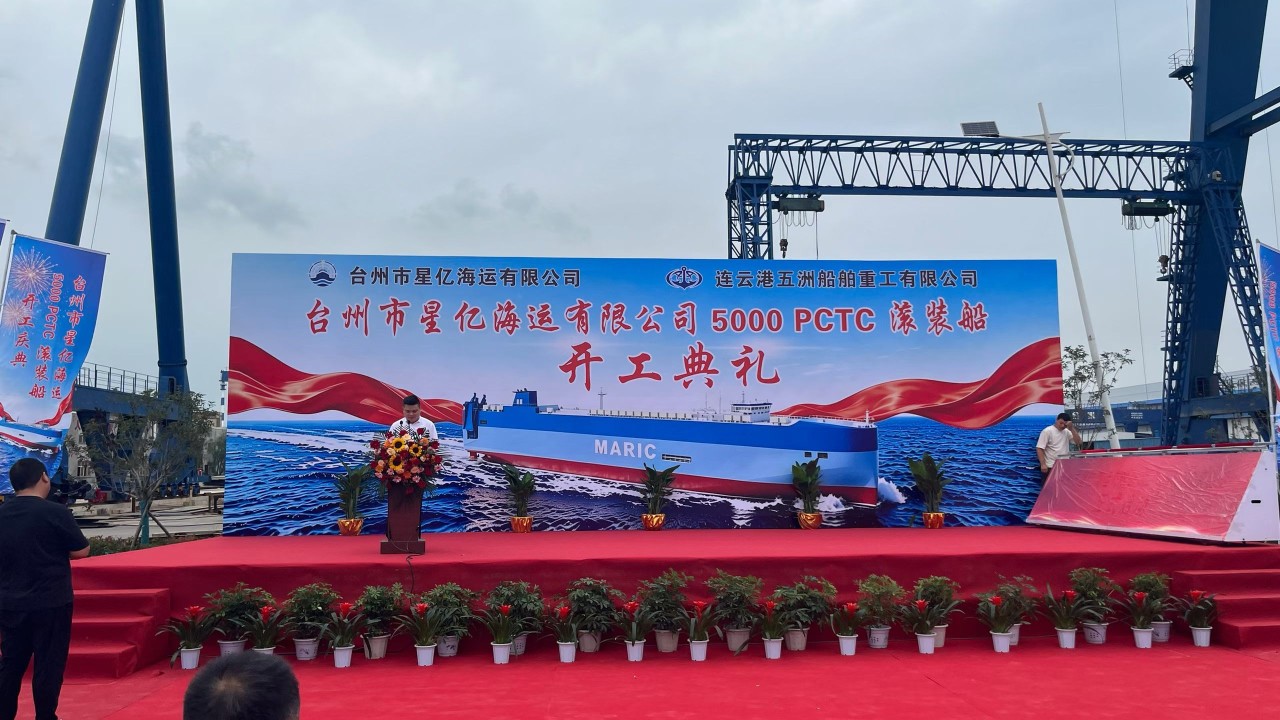
Another Chinese Shipowner Enters PCTC Market — and Another Chinese Yard Moves into 5,000-CEU Construction
 Car Carriers
Up to 14 More PCTCs: Höegh Doubles Down on China as Aurora Programme Could Grow to 26 Ships
 Car Carriers