


Pavimar Returns to Newbuilding Market After a Decade With Four Hengli Kamsarmaxes

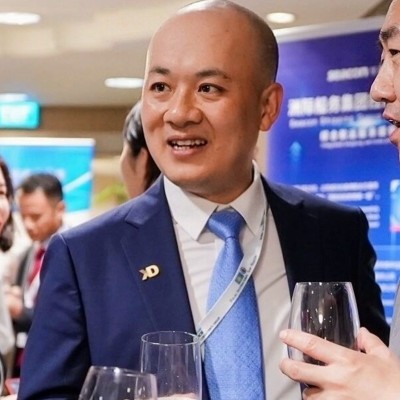
Greek dry bulk owner Pavimar has reportedly ordered four Kamsarmax bulk carriers at China’s Hengli Heavy Industries, marking its first newbuilding contract in a decade. The vessels are scheduled for delivery through 2029, extending the Athens-based company’s recent fleet investments from secondhand acquisitions into new construction.
The company, led by Ismini Panagiotidi, has not disclosed the contract price. European shipbrokers currently estimate Chinese-built Kamsarmax newbuildings at between $37.5 million and $38.5 million each, suggesting a programme value of approximately $150 million to $154 million. Those figures are market estimates.
The reported order places Pavimar alongside other Greek owners committing to new tonnage at Hengli, including Nasdaq-listed EuroDry. Their investments offer a useful view of the choices owners face when younger secondhand vessels command prices close to newbuilding levels.

Secondhand Acquisitions Alongside Newbuildings
Founded by Panagiotidi in 2014, Pavimar has developed both shipowning and shipmanagement activities from its Athens base. Its experience spans several shipping sectors: regulatory filings by affiliated listed company Icon Energy state that Pavimar S.A. has managed more than 50 vessels since its establishment, covering dry bulk carriers, tankers and containerships.
Shortly before the newbuilding order emerged, Pavimar took delivery of another secondhand bulker. Greek financial newspaper Naftemporiki reported on October 6 that the 37,707-dwt Aura had joined its fleet. Built by Japan’s Imabari Shipbuilding in 2014, the vessel previously traded as African Harrier. Pavimar also confirmed the delivery through its official social media channels.
The acquisition and the reported Hengli contract address different points in the company’s fleet development. Aura adds a ship available for employment following delivery, while the four newbuildings would introduce additional capacity over the years ahead. Ordering also allows an owner to specify vessels during construction and plan their integration into the fleet. For Pavimar, these transactions combine an immediate addition with a longer investment horizon extending into 2029.

EuroDry Provides a Price Benchmark
Pavimar’s reported agreement follows another Kamsarmax order placed at Hengli by EuroDry. On October 14, EuroDry announced a contract with Hengli Shipbuilding (Dalian) for its third 82,000-dwt Kamsarmax bulk carrier at the yard. Priced at approximately $37 million, the vessel is scheduled for delivery in the third quarter of 2029 and will be built to an eco-design specification compliant with EEDI Phase 3 requirements. Financing is expected to comprise debt and equity, and the contract is conditional on receipt of a bank refund guarantee acceptable to EuroDry.
Chairman and chief executive Aristides Pittas explained the commercial reasoning behind the investment. In EuroDry’s assessment, modern five-year-old Kamsarmaxes were being valued at or above newbuilding prices. At a similar or lower capital cost, the company therefore saw greater economic appeal in securing a brand-new, more fuel-efficient vessel.
That assessment helps explain why some owners are revisiting new construction. Acquisition price, delivery timing, maintenance requirements and fuel efficiency all affect the economics of a ship investment. When the price gap between younger secondhand vessels and newbuildings narrows, owners able to wait for delivery have an additional reason to consider ordering.
The waiting period still matters. A secondhand ship can enter service relatively quickly and earn revenue while a newbuilding remains under construction. The earnings available during that interval form part of the comparison.
Pavimar has not publicly explained the specific rationale for its order. EuroDry’s disclosed contract nevertheless provides a concrete price reference for a similar vessel type, while the two companies’ commitments show Hengli continuing to attract Greek dry bulk business.
A Broader Investment Portfolio Under Panagiotidi
Panagiotidi also serves as chairwoman and chief executive of Nasdaq-listed Icon Energy. The businesses have an established management connection: Icon’s regulatory disclosures identify Pavimar Shipping Co., controlled by Panagiotidi, as its provider of vessel commercial and technical management services, alongside corporate management and administrative support.
Icon has recently expanded its investments into the container sector through minority stakes in vessel-owning entities. On October 14, the company announced an agreement to acquire approximately 2.8% of an entity established to own a 2023-built, 1,800-TEU eco feeder containership. The vessel is chartered to a major liner operator at a fixed rate of $24,750 per day, with the charter running until at least February 2028. Icon expected to fund the investment from existing cash and complete it by the end of October, subject to definitive documentation and customary closing conditions.
The company already held a 4.6% interest in another vessel-owning entity associated with a 2,000-TEU feeder. These investments form part of Icon’s stated strategy of selectively participating in complementary maritime opportunities alongside experienced partners while maintaining its core dry bulk business. Commercial and technical management of the containerships rests with the operating partners.
Across the businesses led by Panagiotidi, these transactions involve distinct forms of shipping investment: secondhand bulker acquisitions, newbuilding commitments and minority interests in charter-backed containerships. Each carries a different combination of capital exposure, delivery timing and operational responsibility.
For owners making fleet investment decisions, the relationship between asset prices, immediate earnings and future operating efficiency remains central. Pavimar’s reported return to newbuildings shows an established secondhand buyer committing part of its investment programme to vessels that will enter the market over a longer horizon.


READ MORE
 Shipbuilding
Breaking! Hengli Announces Deals for 52 Ultra-Large LNG Dual-Fuel Containerships
 Shipbuilding
Global Newbuilding Orderbook Matches 2008 Peak as Clarksons Flags Faster Fleet Growth
 Shipbuilding
COSCO SHIPPING Bulk Leads Order for 16 New 87,000-DWT Multipurpose Grain Carriers
 Shipbuilding
A New State-Owned Shipbuilding Group Is Born in China
 Shipbuilding
MISC Signs for Five More LNG Carriers at Hudong-Zhonghua
 Shipbuilding
Another Chinese Bridge Builder Moves Into Shipbuilding
 Shipbuilding
Amid China’s Shipbuilding Boom, a State-Owned Yard Quietly Enters Liquidation
 Shipbuilding
Yichang Changyun plans RMB120m inland bulker programme
 Shipbuilding
Steel Giant Shagang Eyes Shipbuilding as a Booming Market Draws Industrial Capital
 Shipbuilding