


Steel Giant Shagang Eyes Shipbuilding as a Booming Market Draws Industrial Capital
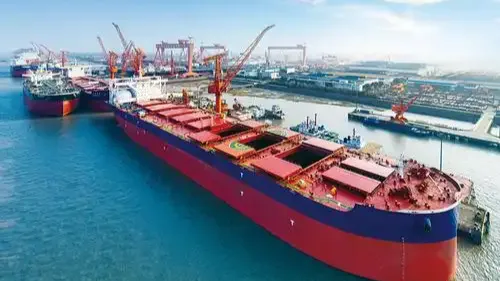

China’s shipbuilding boom is attracting a widening range of industrial investors. Steelmaker Shagang is the latest major group to establish a business platform in the sector, adding to a trend that has already brought petrochemical and offshore wind equipment manufacturers into commercial ship construction.
On 8 October 2026, Shagang established a wholly owned company in Tianjin, Jinsha Heavy Industry, with registered capital of RMB70 million. Its registered business scope covers shipbuilding, vessel design, repair and conversion, offshore engineering equipment and marine components. Details of its production facilities, initial projects and shipbuilding contracts have yet to be disclosed.
The move comes at a time when substantial orderbooks and delivery schedules stretching towards the end of the decade are encouraging industrial groups to reconsider the value of shipbuilding assets. For Shagang, the opportunity builds on existing relationships across marine steel, shipping, ports and the shipyard supply chain.
A Strong Ordering Cycle Opens the Door to New Entrants
The scale of China’s shipbuilding expansion provides a clear backdrop. According to the Ministry of Industry and Information Technology, Chinese yards secured 121.06 million dwt of new orders in the first half of 2026, up 173.1% year on year. Their combined orderbook reached 363.25 million dwt at the end of June, an increase of 54.9%, representing 71.2% of the global total by deadweight tonnage.
Such order visibility creates an opening for companies able to bring additional capital, manufacturing capacity and project management resources into the industry. For an industrial investor, a shipyard can offer several opportunities at once: a new market for existing products, a business serving its own transport requirements, and access to international customers placing substantial contracts years ahead of delivery.
The expansion is also creating opportunities beyond complete vessel construction. More ships require more engines, fabricated structures, specialised steel, outfitting equipment and engineering services. Industrial groups can enter through these activities and broaden their involvement as they develop experience and customer relationships.
Shagang’s Tianjin venture fits within this wider investment environment. Its eventual position in the market will depend on which parts of its broad business scope become operating businesses.
Petrochemicals and Offshore Wind Have Already Produced New Shipbuilders
Hengli offers one of the clearest examples of an industrial group moving rapidly into shipbuilding. With its established businesses in refining, petrochemicals, polyester materials and textiles, Hengli acquired the former STX Dalian assets in 2022 and formally launched operations at its heavy industry complex in January 2023. The acquisition gave it access to an existing shipbuilding base that could be restored and expanded.
By the first half of 2026, Hengli Heavy Industries reported new orders for 207 vessels: 49 bulk carriers, 56 containerships, 94 tankers and eight very large ammonia carriers. It also reported delivering 40 ships during the period, with its delivery schedule extending into 2030. Those figures illustrate how far an industrial entrant can advance when investment in facilities is matched by customer demand and production capacity.
Hengli has also developed relationships across the maritime supply chain. In August 2024, it signed a strategic cooperation framework agreement with Mediterranean Shipping Company covering newbuildings, marine engines, repairs and conversions. For a growing shipbuilder, such relationships provide opportunities to connect manufacturing investment with the requirements of a major international fleet operator.
Dajin Heavy Industry provides another route into the market. The Chinese offshore wind equipment manufacturer developed shipbuilding capabilities alongside its need to transport large offshore structures. In February 2026, it held the naming and maiden-voyage ceremony for its first self-developed and self-built 40,000-dwt deck carrier, KING ONE, designed to carry offshore wind foundations and other large marine equipment.
Dajin subsequently demonstrated its ambitions in mainstream merchant shipbuilding. In an April 2026 exchange announcement, it disclosed contracts with Norwegian and Greek shipowner subsidiaries for eight 210,000-dwt bulk carriers, worth a combined approximately $591 million, for delivery in 2028–2029. The progression from manufacturing offshore equipment to building specialised transport vessels and securing large commercial ship contracts shows how an adjacent industrial business can develop into a shipbuilding operation.
Together, Hengli and Dajin show why Shagang’s new venture deserves attention. Companies entering from other industries can bring manufacturing assets, procurement experience, industrial customers and substantial transport requirements alongside their capital.
Shagang Already Supplies Major Shipyards
Shagang’s strongest existing connection to shipbuilding is its marine steel business. Its products have been used in large containerships, bulk carriers, gas carriers and offshore production units, giving the group experience of the technical and scheduling requirements of major construction projects.
In December 2025, Shagang’s steel business signed a strategic cooperation agreement with CSSC Qingdao Beihai Shipbuilding, a major Chinese builder of large bulk carriers and ore carriers. The cooperation covered steel supply, product development, quality management and information systems, with both sides seeking to expand business and improve production economics.
Its supply record also includes some of the world’s largest containerships. Public disclosures in 2023 showed that Shagang supplied 115,000 tonnes of ship plate for a series of 24,000-TEU-class vessels built by Hudong-Zhonghua, including MSC GEMMA. Such programmes require a steelmaker to coordinate material specifications and deliveries with the yard’s construction schedule across multiple ships.
Offshore engineering provides another established connection. In 2022, Shagang reported that nearly 20,000 tonnes of its high heat-input welding steel had been used in critical areas of three Fast4Ward FPSO hulls built by Shanghai Waigaoqiao Shipbuilding for Netherlands-based SBM Offshore. Subsequent disclosures by Jiangsu University of Science and Technology also identified applications of jointly developed steel in FPSO projects and 16,000-TEU dual-fuel containerships built by Guangzhou Shipyard International.
The product range has continued to develop. Public information released in May 2026 identified Shagang steel in a 24,092-TEU LNG dual-fuel containership and its 5% nickel steel in a 100,000-cbm very large ethane carrier. These applications place the company in supply chains serving both large hull structures and demanding low-temperature cargo systems.
For Shagang, these relationships could support a move into fabrication and engineering services. Supplying shipyards already requires an understanding of welding performance, structural requirements, material certification and production sequencing. Participation in downstream manufacturing would allow the group to apply that knowledge to a broader part of the construction process.
A Steelmaker With Shipping and Port Operations
Shagang also approaches the maritime industry as a cargo owner and transport organiser.
Established in January 2017, Jiangsu Shagang Logistics consolidated waterborne transport activities previously handled by different parts of the group. Its business includes raw-material and steel transport, ship agency, port investment and warehousing, towage and other bulk logistics services. Previously published company profiles described controlled shipping capacity exceeding 8 million tonnes through a combination of owned vessels, bareboat charters and long-term time charters, covering Capesize, Panamax, Supramax and domestic trading fleets.
The group’s Haili terminal facilities in Zhangjiagang connect its steelmaking operations on the Yangtze River with domestic and international shipping. Its port relationships also extend into raw-material processing. In June 2024, Shagang, Ningbo-Zhoushan Port and Brazilian mining company Vale launched a precision ore-blending project at the Zhongzhai ore terminal, moving part of the blending process from the steelworks to the port before onward transport.
Capital cooperation with the shipbuilding industry goes back further. In December 2014, the former China State Shipbuilding Corporation and Shagang completed a restructuring of Jiulong Steel Logistics. Under the arrangement disclosed at the time, the CSSC side held 51% and Shagang 49%, with registered capital of RMB1.128 billion. The business connected steel trading, storage, processing and distribution.
These activities give Shagang several points of contact with the maritime market. It supplies shipbuilders, organises cargo movements and participates in port and logistics infrastructure. That combination could help identify demand for repairs, conversions, marine structures and equipment before the group commits to any particular manufacturing model.
Industrial Investors See Opportunities Across the Value Chain
The investment logic differs according to the entrant’s existing business. A petrochemical group may see opportunities in tankers, gas carriers and marine equipment. An offshore wind manufacturer may build vessels to transport its own products before pursuing third-party orders. A steelmaker can consider extending from plate production into processing, structures, modules and other manufactured components.
For Shagang, fabrication and offshore engineering appear to offer plausible connections with its established capabilities. Its steel products and shipyard relationships could support work on vessel blocks, marine structures or offshore modules, while its shipping activities provide exposure to operational maintenance and conversion requirements. These remain potential directions; the company has not disclosed which will form the core of Jinsha Heavy Industry.
The wider commercial attraction is the ability to participate in more of a project’s value. A supplier that develops engineering and fabrication capabilities can offer customers a broader package, coordinate materials with manufacturing and build longer relationships around individual vessel programmes. During a strong ordering cycle, those opportunities become more visible as yards seek reliable capacity throughout their supply chains.
For international shipowners, successful new entrants could eventually increase the choice of builders and suppliers. The near-term benefit will depend on how quickly investment produces proven engineering teams, reliable equipment procurement and consistent delivery performance.
The Boom Creates an Opening; Execution Determines the Outcome
Steel-backed shipbuilding has a longer history in China. Jianlong entered Zhejiang’s shipbuilding industry through its acquisition of Yangfan in 2006 and later held 78% of Qingdao Shipyard. Qingdao’s subsequent difficulties demonstrate the operating demands of the business: the yard and its subsidiary applied for restructuring in 2016 after a liquidity crisis, with their restructuring plans approved in 2018. China Merchants Industry became involved in a further reorganisation in 2025.
The experience points to the capabilities that industrial investors must build alongside their capital commitment. Ship construction requires coordinated design, equipment procurement, skilled labour, working capital and delivery management over several years. Long orderbooks create opportunities, while also increasing the importance of matching contract commitments with achievable production schedules.
Shagang’s new venture is still at an early stage. Its significance lies in the resources already surrounding it and the market into which it has been established. Marine steel production, shipping demand, port operations and shipyard relationships provide several possible routes towards manufacturing.
As companies from steel, petrochemicals and offshore wind expand their involvement, the shipbuilding boom is changing the industry’s ownership and supply base. The next phase will be measured in commissioned facilities, completed ships and dependable deliveries. For shipowners worldwide, that will determine how much of today’s industrial investment becomes additional capacity they can confidently use.


READ MORE
 Shipbuilding
Hengli Secures 12 Tanker Orders, Retaining World’s Largest VLCC Orderbook
 Shipbuilding
Hengli Signs 11 VLAC Contracts in One Week
 Shipbuilding
China ZWI Enters Ocean Shipping with VLGC Acquisition and Chemical Tanker Newbuild Project
 Shipbuilding
Yichang Changyun plans RMB120m inland bulker programme
 Shipbuilding
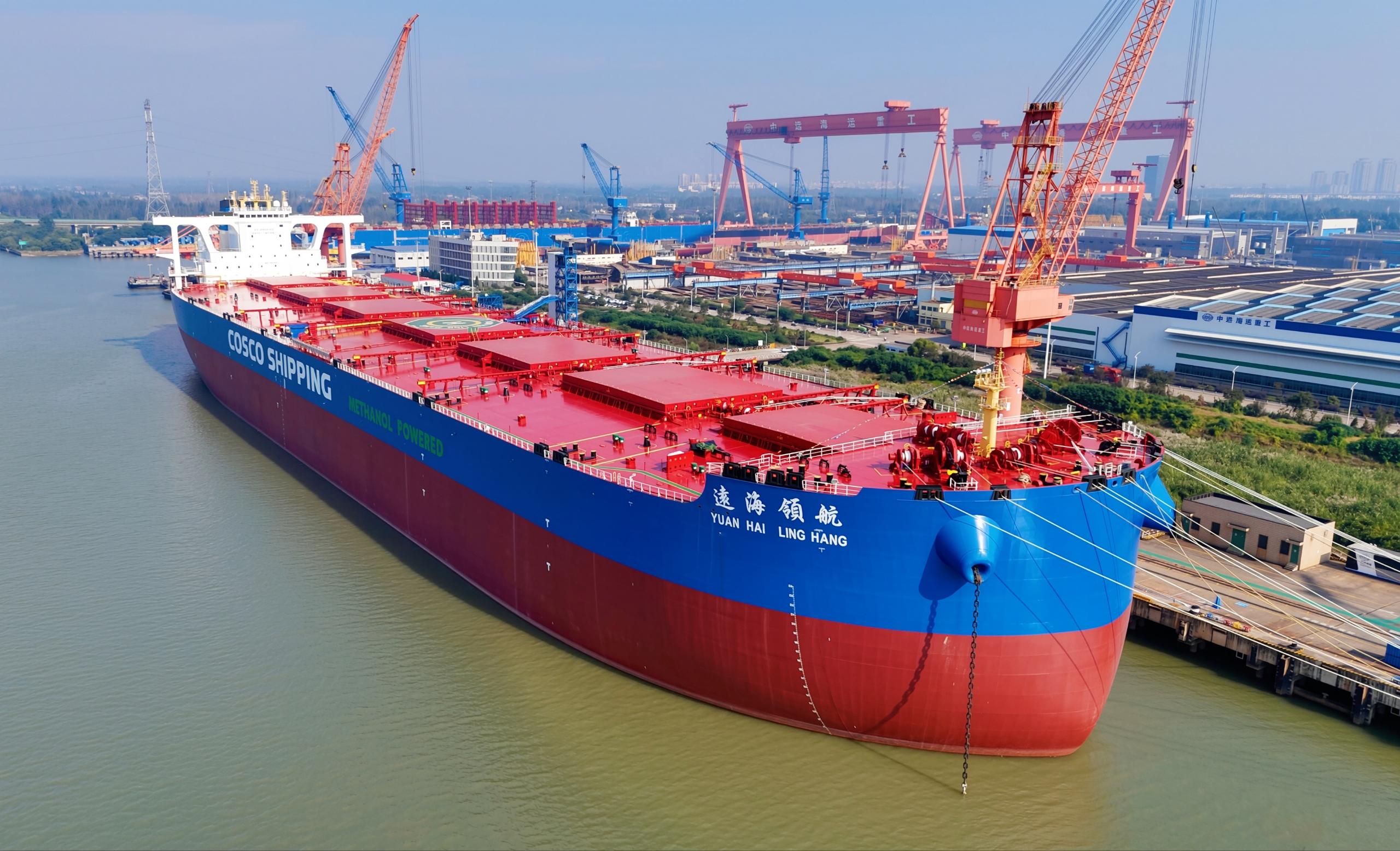
World’s First 325,000-DWT Methanol Dual-Fuel Ore Carrier Delivered
 Shipbuilding
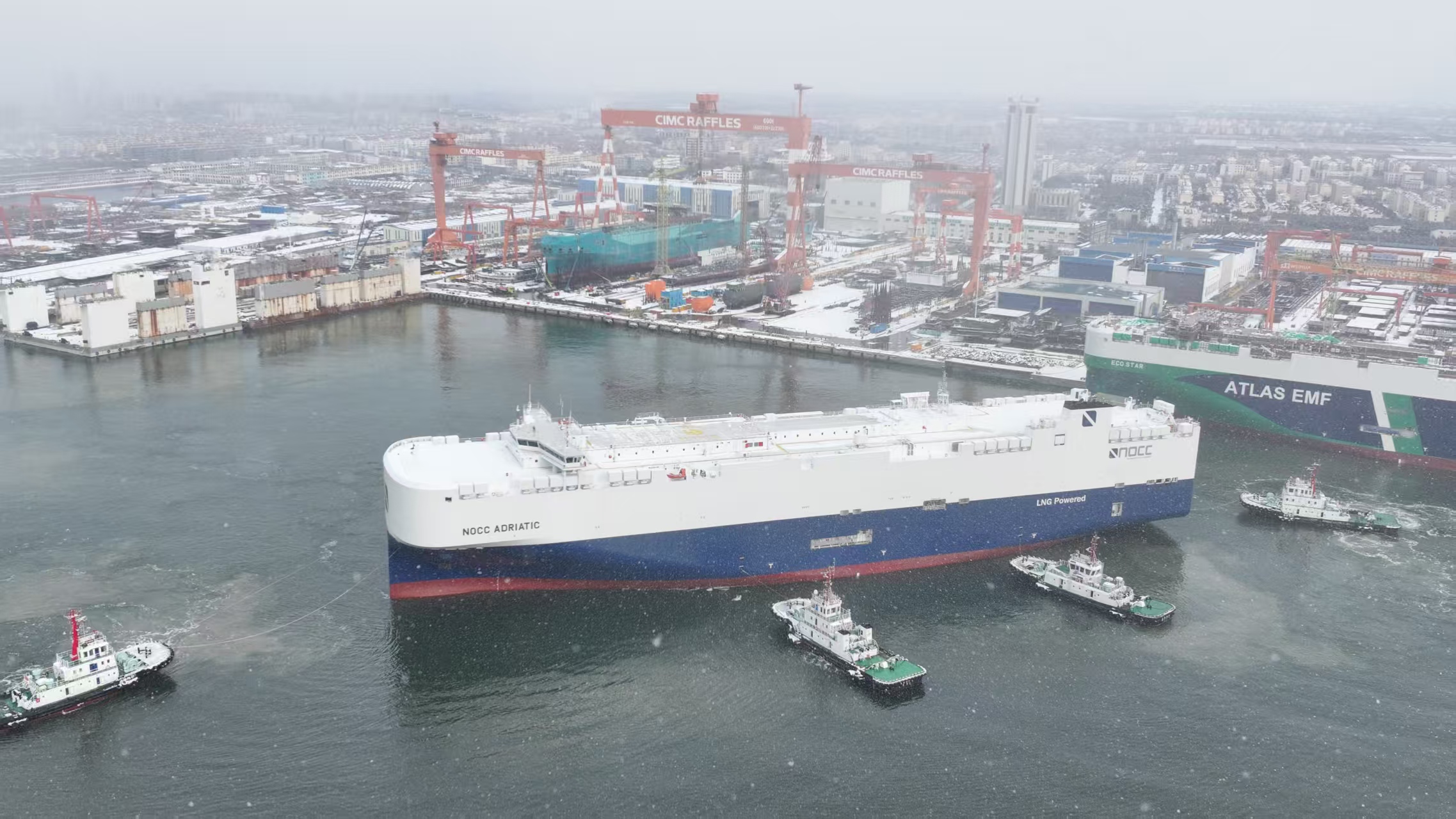
CIMC Raffles Extends NOCC Car Carrier Programme to 2030
 Shipbuilding
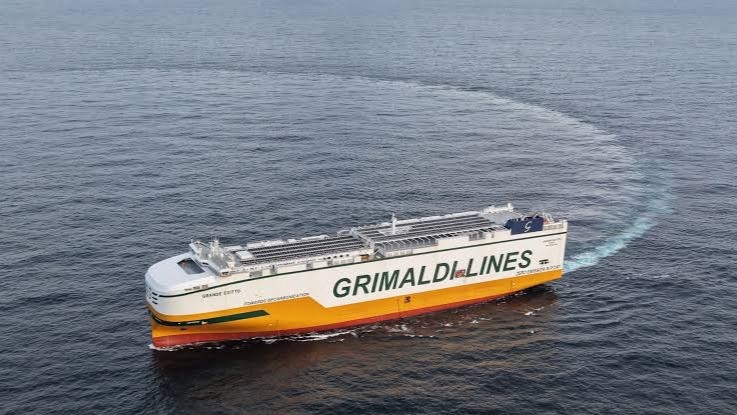
Grimaldi Advances New ConRo and Multipurpose Projects as Fleet Renewal Continues
 Shipbuilding
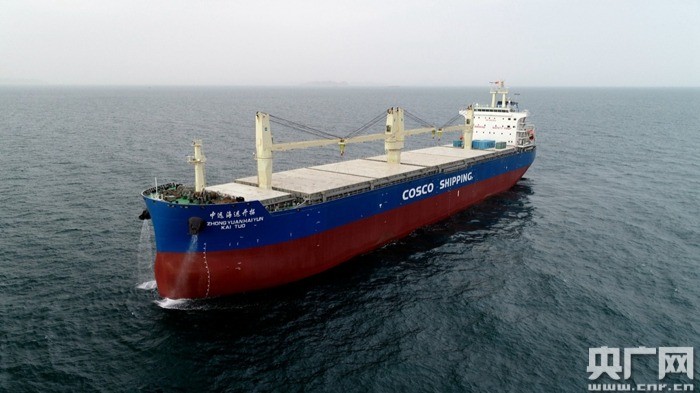
COSCO Shipping Specialized Carriers Shifts Eight 60,000-DWT Heavy-Lift Ships from Chengxi to Dalian
 Shipbuilding
DryDel Orders Two Kamsarmax Bulkers at Tsuneishi
 Shipbuilding