


MISC Signs for Five More LNG Carriers at Hudong-Zhonghua
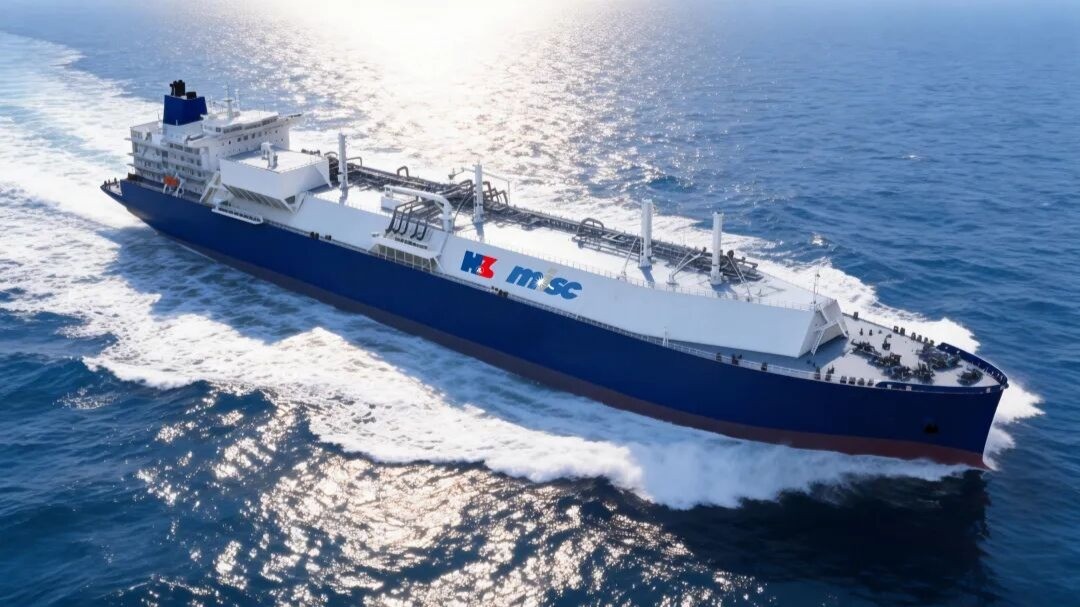

MISC Group Berhad has signed contracts for five additional 174,000-cbm LNG carriers at Hudong-Zhonghua Shipbuilding, doubling the number of large LNG carriers it has contracted at the Chinese yard this year to ten. The agreements were signed on 16 October by the Malaysian shipowner, Hudong-Zhonghua and China Shipbuilding Trading.
The latest order follows MISC’s acceptance of a Letter of Award from PETRONAS LNG Ltd. (PLL) on 7 October, disclosed the following day. The award provides for each of the five newbuildings to operate under a firm 20-year charter, with operations expected to begin in 2030. The shipbuilding contracts now put the construction arrangements behind that transportation programme in place.
Aligning fleet renewal with PETRONAS demand
The five-vessel order builds on contracts for three 174,000-cbm LNG carriers signed in January and another two in February. PETRONAS confirmed in May that PLL had signed 20-year time charters for those first five vessels, with employment expected to begin between 2029 and 2030. Together, the two batches establish a ten-ship programme supported by long-term PETRONAS transportation requirements.
PETRONAS owns approximately 51% of MISC and is also PLL’s ultimate parent. In its October disclosure, MISC linked the latest project to PETRONAS’ anticipated LNG production growth and its own LNG fleet rejuvenation programme. The new vessels are intended to improve operating efficiency and reduce greenhouse gas emissions intensity as the group renews its fleet.
For MISC, this connects investment in new ships with identified customer demand several years ahead of delivery. The latest charter arrangements would extend employment to around 2050, giving the company substantial visibility over the vessels’ intended deployment. For PETRONAS, securing shipping capacity alongside its LNG business development supports the coordination of future supply and customer deliveries.
The programme also places MISC in a role extending across construction and operations. PETRONAS has said MISC will provide project management during construction of the first five ships, followed by operation and ship management after delivery. That continuity allows requirements developed by the owner and operator to be carried through into construction supervision and commercial service.
Operating performance shapes the new tonnage
The latest vessels will use Hudong-Zhonghua’s fifth-generation Changheng design and NO96 Super+ cargo containment system. According to the shipbuilder, the design combines improvements in cargo storage, energy consumption and trading flexibility, while meeting applicable gas-carrier safety and IMO emissions requirements.
For the five ships ordered earlier this year, PETRONAS has disclosed XDF2.1 propulsion technology, shaft generators and onboard reliquefaction equipment. These systems address fuel consumption and boil-off gas management, linking the ships’ technical configuration directly to the demands of long-term LNG transportation.
Over a 20-year charter, operating performance becomes central to the value of a vessel. Fuel efficiency, machinery availability, maintenance requirements and cargo management all affect its ability to perform reliably throughout the contract. MISC’s expanding programme therefore brings a sustained operational commitment alongside the investment in new assets: the ships must continue meeting customer requirements well beyond their delivery dates.
Cooperation extends into regional LNG transport
MISC’s relationship with Hudong-Zhonghua also covers a smaller vessel serving a different part of the LNG supply chain. In July, MISC disclosed a contract for an 18,700-cbm LNG carrier, expected to enter a ten-year transportation arrangement in 2028 on the route from Bintulu, Malaysia, to Sendai, Japan. www.xindemarinenews.com
The project advanced further this month. On 13 October, NYK announced that Asia LNG Transport Sdn. Bhd. (ALT), its joint venture with MISC, had signed a long-term time-charter agreement with Malaysia LNG Sdn. Bhd. A signing ceremony took place in Tokyo on 9 October. The 18,700-cbm vessel will be built by Hudong-Zhonghua, fitted with dual-fuel diesel-electric propulsion and delivered in 2028 for LNG transportation to Japan.
The large carriers and the regional vessel address distinct operating requirements. The 174,000-cbm ships provide capacity for large-volume international trades, while the smaller carrier is matched to an established supply route and receiving market. Together, these projects show MISC investing across different vessel sizes and partnership structures to serve specific customer needs.
For the Malaysian group, the regional project also preserves a long-standing LNG transportation relationship between Bintulu and Sendai. Its commercial rationale rests on the continuity of that service, with vessel size and propulsion selected around the requirements of the trade.
A broader LNG investment programme
MISC’s recent LNG activity also includes new tonnage for QatarEnergy. On 6 October, the group named the 174,000-cbm Th’ailib at Samsung Heavy Industries in South Korea. The vessel is the first of three newbuildings secured under long-term charter arrangements with QatarEnergy and will begin a firm 15-year charter in 2026. MISC previously participated in the first phase of QatarEnergy’s fleet expansion through a consortium involving 12 LNG carriers.
The PETRONAS and QatarEnergy programmes illustrate how MISC is developing its LNG business across customers and shipyards. Its investment combines new vessels for PETRONAS at Hudong-Zhonghua with ships for QatarEnergy at Samsung Heavy Industries, while the NYK joint venture supports a specialised regional service.
The latest Chinese contracts deepen one part of that wider programme. Hudong-Zhonghua reported 15 new LNG carrier orders between January and October and a production schedule extending beyond 2030. Against that workload, MISC has established a substantial series of ships at the yard, with ten large carriers contracted this year alongside the separate regional vessel.
Across these projects, long-term transportation agreements provide the commercial foundation for fleet investment. MISC is translating customer commitments into new vessels with different capacities, delivery schedules and operating roles. As these newbuilding programmes progress, the group’s construction oversight and operating capabilities will be central to fulfilling contracts that extend well into the following decades.


READ MORE
 Shipbuilding
Amid China’s Shipbuilding Boom, a State-Owned Yard Quietly Enters Liquidation
 Shipbuilding
Yichang Changyun plans RMB120m inland bulker programme
 Shipbuilding
Steel Giant Shagang Eyes Shipbuilding as a Booming Market Draws Industrial Capital
 Shipbuilding
Another Chinese Bridge Builder Moves Into Shipbuilding
 Shipbuilding
Hengli Secures 12 Tanker Orders, Retaining World’s Largest VLCC Orderbook
 Shipbuilding
Hengli Signs 11 VLAC Contracts in One Week
 Shipbuilding
China ZWI Enters Ocean Shipping with VLGC Acquisition and Chemical Tanker Newbuild Project
 Shipbuilding
World’s First 325,000-DWT Methanol Dual-Fuel Ore Carrier Delivered
 Shipbuilding
CIMC Raffles Extends NOCC Car Carrier Programme to 2030
 Shipbuilding