

PCTC Are Running Short: COSCO Moves 13,052 Chery Vehicles to Europe in Containers, Tapping Boxship and Multipurpose Vessel Networks
Car Carriers Are Running Short: COSCO Moves 13,052 Chery Vehicles to Europe in Containers, Tapping Boxship and Multipurpose Vessel Networks
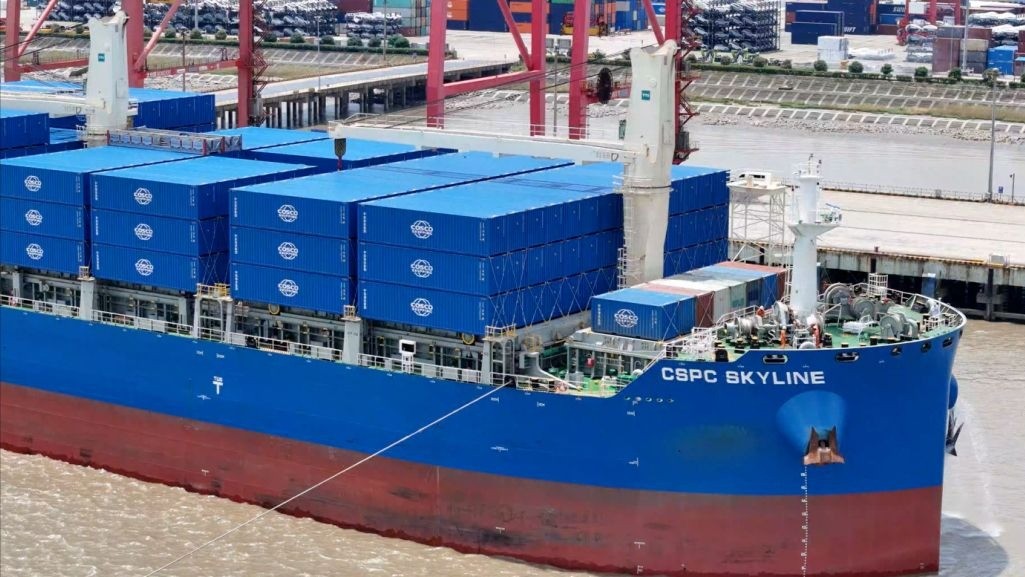

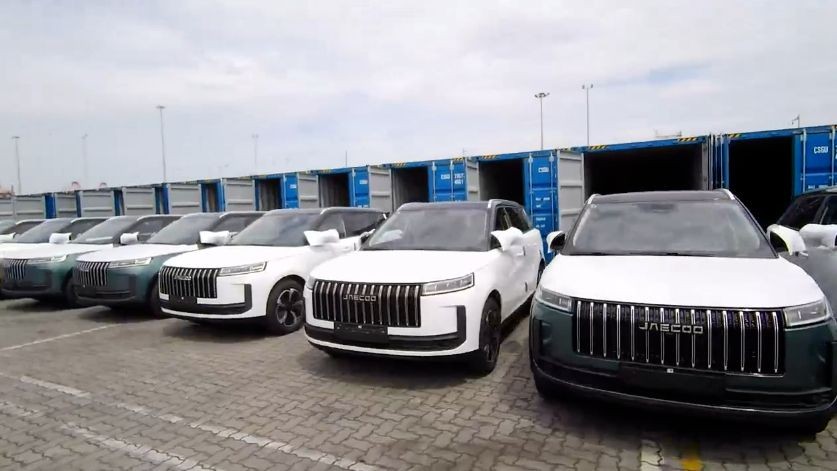
From 4,275 vehicles in the first batch to 4,454 in the third, COSCO SHIPPING has moved a total of 13,052 Chery vehicles from Taicang Port to Europe in three shipments. The vehicles were loaded into containers, with the project drawing on COSCO SHIPPING’s extensive container shipping network, port resources and multipurpose vessel capacity. The operation comes as China’s vehicle exports reached 6.14 million units in the first seven months of 2026, while rising cargo volumes and longer trading distances continue to absorb newly delivered PCTC capacity.
COSCO SHIPPING has completed a containerised vehicle export project whose total volume exceeded the nominal capacity of a medium-sized pure car and truck carrier.
The project, organised by COSCO SHIPPING Lines for Chery, moved 13,052 vehicles in three batches from Taicang Port in eastern China to Europe. The first batch comprised 4,275 vehicles, while the third and final batch contained 4,454 units. The average volume exceeded 4,350 vehicles per batch—roughly equivalent to the nominal intake of a 4,000-CEU car carrier.
The vehicles were collected from different production and storage locations, transported to Taicang, loaded into containers and delivered to the terminal before being shipped to Europe. The project established a direct transport channel to Vado, Italy.
According to COSCO SHIPPING’s official account, the group is using the extensive networks of both multipurpose vessels and container ships to create additional export channels for Chinese automakers. The project combined the liner network, container supply, slot capacity and port resources of COSCO SHIPPING Lines with the multipurpose vessel capacity of COSCO SHIPPING Specialized Carriers.
Shanghai COSCO SHIPPING Lines coordinated container allocation, slot availability, terminals, trucking companies, vessel operators and the automaker. The result was an integrated chain covering vehicle collection, stuffing, terminal delivery, loading, ocean transport and overseas delivery.
COSCO SHIPPING has not disclosed the names of the vessels involved, the total number of containers used, the specific vehicle models or the actual number of vehicles loaded in each container. Its announcement also did not provide a batch-by-batch breakdown of which cargoes were carried by containerships and which drew on multipurpose vessel capacity. The disclosed figure of 13,052 vehicles represents the combined volume of three shipments, rather than the cargo carried by a single vessel.
Cars inside containers
COSCO SHIPPING has described the export chain for a Chinese-built vehicle as five connected stages: factory release, cargo consolidation, container stuffing, cross-border transport and overseas delivery.
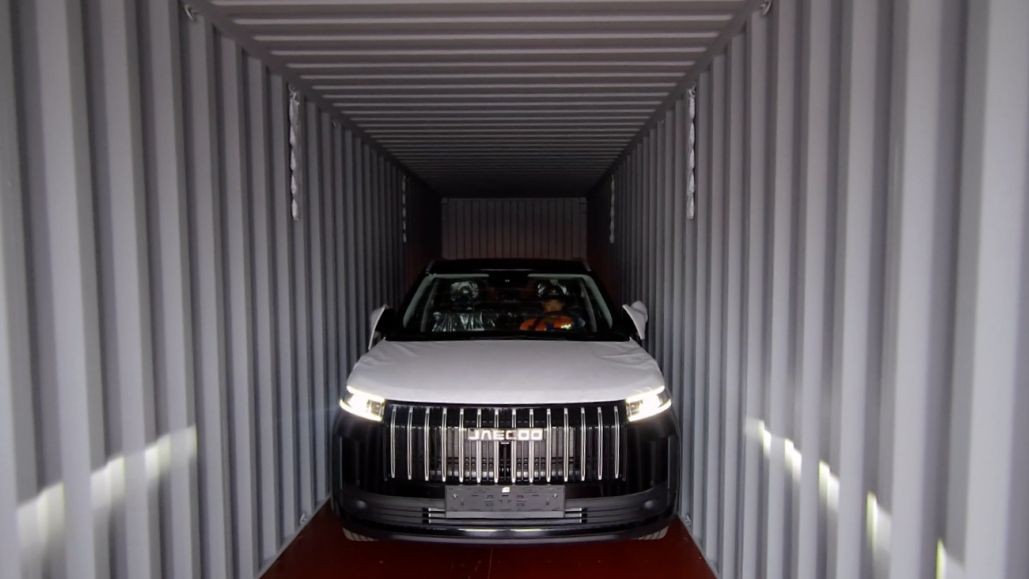
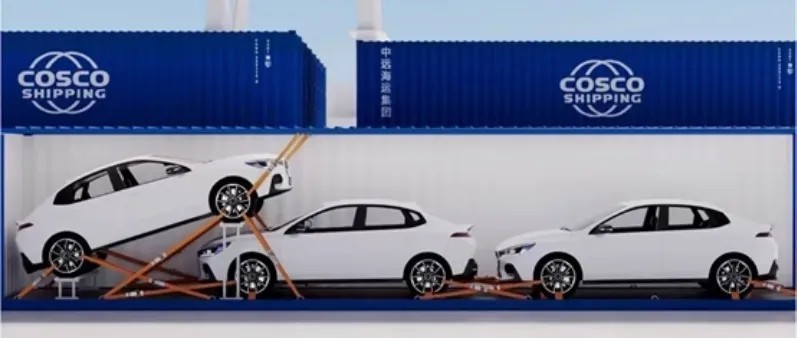
At the stuffing stage, vehicles are secured inside 40-foot containers with purpose-built racks and lashing equipment. Depending on vehicle dimensions and the loading arrangement, a container can generally accommodate between two and four vehicles. One arrangement illustrated by COSCO places one vehicle on an inclined rack above two vehicles positioned on the container floor, making fuller use of the available internal height.
The method allows vehicle cargo to enter the established container logistics system. Once stuffed, the boxes can be moved by truck or rail, stored at container terminals, lifted by standard port equipment and shipped through liner or multipurpose services capable of carrying containers. It also reduces dependence on dedicated ro-ro terminals at both the loading and discharge ends.
COSCO has used the model before. In 2023, 1,000 vehicles were loaded into containers aboard the 20,000-TEU COSCO SHIPPING Gemini for transport from Shanghai to Felixstowe, Zeebrugge and Wilhelmshaven. The disclosed loading system allowed a 40-foot container to carry at least three vehicles.
The Chery project demonstrates how the container unit can be combined with two different maritime networks. Containership services offer schedule frequency, global port coverage and access to established box-handling infrastructure. Multipurpose vessels add flexible port rotations, cargo-space configurations, onboard cranes and the ability to organise direct or customised sailings for large vehicle batches.
COSCO SHIPPING has also developed a digital vehicle supply-chain platform that uses each vehicle identification number as the smallest tracking unit. The system records the vehicle’s receipt, inspection, storage, stuffing, ocean transport, unstuffing and collection, allowing automakers to monitor individual logistics milestones and exceptions.
A different system from vehicle racks aboard pulp carriers
COSCO SHIPPING Specialized Carriers has transported vehicles aboard multipurpose pulp carriers for several years, although its established system has generally used foldable vehicle racks rather than sealed ISO containers.
These racks are typically 48 feet long and can secure three vehicles. The loaded unit is lifted into the cargo hold in a similar manner to a container, but the cars themselves are not enclosed inside a box. On the return voyage, when the ship carries pulp, the racks can be folded and stacked to minimise their use of cargo space. The arrangement supports a two-way cargo structure in which the ship carries vehicles outbound and pulp on the return leg.
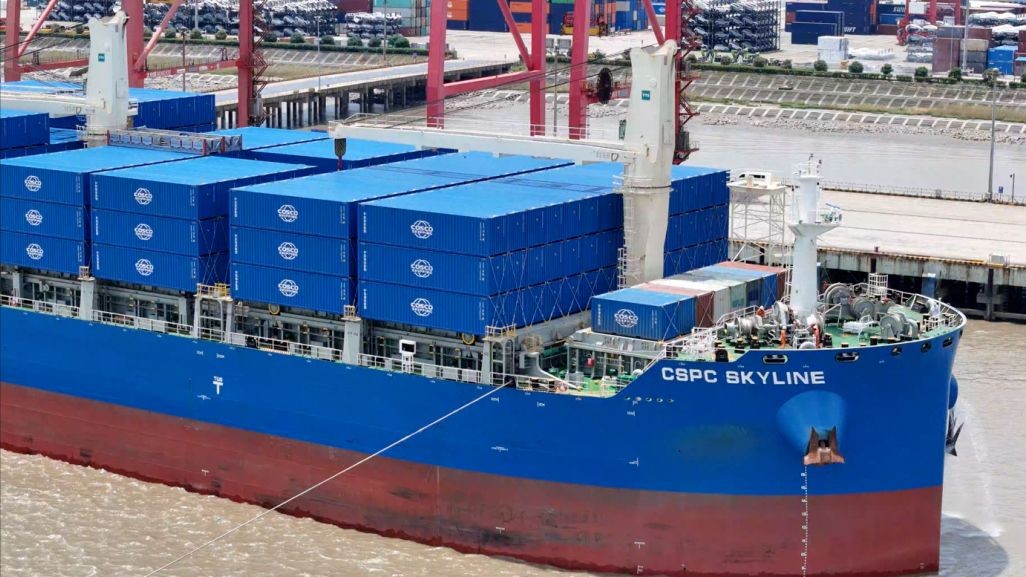
In August 2022, the 62,000-dwt multipurpose pulp carrier COSCO SHIPPING Wisdom used this system to transport more than 1,100 vehicles from Taicang to South America. By July 2023, COSCO SHIPPING Specialized Carriers had completed 60 vehicle-carrying voyages using the rack system and had moved nearly 80,000 vehicles to South America, Europe, the Red Sea, the Mediterranean and Africa.
Containerised vehicle transport uses a different loading unit and logistics process. The Chery vehicles were placed inside sealed containers, allowing the cargo to move through conventional container terminals and intermodal networks. PCTCs, vehicle racks aboard multipurpose pulp carriers and sealed vehicle containers now form three parallel transport channels for China’s expanding automotive exports.
China exported 6.14 million vehicles in seven months
The return of alternative vehicle-transport solutions is being driven by the rapid expansion of China’s automotive exports.
According to the China Association of Automobile Manufacturers, China exported 1.043 million vehicles in July 2026, an increase of 81.3% year on year. Monthly exports exceeded one million units for a second consecutive month. New-energy vehicle exports reached 553,000 units in July, up 150% year on year and accounting for 53% of the monthly total.
Exports in the first seven months reached 6.14 million vehicles, up 66.8% from the same period of 2025. Passenger-car exports rose 72.5% to 5.354 million units, while new-energy vehicle exports increased by approximately 120% to 2.909 million units.
AlixPartners expects China’s full-year vehicle exports to approach 10 million units in 2026, compared with around 7.1 million in 2025. The consulting firm also expects Chinese manufacturers to expand overseas production, technology licensing, contract manufacturing and joint-venture investment as their internationalisation strategies mature.
The changing destination mix is also increasing the amount of shipping capacity consumed by each exported vehicle. More Chinese cars are moving to Europe, Latin America, Oceania, Africa and the Middle East. Longer voyages, Red Sea diversions, port congestion and additional intermediate calls reduce vessel turnover. A vehicle shipped from China to Europe or Brazil occupies vessel capacity for substantially longer than one delivered to Southeast Asia.
New PCTC capacity has yet to remove the shortage
The global car-carrier fleet is already in a heavy delivery cycle. According to figures previously compiled by Xinde Marine News, annual PCTC deliveries increased from around 12 vessels in 2023 to 46 in 2024 and approximately 75 in 2025. About 67 vessels are expected to be delivered in 2026, followed by roughly 50 in 2027 and 26 in 2028.
The additional ships have not yet removed the market’s tightness.
Veson Nautical data show that global vehicle-carrier fleet capacity increased by approximately 3.3% in the first half of 2026, while global car-mile demand expanded by the same percentage. Full-year fleet capacity is projected to rise by about 7.6%, far below the current growth rate of Chinese vehicle exports. Moreover, ships delivered in the middle or final months of the year cannot contribute a full year of capacity.
The charter market reflects the continuing pressure. Veson’s one-year time-charter index for a 6,500-CEU car carrier had risen about 45% since the beginning of 2026 to $67,000 per day by early July. EPS’s 7,060-CEU Lake Rotorua, delivered in April, was chartered to SAIC Anji Logistics in May at $90,000 per day.
Older vessels are also securing long employment. Two 6,500-CEU car carriers built in 2005 and 2006 and owned by SFL were fixed to COSCO at $40,000 per day for 34 months.
Asset values tell a similar story. The 4,310-CEU Chang Sheng Hong, built in 2000 and previously operated by China Merchants RoRo, was sold for RMB285.8 million—around three times its RMB95 million initial asking price. A 26-year-old vessel attracting that level of competition shows the value buyers continue to place on PCTC capacity that can enter service immediately.
PCTC ordering rebounds, with Chinese yards taking nearly 95%
Strong charter rates and asset prices have encouraged owners to return to the newbuilding market.
Xinde Marine News’ review of Clarksons contract data found 37 PCC and PCTC orders worldwide by mid-July 2026, compared with around nine during the whole of 2025. Chinese shipyards secured 35 of those vessels, representing approximately 94.6% of the total.
Bahri subsequently ordered two firm and two optional LNG dual-fuel ro-ro/container vessels from China Merchants Jinling Shipyard. Including the two firm units raised confirmed PCC, PCTC and RoCon orders for 2026 to at least 39 ships; the total could reach 41 if both options are exercised.
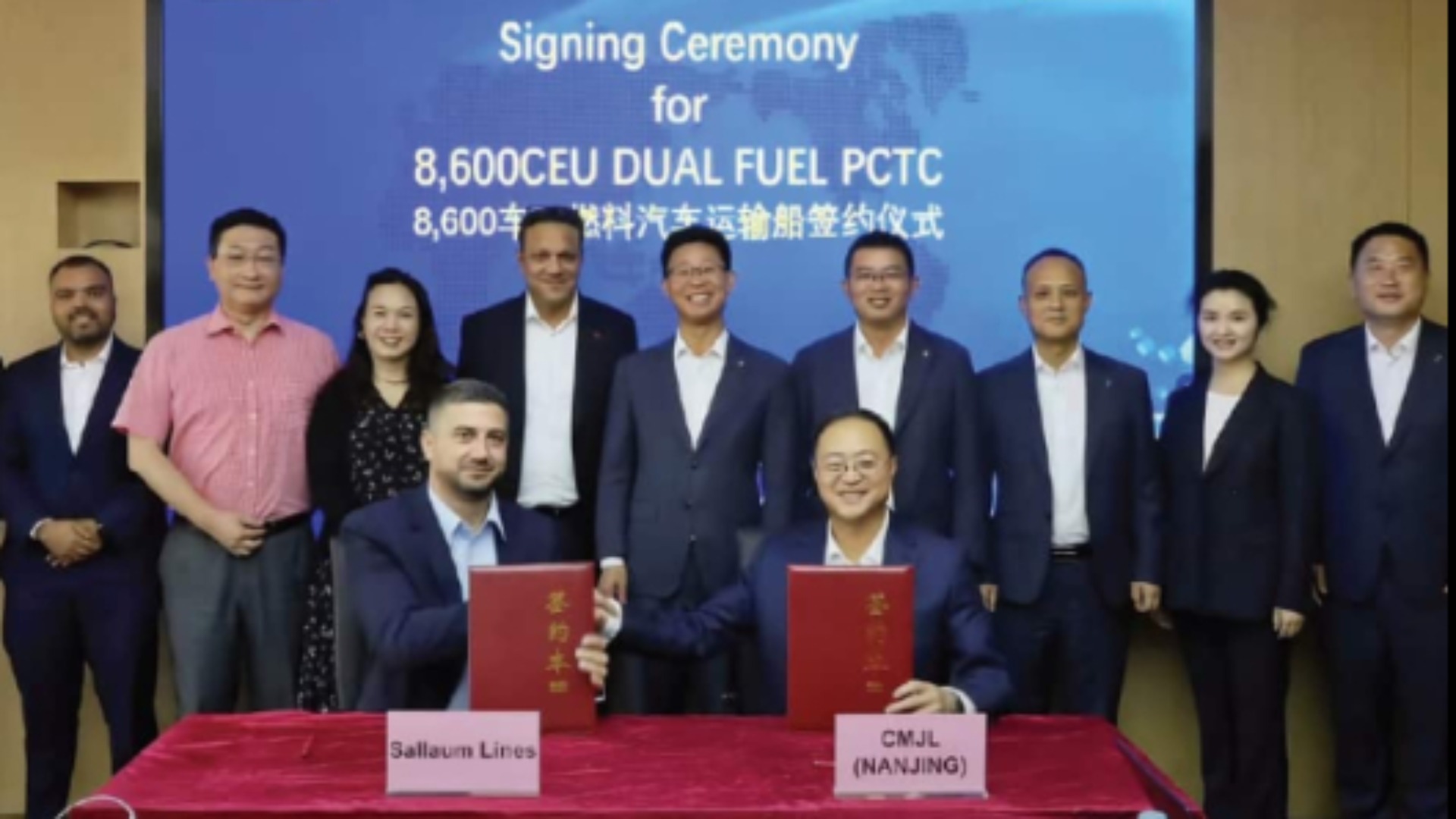
MSC’s Global Car Carriers has also assembled a 12-ship LNG dual-fuel PCTC newbuilding programme at three Chinese yards, comprising eight 8,600-CEU vessels and four 7,000-CEU vessels scheduled for delivery between 2028 and 2030.
Sallaum Lines has placed nine firm newbuildings in China with combined capacity of 70,400 CEU. Its Chinese construction programme could expand to 12 vessels if three options are exercised. Ray Car Carriers, meanwhile, has been linked to negotiations for a newbuilding programme of as many as 14 PCTCs in China with potential investment exceeding $1 billion, although those discussions should not yet be treated as firm orders.
Most of these new vessels will not arrive until 2028–2030 and therefore cannot close the capacity gap over the next two or three years. High secondhand prices, longer charter commitments and renewed ordering are all appearing at the same time as the market tries to absorb China’s export growth.

Alternative channels could carry two million vehicles in 2026
Veson Nautical estimates that more than one million vehicles were shipped outside the dedicated car-carrier fleet in 2025, mainly in containers and through other alternative vessel types. The total could approach two million vehicles in 2026—a record level and roughly one-fifth of China’s projected full-year vehicle exports.
The 13,052-vehicle Chery project shows that containerised exports can now be organised in batches exceeding 4,000 units. Container shipping was once used mainly for smaller lots, fragmented orders and destinations not covered by dedicated car-carrier services. A single batch can now approach the cargo intake of a medium-sized PCTC.
Dedicated car carriers retain clear advantages in loading speed, unit costs and the efficient transport of very large vehicle volumes. COSCO SHIPPING Specialized Carriers’ joint-venture operator, Guangzhou Yuanhai Car Carrier Transportation, now operates more than 30 dedicated car carriers, over 70% of which are LNG dual-fuel vessels. COSCO is therefore expanding its professional ro-ro fleet while also using containerships, multipurpose vessels and specialised rack systems to widen route and port coverage.
Container services contribute frequent liner connections, global box availability and mature terminal infrastructure. Multipurpose vessels can provide direct or tailored sailings and accommodate containers, vehicles, machinery, pulp and project cargo across different voyages. RoCon vessels add another option by combining rolling cargo and container capacity.
China’s automotive export logistics system is becoming a portfolio of complementary ship types: PCTCs provide the principal high-volume trunk capacity; multipurpose and RoCon vessels serve customised cargo programmes; and container shipping networks extend coverage to more ports and inland delivery points. COSCO SHIPPING’s three-batch Chery operation demonstrates that containerised vehicle exports have already moved into standardised, multi-thousand-unit operations—and that boxships and multipurpose vessels are becoming an increasingly important safety valve for a car-carrier market still struggling to keep pace with demand.


READ MORE
 Car Carriers
Up to 26 PCTC! Höegh Autoliners Signs 6 More Aurora Car Carriers with China Merchants
 Car Carriers
917 Chinese Vehicles Arrive at Chancay as COSCO SHIPPING Expands Rack-Based Auto Logistics
 Car Carriers
BYD Orders Another 10 x 9,200 CEU-CEU Car Carriers?
 Car Carriers
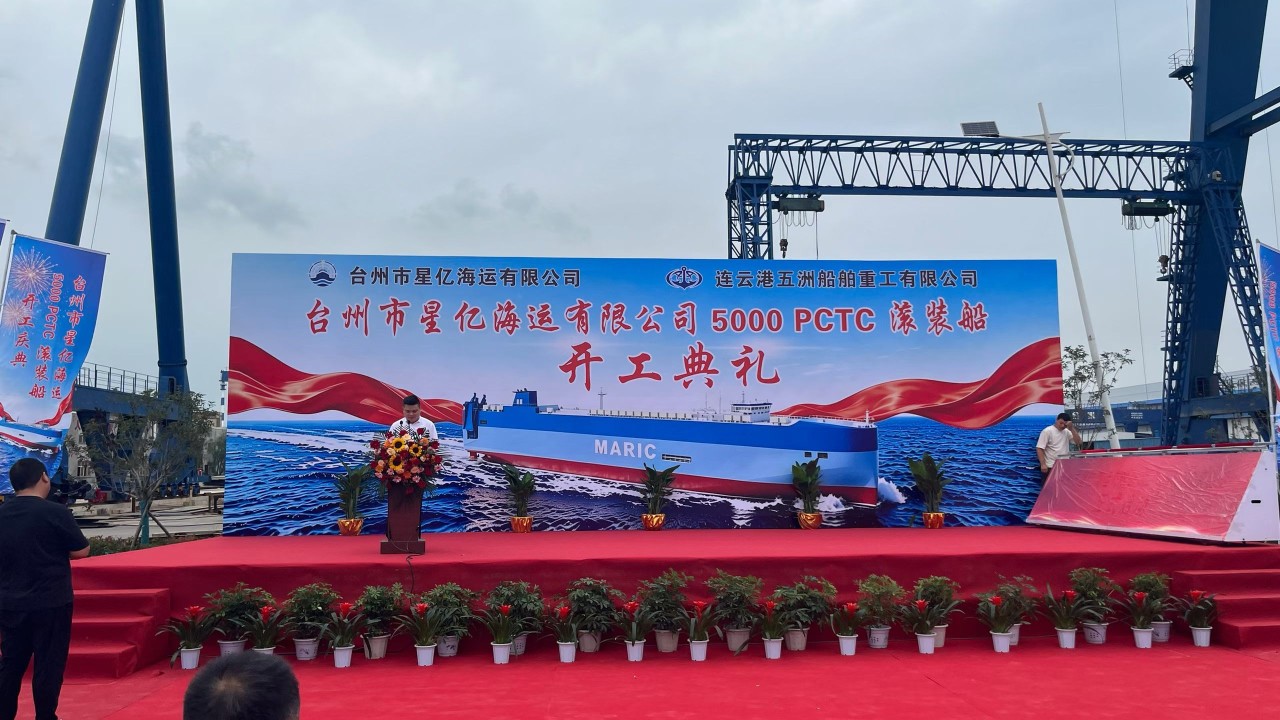
Another Chinese Shipowner Enters PCTC Market — and Another Chinese Yard Moves into 5,000-CEU Construction
 Car Carriers
Up to 14 More PCTCs: Höegh Doubles Down on China as Aurora Programme Could Grow to 26 Ships
 Car Carriers