


Overtaken by Shanghai, How Can London Keep Shipowners and Capital?

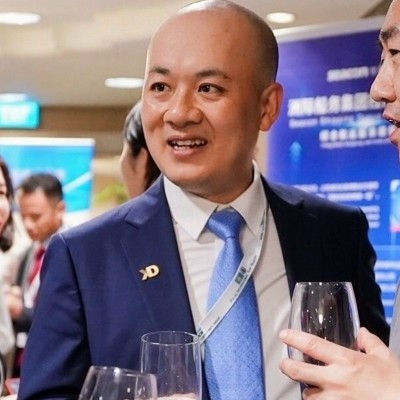
“I have to leave before 12 o’clock tonight.”
Speaking at the 18th Annual Capital Link Shipping & Marine Services Forum in London on 15 September, Nikolas P. Tsakos Nikos Tsakos , founder and chief executive of TEN Ltd., offered a revealing illustration of the pressures facing an established maritime centre.
His family opened its London office in 1974. Fifty-two years later, he remained proud of that presence and wanted to maintain it. Yet even a visit to a city so closely connected with the family business required careful attention to the number of days he could spend in the United Kingdom.
Two months earlier, London had slipped behind Shanghai in the Xinhua-Baltic International Shipping Centre Development Index. Published on 10 July, the 2026 ranking placed Singapore first, Shanghai second and London third, changing an order that had remained unchanged for six consecutive years. The index assesses 43 maritime centres across port performance, professional maritime services and the wider business environment.
That composite ranking provides a backdrop to a more practical question: how can London ensure that the people who commission ships, arrange financing and direct international fleets continue to build their businesses there?
The Capital Link discussion brought together Tsakos, UK Minister for Aviation, Maritime and Logistics Keir Mather , and Cyprus Shipping Deputy Minister Marina Hadjimanolis, with Stephenson Harwood partner Dora Mace-Kokota moderating. Their exchanges suggested that London’s future will depend heavily on how effectively its established expertise translates into everyday conditions for investment and business.
Keeping the people who make the decisions
London’s maritime position developed through relationships built over generations.
Tsakos recalled how shipping businesses from the Greek islands once established their first overseas offices directly in London, sometimes bypassing Athens. The attraction was a concentration of banks, brokers, insurers and other specialists who understood shipping and could help owners expand internationally.
Those relationships continue to matter. A ship purchase can generate financing, insurance, chartering, legal and management work throughout a vessel’s commercial life. Owners based in a maritime centre bring repeated transactions, experienced staff and personal networks that support the surrounding service industries.
Opening the discussion, Mace-Kokota highlighted London’s opportunity to become a centre for maritime transition. She also raised a concern about the departure, over several decades, of shipowners and charterers with decision-making authority.
Professional firms can serve clients across borders. But when an owner relocates, new teams and business relationships may gradually develop around the new base. Existing advisers may retain mandates while future opportunities emerge elsewhere.
Tsakos’s message was that London should make international shipping companies feel welcome and able to develop their businesses. His concern extended beyond Greek owners to a global industry whose participants have considerable freedom to choose where they operate.
For London, the implication is practical: retaining maritime expertise also requires sustained attention to the people who generate demand for it.
From £448 million to a wedding at sea
Mather presented a response combining investment in new technology with improvements to the ordinary business of government.
He identified autonomous shipping, alternative fuels and maritime nuclear propulsion as areas in which the UK should actively pursue opportunities. Companies exploring those technologies, he argued, need a government capable of keeping pace with their ambitions.
Public funding forms part of that approach. In September 2025, the government announced its intention to provide £448 million in research and development investment for the UK Shipping Office for Reducing Emissions, or UK SHORE, between 2026 and 2030. The programme is intended to advance clean maritime technologies towards commercial deployment, with the announcement subject to business case approval.
At the forum, Mather also discussed faster port consenting, the competitiveness of the tonnage tax regime and more responsive service from the Maritime and Coastguard Agency.
His cruise industry example brought the discussion down to a particularly concrete level. Shore power investment matters to cruise operators, but so do domestic provisions affecting their ability to conduct weddings aboard ships. Addressing those obstacles could improve the appeal of the UK flag.
The example illustrated how widely the work of attracting maritime business can extend. Infrastructure, administrative service and legislation all influence an operator’s commercial decisions.
For an investor, the relevant questions are often straightforward. How long will approval take? Will the regulator respond promptly? Does the system accommodate the vessel and business model being proposed?
Mather acknowledged the strength of Britain’s maritime tradition while making clear that the government could not be complacent about its competitive position.
Cyprus puts access and stability at the centre
Hadjimanolis described Cyprus’s maritime development through its relationship with the industry.
Over decades, the country has assembled a registry, a substantial ship management sector and supporting businesses intended to meet the needs of international shipping companies. A dedicated shipping administration gives the sector a clear point of contact within government.
She placed particular emphasis on listening to companies before making decisions that affect them.
That relationship has become increasingly important as decarbonisation moves from policy objectives into expenditure on ships, equipment, fuel and training. Governments can establish obligations, but those obligations eventually reach company budgets.
Her question was direct: who will pay?
Owners considering a newbuilding or conversion must assess costs that extend well beyond the initial investment. They need to understand fuel availability, infrastructure, customer demand and the likely regulatory treatment of the vessel over its operating life.
Banks need a credible repayment case. Charterers need to understand how additional costs will be allocated. Owners need confidence that a decision made today will remain commercially workable when the ship is delivered.
Hadjimanolis therefore linked investment closely to regulatory stability. Governments should give businesses sufficient confidence to commit capital over long periods.
Her argument also underlined the value of accessible administration. Regular contact with companies helps policymakers understand where a proposed measure may create costs, delay investment or produce unintended consequences.
Global rules must produce a workable bill
The discussion repeatedly returned to the difficulty of operating an international fleet under overlapping regulatory systems.
Hadjimanolis advocated global measures that are realistic and workable, expressing concern about the fragmentation created by regional approaches. An owner trading across jurisdictions must account for different requirements within the economics of the same ship.
Mather reaffirmed the UK’s support for progress through the International Maritime Organization’s net-zero process. He also acknowledged the sensitivity of decisions about future fuels and warned against constraining industry choices too narrowly.
On carbon costs, he said the UK had committed to reviewing its Emissions Trading Scheme should a global IMO measure be adopted, with the aim of avoiding double payments.
For shipping companies, the relationship between those systems is central to investment calculations. The value of a fuel-saving measure depends partly on the fuel and carbon costs it avoids. The case for an alternative-fuel vessel depends on operating expenditure, compliance treatment, charter income and the availability of fuel along its trading routes.
Uncertainty over those variables can make it difficult to establish a reliable business case.
The exchanges pointed to a shared challenge for governments: climate policy must provide enough clarity for commercial participants to assess risk and allocate capital. Ambition needs to be accompanied by rules that companies, lenders and customers can incorporate into their contracts and investment plans.
Maritime competitiveness reaches across government
Mather expressed some envy of Cyprus’s dedicated shipping administration.
In the UK, he explained, maritime sits within the Department for Transport. Part of his role is to ensure that other departments understand the industry’s requirements, particularly the Treasury and those responsible for financial services in the City of London.
Hadjimanolis wished him luck in his conversations with the finance minister, drawing attention to a familiar difficulty for maritime policymakers.
Many of the decisions that influence shipping investment lie outside the direct authority of a shipping minister.
A shore power project depends on planning permission and electricity connections. A new fuel supply chain requires coordination between transport, energy and industrial policy. A company choosing a headquarters considers taxation, recruitment and the practicalities of maintaining an international management team.
Mather invited industry participants to identify barriers to investing and operating in the UK so that he could pursue solutions within government.
That invitation reflects an important test for any maritime centre. Companies experience the combined effect of public policy, regardless of how responsibilities are divided between departments. Effective coordination can reduce delays and make an otherwise uncertain project easier to finance and deliver.
The next generation needs a route into shipping
The discussion also connected maritime competitiveness with education and career development.
Hadjimanolis said Cyprus had made seafarer skills and retraining a priority during its presidency of the Council of the European Union. New ships and technologies, she argued, must be accompanied by investment in the people who operate them.
She pointed to the Tsakos family’s maritime education initiative on the Greek island of Chios, where a private merchant marine academy had received approval from the Cypriot authorities.
Tsakos described how a career at sea had changed since his father’s early years. Modern accommodation, communications and rotation arrangements have altered the experience, while time aboard ships can provide a foundation for later employment ashore.
That connection matters to maritime centres. Experienced masters, engineers and other seafarers move into ship management and professional roles, bringing operational knowledge into commercial and technical decisions.
Alternative fuels and increasingly sophisticated equipment make that experience especially valuable. Training must prepare crews to operate new systems safely, while career pathways must help the industry retain their expertise.
A city seeking to expand its maritime services therefore has an interest in the development of people whose careers may begin far from its offices.
Strong freight markets still need peaceful seas
Tsakos’s comments on the tanker market added a longer-term perspective.
Despite strong trading conditions, he said he preferred a peaceful world with open seas. Shipping, in his description, is a marathon.
Recent years have required owners to manage successive disruptions, including the pandemic, war and restrictions on major trade routes. He described the daily need to consult security teams about where vessels could safely operate.
Higher freight rates can improve earnings. They also coexist with difficult decisions about routing, crew safety and commitments to customers.
Tsakos’s preference was for a sustainable business over time, with greater security for the people aboard his ships. International cooperation and effective institutions remain essential to those operating conditions.
The same long horizon applies to maritime centres. Attracting an office is the beginning of a relationship that must survive market cycles, management changes and successive rounds of fleet investment.
London retains the commercial relationships and professional experience accumulated over generations. The discussion at Capital Link showed how much attention is now required to sustain the conditions around them: responsive administration, investment certainty, access to talent and coordination across government.
Shanghai’s rise has sharpened the focus on competition between maritime centres. London’s response will be measured in the choices companies make about where to locate their teams, arrange their next financing and direct their future fleets.
For a family that established its London office in 1974, the desire to remain is already there. The task for policymakers is to make that commitment easier to sustain—and attractive to the next generation of shipowners.

READ MORE
 Finance
HEIDMAR - Scaling for Growth: Capitalizing on Favorable Market
 Finance
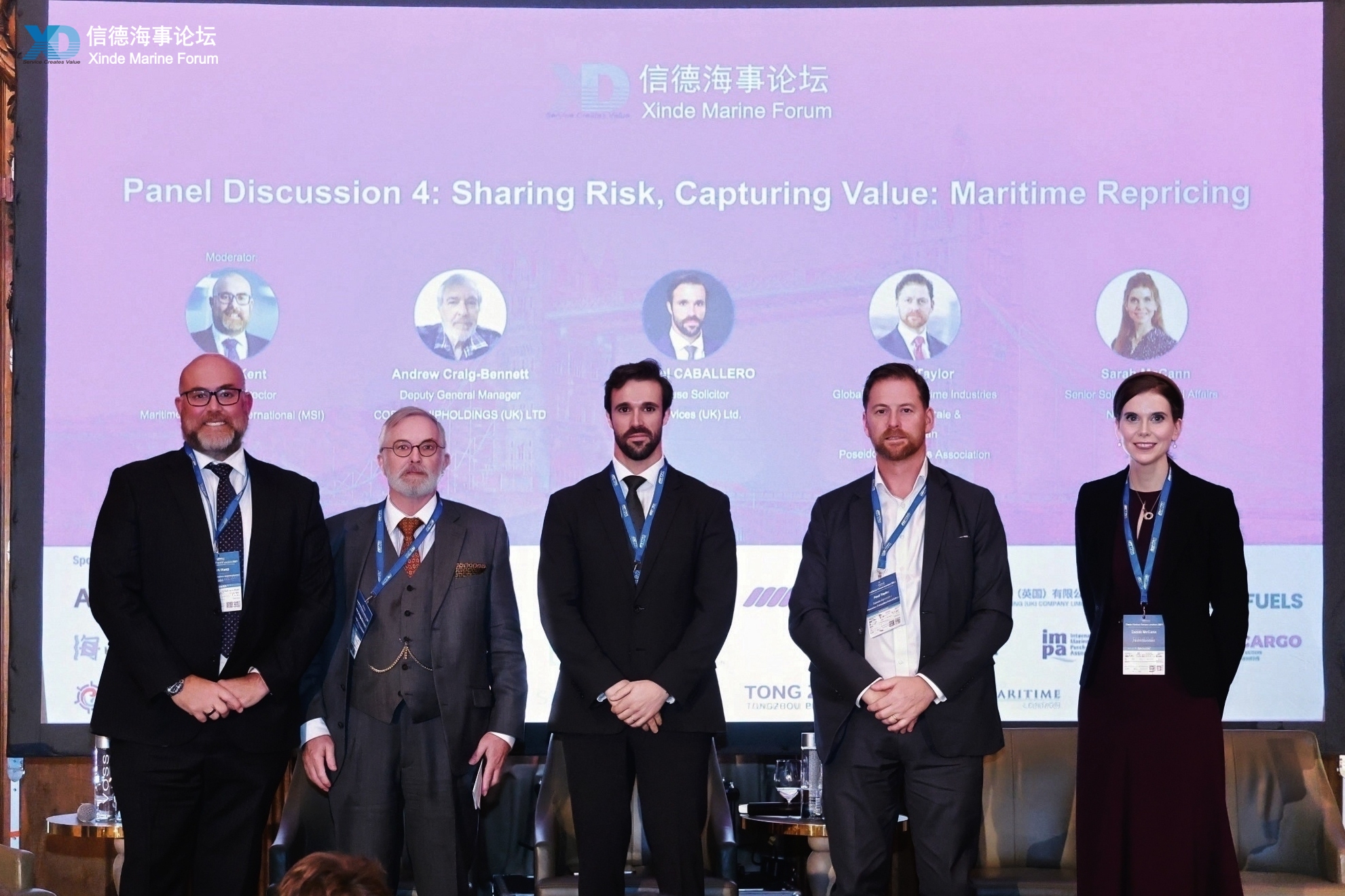
Shipping’s Risk Equation Is Being Repriced as Finance, Insurance and Contracts Adapt
 Finance
Shandong Shipping and OSM Thome Form Singapore JV
 Finance
Shipowners Have Made a Fortune. How Will They Spend It?
 Finance
From RMB 1.87 Billion to RMB 4.55 Billion: What Changed at COSCO Shipping Energy in One Year?
 Finance
Net Profit Jumps 42% as NJTC Reshapes Its Liquid-Bulk Shipping Network
 Finance
Capital Is Available, but Ship Finance Is Repricing the Risk of Buying the Wrong Vessel
 Finance
Plenty of Capital, Yet Ships Still Struggle for Financing: The Structural Mismatch Reshaping Ship Finance
 Finance
COSCO SHIPPING Specialized Posts $202 Million H1 Profit as Second-Quarter Earnings Double
 Finance