


China’s First Self-Designed and Built Dual-Fuel 88K VLGC Enters Service
“Chang Ping Yuan” marks a new milestone as a high-end gas carrier fleet takes shape

China’s high-end gas carrier sector reached a new milestone on September 8, as the country’s first domestically designed and built dual-fuel 88,000-cbm very large gas carrier (VLGC) was officially named and entered service.
The vessel, “Chang Ping Yuan”, was built by Qidong COSCO Shipping Offshore Engineering and will be operated by Dalian COSCO Shipping Energy Supply Chain Co., Ltd., a subsidiary of COSCO Shipping Energy. The vessel has joined the LPG and chemical tanker fleet registered in Dalian Changxing Island.
The 230-metre-class VLGC represents several significant firsts for China. It is the country’s first 88000-cbm VLGC designed and built domestically under the Chinese flag, the first Chinese-built VLGC equipped with an LPG dual-fuel propulsion system, and the first VLGC independently built and operated by COSCO Shipping Group. The vessel was also delivered three months ahead of schedule.
However, the significance of “Chang Ping Yuan” extends far beyond a single ship delivery.
Behind this vessel is a broader industrial strategy linking ship design, advanced shipbuilding, fleet operation, LPG transportation, ammonia logistics and future hydrogen-based energy supply chains. With three additional sister vessels of the same design currently under construction, China’s capability in this sector is moving from a one-off breakthrough toward series production and commercial fleet development.
A VLGC designed for today’s LPG trade and tomorrow’s ammonia market
VLGCs are among the most important vessel types in global liquefied petroleum gas transportation. Similar to how VLCCs dominate crude oil shipping, VLGCs represent the backbone of long-distance LPG transportation.
With a capacity of 88,000 cubic metres, “Chang Ping Yuan” sits within the mainstream segment of modern large gas carriers.
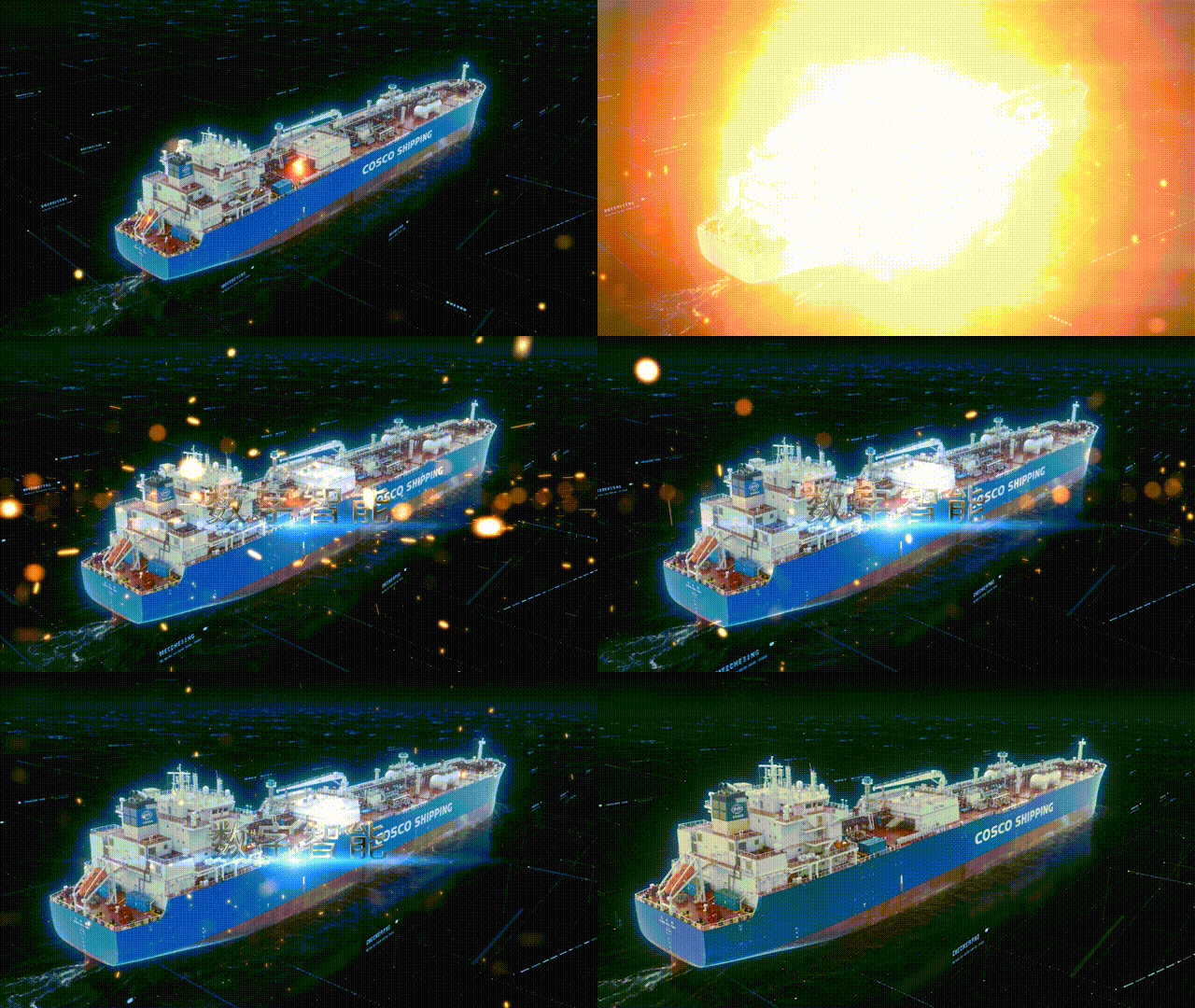
The vessel measures 229.9 metres in length, 32.25 metres in breadth and 23.85 metres in depth. It is equipped with four Type-A independent cargo tanks and a domestically developed 300-cbm deck tank. The vessel adopts a new low-resistance vertical bow design and incorporates energy-saving technologies including a ducted propeller system and rudder bulb.
Its propulsion system is one of the vessel’s key features.
“Chang Ping Yuan” is equipped with an LPG dual-fuel main engine and a shaft generator system, allowing it to use LPG as fuel. Compared with conventional marine fuel, LPG propulsion can reduce carbon dioxide emissions by approximately 20% while cutting sulphur oxides and particulate emissions by around 90%.
The vessel is also equipped with an intelligent ship system compliant with CCS i-ship notation requirements, covering intelligent navigation, intelligent engine room management, energy efficiency optimization and integrated ship platforms.
But the vessel’s long-term value lies not only in what fuel it consumes — it also lies in what cargoes it can carry.
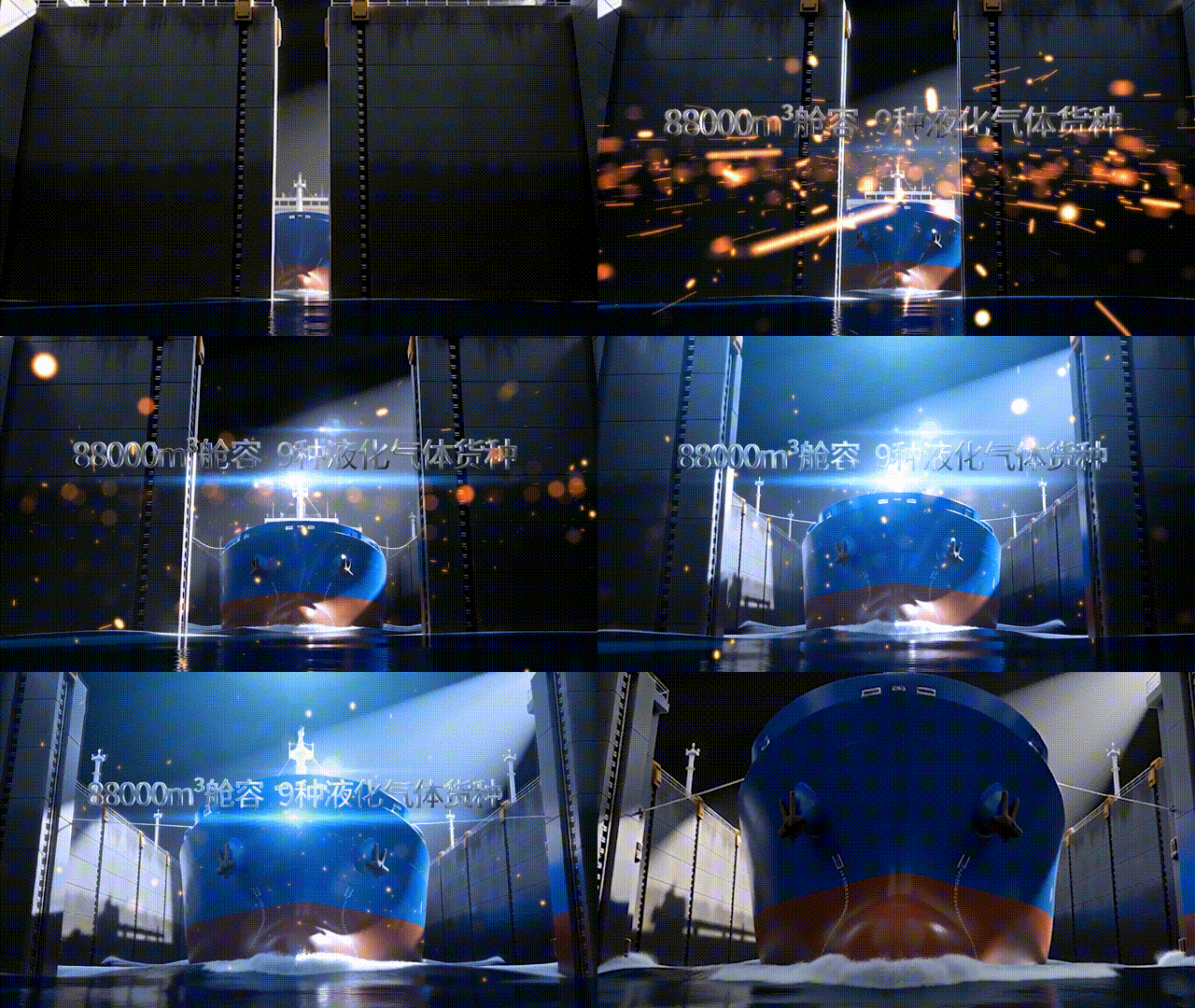
“Chang Ping Yuan” is capable of transporting LPG, ammonia and other liquefied gases, covering nine types of gas cargoes.
This gives the vessel much greater commercial flexibility than a conventional LPG carrier.
Today, propane and butane remain the dominant cargoes in global VLGC markets. However, the energy transition is creating new demand for ammonia transportation, particularly as low-carbon ammonia and green hydrogen supply chains continue to develop.
For a vessel expected to operate for 20 to 25 years, future cargo flexibility is becoming increasingly important. A ship delivered today may still be trading well into the 2040s and beyond. Designing vessels capable of serving both existing LPG markets and emerging ammonia markets allows owners to reduce long-term asset risks caused by changes in energy trade patterns.
This approach reflects a broader trend in next-generation gas carrier design: vessels must not only serve today’s energy market, but also remain adaptable to tomorrow’s energy landscape.
From the first vessel to a four-ship series: building repeatable capability
The construction of advanced gas carriers requires highly specialized capabilities.
Large independent cargo tanks, cryogenic materials, low-temperature welding, complex cargo handling systems, dual-fuel propulsion technologies and increasingly strict environmental standards make VLGCs among the most technically demanding commercial vessels.
The real test for a shipyard is not only whether it can complete one prototype vessel, but whether it can establish a repeatable system for design, procurement, construction and commissioning.
“Chang Ping Yuan” is the first vessel in a series of four 88,000-cbm VLGCs.
The remaining three sister vessels are currently under construction and are expected to be delivered progressively through 2026 and 2027.
This marks a transition from a single technological achievement toward standardized and scalable production.
During the construction process, Qidong COSCO Shipping Offshore Engineering and Dalian Haine Energy conducted early-stage collaboration, optimizing technical solutions from the design phase. For critical areas including cargo tank positioning, low-temperature steel welding and cargo system installation, the project team worked with Lloyd’s Register (LR), China Classification Society (CCS) and industry experts through multiple technical reviews.
The entire process — including design, procurement, construction and commissioning — was managed through integrated coordination.
The successful early delivery of “Chang Ping Yuan” demonstrates not only shipbuilding capability, but also project management, supply chain coordination and quality control strength.
For China’s shipbuilding industry, the importance of this project lies in moving beyond “being able to build” toward “being able to build efficiently and repeatedly.”
In recent years, Chinese shipyards have expanded rapidly in LNG carriers, VLGCs, VLECs, ammonia carriers and various dual-fuel vessels. High-value gas carriers have become a key area for China’s transition toward more sophisticated shipbuilding.
The first vessel proves technological capability. The next three vessels will demonstrate industrial scalability.
“Built and operated in-house”: COSCO enters the VLGC market on both sides
Another important feature of “Chang Ping Yuan” is that it is COSCO Shipping Group’s first self-built and self-operated VLGC.
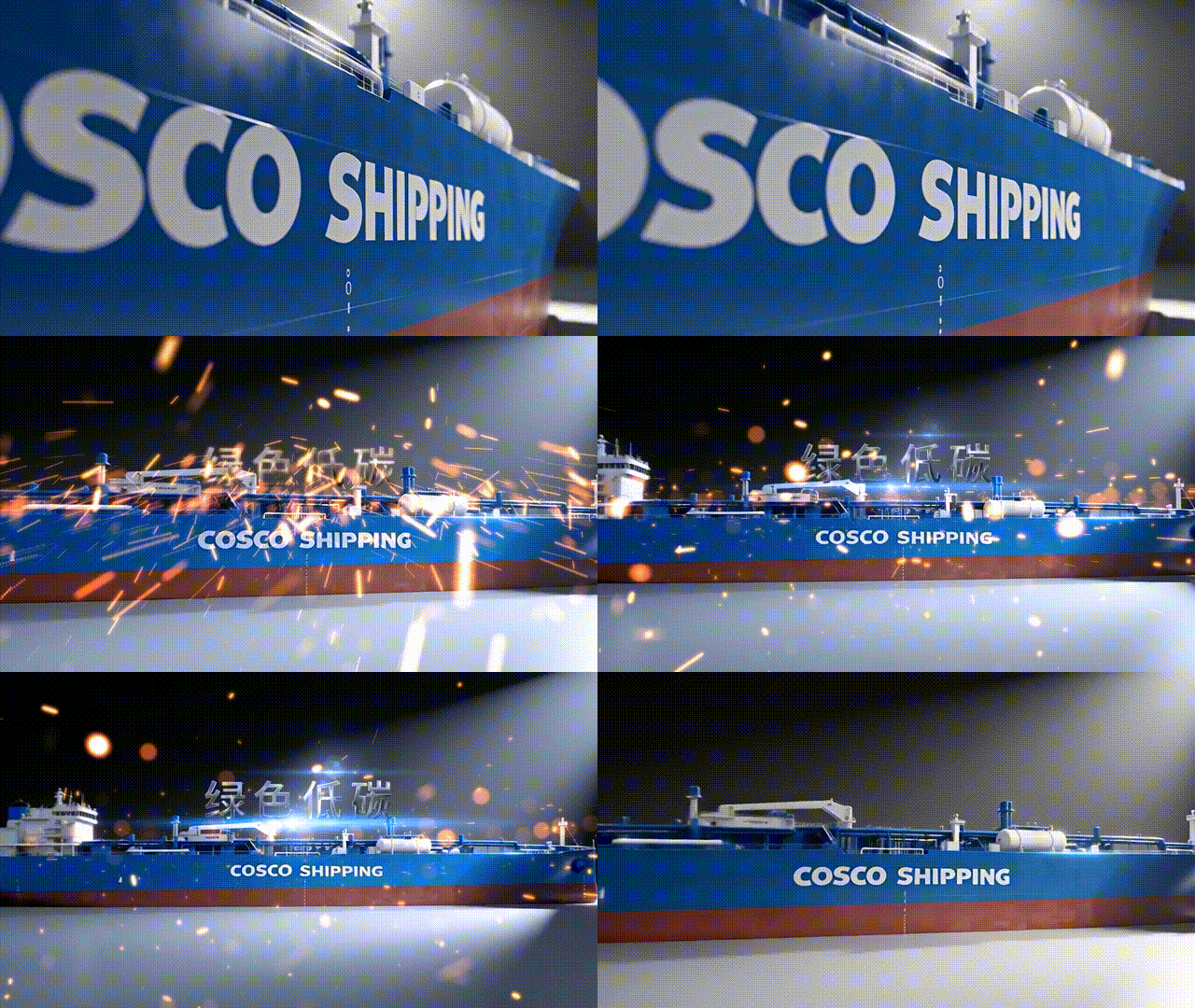
The vessel was built within the COSCO Shipping system, developed with design support from COSCO Shipping Heavy Industry Design & Research Institute and the 708 Research Institute, and will be operated by Dalian Haine Energy.
This creates an integrated model covering ship research and development, construction and fleet operation.
For high-end vessels such as VLGCs, competitiveness depends not only on technical specifications, but also on long-term operational performance, including fuel efficiency, reliability, cargo flexibility, maintenance efficiency and crew experience.
When shipbuilders and operators are closely connected, operational feedback can directly improve future sister vessels. This creates a continuous improvement cycle across the entire vessel lifecycle.
The four VLGCs will therefore serve two strategic purposes:
First, they will strengthen Dalian Haine Energy’s position in the international gas transportation market.
Second, they will provide COSCO Shipping with practical experience in the full lifecycle management of large gas carriers.
Beyond four ships: Dalian’s ambition for a new energy logistics hub
The arrival of “Chang Ping Yuan” is not simply a fleet expansion project.
In June 2024, the Dalian municipal government, Changxing Island Economic and Technological Development Zone and COSCO Shipping Dalian Investment signed a cooperation agreement covering an LPG and chemical tanker fleet project as well as an integrated hydrogen-based energy storage and transportation project in Xizhong Island.
The plan aims to build a world-leading gas chemical transportation fleet while developing supporting infrastructure including terminals and storage facilities.
The broader goal is to establish Liaoning as a strategic hub for hydrogen-based energy logistics, including the transportation of methanol and ammonia from northern production regions and overseas markets.
For hydrogen-based energy development, production capacity is only one part of the equation. Efficient transportation and storage infrastructure will determine whether these emerging energy products can achieve large-scale commercialization.
Future energy logistics will require more than production facilities. It will require railways, pipelines, storage tanks, specialized terminals and dedicated gas carriers.
Within this system, VLGCs and ammonia-capable gas carriers will serve as the maritime connection between energy producers, ports and global consumers.
With its ability to transport ammonia and other liquefied gases, “Chang Ping Yuan” fits naturally into this emerging ecosystem.
If green ammonia production expands in Northeast China and Inner Mongolia, vessels with ammonia transportation capability could connect these resources with major domestic and international markets.
From this perspective, Dalian Haine Energy is not simply building an LPG fleet. It is developing a future-oriented gas transportation platform covering LPG, chemical gases and hydrogen-based energy carriers.
China’s high-end gas carrier industry moves toward a complete ecosystem
The entry into service of “Chang Ping Yuan” reflects a broader transformation in China’s high-end gas transportation sector.
China is already one of the world’s largest LPG and chemical product markets. Historically, much of the long-distance transportation demand was served by international shipowners. Today, Chinese shipyards, energy companies and shipping groups are increasingly participating across the entire value chain — from vessel construction and fleet operation to terminals, storage and energy logistics networks.
The ammonia transportation market, in particular, remains at an early stage of development.
The companies that can successfully connect energy production, storage infrastructure, specialized vessels, long-term transportation contracts and end users will gain a significant advantage.

The future competition in gas transportation will not be determined only by fleet size. It will depend on the ability to build integrated industrial ecosystems.
“Chang Ping Yuan” is only the first vessel in this development.
Behind it are three sister vessels under construction, a growing LPG and chemical gas fleet in Changxing Island, and a broader hydrogen-based energy logistics strategy.
From one 88,000-cbm VLGC to a four-vessel series, and eventually to integrated shipping, terminal and energy infrastructure networks, China’s high-end gas carrier industry is moving toward a new stage.
For Qidong COSCO Shipping Offshore Engineering, the vessel represents the transition from prototype construction to series production.
For Dalian Haine Energy, it marks entry into large-scale international gas transportation.
For Changxing Island, it provides a key maritime asset supporting future energy logistics.
And for China’s shipbuilding industry, it demonstrates the emergence of a more complete ecosystem connecting design, construction, operation and future energy trade.
The delivery of the next three sister vessels will further reveal whether this milestone can evolve into a lasting industrial capability.
At that point, “Chang Ping Yuan” will be remembered not only as China’s first domestically designed and built dual-fuel VLGC, but as the starting point of a new generation of Chinese high-end gas carrier development.

READ MORE
 Tankers
CMB.TECH’s Tanker Sales Set to Generate Nearly $680m in Gains
 Tankers
INTERTANKO Press Statement -- Easing of US sanctions
 Tankers
International Seaways Agrees $370 Million Bruton Takeover to Expand VLCC Fleet
 Tankers
69 Ships for Prokopiou, 10 for Centrofin: Why Owners Keep Choosing Hengli
 Tankers
Kinetai Holdings Opens Singapore Base with Fleet Expansion and Tanker Plans
 Tankers
Emarat Maritime Adds Six LR1s as China Newbuilding Programme Reaches 22 Ships
 Tankers
China Merchants Energy Shipping Establishes European Marketing Hub in London to Expand Global Reach
 Tankers
Guohang expands Hong Kong platform for tanker and heavy-lift push
 Tankers
A 15-Year-Old VLCC Sells for $161 Million as Tanker Asset Prices Surge
 Tankers