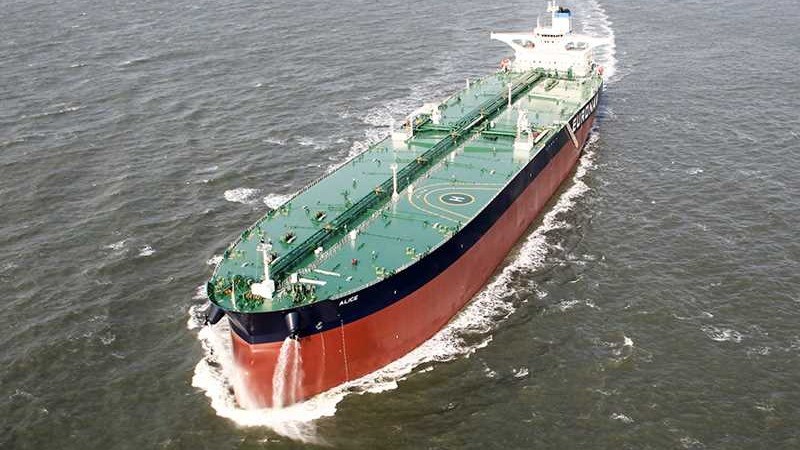


Record Profits, Record Orders, Rising Anxiety: CMES and CMB.TECH Warn of a VLCC Supply Wave
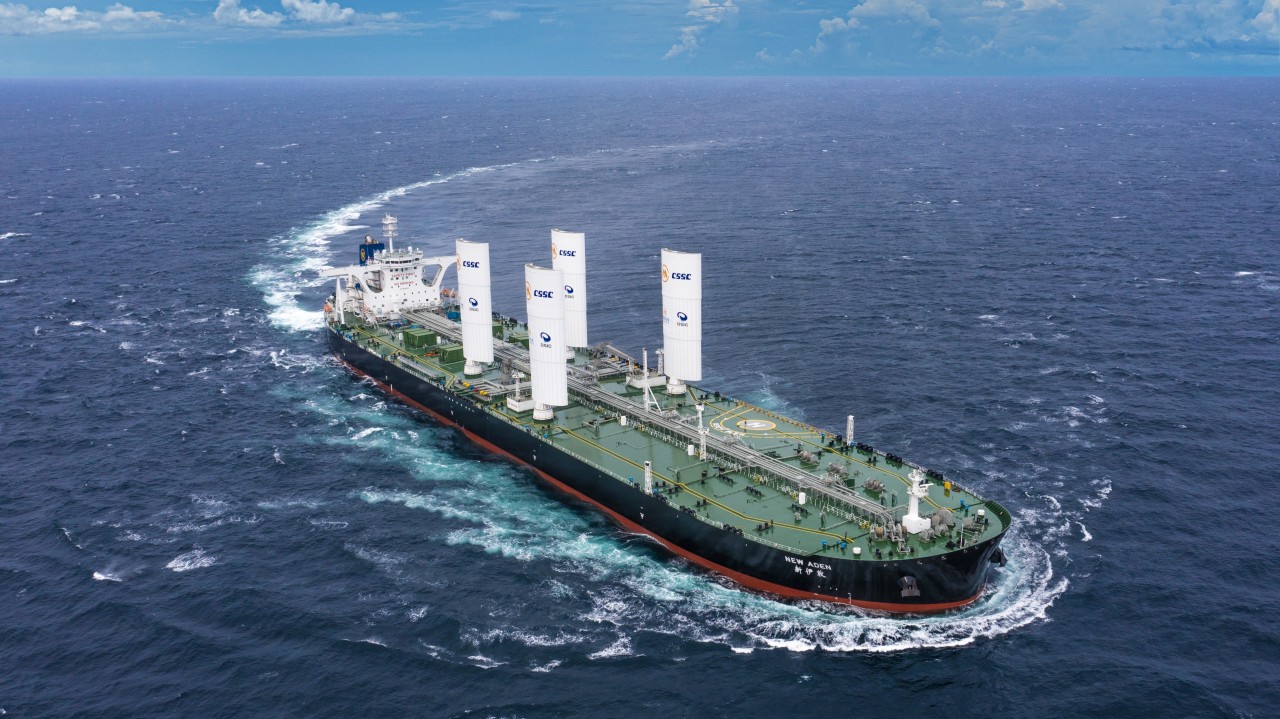
China Merchants Energy Shipping earned more in six months than it did in the whole of 2025, with tanker profit surging 379%. Yet both CMES and CMB.TECH are warning that today’s ordering boom could create a formidable supply wave from 2027 onwards.
By Xinde Marine News
China Merchants Energy Shipping Co., Ltd. has delivered one of the strongest half-year results in its history, powered by an extraordinary increase in tanker earnings and a simultaneous recovery in dry bulk shipping.
During the first half of 2026, the Shanghai-listed shipping group recorded revenue of RMB19.65 billion, up 56.15% year on year. Net profit attributable to shareholders reached RMB6.96 billion, representing an increase of 227.57%, while recurring net profit rose 262.36% to RMB6.91 billion.
The most striking comparison is with the company’s full-year performance. CMES earned RMB6.01 billion in net profit throughout 2025. Its first-half 2026 result was therefore equivalent to 115.8% of last year’s full-year profit, exceeding it by approximately RMB948 million.
Quarterly earnings also continued to accelerate. After recording net profit of RMB2.76 billion in the first quarter, CMES generated approximately RMB4.20 billion in the second quarter, an increase of nearly 52% sequentially. From RMB2.13 billion in the first half of 2025 to RMB2.71 billion in the fourth quarter, RMB2.76 billion in the first quarter of 2026 and RMB4.20 billion in the second quarter, the company’s earnings base has now risen for several consecutive quarters.
Yet behind these record results sits a growing concern shared by some of the world’s largest tanker owners: the current wave of VLCC ordering may be laying the foundations for the next supply imbalance.
Strong earnings backed by cash flow
The quality of CMES’s first-half earnings was particularly strong. The difference between reported net profit of RMB6.96 billion and recurring net profit of RMB6.91 billion was only about RMB52 million, demonstrating that almost all the company’s earnings came from its core operations.
This represents a clear change from 2025, when the gap between full-year reported and recurring net profit was close to RMB990 million, partly due to gains from vessel disposals and other non-recurring items. Asset-disposal gains in the first half of 2026 fell 68.73% year on year, as the company did not repeat the sizeable gains generated from the sale of an older vessel in the comparable period.
Operating cash flow reached RMB8.13 billion, rising 130.56% and exceeding attributable net profit by RMB1.17 billion. Cash holdings increased from RMB4.72 billion at the end of 2025 to RMB7.89 billion at the end of June, a rise of 67.08%.
Revenue increased by RMB7.07 billion, while operating costs rose by only RMB1.19 billion. Based on the reported figures, the group’s gross margin expanded from approximately 23.5% to almost 45%. High freight rates, combined with the operating leverage of a large fleet, were converted directly into higher margins and cash generation.
This cash flow is also supporting an increasingly ambitious fleet-investment programme. CMES recorded net investing cash outflow of RMB5.42 billion during the first half, largely due to newbuilding instalments. Operating cash flow nevertheless remained sufficient to cover the period’s net investment outflow.
Tanker profit surges 379%
Tankers were the principal driver of the earnings increase.
CMES’s tanker division generated first-half revenue of RMB9.58 billion, up 115.66%, while segment net profit jumped 378.62% to RMB6.19 billion. The tanker division alone contributed segment profit equivalent to almost 90% of the group’s consolidated attributable earnings.
The scale of the improvement becomes even clearer when compared with 2025. CMES’s tanker business earned approximately RMB4.19 billion for the whole of last year. Its first-half 2026 tanker profit was already around 148% of that full-year figure.
The growth was achieved despite a decline in physical cargo volumes. The tanker fleet transported 39.12 million tonnes of cargo during the first half, down 8.9%, while transport work declined 2.22% to 299.70 billion tonne-miles. The sharp increase in revenue and profit was therefore driven by freight rates, voyage composition and fleet-deployment efficiency rather than volume growth.
The closure and subsequent disruption of the Strait of Hormuz reshaped global crude flows. Middle East exports fell sharply, while Atlantic Basin supplies from the United States, Brazil and West Africa became increasingly important. Longer voyages, vessel repositioning, waiting time and operational inefficiencies reduced effective fleet availability even as the headline volume of crude moving by sea declined.
CMES increased its exposure to western loading areas, expanded Atlantic long-haul employment and secured voyages during strong rate windows. Its scale allowed the company to reposition tonnage across the Middle East, Atlantic Basin and Far East markets more efficiently than smaller owners with more concentrated customer and trading patterns.
At the end of the reporting period, CMES fully owned, operated and managed approximately 50 VLCCs. Most were deployed in the spot market, giving the company one of the highest spot-market exposures among major listed VLCC owners. Only a limited number of vessels were fixed on rolling six- to twelve-month charters for core customers, with the locked-in rates reportedly above the average period market.
Its Aframax fleet followed a more balanced model combining time charters, pool participation and selected spot exposure. The result was a portfolio that retained substantial upside from the VLCC spot market while using period employment and pool operations to provide a degree of earnings stability.
This high VLCC spot exposure amplified the downturn when the market weakened in early 2025. It is now producing exceptional earnings as rates remain elevated.
Dry bulk provides a second engine
Dry bulk also made a substantial contribution. Segment revenue increased 38.34% to RMB5.12 billion, while net profit rose 179.37% to RMB1.18 billion. The division’s first-half earnings were already higher than its approximately RMB1.14 billion profit for the whole of 2025.
The average Baltic Dry Index reached 2,347 points during the first half, up 82% year on year. Brazilian iron ore, Guinean bauxite, South American grain and Chinese exports of steel, machinery and energy-storage equipment all supported demand.
CMES manages 37 very large ore carriers, maintaining one of the world’s largest VLOC operations. Long-term contracts of affreightment and strategic-customer cargoes provide the fleet with a stable earnings base, while the company’s Capesize, Panamax, geared bulk carrier and multipurpose operations retain greater market exposure.
Almost half of the company’s Capesize voyages achieved daily TCE earnings above $40,000. Its 62,000-dwt multipurpose vessels generated TCE levels approaching $30,000 per day, with virtually all full-year export cargo capacity already covered. The fleet also transported 672 energy-storage containers during the first half and continued expanding into wind-turbine components and European project cargoes.
CMES has since advanced plans for six new 343,000-dwt VLOCs, with projected investment capped at RMB4.93 billion. The vessels are intended to support long-term transportation agreements and reinforce the company’s strategic-mineral logistics capacity as projects including Simandou gradually increase exports to China.
LNG, car carriers and containers add new layers
CMES’s diversified fleet also produced growth outside the two core businesses.
The LNG segment reported revenue of RMB139 million and segment net profit of RMB357 million. The profit figure includes earnings from joint ventures accounted for under the equity method and therefore cannot be compared directly with segment revenue.
CMES has now invested in 64 LNG carriers. Its wholly owned CMLNG platform controls investments in 18 vessels and holds stakes in another 10 project vessels, while the CLNG joint venture operates 30 ships and has six under construction. Five LNG carriers were delivered during the first half and all entered long-term employment with major international LNG traders.
The company’s LNG strategy has gradually moved beyond financial participation towards independent operational capability. The completion of the maiden voyage of Sea Spirit, its first independently controlled LNG carrier, in 2025 marked an important step in building its own technical management, crewing and ship–shore operating capabilities.
The car-carrier segment generated revenue of RMB982 million and net profit of RMB204 million, rising 20.34% and 92% respectively. Total vehicle volume declined 11% to 288,000 units, but international volume almost doubled to 103,200 vehicles and foreign-trade sailings achieved a 100% load factor. CMES repositioned vessels away from the Gulf before the Hormuz disruption, captured Brazil-bound demand ahead of tariff changes and added services to Australia and Japan.
Container shipping remained the only major division to record a profit decline. Revenue fell 1.47% to RMB2.98 billion, while net profit decreased 7.57% to RMB580 million. Operational indicators nevertheless improved: loaded container volume rose 8% to 590,000 TEU, China export volume increased 11%, and slot utilisation reached 90% even as weekly services were streamlined from 63 to 57.
The group signed contracts for 12 container ships in three size classes—8,200 TEU, 3,000 TEU and 1,800 TEU—for delivery in 2027 and 2028. Together, the vessels will add approximately 52,000 TEU of owned capacity and support the expansion of Sinotrans Container Lines from regional feeder operations into a broader mix of intra-Asia trunk and feeder services.
After the reporting period, CMES also completed its acquisition of control over Antong Holdings. Sinotrans Container Lines directly holds 14.94% of Antong, while the China Merchants group parties acting in concert control approximately 24.84%. Five of the nine members of Antong’s new board were nominated by Sinotrans Container Lines and China Merchants Port, making Sinotrans Container Lines the controlling shareholder and China Merchants Group the ultimate controller.
The transaction gives CMES access to Antong’s extensive domestic container network and creates potential links with the group’s international services, ports, logistics operations and supply-chain infrastructure.
A fleet investment programme exceeding RMB22 billion
CMES received 10 new vessels during the first half of 2026: two Aframax tankers, five LNG carriers, two 82,000-dwt Kamsarmax bulkers and one 62,000-dwt heavy-lift multipurpose ship.
It also signed 22 newbuilding orders during the period, comprising 10 VLCCs and 12 container ships. At the end of June, the group’s owned fleet stood at 241 vessels, supplemented by 69 chartered ships. Its owned newbuilding programme contained 76 vessels spanning tankers, LNG carriers, bulk carriers, car carriers and containerships.
The 10 VLCCs, ordered from Dalian Shipbuilding Industry Co., carry a total contract value of approximately RMB8.57 billion and are scheduled for delivery between 2028 and 2030. They will be equipped with scrubbers and shaft generators, while their designs will reserve the possibility of future conversion to dual-fuel propulsion.
CMES subsequently ordered five energy-efficient Aframax tankers for approximately RMB2.49 billion, with delivery expected in 2029 and 2030. It has also advanced six VLOCs, one Newcastlemax, additional feeder containerships and an earlier 1+1 order for 154,000-dwt dynamic-positioning shuttle tankers.
Based on disclosed contract values and project investment ceilings, CMES has signed or publicly advanced newbuilding projects worth approximately RMB22.63 billion during 2026. Some figures represent maximum authorised investment rather than final committed capital expenditure, but the overall direction is clear: the company is using the current earnings window to prepare its fleet for the second half of this decade.
VLCCs reinforce its position in long-haul crude transportation; Aframaxes increase its flexibility in regional trades; DP shuttle tankers take the company into technically demanding offshore oil logistics; VLOCs connect new capacity with long-term strategic cargoes; and three containership size classes support the development of an integrated regional network.
CMES sounds the orderbook alarm
CMES’s own interim report nevertheless contains a remarkably direct warning about the pace of tanker contracting.
According to the company, 509 tankers were ordered globally during the first seven months of 2026, making this the strongest tanker-ordering year of the past two decades. The total included 162 VLCCs, the highest volume of VLCC contracting since 1973.
By early August, the crude tanker orderbook had doubled year on year to approximately 132.1 million dwt, close to a 50-year high. The VLCC orderbook was estimated at around 302 vessels—roughly three times its earlier level—although CMES noted that some figures reported by brokers and investment banks may include options that have yet to become fully firm.
The average delivery lead time has stretched to three or four years, and the number of VLCCs that will be 20 years old or more when the new vessels arrive still exceeds the orderbook. Immediate oversupply is therefore far from inevitable. CMES nevertheless described the surge in contracting as a warning signal that the industry cannot ignore.
The company expects the global VLCC market to remain tightly balanced during the second half of 2026 and potentially for longer. Freight rates may continue trading within historically high ranges, with effective-capacity bottlenecks producing further temporary spikes. Its concern is concentrated further forward, when a large volume of new vessels begins entering service between 2028 and 2030.
CMB.TECH sees a “tsunami” from 2027
CMB.TECH has expressed an even more forceful version of the same concern.
During its second-quarter results discussion, CEO Alexander Saverys said approximately 370 VLCCs and 250 Suezmaxes were on order, with the orderbook in both segments exceeding 30% of the existing fleet.
The precise total differs from the approximately 302 VLCCs cited by CMES because the figures come from different market sources, dates and definitions, including the possible treatment of options and unconfirmed projects. The direction of the data is consistent: the large crude-tanker orderbook has expanded extremely rapidly.
CMB.TECH considers the 2026 delivery schedule manageable. The heavier pressure begins from 2027 and becomes more pronounced in 2027–2028.
Saverys described the approaching deliveries as “a tsunami of VLCCs and Suezmaxes coming to the market”—equivalent to roughly one new VLCC or Suezmax entering service every two days.
CMB.TECH also questioned whether demolition would be sufficient to offset the new supply. The number of older vessels approaching likely recycling age has fallen below the orderbook, reversing the pattern seen before the recent ordering boom. Meanwhile, grey-market and sanctions-related tonnage may remain active for longer than some forecasts assume.
Its concern represents a medium-term supply warning rather than an immediate bearish call. CMB.TECH’s VLCC earnings exceeded $120,000 per day during the second quarter, and the company continues to retain spot exposure. It has also sold selected vessels at exceptionally high secondhand values and added time-charter cover to part of the remaining fleet, using the strong asset market to reduce future cycle risk.
Why are owners ordering while warning about orders?
The simultaneous expansion and caution of CMES and CMB.TECH captures the central tension in today’s tanker market.
Older fleets require renewal. Environmental regulations are becoming more demanding. Efficient and fully compliant ships command growing commercial advantages. Quality shipyard capacity is limited, and delivery slots for large vessels already extend towards the end of the decade. An owner that waits for clear evidence of future tonnage shortages may find that suitable newbuildings can no longer be delivered in time.
Strong freight rates and vessel values have also repaired shipowners’ balance sheets, allowing established companies to invest without immediately placing excessive pressure on liquidity. For CMES, first-half operating cash flow of RMB8.13 billion, cash of RMB7.89 billion and an asset-liability ratio of around 47.5% provide a solid basis for current expansion.
Short-term borrowings fell by RMB1.63 billion during the first half, although long-term borrowings increased by RMB2.83 billion to fund shipbuilding commitments. The financial profile remains manageable, but the growth in long-term debt and lease liabilities shows that the investment cycle is already reshaping the balance sheet.
The decisions of individual owners may therefore be commercially rational. Their combined effect could still create a substantial supply wall.
CMES is trying to manage that risk by combining spot-market exposure with selected period cover, long-term contracts, strategic cargo relationships and the gradual retirement or replacement of older ships. CMB.TECH is using vessel sales, time charters and a measured amount of continued spot exposure to protect part of its current earnings and asset values.
Both companies remain constructive on near-term tanker fundamentals. Both are becoming increasingly cautious about the period when today’s contracts turn into delivered vessels.
Today’s boom is shaping the next cycle
The tanker market is currently supported by limited compliant capacity, longer voyages, sanctions, disrupted trade flows and declining fleet efficiency. These factors could absorb more vessels than conventional supply-and-demand models suggest, particularly if geopolitical fragmentation and long-haul Atlantic-to-Asia trade persist.
The risk becomes more visible if trade routes normalise, voyage inefficiencies fall, oil demand disappoints or grey-market vessels remain in service while newbuildings arrive. Under that combination, the 2027–2030 delivery schedule could move the market from effective scarcity towards excess capacity much faster than many current forecasts assume.
For CMES, the present cycle has already produced extraordinary results. First-half net profit exceeded the whole of 2025, tanker profit surged 379%, and operating cash flow reached a level capable of funding major fleet renewal. Its newbuilding programme, LNG portfolio, strategic bulk contracts and acquisition of Antong are simultaneously reshaping the company into a broader global shipping platform.
Yet its warning on the VLCC orderbook deserves as much attention as its record earnings. CMB.TECH’s description of an approaching “tsunami” makes the message even harder to ignore.
The strongest tanker companies are still investing. They are also preparing for the consequences of an industry that may be investing too aggressively.
Today’s high freight rates are rewarding existing ships. Today’s newbuilding contracts will determine the balance of the market several years from now. The next tanker cycle is already being built in the orderbooks of 2026.

READ MORE
 Tankers
Guohang expands Hong Kong platform for tanker and heavy-lift push
 Tankers
A 15-Year-Old VLCC Sells for $161 Million as Tanker Asset Prices Surge
 Tankers
VLCC Benchmark Tops $1 Million a Day: How Are Owners Using the Windfall?
 Tankers
China Merchants Energy Shipping Establishes European Marketing Hub in London to Expand Global Reach
 Tankers
An $81 Million Quote for One Voyage: How Long Can the Tanker Market Frenzy Last?
 Tankers