


Hormuz Crisis Exposes Shipping’s Three Fault Lines. Shipping Leaders Confront the Lessons of the Hormuz Crisis
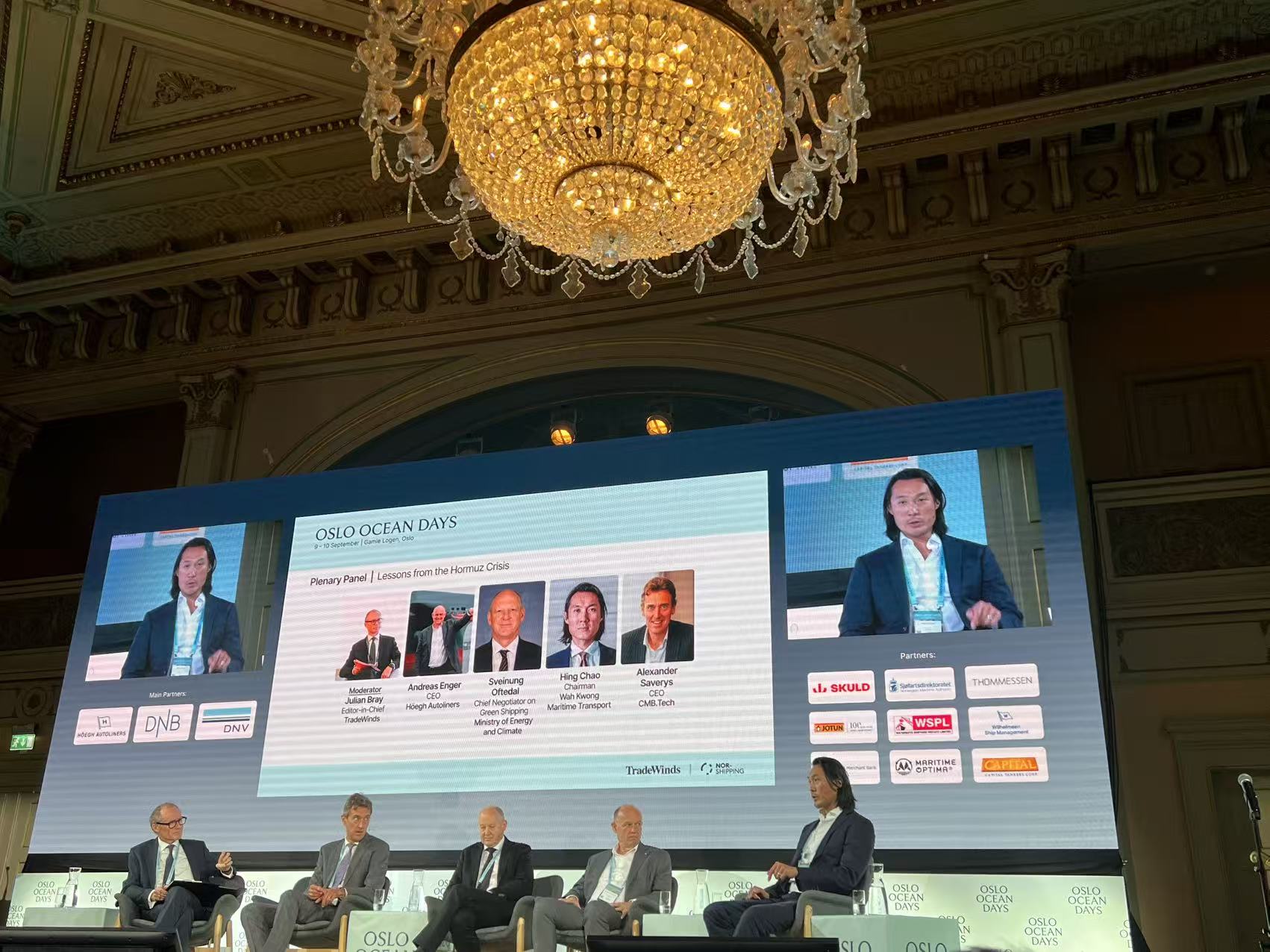

Executives from Höegh Autoliners, Wah Kwong Maritime Transport and CMB.TECH joined Norway’s chief green-shipping negotiator in Oslo to discuss disrupted voyages, unequal access to energy, freedom of navigation, shadow fleets, alternative fuels and the risk of a tanker-market correction.
The disruption in the Strait of Hormuz is no longer solely a question of whether ships can pass through the waterway.
It has become a test of shipping companies’ operational resilience, importing countries’ ability to pay for energy, the durability of global maritime rules and owners’ confidence in long-term fuel investments.
Those issues shaped a plenary session titled “Lessons from the Hormuz Crisis” at Oslo Ocean Days 2026 on September 9.
The panel featured Andreas Enger, chief executive of Höegh Autoliners; Sveinung Oftedal, Chief Negotiator for Green Shipping at Norway’s Ministry of Climate and Environment; Hing Chao, chairman of Wah Kwong Maritime Transport; and Alexander Saverys, chief executive of CMB.TECH. TradeWinds editor-in-chief Julian Bray moderated the discussion.
Can the crisis be resolved quickly?
Bray opened by asking whether a rapid resolution was realistic, given that Iran had prepared for confrontation for years and the positions of the parties remained far apart.
Oftedal said a lasting solution would require both an effort to address the root causes of the conflict and a genuine willingness among the parties to reach an agreement.
International diplomacy and multilateral institutions could provide a venue for negotiations, he said, but outsiders could not easily determine the parties’ intentions or when the necessary political conditions would emerge.
From shipping’s perspective, the International Maritime Organization can defend safe operations and common maritime rules. It cannot, however, resolve the political disputes that created the conflict.
Oftedal said the pressure on global trade would eventually strengthen the need for a negotiated solution, although the timing remained uncertain.
How has Höegh Autoliners adapted its operations?
Bray then asked Enger how the crisis had affected Höegh Autoliners’ services.
Enger said the company had been forced to make significant operational adjustments. At one stage, vessels carrying about 16,000 vehicles could no longer deliver their cargoes to their intended destinations as planned.
The company rearranged voyages and cargo movements, including diversions involving Sri Lanka, while continuing to serve the affected markets.
For Höegh Autoliners, which carries vehicles and other rolling cargoes through a global liner network, the disruption complicated port rotations, customer deliveries and fleet planning.
Enger nevertheless described those operational difficulties as limited when compared with the wider impact on the global energy system. A shipping company can increase fuel inventories, adjust schedules and redeploy vessels, but such measures do not remove the underlying disruption to energy supply.
He said the episode demonstrated shipping’s ability to adapt. It also showed that operational resilience comes with additional costs for owners and customers.
Ship traffic remains far below normal levels. Preliminary Kpler data reported by Reuters showed that only six commodity vessels passed through Hormuz on September 8, down from nine a day earlier and below the preceding 10-day average of about 12.
Before the war began on February 28, the strait typically handled about 125 large commercial vessels per day.
Has an energy crisis been avoided—or merely obscured?
Bray next asked why the disruption had not immediately produced an energy shock comparable with the crises of the 1970s.
He questioned whether inventories had only deferred the impact or whether global energy flows were already being reconfigured.
Saverys said the crisis had not been entirely unexpected for some countries. Europe had experienced a major energy shock after Russia’s invasion of Ukraine in 2022, but concern about energy security eased again when oil prices later fell.
The latest crisis, he said, had renewed the case for accelerating the energy transition—not only for climate reasons, but also to improve energy security and control costs.
Chao rejected the suggestion that an energy crisis had not occurred.
“We are in the middle of a global energy crisis,” he said.
The effects were unevenly distributed, he argued. Buyers in wealthier economies could continue obtaining energy by paying higher commodity, freight and insurance costs. Countries with less purchasing power faced fuel shortages, rationing and disruption to daily economic activity.
Drawing on his recent travel in Europe and Asia, Chao described markets where fuel stations had stopped operating or consumers had waited for hours to obtain limited quantities.
His point was that continued supply in well-funded markets should not be mistaken for the absence of a crisis. Energy was increasingly flowing towards those able to pay the highest price.
Enger agreed that the disruption was being felt very differently around the world.
Measures taken by Höegh Autoliners, including building fuel inventories, could affect quarterly results, he said. But those effects were relatively minor compared with the energy constraints facing parts of Asia and Africa.
Enger added that the crisis could reinforce investment in renewable energy. For countries without substantial domestic oil and gas resources, renewable generation is not only a decarbonisation measure but also a means of reducing exposure to imported fuels.
Front-month Brent crude settled at $101.21 per barrel on September 9, its highest close since May 22.
Flows through Hormuz had recently fallen below 2m barrels per day, compared with 8m–9m barrels per day in the week before fighting resumed on August 30.
What remains of freedom of navigation?
Bray then turned to freedom of navigation, asking what the direct involvement of major military powers and attacks on merchant shipping meant for commercial operators.
Oftedal placed the issue within the wider multilateral system created after the Second World War.
That system was intended to protect trade, navigation and economic development through internationally recognised rules and agreements, he said. During military conflicts, however, governments change their priorities and may set those arrangements aside.
Commercial ships, seafarers and civilians then bear the consequences.
Oftedal said governments needed to continue defending multilateral cooperation and respect for international agreements. Diplomacy and cooperation between states remained the only viable route towards restoring a more stable operating environment.
Would owners pay for guaranteed passage?
Bray followed with a more direct commercial question: if owners could pay a charge in exchange for safe passage, would such an arrangement be fundamentally different from paying a canal toll?
Chao said global trade had become accustomed to a relatively stable, efficient and predictable operating environment. Sanctions, tariffs, conflict and other restrictions were now pushing supply chains in the opposite direction.
A relatively small shipping company could not change the geopolitical environment, he said. Owners would prefer governments, international organisations and the IMO to provide secure navigation, but they still had to move cargo when those institutions could not fully guarantee safety.
If transportation remained necessary and secure passage required additional expenditure, shipping companies might have little practical choice but to pay.
Chao also referred to reports of payments being made through unofficial channels during the early stages of the conflict, while stressing that those reports had not been verified.
The direct costs of transit have already increased sharply.
An Emirates National Oil Company executive said cargo insurance could reach 5%–6% of cargo value, potentially adding another $10m to a shipment. Additional war-risk premiums have risen from effectively zero before the conflict to as much as 10% of cargo value in some cases.
Total transit-related costs have reached $10m–$20m for some voyages, according to a Reuters report.
What does the shadow fleet reveal about shipping regulation?
Bray then asked Saverys about the growth of the shadow fleet.
Many of these ships operate with opaque ownership, limited insurance transparency, interrupted AIS transmissions and flag or classification arrangements that are not widely recognised. Bray asked whether conventional owners could maintain a common moral or regulatory position while such vessels continued to meet demand.
Saverys said most participants in global shipping would support freedom of navigation and common safety standards as a matter of principle.
Commercial practice, however, was more complicated. If there was demand for a product, a customer prepared to pay, seafarers willing to sail and an insurer willing to provide cover, someone would probably undertake the voyage.
The shadow fleet existed because the underlying cargo demand had not disappeared, he said. Moral and regulatory questions remained important, but markets became more fragmented during periods of crisis.
Chao urged the industry to return to several common values: protecting crews, ships and the environment.
Countries did not share the same positions on sanctions or acceptable trading partners, he said. Some economies still needed to import oil and gas from counterparties that Europe or the United States did not approve of.
That required a more nuanced discussion of sanctioned trade and shadow fleets. Even without agreement on the politics, Chao said governments and industry participants should still be able to recognise common responsibilities towards seafarers, vessel safety and environmental protection.
Enger focused on the importance of preserving global regulation.
Shipping had benefited enormously from having a worldwide regulator in the IMO and broadly recognised rules covering ship safety, seafarers and environmental performance, he said.
His concern was that fragmentation could eventually produce parallel maritime systems. A fleet regarded as “dark” under one system could develop its own classification, insurance and regulatory arrangements and operate openly within another trading bloc.
Enger said maintaining a unified global framework remained essential, regardless of disagreements over sanctions or individual transit arrangements.
Is the crisis accelerating shipping’s energy transition?
Moving to energy security and decarbonisation, Bray asked Enger how the vehicle-carrier market was changing and whether Chinese carmakers were showing greater interest in lower-emission supply chains.
Enger said shipping had previously been regarded as an especially difficult sector to decarbonise. Developments over the past three or four years had shown that owners could order and operate ships designed for lower-carbon fuels.
China, he said, was increasingly demonstrating that the manufacturing and fuel systems required for the transition could be developed. Major cargo interests—including Chinese and international vehicle manufacturers—were also taking a closer interest in supply-chain emissions.
Höegh Autoliners is building its 9,100-ceu Aurora-class vehicle carriers with ammonia and methanol capability.
Under its agreement with North Ammonia, the company aims to operate at least 5% of its deepsea services on green ammonia by 2030 and consume at least 100,000 tonnes of green ammonia annually by that date.
Enger said the company intended to demonstrate through vessel operations that the technology could work, even if global regulation progressed more slowly than expected.
Operating data on fuel use, costs and emissions would give regulators and customers clearer evidence on what was commercially possible.
Is Europe underestimating China’s transition?
Chao said many Western shipowners did not fully recognise the scale of the changes that had taken place in China over the previous five to seven years.
China’s importance to global manufacturing, commodity trade and shipping meant that changes in its energy system would have international consequences, he said.
Chao argued that China had not pursued an absolute choice between conventional fuels and renewable energy. It continued to protect energy supply while expanding solar and wind generation, batteries, transmission systems, electric vehicles and hydrogen-related industries.
Renewable electricity would increasingly be used not only to power households and industry, but also to produce hydrogen and hydrogen-derived fuels, he said.
China’s role in shipping’s transition could therefore extend beyond ship construction into fuel production, storage, logistics, financing and bunkering.
What is preventing wider adoption of green fuels?
Bray then asked Saverys how he assessed the alternative-fuel market after years of investing in hydrogen and ammonia projects.
Saverys said the Hormuz crisis would not cause owners to abandon conventional vessels immediately. Wider adoption would depend on whether lower-carbon shipping could compete commercially with conventional operations.
Technology was no longer the main obstacle, he said. The additional capital cost of alternative-fuel equipment could be depreciated over a vessel’s working life. The more difficult issue was the recurring price of the fuel itself.
Owners would continue to wait if green fuels remained substantially more expensive than diesel. The industry therefore needed pioneers to demonstrate technical and operational feasibility while producers expanded supply and reduced costs.
CMB.TECH expects to take delivery of 11 ammonia-powered vessels in 2026: 10 Newcastlemax bulk carriers being built at Qingdao Beihai Shipyard and one 1,400-teu container ship under construction at China Merchants Industry’s Weihai yard.
The ships will be fitted with dual-fuel diesel-ammonia engines and will carry ammonia for propulsion and auxiliary power.
Asked about nuclear propulsion, Saverys said it deserved further research, particularly for larger ships. But regulation, port acceptance and the approvals required for a private operator to run nuclear-powered ships worldwide would take considerable time.
Ammonia and other fuels already under development offered opportunities for more immediate action, he said.
Could common European and Chinese standards unlock supply?
Chao agreed that shipping needed solutions that could be deployed in the near term.
He identified alignment between European and Chinese fuel-certification standards as an important next step. Mutual recognition could make it easier for Chinese producers to supply methanol, ammonia, biomethane and synthetic LNG to international users.
Chao said his energy activities were divided between certification and alternative fuels and involved discussions with a broad range of Chinese methanol producers.
Wah Kwong also participated in China’s first ship-to-ship green methanol bunkering operation, completed at Yangshan in April 2024. The bunkering vessel was owned by Shanghai International Port Group and managed by Wah Kwong.
Chao previously told Reuters that China could become an important green fuel producer and potentially attract bunkering volumes from established international hubs.
Enger returned to the importance of flexibility in newbuildings.
Owners investing in ships with working lives of up to 30 years could not assume that today’s fuel economics and regulations would remain unchanged, he said. Building conversion capability into new ships reduced the risk of committing an asset to a single pathway.
Even if a vessel never used the fuel initially envisaged, the option to convert could still have commercial value.
Can the IMO Net-Zero Framework recover?
Towards the end of the session, Bray asked Oftedal why owners should remain confident that the IMO could reach an agreement after the previous negotiating setback.
Oftedal described himself as a “realistic optimist”.
The IMO Net-Zero Framework combines a global marine fuel standard with a greenhouse gas pricing mechanism. The Marine Environment Protection Committee’s extraordinary session in October 2025 adjourned without formally adopting the framework, and talks were postponed for one year.
Oftedal said the member states still had significant differences, particularly over the speed of the transition, its cost and the principles used to distribute those costs.
However, he argued that they were not necessarily moving in opposite directions. Many governments accepted that shipping’s energy mix would have to change, even if they disagreed on how quickly and under which mechanism.
The United States remained involved in the IMO and its council despite opposing elements of the climate package, he noted. Washington still had an interest in IMO rules covering maritime safety, security and other areas.
Even a relatively limited initial agreement could provide a starting point for stronger measures later, Oftedal said.
Is the tanker market in a bubble?
Bray closed the panel by asking whether parts of the tanker and dry bulk markets had entered bubble territory.
Saverys gave a direct answer: “It will burst.”
He said it was impossible to know how high the market could rise or when it would turn. But when freight becomes unaffordable for some importing countries, demand destruction will follow.
VLCC earnings on Middle East-to-China routes exceeded $500,000 per day before the June agreement and were still quoted at about $287,000 per day later that month.
Chao agreed that the market would eventually correct but cautioned against judging future vessel requirements solely by monthly freight data or conventional cycle patterns.
A more fragmented global trading system would produce additional disruption and inefficiency, he said. Longer voyages, waiting time and altered trading relationships could require more ships to transport the same volume of cargo.
Enger said owners could not reliably predict the top or bottom of the market. Their practical response should be to control costs and invest in adaptable assets with operational and fuel flexibility.
The panel did not produce a single prescription for the Hormuz crisis. Instead, its answers reflected the different responsibilities of policymakers, shipowners and energy investors.
The immediate task is to protect ships, crews and cargoes. The longer-term challenge is to preserve workable international rules while avoiding fuel and asset decisions that could burden owners long after the crisis has passed.

READ MORE
 Safety
The accident often starts when the job feels safe
 Safety
Opinion:Why a Rapid Return to Calm in the Middle East Looks Unlikely
 Safety
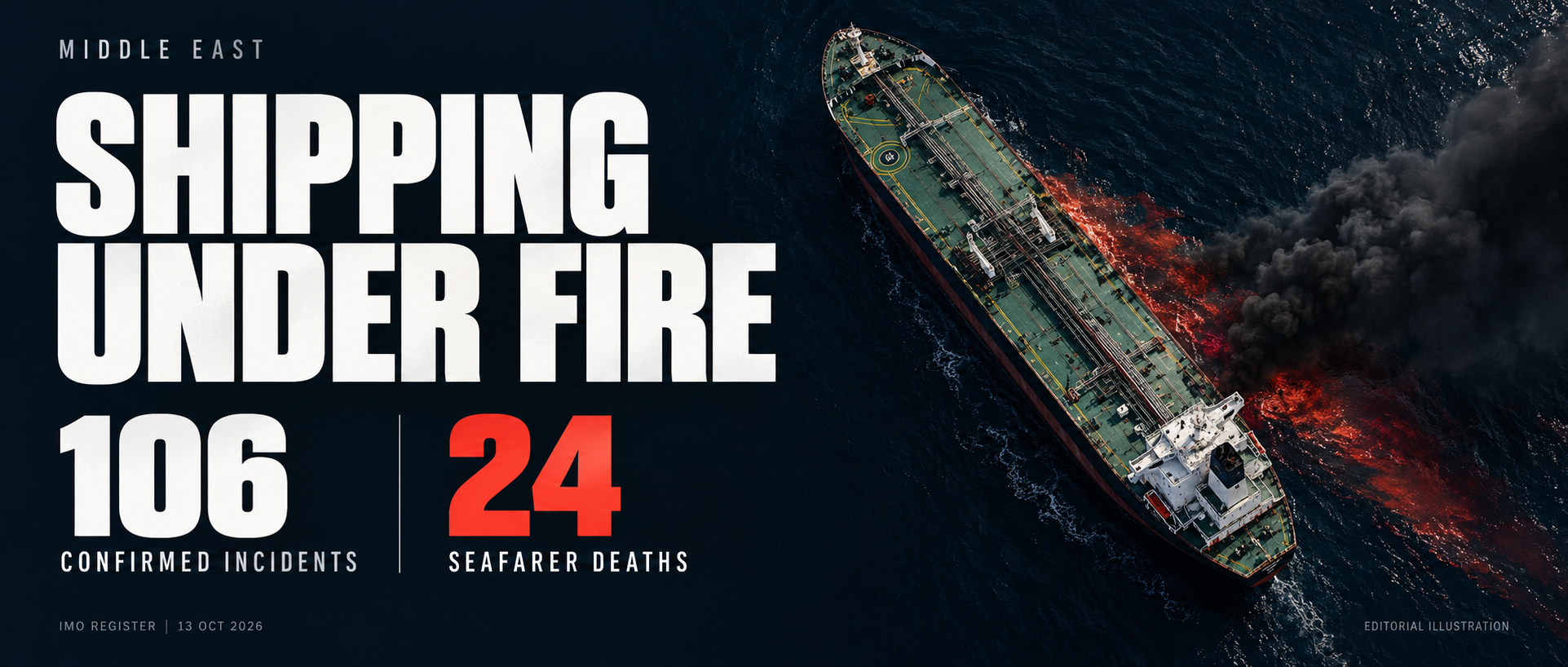
Middle East war leaves mounting toll on merchant shipping
 Safety
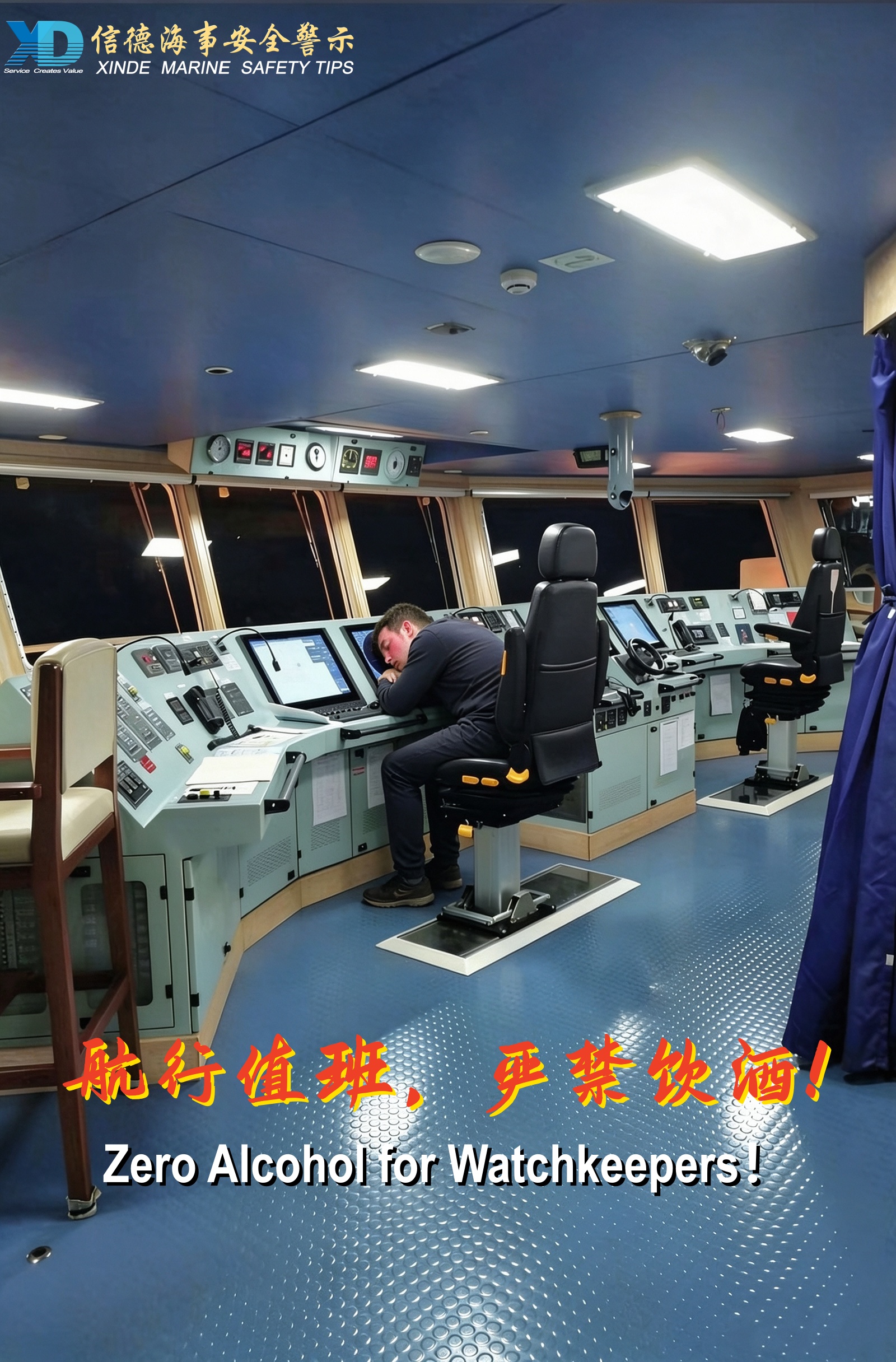
Alcohol‑Control for Seafarers and Key Points for PSC Inspections
 Safety
US Says It Disabled Hong Kong-Owned Bulker off Oman
 Safety
Attacked Just 42Days After Delivery: George Prokopiou’s 115,000-Dwt Tanker Hit in Hormuz
 Safety
Five Seafarers Reported Dead as Puntland Retakes Hijacked Tanker Honour 25
 Safety
China-U.S. Consensus Highlights Free Navigation: No Country or Entity Should Impose Transit Fees on International Waterways
 Safety
1 seafarer killed, Fatal attack in the Strait of Hormuz: Capesize bulker CAPE DAO hit by unknown projectile
 Safety