


The New Battleground in Container Shipping: Why Maersk, MSC, Hapag-Lloyd, CMA CGM and COSCO Are Investing in Ports
A rare consensus is emerging among the world’s largest container shipping companies: the next major constraint on global liner shipping may no longer be the availability of ships, but the capacity of ports and the infrastructure behind them.
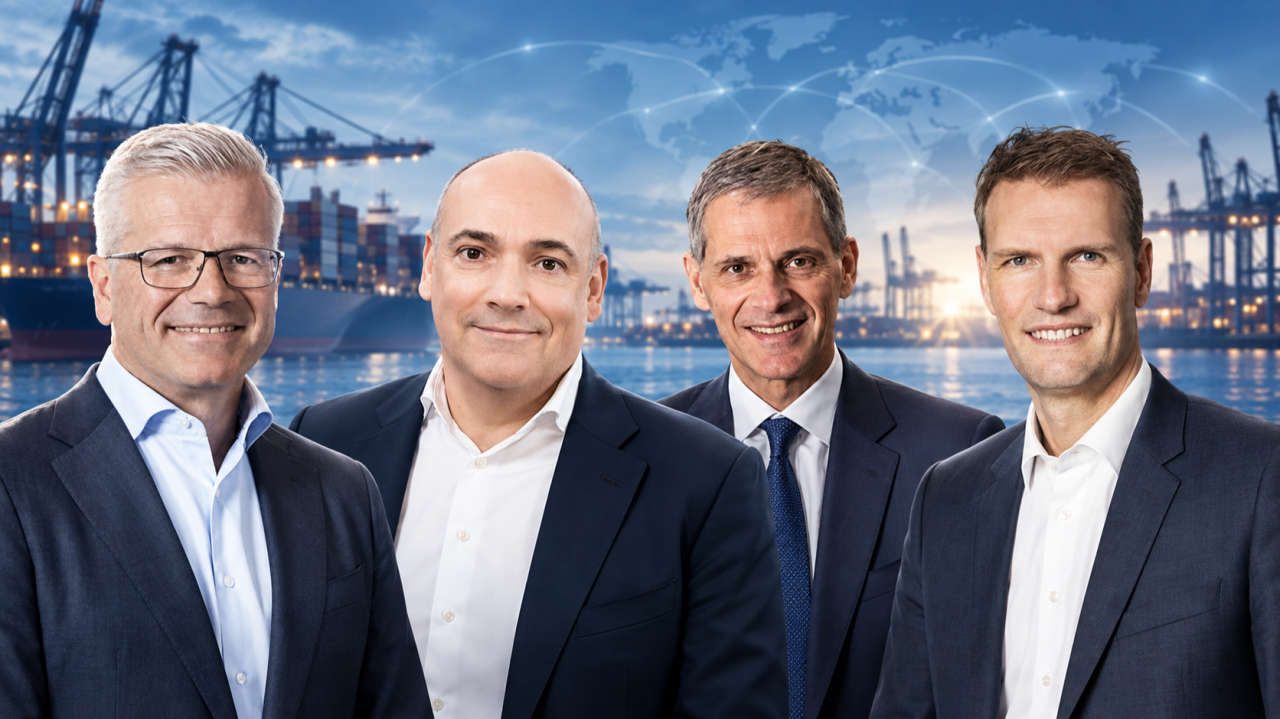
MSC Chief Executive Søren Toft has described port congestion as a central issue facing the container transport system. More vessels can be added, he argued, but if ports cannot handle them efficiently, the result will simply be longer queues outside terminals.
Hapag-Lloyd Chief Executive Rolf Habben Jansen has reached a similar conclusion. He recently said that a considerable part of the congestion affecting major ports appeared to be “fairly structural” and could remain a feature of the market for several years. Maersk CEO Vincent Clerc has also called for greater investment in ports, railways, trucking capacity and other landside infrastructure as supply-chain bottlenecks increasingly move ashore.
CMA CGM Chairman and CEO Rodolphe Saadé has now added one of the clearest statements from a major carrier. Announcing CMA CGM’s latest investment at Jeddah Islamic Port in August 2026, he said that “terminals are becoming increasingly strategic assets” as global trade patterns evolve and infrastructure requires expansion and modernisation. In his assessment, terminals help secure operations, reinforce major trade corridors and provide customers with greater reliability.

These comments come from companies pursuing different corporate strategies, yet their investment decisions point in the same direction. Maersk, MSC, Hapag-Lloyd, CMA CGM and COSCO are all strengthening their positions in ports, terminals and connected logistics infrastructure.
Fleet size determines a carrier’s nominal capacity. Port access and terminal performance increasingly determine how much of that capacity can actually be deployed.
The bottleneck is moving ashore
The global containership orderbook remains close to historic highs. According to Alphaliner data, the orderbook stood at approximately 12.98 million TEU across 1,592 vessels in June 2026, equivalent to 38.3% of the existing cellular fleet. Another 329 ships totalling about 1.89 million TEU were ordered during the first half of 2026 alone.
A large volume of new capacity will continue entering the market over the next several years. Port infrastructure cannot expand at the same pace.
A containership can typically be ordered and delivered within two or three years. A major deepwater container terminal requires access to scarce waterfront land, dredging, environmental approvals, concession agreements, quay construction, yard development, cranes, railway connections, road access and supporting utility infrastructure.
From planning and financing to full operation, a large terminal project can take five to ten years. Expansion is even more difficult at mature gateways located close to densely populated urban areas, where terminals face land shortages, channel restrictions, environmental limits and community opposition.
This mismatch is changing the industry’s understanding of effective capacity. More ships at sea do not automatically create an equivalent increase in transport capacity. A vessel waiting outside a port for several days, followed by slow berth operations or congested landside connections, may lose much of the capacity benefit created by additional tonnage.
Sea-Intelligence estimated in late August 2026 that worsening port congestion had made approximately 6.6% of the global container fleet unavailable for normal operations. Hapag-Lloyd’s Asian operational updates showed waiting times of eight to ten days for some services at Shanghai’s Yangshan terminals, while certain non-Gemini services faced delays of seven to eleven days.
A series of typhoons was the immediate trigger for the latest disruption in Shanghai and Ningbo. The scale and duration of the resulting backlog also demonstrated how little spare capacity exists at ports already operating under sustained pressure.

Habben Jansen noted that infrastructure had generally been planned around expected cargo-flow growth of 3% to 4% per year. Chinese export container volumes, however, had increased by approximately 10%, 6% and 7% in three successive years. When cargo demand grows consistently faster than terminal capacity, congestion begins to develop structural characteristics.
Why terminal ownership matters
Ports are the physical transfer points between deepsea shipping and inland supply chains. A vessel’s ability to berth on schedule, the speed of cargo operations, the reliability of transshipment connections and the availability of rail, road and barge capacity all influence the performance of a liner network.
Terminal ownership does not allow a carrier to disregard multi-user principles, competition rules or port regulations. It does, however, create closer alignment between network planning and infrastructure investment.
A carrier with a long-term interest in a strategic terminal can coordinate berth expansion, crane procurement, yard automation, digital systems and rail connectivity with future vessel deployments and service patterns. That coordination becomes especially valuable in hub-and-spoke networks, where disruption at one major transshipment hub can spread across multiple mainline services, dozens of feeder connections and thousands of containers.
Port assets also provide a greater degree of capacity certainty. During peak seasons, industrial disputes, extreme weather or major supply-chain disruptions, berth windows and yard capacity may become more difficult to secure than vessel slots.
The modern terminal is also extending beyond the quayside. Rail terminals, inland depots, distribution centres, customs services, cold-chain facilities and alternative-fuel infrastructure are becoming part of the wider port ecosystem. Ports increasingly sit at the intersection of cargo flows, transport data and energy supply.
Maersk: terminals at the centre of an integrated network
Maersk’s approach is closely connected to its integrated logistics strategy. APM Terminals supports the group’s ocean network while linking shipping services with warehousing, rail, road transport and wider supply-chain products.
The Gemini Cooperation illustrates this approach. Maersk and Hapag-Lloyd redesigned their east-west network around a smaller number of highly productive hubs, supported by dedicated shuttle services. The original Gemini structure included 58 services and more than 6,000 port-to-port combinations.
The main network was deliberately centred on hubs owned, controlled or closely associated with Maersk and Hapag-Lloyd. APM Terminals owns eight of the selected hubs, including Rotterdam Maasvlakte II, Bremerhaven, Algeciras, Tangier, Port Said, Salalah and Tanjung Pelepas.
To support Gemini, APM Terminals has been increasing capacity at the relevant hubs by 30%. Once expanded, they are expected to offer around 19 kilometres of quay and more than 200 ship-to-shore cranes. Investments in equipment, processes and technology have already helped reduce average vessel stay times across APM Terminals’ portfolio by 15% to 20%.
Maersk is also developing capacity in emerging markets. APM Terminals and Vietnam’s Hateco Group are advancing the Lien Chieu container terminal project in Da Nang. The planned investment exceeds $1.7 billion, with annual capacity expected to surpass 5.7 million TEU after full development.
The financial contribution is already substantial. In the second quarter of 2026, Maersk reported 55 terminals under its financial reporting perimeter, including 29 consolidated operations. The terminals division generated EBIT of $458 million, an EBIT margin of 31.6% and a trailing 12-month return on invested capital of 14.8%。
Maersk is using terminals to stabilise its ocean network and connect that network with a broader range of inland logistics services.
MSC: securing the nodes required by the world’s largest fleet
MSC continues to place ocean shipping at the centre of its business, but the scale of its fleet has increased its dependence on efficient terminals, transshipment hubs and inland connections.
Terminal Investment Limited, MSC’s dedicated terminal investment platform, is present in more than 70 container terminals, including projects under development. Under the wider reporting boundary used by MSC’s Cargo Division—which also includes terminal interests connected with businesses such as Africa Global Logistics and inland logistics specialist MEDLOG—the group was operating or investing in more than 114 terminals by the end of 2025.

MSC’s port strategy increasingly links equity investment with future cargo commitments. Its partnership with the City of Hamburg over HHLA is a clear example. The city retains 50.1% of HHLA, while MSC holds 49.9%. The two shareholders have agreed to provide €450 million in equity to support future investment.
MSC has also committed to increasing cargo throughput at HHLA terminals to at least one million TEU annually from 2031. The arrangement gives HHLA access to long-term cargo and investment, while providing MSC with a deeper position at one of Northern Europe’s most important gateways.
Toft has placed vessels, terminals and logistics infrastructure within the same investment framework. For a carrier that has already passed the milestone of 1,000 vessels, the logic is straightforward: continued fleet growth has to be supported by additional berth capacity, efficient transshipment hubs and inland infrastructure.
Without that support, a larger fleet can produce more waiting time instead of greater transport efficiency.
Hapag-Lloyd: building a terminal portfolio around the liner network
Hapag-Lloyd has chosen a more selective form of vertical integration. The company does not intend to replicate every element of Maersk’s end-to-end logistics model, yet it has placed terminals firmly within its Strategy 2030 agenda.
In 2023, Hapag-Lloyd established Hanseatic Global Terminals as a separate business unit for terminals and infrastructure. HGT now operates 26 strategically located marine terminals across 13 countries and intends to expand its portfolio to more than 30 terminal interests by 2030.
The portfolio is being constructed around Hapag-Lloyd’s key trade lanes and regional growth markets.
Damietta Alliance Container Terminals in Egypt began commercial operations in February 2026. Hapag-Lloyd indirectly owns 39% of the terminal, which is expected to reach 3.3 million TEU in annual capacity after final construction. With a water depth of 18 metres and a projected cargo mix of approximately 80% transshipment, Damietta will support East Mediterranean, Black Sea and major east-west services.
In Brazil, HGT has acquired 50% of the greenfield Aracruz terminal project. The facility is expected to open in mid-2028 with annual capacity of around 1.2 million TEU, 750 metres of quay and a depth of 17 metres.
HGT has also announced plans to acquire approximately 20% of Eurogate Container Terminal Hamburg and increase its stake in the TC3 terminal at Tangier from 10% to 20%.
The financial results underline the role of this strategy. Hapag-Lloyd’s liner shipping business recorded an EBIT loss of $21 million in the first half of 2026. Its Terminal & Infrastructure division generated revenue of $360 million, EBITDA of $102 million and EBIT of $39 million over the same period.
The terminal business remains much smaller than liner shipping, but it continued to produce positive operating earnings while the core ocean business came under pressure.
Hapag-Lloyd’s model remains centred on liner shipping, supported by terminal and selected inland-logistics assets that strengthen reliability and regional connectivity.
CMA CGM: terminals as “the pivot of our fleet and our industry”
Among the major carriers, CMA CGM has made one of the most explicit statements about the function of port assets.
The group describes terminals as “the pivot of both our fleet and our industry”. Under the portfolio definition currently used by CMA Terminals Holding, CMA CGM has interests in 66 terminal assets worldwide, which handled approximately 52 million TEU in 2025.
The portfolio is divided between two established platforms. CMA Terminals is wholly owned by CMA CGM and has 45 terminals, which handled about 22 million TEU in 2025. Terminal Link, owned 51% by CMA CGM and 49% by China Merchants Port, operates 21 terminals across 16 countries and handled approximately 30 million TEU last year.
CMA CGM says these facilities operate on a multi-user basis, serving other carriers while securing critical capacity and protecting customers’ supply chains.
The latest investment in Saudi Arabia provides a clear example of how the group connects terminal development with its global shipping network.
In August 2026, CMA CGM and Red Sea Gateway Terminal signed definitive agreements to jointly develop and operate Terminal 4 at Jeddah Islamic Port in cooperation with the Saudi Ports Authority, Mawani.
The initial investment is valued at approximately $434 million, or SAR1.6 billion. The project will add up to 2.6 million TEU of annual capacity and include new deepwater berths capable of handling the world’s largest containerships, advanced terminal technology and ten new ship-to-shore cranes.
Jeddah sits on the Red Sea corridor linking Asia, Europe and Africa. It serves both as a gateway for Saudi imports and exports and as a regional transshipment hub. CMA CGM can direct cargo and mainline services into the terminal, while the additional capacity can improve the reliability of its Red Sea, Middle East and east-west networks.
Saadé’s remarks at the signing defined the group’s position clearly. CMA CGM regards terminals as assets that secure shipping operations, reinforce trade corridors and improve service reliability. The Jeddah project also combines CMA CGM’s global network and terminal experience with RSGT’s local operating capabilities.
The group is pursuing a distinctive capital strategy alongside its operational expansion.
In July 2026, CMA CGM and infrastructure investor Stonepeak completed the formation of United Ports. Stonepeak invested $2.4 billion for a 25% stake, while CMA CGM retained 75% ownership and full operational control.
The initial portfolio consists of nine CMA CGM-operated terminals across five countries. The assets include Fenix Marine Services in Los Angeles, Port Liberty in New York and Bayonne, Santos in Brazil, Valencia, Bilbao and Algeciras in Spain, Kaohsiung and Gemalink in Vietnam. Stonepeak may invest a further $3.6 billion alongside CMA CGM in future high-growth port opportunities.
The transaction implies an equity valuation of approximately $9.6 billion for the initial United Ports portfolio. It also shows how major carriers can use long-term infrastructure capital to accelerate port investment without surrendering operational control.
Terminal Link with China Merchants Port, United Ports with Stonepeak and the Jeddah partnership with RSGT all follow the same broad pattern. CMA CGM combines its shipping volumes and terminal expertise with the capital, local knowledge or global infrastructure experience of strategic partners.
COSCO: integrating shipping, ports and logistics
The expansion of port assets extends beyond Europe’s carriers and MSC. COSCO has long pursued an integrated strategy built around shipping, ports and logistics.
As of the end of June 2026, COSCO SHIPPING Ports operated and managed 394 berths at 40 ports worldwide, including 245 container berths.
During the first half of 2026, its terminals handled 80.16 million TEU, an increase of 7.9% year on year. Revenue rose by 12.3% to approximately $905.3 million, while profit attributable to shareholders increased by 28.5% to about $233.7 million.
The company is extending its traditional handling operations into integrated logistics, multimodal transport, terminal automation, artificial intelligence and green-fuel supply chains.
For COSCO SHIPPING Holdings, the terminal portfolio links deepsea services with regional routes, rail corridors, port logistics parks and inland distribution. For COSCO SHIPPING Ports, group and alliance volumes provide a long-term cargo base.
The organisational structure differs from those of Maersk, MSC, Hapag-Lloyd and CMA CGM, but the strategic direction is closely aligned: ports are critical nodes connecting vessel networks with global trade flows.

Ports are reshaping carrier earnings and capital allocation
Container shipping remains highly cyclical. Freight rates, bunker prices, geopolitical conflict, fleet supply and route diversions can change earnings within a matter of months.
Large terminals tend to operate under long concessions, benefit from high barriers to entry and generate revenue from relatively stable cargo flows. Their earnings can offer greater continuity than the ocean freight market.
Maersk’s 31.6% quarterly EBIT margin in terminals, Hapag-Lloyd’s positive terminal earnings during a period of negative liner EBIT and the multibillion-dollar valuation attached to United Ports all point to the same development: terminal assets are becoming independently managed, financed and valued businesses within major shipping groups.
Their contribution also extends beyond handling income.
Shorter vessel waiting times, faster transshipment connections, better empty-container positioning and stronger schedule recovery reduce costs across the ocean network. For a carrier operating hundreds of vessels and several million TEU of capacity, even a modest reduction in port time can release a substantial amount of effective capacity.
Ports are becoming energy and data infrastructure
Shipping’s energy transition is expanding the role of ports further.
Methanol, biofuels, LNG, ammonia and shore power require storage, bunkering, electricity supply, safety systems and certification. A carrier can order alternative-fuel vessels, but the commercial deployment of those ships depends on fuel availability at the ports they serve.
In 2026, the 13,000-TEU dual-fuel containership CMA CGM OSMIUM completed a record bunkering operation in Shanghai involving 8,016 tonnes of biomethanol. The volume was sufficient to support the vessel’s voyage from Shanghai to the east coast of South America.
The operation depended on the coordination of vessel technology, fuel production, port storage, bunker delivery and regulatory oversight. It demonstrated how ports are becoming the physical locations where shipping decarbonisation must be implemented.
Digitalisation is creating another layer of strategic value. Berth schedules, crane deployment, yard density, customs information, rail departures and vessel speeds can increasingly be managed through connected systems. Greater coordination between carrier and terminal data allows port conditions to be incorporated into network planning at an earlier stage.
Ports also sit at the intersection of commercial infrastructure and national strategy. Deepwater gateways, major transshipment hubs and terminals located close to strategic waterways influence trade security, industrial supply chains and access to key markets. Large terminal transactions are consequently attracting closer foreign-investment and antitrust scrutiny.
Port capacity will determine how much fleet capacity can be realised
Maersk, MSC, Hapag-Lloyd, CMA CGM and COSCO are following different routes towards a similar objective.
Maersk is embedding terminals within an integrated logistics network and using hub control to support Gemini’s reliability targets. MSC is building port and inland capacity around the world’s largest containership fleet. Hapag-Lloyd is rapidly expanding a focused terminal portfolio through Hanseatic Global Terminals. CMA CGM has created several investment platforms that combine carrier-controlled operations with external infrastructure capital. COSCO continues to integrate global port nodes with its shipping and logistics network.
Fleet size and vessel orders remain central indicators of carrier strength, but they no longer provide a complete picture of network quality.
The location of terminal assets, the availability of deepwater berths, expansion potential, concession duration, transshipment efficiency, inland connectivity, energy infrastructure and access to stable cargo volumes will increasingly determine the strategic value of a carrier’s port portfolio.
Ships can be ordered, chartered or redeployed. A high-quality terminal at a mature gateway or strategically positioned transshipment hub cannot be replicated quickly.
Ships define the scale of a carrier’s network. Ports determine how efficiently that network operates. The next phase of competition in container shipping is already moving from sea to shore.

READ MORE
 Containers
With an Orderbook Above 45% of the Fleet, Why Are Container Lines Still Paying Up for Ships?
 Containers
HMM Approves $1.62 Billion Plan to Add 12 Containerships
 Containers
Buy Again! From Ships to Ports: Inside the Maersk Family’s Infrastructure Buying Spree
 Containers
What Kind of Company Is Seaspan Today?
 Containers
CMA CGM Updates eBL Templates to Clarify Electronic Original Status
 Containers
Bigger Fleets, Wider Networks: China’s Provincial Shipping Companies Step Up Expansion
 Containers
2,824-TEU GFS PRIDE Sinks in Hormuz; All 21 Crew Safe
 Containers
Zhonggu Orders Its First 14,000 TEU Ships as Annual Newbuilding Tally Reaches 20
 Containers
CMA CGM Expands Biomethane Push with Singapore Supply Partnership
 Containers