


$2.2 Billion Backlog, 17 Newbuilds and Four 7,000-TEU Acquisitions: MPCC Accelerates Fleet Renewal
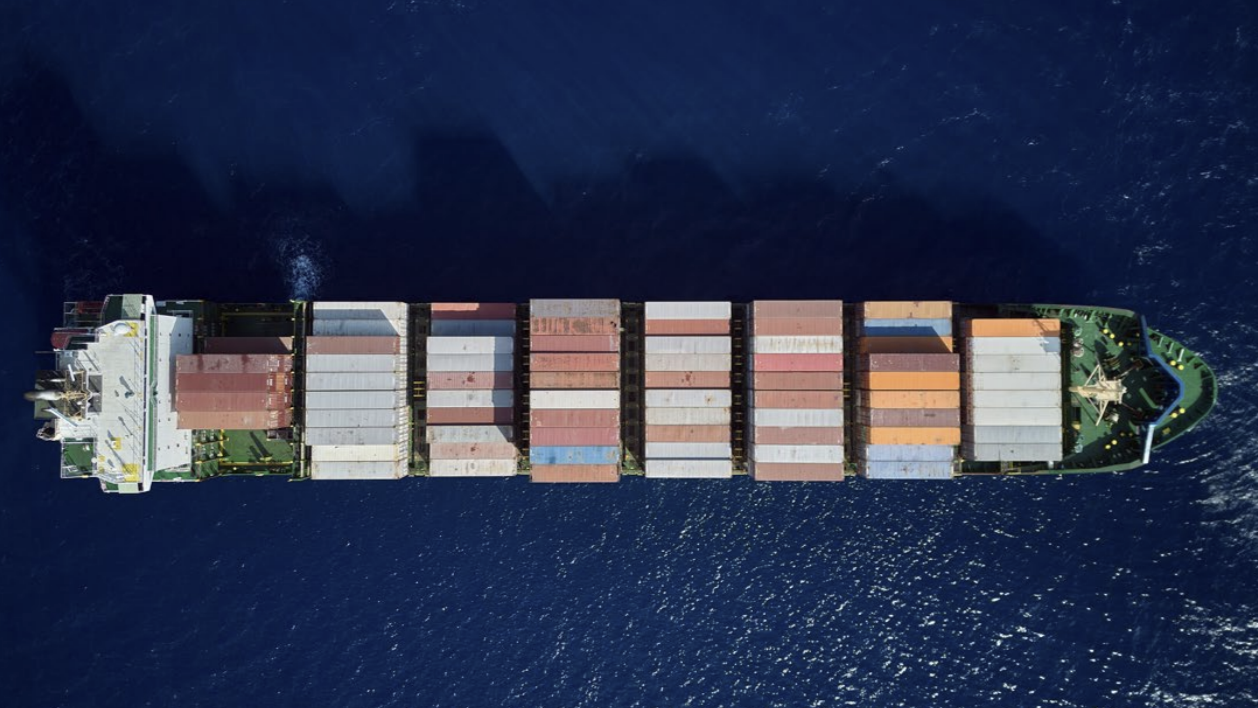

MPC Container Ships ASA is carrying out a substantial transformation of its containership fleet, using long-term charter coverage, selective vessel disposals and pre-arranged financing to strengthen earnings visibility through the next market cycle.
The Oslo-listed tonnage provider reported operating revenue of $116.9 million, EBITDA of $95.4 million and a net profit of $69.4 million for the second quarter of 2026. All three figures declined year on year, although fleet utilization increased to 98.8% and adjusted average time charter equivalent earnings remained close to $25,000 per day. More importantly, MPCC’s contracted charter revenue backlog has reached $2.2 billion, with coverage of 99% for 2026, 85% for 2027, 60% for 2028 and 39% for 2029.
At the same time, the company is selling older vessels into a strong secondhand market, acquiring four modern 7,000-TEU containerships for $343.4 million and advancing a 17-vessel newbuilding program. According to MPCC, the four acquired vessels are already secured on three-year fixed-rate charters to a top-five liner company and are expected to generate approximately $180 million in contracted revenue and around $140 million in EBITDA.
The figures contained in MPCC’s Q2 2026 financial report show a company moving beyond the model of operating an ageing feeder fleet and distributing most of its cyclical earnings. MPCC is building a younger, more efficient fleet supported by multi-year employment, while continuing to return cash to shareholders and maintaining moderate leverage.
Revenue Falls as the Operating Fleet Shrinks
MPCC’s second-quarter revenue fell by 15.2% from $137.9 million in the corresponding period of 2025. EBITDA declined by 11.1% from $107.4 million, while net profit was down by a similar percentage from $78.1 million.
For the first six months of 2026, the company generated $235.8 million in revenue, $163.5 million in EBITDA and $110.2 million in net profit, compared with $265.0 million, $180.5 million and $137.8 million respectively in the first half of 2025.
A large part of the revenue decline can be traced to a smaller operating fleet and fewer revenue-generating days. MPCC recorded 4,596 ownership days during the second quarter, down 13.4% from 5,307 days a year earlier. Trading days decreased by 12.4% from 5,062 to 4,432.
The decline in charter earnings per vessel was considerably smaller. Adjusted average TCE fell by 4.9% from $26,247 to $24,951 per day and remained broadly unchanged from $25,040 per day in the first quarter of 2026. This suggests that the contraction in reported revenue was driven primarily by the reduction in operating days rather than a sharp deterioration in achieved charter rates.
Operational performance remained strong. Fleet utilization rose from 97.6% to 98.8%, while adjusted operating expenses declined slightly from $7,707 to $7,649 per day. MPCC maintained this level of utilization while disposing of older vessels and progressing with fleet renewal, reflecting limited off-hire and consistent execution of existing charter contracts.
Vessel Sales Lift Reported Earnings
The company’s reported EBITDA of $95.4 million and net profit of $69.4 million included a $30.4 million gain from vessel disposals. After excluding gains from asset sales and other non-recurring items, adjusted EBITDA amounted to $65.0 million, down 19.4% from $80.7 million a year earlier. Adjusted net profit decreased from $48.6 million to $39.0 million, while adjusted earnings per share fell from $0.11 to $0.09.
The adjusted figures provide a clearer indication of the earnings generated by MPCC’s continuing charter operations. Its adjusted EBITDA margin remained high at approximately 55.6%, compared with about 58.5% in the second quarter of 2025.
Cash conversion was also solid. Operating cash flow reached $71.7 million in the second quarter and $141.2 million in the first half of the year. During the first six months, MPCC paid $74.1 million in newbuilding instalments, invested $17.3 million in drydockings and vessel upgrades, repaid $73.6 million of long-term debt and distributed approximately $40.1 million to shareholders.
The company therefore continued to generate enough operating cash to fund a meaningful part of its fleet renewal program while reducing existing debt and maintaining quarterly distributions.
A $2.2 Billion Backlog Extends Earnings Visibility to 2029
The most important figure in MPCC’s second-quarter report is its $2.2 billion contracted charter revenue backlog.
Contract coverage stands at 99% for 2026, leaving the company with very limited exposure to the charter market for the remainder of the year. Coverage remains high at 85% for 2027, before declining to 60% in 2028 and 39% in 2029.
Based on annualized first-half revenue, the backlog is equivalent to approximately 4.7 years of MPCC’s current revenue base, although part of it relates to vessels that have yet to be delivered. The comparison nevertheless illustrates the scale of the company’s contracted income relative to its present operations.
This coverage is particularly valuable because the containership market is being influenced by two opposing forces. Red Sea diversions, port congestion, regional trade growth and geopolitical disruption continue to absorb effective capacity and support charter demand. Meanwhile, the global orderbook is approaching 40% of the existing fleet, creating a substantial supply risk as deliveries accelerate.
MPCC has used the current strength of the charter market to secure employment well before vessels become available. The company said discussions for some charter candidates already extend into 2028. Across the wider market, vessels above 1,000 TEU are being fixed around six months in advance, an all-time high, with scarce larger units being discussed for even later delivery positions.
Long-term charters limit some of the upside if rates rise further, but they also delay the transmission of a weaker spot or charter market into MPCC’s income statement. That protection is increasingly important as the company takes on close to $1 billion of disclosed vessel acquisition, newbuilding and joint-venture commitments.
Four Modern 7,000-TEU Vessels Add Contracted Growth
In June 2026, MPCC agreed to acquire four eco-conventional 7,000-TEU containerships built in 2023 and 2024 for a total price of $343.4 million. Delivery is expected by November 2026.
Each vessel is secured on a three-year fixed-rate time charter to a top-five liner company. MPCC expects the ships to contribute approximately $180 million in contracted revenue and around $140 million in EBITDA during the initial charter periods.
On a simple annualized basis, the four vessels could generate combined EBITDA of approximately $46.7 million per year, equivalent to around 13.6% of their acquisition cost. This calculation precedes financing costs, drydocking expenditure, off-hire, taxes and other corporate expenses, while also excluding the ships’ residual value at the end of the three-year contracts.
The revenue guidance implies an average charter rate of approximately $41,100 per vessel per day over the three-year period, assuming continuous employment. Expected EBITDA equates to roughly $32,000 per vessel per day. These are calculated estimates based on MPCC’s disclosed aggregate figures and may differ from actual results because of delivery dates, off-hire and operating expenses.
The acquisition gives MPCC immediate exposure to a commercially important size segment. A 7,000-TEU vessel can operate on regional mainline, North–South and secondary intercontinental services, offering greater flexibility than ultra-large ships while providing significantly more capacity than traditional feeder tonnage.
Acquiring four similar vessels should also create operating and commercial efficiencies. It strengthens MPCC’s ability to offer packages of sister ships to major liner companies and increases the proportion of younger tonnage in its fleet without taking open charter-market exposure at the time of delivery.
Selling Five Older Ships Into a Strong Asset Market
MPCC is funding part of its renewal strategy by selling older ships while secondhand containership values remain elevated.
During the second quarter, the company completed the sale of the 2006-built AS Felicia and AS Clementina and the 2008-built AS Alva. The three vessels generated combined gross proceeds of $53.5 million and an aggregate disposal gain of $30.4 million.
The size of the gain indicates that the vessels were sold substantially above their carrying values, allowing MPCC to crystallize the strength of the secondhand market.
The company subsequently agreed to sell the 2007-built AS Angelina and the 2012-built AS Selina for combined proceeds of $41.1 million. AS Angelina was delivered to its buyer with its existing charter attached in August, while AS Selina is expected to be handed over around November after completing its current charter. No gains related to these two transactions were recognized in the second quarter.
The five completed or agreed disposals will generate total gross proceeds of $94.6 million. The proceeds recycle capital from ageing assets into younger ships with lower fuel consumption, longer remaining economic lives and secured multi-year employment. Disposing of older vessels also reduces future exposure to drydocking, maintenance and regulatory compliance costs.
The strategy does not necessarily produce rapid fleet growth in vessel numbers. It improves fleet quality, average age, efficiency and contracted earnings capacity.
Seventeen Newbuildings Will Reshape the Fleet
As of June 30, MPCC’s operating fleet consisted of 48 vessels, including one classified as held for sale, with total capacity of approximately 123,630 TEU. The company also had 17 newbuildings scheduled for delivery between 2026 and 2029. Fifteen are directly controlled, while two are held through a joint venture.
The carrying value of the directly controlled newbuilding program stood at $118.1 million, including $4.9 million of capitalized borrowing costs. Remaining commitments amounted to $631.7 million, comprising $73.4 million due in 2026, $180.0 million in 2027, $295.4 million in 2028 and $82.9 million in 2029.
In August, MPCC paid a final instalment of $21.5 million and took delivery of the methanol dual-fuel feeder AS Friederike, which is to be renamed DP World Southampton. The delivery marks the point at which the company’s newbuilding commitments begin translating into operating assets and revenue.
The new ships should reduce average fuel consumption and improve MPCC’s position under the EU Emissions Trading System, FuelEU Maritime and future international emissions regulation. More efficient vessels can reduce charterers’ fuel and carbon-compliance costs, supporting longer charter periods and stronger relationships with high-quality counterparties.
MPCC is combining conventional energy-efficient vessels with methanol dual-fuel newbuildings rather than committing its entire investment program to one propulsion technology. Conventional eco-ships can operate within today’s established fuel infrastructure, while methanol-capable vessels preserve the option of using lower-emission fuels as supply availability improves.
Moderate Leverage Provides Room for Expansion
MPCC ended June with total assets of $1.54 billion and equity of approximately $1.00 billion, up from $934.2 million at the end of 2025. Interest-bearing debt decreased from $503.9 million to $436.8 million, while its leverage ratio fell to 28.4% from 32.2% a year earlier.
Thirty vessels in the fleet were debt-free.
The company held $314.1 million in cash and cash equivalents, including $8.7 million of restricted cash, as well as approximately $100.1 million in money-market investments. Combined cash and short-term financial assets exceeded $414 million at the end of the quarter.
This liquidity provides a substantial buffer, but MPCC’s capital commitments have also expanded significantly. The $631.7 million remaining obligation for directly controlled newbuildings, the $343.4 million acquisition of four 7,000-TEU vessels and approximately $23.1 million representing MPCC’s share of remaining joint-venture commitments bring the disclosed total close to $1 billion.
The company must therefore manage newbuilding instalments, acquisition payments, debt drawdowns, operating cash flow and shareholder distributions in parallel.
$375 Million Bank Facility and Long-Term Interest Rate Hedging
After the reporting date, MPCC signed a syndicated facility of up to approximately $375 million to partly finance ten newbuildings ordered in 2025. The loan is provided by a consortium including Société Générale, KfW IPEX-Bank, BNP Paribas, ING and Crédit Agricole CIB.
The facility can be drawn on both a pre-delivery and delivery basis as the vessels progress through construction. This structure aligns debt funding with shipyard payment schedules and reduces the need to fund the full program from existing cash.
MPCC also entered into pre-hedging arrangements with a maximum notional amount of $252.6 million. The related US dollar SOFR interest rate swaps are scheduled to become effective in October 2027 and run until July 2039, mitigating part of the floating-rate exposure attached to the company’s long-term newbuilding financing.
Securing interest rate protection before the bulk of the debt is drawn provides greater visibility over the financing cost of vessels that will remain in the fleet for many years. The eventual shareholder return from the program will depend on the spread between contracted vessel earnings and the combined cost of debt, operating expenses and equity capital.
A $107 Million Private Placement Strengthens the Balance Sheet but Dilutes Existing Shareholders
MPCC completed an oversubscribed private placement after the end of the quarter, raising approximately $107 million in gross proceeds. The company issued 44.37 million new shares at NOK24 per share, equivalent to approximately 10% of its pre-transaction share capital.
The proceeds restore balance-sheet flexibility after the expansion of the newbuilding and acquisition program and provide additional capacity to pursue further investments. The company also said the placement brought several new investors into the shareholder base.
For existing shareholders, the transaction represents dilution of approximately 9.1% on a post-issuance basis. The longer-term result will depend on whether earnings from the new vessels exceed the cost of the additional equity and offset the increase in the number of shares outstanding.
MPCC’s fleet renewal program therefore carries a clear financial trade-off. It improves asset quality, extends fleet life and expands contracted earnings, while also increasing capital requirements and the share count.
Quarterly Dividend Maintained at $0.04 Per Share
The board declared a recurring dividend of $0.04 per share for the second quarter, representing a total payment of approximately $19.5 million. The dividend was declared in US dollars and will be distributed in Norwegian kroner.
The quarterly dividend is lower than the $0.05 per share paid for the corresponding period of 2025. Total distributions for the first half of 2026 amounted to $0.08 per share, compared with $0.13 a year earlier.
Based on adjusted second-quarter net profit of $39.0 million, the latest dividend represents a payout ratio of approximately 50%. MPCC is therefore retaining a larger share of earnings to support newbuilding payments, acquisitions and debt management while continuing to provide shareholders with a recurring cash return.
The company became well known in recent years for substantial distributions of cyclical containership earnings. Its capital allocation is now evolving towards a combination of recurring dividends, fleet renewal and selective growth. The $2.2 billion backlog provides support for continued distributions, although future dividends per share will also be affected by the larger post-placement share count and the financing requirements of the new fleet.
Tight Charter Availability Meets a 13.1 Million-TEU Orderbook
The containership charter market remained strong during the second quarter. The HARPEX index rose by approximately 6%, from 2,213 points at the beginning of April to 2,340 points at the end of June.
Average charter periods remained lengthy. Fixtures for ships between 1,000 and 2,000 TEU averaged around 18 months, while vessels in the 2,000–3,000-TEU range secured approximately 24 months. The limited number of fixtures involving 3,000–5,100-TEU vessels averaged as much as 31 months.
The number of containerships available for charter over the following six months declined by 25% year on year, with availability particularly limited for vessels above 3,000 TEU. Red Sea diversions, port congestion, strong Asian exports and resilient regional trade have all contributed to the shortage of effective capacity.
At the same time, the orderbook is becoming increasingly difficult to ignore. The global active containership fleet stood at approximately 33.8 million TEU in mid-2026, while the orderbook had reached 13.1 million TEU, equivalent to 38.7% of the existing fleet.
A total of 164 containerships representing approximately 866,000 TEU were ordered during the second quarter alone. Around 31.5% of the contracts by vessel number were placed in the 1,000–2,000-TEU segment, while another 22% involved ships between 6,000 and 8,000 TEU.
The supply shortage supporting MPCC’s market is therefore being met with a growing ordering response. Modern feeder tonnage remains scarce today, but that scarcity could ease as vessels contracted in 2026 begin entering service from 2027 onwards.
A broad return to Red Sea and Suez Canal routing represents another significant variable. MPCC’s report, citing Clarksons, estimates that a return to pre-crisis routing could release capacity equivalent to approximately 12% of TEU-mile demand. Combined with accelerating newbuilding deliveries, such a development could place pressure on both charter rates and asset values.
MPCC’s extensive contract coverage delays the effect of this risk. A weaker market would initially affect the company’s uncovered operating days and renewal rates, while the majority of contracted revenue through 2027 and much of 2028 would remain protected.
From an Ageing Feeder Fleet to a Modern Contracted Tonnage Platform
MPCC’s second-quarter results reveal a company in transition.
Revenue, adjusted EBITDA and adjusted profit have declined as the operating fleet shrinks and some historically strong charters roll off. At the same time, utilization of 98.8%, adjusted TCE of almost $25,000 per day and a $2.2 billion backlog demonstrate that the underlying charter business remains profitable and operationally sound.
The disposal of five older ships, acquisition of four modern 7,000-TEU vessels, delivery of the first methanol dual-fuel feeder and construction of another 16 newbuildings are reshaping the company’s asset base. The $375 million bank facility, $107 million equity placement and long-term interest rate hedging provide the financial structure required to complete the program.
This strategy carries higher capital commitments, renewed borrowing requirements and equity dilution. In return, MPCC expects to emerge with a younger fleet, lower unit fuel consumption, stronger charterer relationships and contracted revenue extending into 2029.
With the global containership orderbook above 13 million TEU and the timing of a full Red Sea reopening still uncertain, MPCC has chosen to protect its fleet renewal program through long-term employment. The outcome will depend on whether the new vessels are delivered on schedule and within budget, whether the $2.2 billion backlog converts smoothly into cash flow, and whether earnings from the enlarged fleet are sufficient to cover financing costs, offset dilution and sustain recurring dividends.
The Q2 2026 report indicates that MPCC has assembled the three central components needed for that transition: contracted employment, modern assets and committed financing.

READ MORE
 Containers
Bigger Fleets, Wider Networks: China’s Provincial Shipping Companies Step Up Expansion
 Containers
2,824-TEU GFS PRIDE Sinks in Hormuz; All 21 Crew Safe
 Containers
Zhonggu Orders Its First 14,000 TEU Ships as Annual Newbuilding Tally Reaches 20
 Containers
CMA CGM Updates eBL Templates to Clarify Electronic Original Status
 Containers
CMA CGM Expands Biomethane Push with Singapore Supply Partnership
 Containers
sakos Returns to Containership Ordering After Four Years with Hengli Deal
 Containers
Global Ambitions, Provincial Roots: China’s State-Owned JOSCO Expands Overseas
 Containers
China Merchants links container and bulker businesses in Australia trial
 Containers
Ningbo Containerized Freight Index Weekly Commentary North America Freight Rates Remained Elevated; Composite Index Decline Narrowed
 Containers