


Record Cruise Fares and Higher Earnings Guidance Lift Royal Caribbean and Rival Stocks
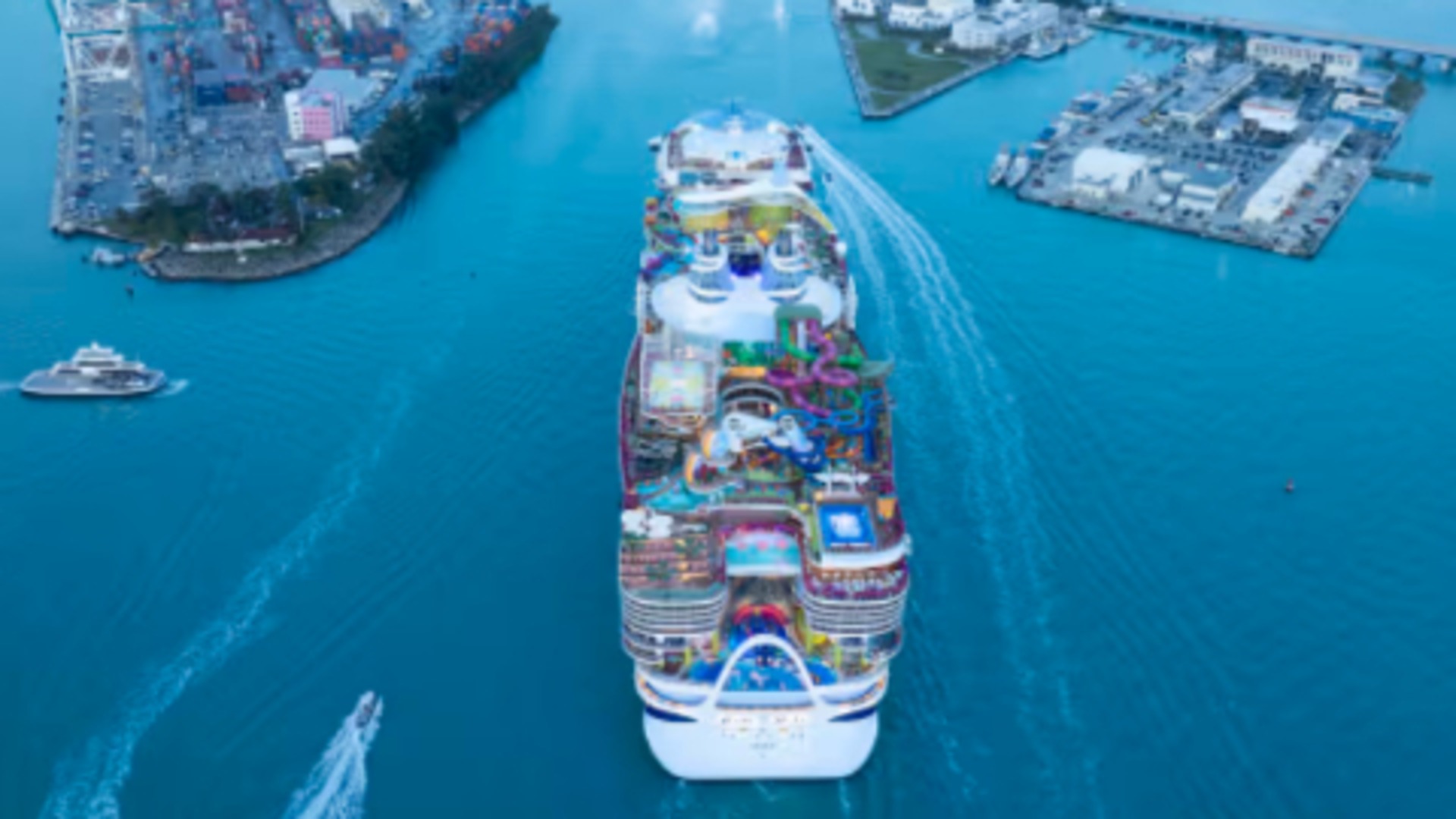

The global cruise market continues to demonstrate stronger-than-expected consumer resilience.
Royal Caribbean Group reported its second-quarter 2026 results on Tuesday, July 28. Although quarterly net income declined from a year earlier, adjusted earnings per share significantly exceeded market expectations, prompting the company to raise its full-year profit guidance again.
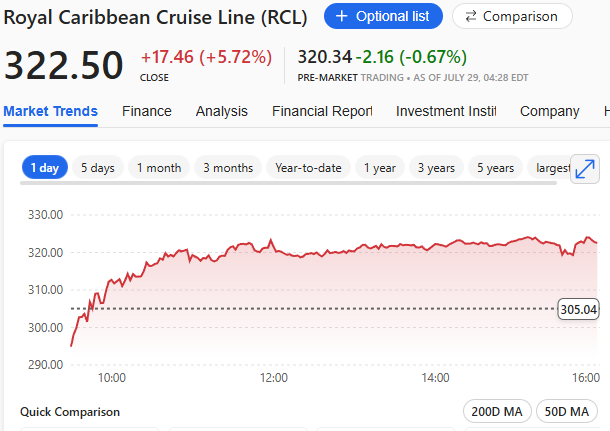
The results sent shares across the cruise sector higher. Royal Caribbean closed 5.7% higher at $322.50 per share, while Carnival Corporation gained 4.1% to $28.23. Norwegian Cruise Line Holdings rose 5.9% to $21.22.
The market reaction suggests that investors are placing greater weight on Royal Caribbean’s stronger-than-expected underlying earnings, record booking prices and forward demand than on the year-on-year decline in reported net income.
Revenue Rises 6%, but Fuel and Labour Costs Climb
Royal Caribbean generated revenue of $4.83 billion in the second quarter, up approximately 6.5% from $4.54 billion in the same period last year.
Passenger ticket revenue increased from $3.20 billion to $3.34 billion, representing growth of about 4.5%. Onboard and other revenue rose by more than 11%, from $1.34 billion to $1.49 billion.
Spending on dining, entertainment, retail, shore excursions and services purchased before departure is becoming an increasingly important contributor to cruise operators’ revenue growth.
Royal Caribbean’s capacity increased by 5% during the quarter, while the group carried approximately 2.4 million passengers, 6% more than a year earlier. Occupancy reached 110% under the cruise industry’s standard measurement method.
An occupancy rate above 100% means that some cabins, which are calculated on the basis of double occupancy, were occupied by three or more passengers.
Net yields increased by 1.9%, or 1.2% on a constant-currency basis, outperforming the company’s previous guidance. Royal Caribbean said stronger-than-expected close-in bookings were a key reason for the better yield performance.
However, revenue growth did not fully translate into higher reported profit.
Net income attributable to Royal Caribbean fell by approximately 6.8% to $1.13 billion, from $1.21 billion a year earlier. Operating income declined slightly, from $1.33 billion to $1.31 billion.
Higher operating expenses were a major factor. Fuel expenditure reached $355 million, an increase of about 27%. Payroll and related costs rose by more than 23%, from $329 million to $405 million, while depreciation and amortisation increased from $417 million to $464 million.
Total cruise operating expenses rose from $2.28 billion to $2.55 billion.
Despite these cost pressures, adjusted earnings per share reached $4.21, comfortably above the company’s previous guidance of between $3.83 and $3.93 and ahead of the average analyst estimate of $3.98.
Royal Caribbean attributed the outperformance to strong close-in demand, the timing of certain expenses and better-than-expected results from joint ventures.
Why Raise Profit Guidance While Lowering Revenue Expectations?
One of the most notable aspects of the results was that Royal Caribbean lowered its revenue growth forecast while simultaneously increasing its earnings outlook.
The group now expects full-year revenue to grow by approximately 9%, compared with an earlier forecast of around 10%. Full-year net yield growth is expected to be between 2.35% and 2.85%, compared with the previous range of 2.3% to 3.3%.
At the same time, Royal Caribbean raised its full-year adjusted earnings-per-share forecast from between $17.10 and $17.50 to between $17.73 and $17.87. The revised guidance would represent growth of approximately 14% from 2025.
The new forecast brings Royal Caribbean’s earnings expectations close to where they stood at the beginning of the year.
In January, the company initially forecast adjusted earnings per share of between $17.70 and $18.10 for 2026. It lowered that range to between $17.10 and $17.50 in April, citing geopolitical instability, higher fuel costs and weaker booking activity on certain European and Mexican west coast itineraries.
Following the stronger-than-expected second-quarter performance, the forecast has now recovered to between $17.73 and $17.87.
This indicates that geopolitical disruption has affected revenue growth on some routes without materially undermining the group’s overall profitability.
Management said prolonged geopolitical activity had caused a “modest, near-term impact” on bookings for certain itineraries, with Europe and the Mediterranean among the more affected markets.
Some US passengers have reportedly reconsidered European holidays because of international airfare costs, flight availability and the risk of travel disruption, instead choosing Caribbean itineraries closer to home.
Royal Caribbean expects third-quarter net yields to remain broadly flat year on year, although revenue is forecast to rise by approximately 8%. Adjusted earnings per share are expected to be between $6.26 and $6.36.
By redeploying ships, maintaining higher ticket prices, increasing onboard spending and controlling non-fuel costs, the group is seeking to offset softer demand in selected markets.
Record Ticket Prices Continue to Support the Cruise Market
Royal Caribbean has not seen evidence of a broad-based weakening in cruise demand.
The company said booked sailings continue to command record prices, while booking volumes remain ahead of last year. Occupancy levels are strong, and onboard and destination spending continues to increase.
Passengers are still willing to spend more on dining, entertainment, private-island experiences and shore-based activities.
Chief financial officer Naftali Holtz said booking trends for 2027 remain at an early stage but are running ahead of historical levels, including for itineraries affected by geopolitical developments during 2026.
New vessel deliveries are also expanding the group’s revenue base.
Legend of the Seas, built by Meyer Turku in Finland, was delivered during the second quarter and entered service in July. The vessel is the third ship in Royal Caribbean’s Icon class.
It is operating in Europe during the summer before moving to its homeport in Florida in November for Caribbean cruises.
Royal Caribbean expects group capacity to increase by 6.6% in 2026. Capacity is then forecast to grow by approximately 4% in 2027, 6% in 2028 and 7% in 2029.
The company expects capital expenditure of about $4.7 billion this year, mainly related to new cruise ships and the development of land-based holiday destinations.
At the end of the second quarter, Royal Caribbean and its joint-venture brands operated a combined fleet of 71 ships, serving more than 1,000 destinations across all seven continents.
The group also plans to increase the number of private holiday destinations in its portfolio from three to eight by 2028 and will enter the river-cruise market through Celebrity River Cruises in 2027.
Cruise Demand Remains Strong, but Growth Is Becoming More Selective
Royal Caribbean’s second-quarter results do not suggest that every cruise market and itinerary is expanding at the same pace.
Mediterranean and other itineraries that depend on long-haul air travel are more exposed to airfare levels, regional security concerns and flight reliability. Caribbean cruises, which are closer to the core North American source market and benefit from a wider range of flight connections, have remained comparatively resilient.
Higher-income travellers, family holidays and spending on onboard experiences continue to support the major cruise operators.
At the same time, fuel, labour and depreciation costs are rising rapidly. Royal Caribbean’s fuel bill increased by 27% in the second quarter, and the company expects full-year fuel expenditure of approximately $1.34 billion.
Whether earnings can continue growing will depend on the industry’s ability to increase ticket prices and onboard spending faster than capacity and operating costs.
The latest rally in cruise shares was therefore not driven by higher reported quarterly net income. It reflected Royal Caribbean’s ability to deliver earnings above expectations and raise its full-year profit target despite geopolitical disruption, rising fuel prices and softer bookings on selected routes.
The underlying pillars of the cruise market remain intact. Consumers continue to pay premium prices for differentiated holiday experiences, while new ships and private destinations are helping leading operators capture more spending from each passenger.
However, as global cruise capacity continues to expand, the next major test will be whether operators can fill the growing number of cabins without sacrificing record ticket prices.


READ MORE
 Finance
Highton Reports RMB819 Million Profit as Controlling Shareholder Pledges No Share Sales for Two Years
 Finance
Why Is a 40-Year Shipping Investor Expanding into Commodities?
 Finance
Financing Above 90%: Why Abundant Capital Is Making Shipping Lenders Wary
 Finance
2026 North Bund Forum Unveils Five Major Outcomes in Shipping Finance and Insurance
 Finance
Shanghai links safety records to RMB5m maritime loan
 Finance