


China CMES Says Tanker “Supercycle” Could Run to 2030 as Strait Disruptions Reshape Global Shipping
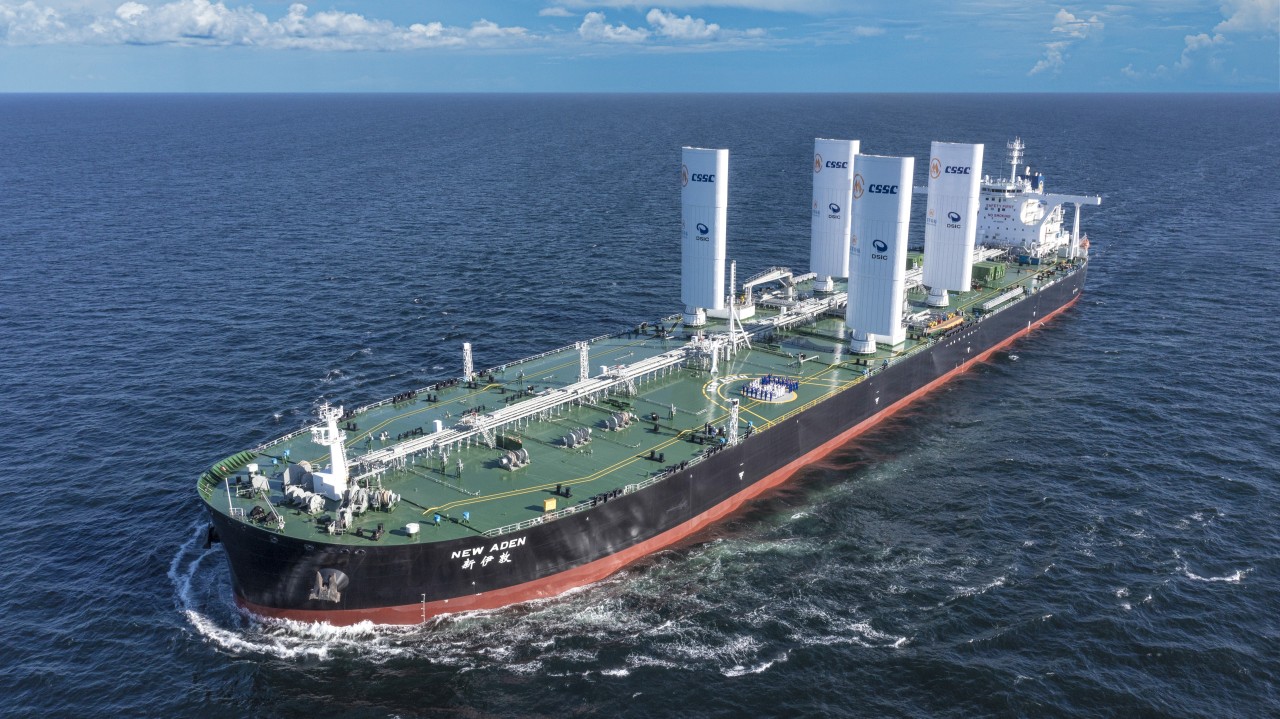

China Merchants Energy Shipping argues that prolonged restrictions at the Strait of Hormuz and Bab el-Mandeb are doing more than lifting freight rates. They are reducing fleet efficiency, extending voyage distances, accelerating the retirement of older vessels and strengthening the pricing power of compliant shipowners. If the disruption continues into 2027, the company believes the tanker upcycle could last until 2030.
China Merchants Energy Shipping, or CMES, has offered one of its clearest assessments yet of how the current Middle East crisis could reshape global oil transportation and the wider shipping cycle.
During a series of investor meetings held between July 22 and 27, 2026, CMES met with more than 100 institutional investors through four in-person sessions and two online meetings. The discussions covered the Strait of Hormuz, Bab el-Mandeb, tanker supply and demand, car-carrier markets, the Simandou iron ore project and the long-term investment logic of shipping.
The central message was that the industry is moving into a new operating environment. Freight markets are increasingly being determined by security, route availability and effective fleet capacity rather than by nominal vessel supply alone.
Hormuz remains outside normal operating conditions
According to the company’s investor-relations record, the Strait of Hormuz has been effectively closed since March 2, with current transit volumes standing at only around 4% of pre-war levels.
CMES said the United States restarted blockade operations on July 14 in an effort to intercept vessels linked to Iranian ports, although some Iranian tankers and ballast vessels have continued to use routes north of Iran. The company estimated that the disruption had created a net Gulf crude supply shortfall of approximately 9 million barrels per day, equivalent to around 23% of pre-war seaborne crude supply, while the product shortfall was estimated at 14%.
The shock is becoming more difficult for the wider oil market to absorb.
Earlier in the crisis, supply losses could be partly offset through strategic stock releases, increased exports from Saudi Arabia’s Yanbu terminal, offshore loading outside the Gulf of Oman and higher production from non-Middle Eastern suppliers. CMES said that much of this buffer has now been consumed, leaving the global market more exposed to the simultaneous disruption of both Hormuz and Bab el-Mandeb.
For safety reasons, the company said its vessels are currently not entering the Strait of Hormuz. Most major shipowners are also continuing to watch developments before resuming normal operations.
At the same time, alternative logistics arrangements are beginning to emerge. CMES expects offshore transshipment outside the Persian Gulf to continue and said several voyages have already been observed in which crude exported from the Red Sea to Asia first moves north through the Suez Canal, enters the Mediterranean, rounds Africa and then proceeds eastwards toward Asian markets.
This extraordinary routing illustrates how geopolitical disruption is changing the relationship between cargo volumes and shipping demand. The same quantity of oil may still reach its destination, but it requires considerably more sailing time, fuel, vessel days and operational coordination.
Gulf transshipment is supporting tanker activity
Despite the severity of the disruption, Gulf producers have shown a strong incentive to maintain exports.
Since late May, Kuwait and the United Arab Emirates have reportedly chartered VLCCs or deployed their own vessels for ship-to-ship transfer operations within the Gulf. CMES said transshipment volumes increased by around 20% month on month in June.
The number of Middle East cargo fixtures rose to more than 120 in June and exceeded 150 during the first three weeks of July, compared with only slightly more than 80 cargoes in both March and April.
This does not mean that the crisis has been resolved. It indicates that the transportation system is adapting through less efficient and more complicated operating patterns.
For tanker owners, that distinction matters. Longer waiting periods, additional transfers, changing loading locations and stricter compliance requirements all consume vessel capacity. The nominal size of the tanker fleet may remain unchanged, but the number of ships effectively available to perform ordinary voyages can decline significantly.
CMES believes these conditions will continue to tighten effective supply and improve the pricing power of shipping companies capable of providing safe, compliant and reliable tonnage.
Bab el-Mandeb detours could require three times as many VLCCs
The impact of a prolonged closure of Bab el-Mandeb could be even more dramatic.
CMES estimated that rerouting Red Sea cargoes around the Cape of Good Hope would add approximately 18,000 nautical miles to a round voyage serving Asian markets. At a sailing speed of 13 knots, the additional voyage time would be around 58 days.
If Yanbu continues exporting more than 3 million barrels per day, the company calculated that the Red Sea-to-Asia trade could require roughly three times as many VLCCs to maintain the same level of transportation service.
The cargoes cannot simply be replaced by oil from the US Gulf, West Africa or Brazil. CMES noted that these regions do not have enough incremental supply to substitute for Middle Eastern exports on the required scale.
Oil exports are also a critical source of fiscal revenue for Gulf producers. Even if rerouting raises shipping costs by several dollars per barrel, exporters may be able to offset part of that increase by offering wider discounts on their crude. As a result, if Bab el-Mandeb remains inaccessible, sending Red Sea oil around Africa may become an operational necessity rather than an exceptional emergency measure.
The consequence is a major increase in tonne-mile demand without an equivalent rise in physical cargo volumes.
Effective tanker supply is becoming more important than fleet size
CMES said tanker fleet efficiency has already been declining because of geopolitical disruption, longer waiting times and frequent changes in trading patterns.
Complex operating conditions also place greater demands on shipowners, technical managers and crews. Companies must be able to adjust routes, manage sanctions exposure, assess security risks and maintain operational reliability while vessels spend more time at sea or wait for revised instructions.
These factors are likely to reduce effective vessel availability and strengthen the position of established operators with strong compliance and management systems.
This is one reason why tanker freight rates can remain firm even when headline supply-and-demand data appear less supportive. CMES said second-quarter tanker indicators showed substantial apparent oversupply, yet freight rates remained resilient because of lower fleet efficiency and persistent risk premiums.
The company believes normal demand may not fully return until geopolitical risks decline and the key straits reopen. When that happens, previously suppressed transportation demand could be released at the same time as a new inventory-restocking cycle, potentially extending the market upturn beyond current expectations.
Ageing tankers could reinforce the cycle
The supply side is also entering a critical period.
CMES said a limited number of tankers aged 20 years or more remain active in the compliant market, but these vessels generally face higher ownership costs and very low utilisation rates. Major oil companies often avoid tankers above that age because of safety and environmental considerations.
Large shipowners are also expected to remove older vessels in order to protect fleet quality, maintain service standards and reduce operational risks. Between 2028 and 2030, some ageing ships may be scrapped, while others could be converted into floating storage facilities.
If restrictions at Hormuz continue into the first quarter or even the second half of 2027, CMES expects the eventual need to rebuild depleted inventories to provide long-term support for tanker demand.
Combined with the approaching retirement peak for older vessels, the company said the current tanker “supercycle” could potentially continue until 2030, allowing tanker operators to maintain relatively strong shareholder returns for an extended period.
China’s vehicle exports lift the car-carrier market
CMES also gave a bullish assessment of the vehicle-carrier market.
The company said China’s automobile exports had recently entered another period of rapid growth, leaving car-carrier space in extremely tight supply. Cargo volumes and freight rates were rising simultaneously, with market conditions exceeding previous expectations.
This assessment is particularly significant because the sector is entering a period of heavy newbuilding deliveries. Concerns about overcapacity have grown as large numbers of PCTCs enter service, but continued growth in Chinese vehicle exports could absorb more of that capacity than previously anticipated.
CMES said the direct impact of the Bab el-Mandeb disruption on containerships, dry bulk carriers and vehicle carriers remained relatively limited for the time being. Some cargoes can be discharged at ports such as Jeddah and moved overland toward the Gulf region. However, changes in routing and capacity management could still support freight rates indirectly.
Simandou may disappoint, but dry bulk remains supported
On dry bulk shipping, CMES said the Simandou iron ore project was unlikely to begin producing meaningful volumes before the fourth quarter of 2026.
Progress remains constrained by local infrastructure and key mineral policies in West Africa. The company said it had already participated in transportation services connected to the project following the announcement of mining operations in November last year.
However, CMES does not consider Simandou the main driver of the dry bulk market in 2026. The sector will depend more heavily on shipment volumes from major iron ore producers in Brazil and Australia.
Coal transportation demand was also stronger than expected in the first half of the year. If severe El Niño conditions emerge in the second half, combined with further disruption around Bab el-Mandeb, CMES believes the dry bulk outlook could remain positive.
Shipping is moving from cost efficiency to supply-chain security
The most important part of the CMES assessment may be its explanation of how the industry’s underlying logic is changing.
The company said repeated trade disputes and geopolitical conflicts have reduced global supply-chain efficiency. The traditional priorities of low cost and maximum efficiency are increasingly giving way to security and essential supply requirements.
In that environment, the strategic importance of maritime transportation is rising, while the industry’s value may still be systematically underestimated by capital markets.
The global merchant fleet is also at one of its oldest points in three decades, while environmental and decarbonisation pressures continue to increase. With shipbuilding capacity expected to remain constrained before 2030, vessel supply growth may be more limited than headline orderbook figures suggest.
Shipping will remain cyclical, but CMES believes the industry’s return profile may be changing. Market participation, bargaining power and the distribution of value across the supply chain are evolving, while shipowners are increasingly using digitalisation and artificial intelligence to improve operations and investment decisions.
The emerging market structure suggests that the current shipping cycle may last considerably longer than historical experience would imply.
The disruption at Hormuz and Bab el-Mandeb is therefore more than a temporary freight-rate story. It is accelerating a wider reassessment of effective fleet capacity, route security and the strategic value of reliable maritime transport.
For shipowners with modern fleets, strong compliance systems and global operating capabilities, that reassessment could become one of the defining commercial opportunities of the remainder of this decade.
This article is based on the investor-relations activity record released by China Merchants Energy Shipping covering meetings held from July 22 to 27, 2026. Figures and market forecasts concerning strait traffic, oil supply, freight demand and the duration of the shipping cycle reflect the company’s disclosures and assessments.


READ MORE
 Tankers
CMB.TECH’s Tanker Sales Set to Generate Nearly $680m in Gains
 Tankers
INTERTANKO Press Statement -- Easing of US sanctions
 Tankers
International Seaways Agrees $370 Million Bruton Takeover to Expand VLCC Fleet
 Tankers
69 Ships for Prokopiou, 10 for Centrofin: Why Owners Keep Choosing Hengli
 Tankers
Kinetai Holdings Opens Singapore Base with Fleet Expansion and Tanker Plans
 Tankers
Emarat Maritime Adds Six LR1s as China Newbuilding Programme Reaches 22 Ships
 Tankers
China Merchants Energy Shipping Establishes European Marketing Hub in London to Expand Global Reach
 Tankers
Guohang expands Hong Kong platform for tanker and heavy-lift push
 Tankers
A 15-Year-Old VLCC Sells for $161 Million as Tanker Asset Prices Surge
 Tankers