


How Can Sea Legend Reach Europe in 20 Days? Inside the Operational System Behind the CAX Arctic Express
A China-Europe container route capable of reaching the UK in around 20 days is preparing to move from a successful trial voyage into regular seasonal operation.
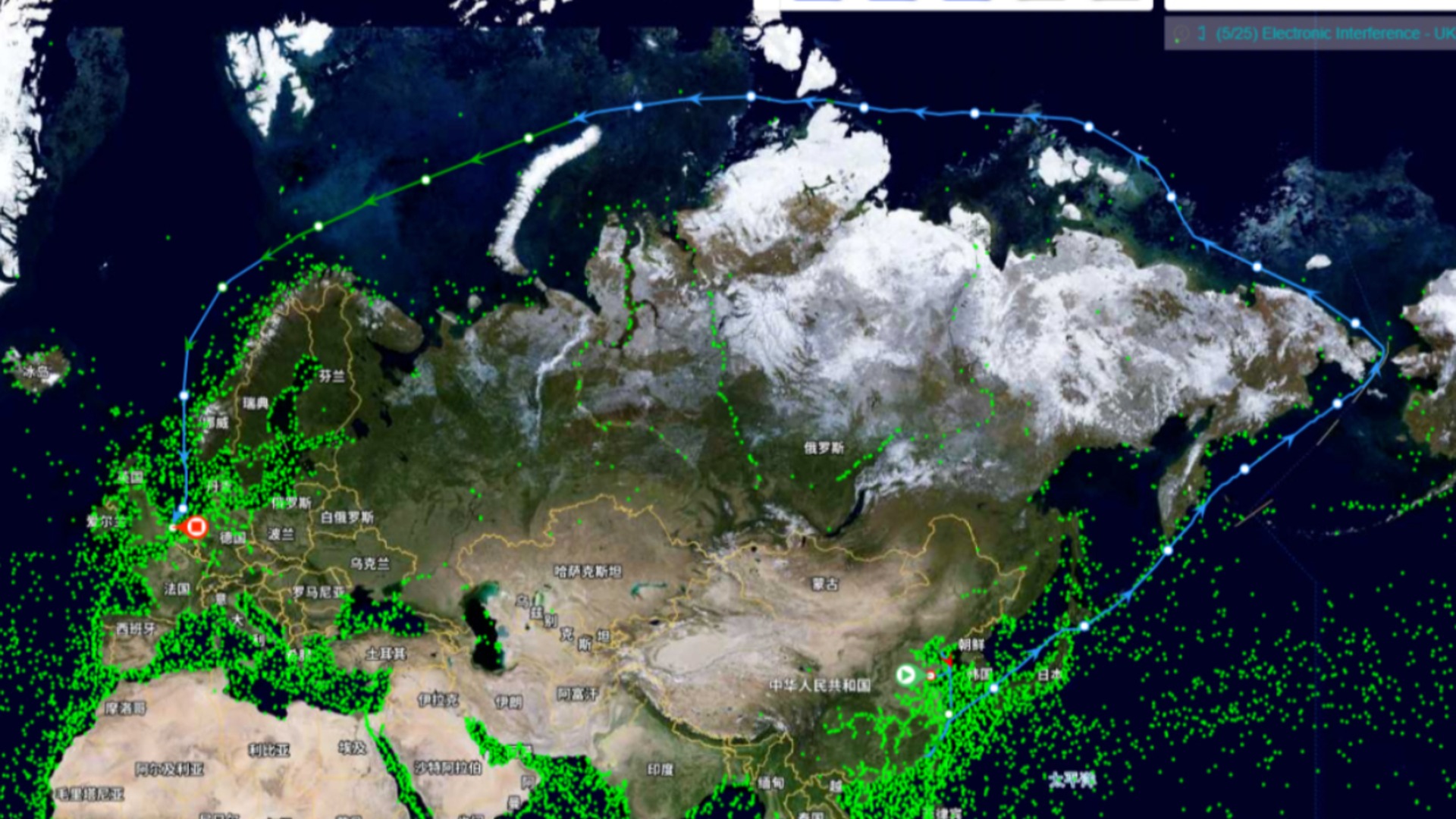

Sea Legend Line Limited has released a detailed CAX China-Europe Arctic Express operational handbook, revealing the systems behind its Arctic container service, including ice-class vessels, digital ice navigation, polar risk management, cargo safety procedures, European port coordination and specialised solutions for new-energy cargo.
The CAX service is scheduled to resume in August 2026, with eight consecutive weekly sailings planned during the Arctic navigation window. The service will depart from Ningbo-Zhoushan Port, transit the Northern Sea Route and arrive at Felixstowe, with onward connections to selected European ports including Rotterdam, Hamburg, Wilhelmshaven, Antwerp, Le Havre, Gothenburg, Gdynia, Riga, Aarhus and Tallinn.
From a single voyage in 2025 to a structured seasonal service in 2026, Sea Legend is now testing whether Arctic container shipping can move from a pioneering concept into a repeatable commercial product.
From a 20-day voyage to a scheduled Arctic service
Sea Legend was established in 2022 and focuses on container shipping and integrated logistics services connecting China with regions including the Red Sea, Mediterranean, North Africa and Europe.
In 2025, the company expanded into Europe and launched the CAX China-Europe Arctic Express.
The 2026 CAX programme builds on the inaugural voyage of Istanbul Bridge, which departed Ningbo-Zhoushan Port on 23 September 2025 and sailed through the Arctic Northeast Passage to Europe.
The vessel carried time-sensitive cargo including new-energy products and e-commerce goods. It later called at Felixstowe, Hamburg, Gdansk and Rotterdam, completing the China-Europe voyage in around 20 days.
The voyage provided operational experience in vessel preparation, crew training, Arctic navigation, weather monitoring, port coordination and specialised cargo handling.
The 2026 programme represents the next stage: moving from proving feasibility to testing consistency.
Eight weekly sailings supported by a dedicated fleet
Sea Legend’s 2026 Arctic Express will operate eight consecutive voyages.
The first sailing will be performed by Dubai Tower, departing Ningbo on 15 August and arriving at Felixstowe on 5 September.
The following voyages will involve:
- Riyadh Mukaab
- Athens Odeon
- Istanbul Bridge
- Tiger Maanshan
- Tiger Bintulu
- Tiger Lianyungang
Dubai Tower will also operate the final published voyage.
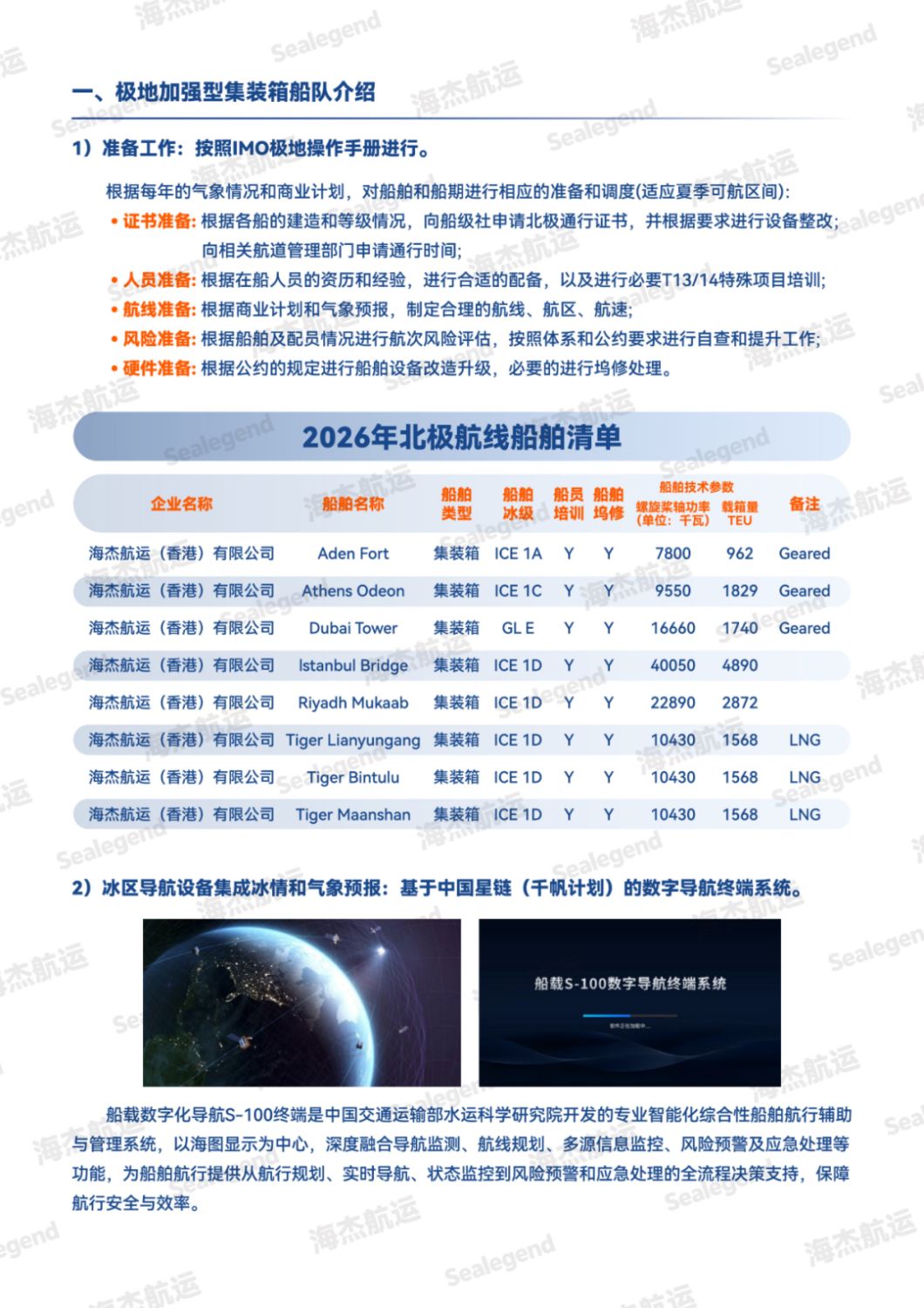
The company’s 2026 Arctic fleet includes vessels ranging from approximately 962 TEU to 4,890 TEU, with different ice-class capabilities including ICE 1A, ICE 1C and ICE 1D.
Some vessels are equipped with cranes, while others feature LNG propulsion.
Sea Legend said vessel deployment will be adjusted according to annual weather conditions, commercial planning and the available Arctic navigation window.
Five preparations before entering Arctic waters
Operating through the Arctic requires far more preparation than a conventional Asia-Europe voyage.
According to Sea Legend’s handbook, vessels must complete preparations in five major areas:
Certification preparation
Ships must obtain appropriate polar navigation certificates based on their construction and ice-class capabilities, complete necessary equipment modifications and apply for navigation arrangements with relevant authorities.
Crew preparation
Crew deployment considers previous experience, qualifications and specialised polar-water training requirements.
Route planning
Voyage planning integrates commercial schedules, weather forecasts, ice conditions, navigation areas and safe-speed requirements.
Risk management
Each voyage requires dedicated risk assessment, system checks and operational reviews.
Technical preparation
Ships may require equipment upgrades, maintenance or dry-docking arrangements before entering polar waters.
The objective is to ensure that vessels, crews and voyage plans match the actual Arctic conditions of each season.
Digital ice navigation: bringing risk response from days to hours
One of the key technologies supporting CAX operations is digital ice navigation.
Sea Legend said CAX vessels will use the S-100 digital navigation terminal, integrating electronic charts, navigation monitoring, route planning, multi-source information monitoring, risk warnings and emergency response functions.
The system, developed by the China Transport Telecommunications & Information Center’s research institutions, combines satellite communications, regional weather data and multiple ice-information sources to support shipboard and shore-based decision-making.
According to Sea Legend, the system can identify ice and environmental risks within approximately 500 kilometres ahead of the vessel and adjust routing based on real-time conditions.
The company said the response cycle for voyage planning can be shortened from a “day-level” process to an “hour-level” process.
Emergency plans for ice conditions and extreme weather
The Arctic is not a fixed corridor. Ice concentration, wind, currents, visibility and weather conditions can change rapidly.
Sea Legend has developed a standardised Arctic emergency response framework based on IMO Polar Code requirements and Northern Sea Route management regulations.
When satellite ice data or weather information indicates elevated risks, vessels may reduce speed, move toward lower ice-density areas or suspend passage through high-risk zones.
If ice conditions exceed the vessel’s operational capability, the master can report to Northern Sea Route authorities and request icebreaker escort or ice pilot assistance.
The vessels are also prepared for anti-icing operations, hull monitoring and emergency communication procedures.
In the event of incidents such as ice entrapment or machinery failure, ships will use dedicated polar communication channels and coordinate with coastal rescue facilities and shore-based management teams.
Special focus on lithium batteries and energy-storage cargo
New-energy products are among the key cargo categories targeted by CAX.
During the 2025 voyage, the service carried lithium batteries, energy-storage systems and photovoltaic equipment.
For 2026, Sea Legend has introduced dedicated procedures for UN 3536 battery energy storage system (BESS) cargo.
The company requires detailed inspections before containers leave the vessel, including checks of container roofs, bottoms, side structures and locking areas.
Any damage must be jointly confirmed by the vessel and terminal, documented with photographs and recorded before the container leaves the ship side.
The chief officer is responsible for checklist completion, while all incidents must be recorded in the vessel’s official logs.
Sea Legend has also analysed temperature data from Arctic voyages, the East China Sea and the Indian Ocean to develop more targeted transportation solutions for temperature-sensitive cargo.
European port coordination becomes a key advantage
A faster sea route only creates value if ports can maintain efficient turnaround.
Sea Legend said it has worked with European ports and terminals including Felixstowe, Rotterdam, Hamburg, Wilhelmshaven and Antwerp to secure operational support, priority arrangements and dedicated handling resources.
The company’s cooperation network includes Rotterdam Matrans, Hamburg EUROGATE and Antwerp CSP terminals.
During the 2025 Istanbul Bridge voyage, the vessel received direct berth arrangements at relevant ports without the several-day anchorage waiting periods sometimes seen during periods of congestion.
For an Arctic service, this coordination is particularly important. Time saved at sea can easily be lost if cargo faces delays at terminals.
Moving from a record voyage to a scalable Arctic product
Sea Legend highlights six core advantages of CAX:
- Faster direct transit
- Compatibility with different cargo types
- Dedicated polar insurance solutions
- Multiple logistics benefits
- Strategic corridor value
- Lower-carbon transportation potential
The company has also worked with PICC to provide specialised insurance solutions for Arctic cargo transportation.
For CAX, the 2025 voyage demonstrated technical feasibility. The 2026 weekly service will provide a much tougher commercial test.
Cargo demand, schedule reliability, vessel coordination, port efficiency and specialised cargo safety will determine whether the Arctic route can develop into a sustainable seasonal shipping product.
With fixed schedules, dedicated vessels, digital navigation support and integrated logistics solutions, Sea Legend is attempting to turn the Arctic route from a geographic possibility into a structured China-Europe shipping option.
When the first 2026 voyage departs Ningbo in August, the industry will be watching closely to see whether a 20-day China-Europe Arctic connection can become a repeatable part of global supply-chain networks.

READ MORE
 Containers
With an Orderbook Above 45% of the Fleet, Why Are Container Lines Still Paying Up for Ships?
 Containers
HMM Approves $1.62 Billion Plan to Add 12 Containerships
 Containers
Buy Again! From Ships to Ports: Inside the Maersk Family’s Infrastructure Buying Spree
 Containers
What Kind of Company Is Seaspan Today?
 Containers
CMA CGM Updates eBL Templates to Clarify Electronic Original Status
 Containers
Bigger Fleets, Wider Networks: China’s Provincial Shipping Companies Step Up Expansion
 Containers
2,824-TEU GFS PRIDE Sinks in Hormuz; All 21 Crew Safe
 Containers
Zhonggu Orders Its First 14,000 TEU Ships as Annual Newbuilding Tally Reaches 20
 Containers
CMA CGM Expands Biomethane Push with Singapore Supply Partnership
 Containers