


London Market Draws a Red Line on Hormuz Tolls: Pay, and Cover for the Vessel Terminates
A new commercial barrier is emerging in the Strait of Hormuz: a vessel may secure permission to transit by making a payment, only to lose its hull and war-risk protection from the moment that payment is made.
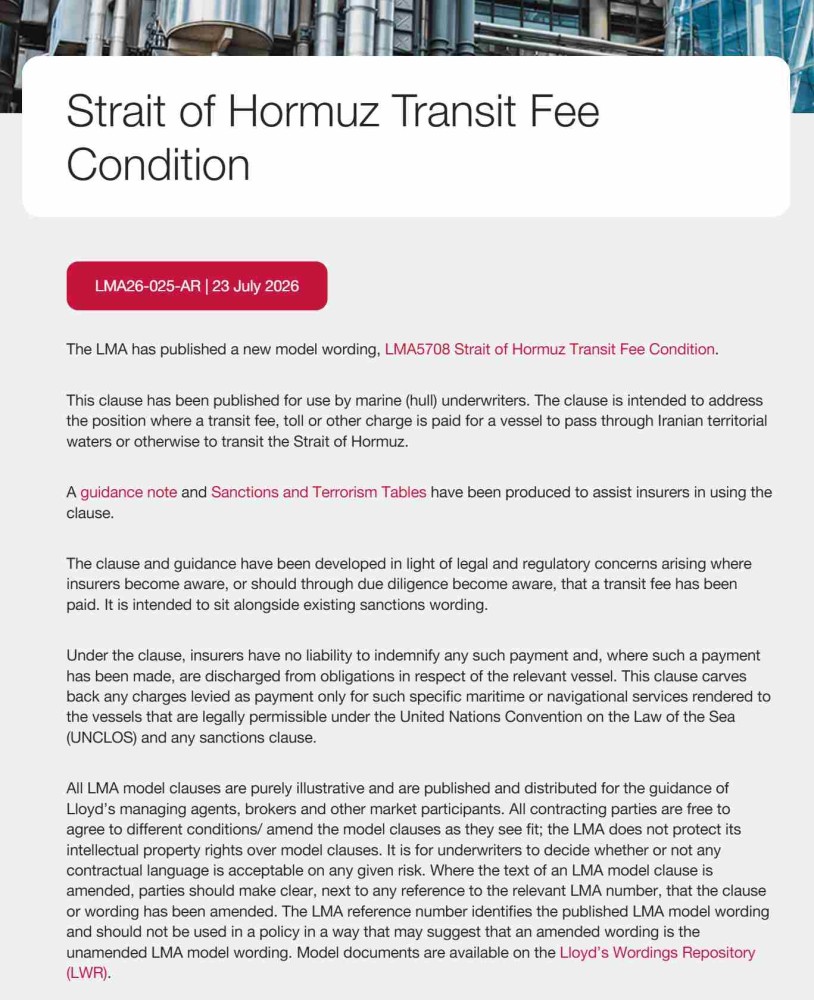
On 23 July 2026, the Lloyd’s Market Association published LMA5708, the Strait of Hormuz Transit Fee Condition. The model clause allows marine hull underwriters to terminate their insurance obligations for a vessel where any transit fee, toll, charge or other consideration has been paid in connection with passage through Iranian territorial waters or the Strait of Hormuz.
The development moves the Hormuz transit problem beyond physical security and additional war-risk premiums. Sanctions compliance, terrorism-financing legislation and the continuing validity of a vessel’s insurance cover have now become central parts of the transit decision.
A deliberately broad definition of payment
LMA5708 applies to direct and indirect payments made by any means.
The wording covers financial payments as well as non-financial consideration. A shipowner cannot necessarily avoid the clause by arranging for a charterer, agent, intermediary or local service provider to make the payment.
The clause is also drafted without limiting the recipient to the Iranian government or the Islamic Revolutionary Guard Corps. LMA guidance says the wording was deliberately widened so that underwriters do not have to prove that the ultimate recipient is linked to the IRGC.
It may also catch a payment made to Oman or another state where the payment is imposed simply for transit through an international waterway.
Where a prohibited payment is made, insurers have no obligation to reimburse the payment. More significantly, they are “irrevocably discharged” from their obligations in connection with the relevant vessel from the moment the payment or other consideration is provided.
The remedy therefore goes beyond the temporary suspension commonly found in sanctions clauses. Under the new condition, cover for the affected vessel terminates.
A model clause, not an automatic global rule
The wording does not automatically amend every marine insurance policy in the world.
LMA5708 is an illustrative model clause developed for marine hull underwriters. Insurers, brokers and insured parties must incorporate it into a policy, renewal or endorsement before it becomes contractually binding. They remain free to amend the wording or agree different terms.
The distinction is important. The Lloyd’s Market Association represents 59 Lloyd’s managing and members’ agents and plays an influential role in developing London-market policy wordings. It does not independently impose contractual terms on every insurer or shipowner.
The clause is expected to carry considerable influence because Lloyd’s and the wider London company market remain major centres for marine hull, war-risk and reinsurance capacity. Its practical reach will depend on how quickly underwriters incorporate LMA5708 into policies.
Only the affected vessel is caught
LMA guidance expressly states that a payment by one vessel will not terminate cover for an owner’s or manager’s entire fleet.
The condition applies to the particular vessel in respect of which the toll or other consideration was paid. LMA has submitted the clause to the US Office of Foreign Assets Control and the UK Office of Financial Sanctions Implementation, partly to clarify that the contractual consequence is vessel-specific.
The wording has primarily been designed for hull policies and to assist the hull and war-risk markets. Cargo insurance, charterers’ liability and protection and indemnity insurance raise separate contractual issues.
LMA stated in March that liability cover provided through the International Group P&I clubs was non-cancellable and continued to be reinsured in the London market. The new model clause therefore should not be described as automatically extinguishing every category of insurance carried by a ship.
P&I clubs and other insurers may nevertheless be unable to respond where payment or continued cover would breach sanctions, terrorism-financing rules or an existing sanctions clause. Each policy and transaction will require a separate analysis.
US sanctions have already closed the main compliance route
The insurance clause follows increasingly explicit US sanctions warnings.
OFAC FAQ 1249 states that US persons, US financial institutions and foreign entities owned or controlled by US persons are not authorised to make direct or indirect payments to the Government of Iran or the IRGC in return for safe passage through the Strait of Hormuz.
US persons are also prohibited from receiving Iranian government services connected with a guarantee of safe passage, even where no payment is made. Non-US shipowners, banks, insurers and traders may face secondary-sanctions exposure when transactions involve designated or blocked Iranian parties.
On 27 May, OFAC designated the so-called Persian Gulf Strait Authority as a specially designated national. The US Treasury described the PGSA as an IRGC-linked body created to collect tolls, require vessels to submit information and direct ships towards an Iranian-controlled route close to the Iranian coast.
For underwriters, continuing to insure a vessel after becoming aware that it has paid an Iranian-linked entity could create exposure under US, UK or EU sanctions and terrorism-financing laws.
LMA5708 provides insurers with a contractual mechanism to end that exposure from the moment a payment is made.
Charges for genuine services remain possible
The condition contains a limited carve-back.
It does not apply to charges imposed solely for specific maritime or navigational services actually rendered to a vessel, provided that those charges are legally permissible under the United Nations Convention on the Law of the Sea and comply with the policy’s sanctions provisions.
Article 26 of UNCLOS states that no charge may be levied on a foreign ship solely because it passes through a territorial sea. Charges may be imposed only for specific services rendered to the vessel and must be levied without discrimination.
On 13 July, the IMO Council reaffirmed that transit through the Strait of Hormuz should remain free of tolls and charges and that the right of transit passage must not be threatened, impeded or suspended.
Charges for genuine pilotage, towage, navigational assistance or pollution-response services may potentially fall within the exemption. Re-labelling a compulsory transit toll as a security, environmental or insurance service would not by itself make the charge lawful or sanctions-compliant.
Wider consequences for chartering and finance
The impact of LMA5708 extends beyond a potential insurance claim.
Ship mortgages and leasing agreements normally require an owner to maintain hull, war and P&I cover that meets the lender’s requirements. Termination of hull cover following a transit payment could place the owner in breach of financing covenants and trigger demands for additional security, accelerated repayment or other default remedies.
Charterparties may also face disputes over routing instructions. An owner may refuse an order to use a route that requires payment to an Iranian-linked entity where compliance would terminate insurance, breach sanctions or expose the crew and vessel to unacceptable danger.
Owners will need to establish whether charterers, agents, cargo interests or local intermediaries have provided any payment or non-financial consideration on behalf of the vessel. Non-disclosure will not necessarily protect either the owner or the underwriter, particularly as LMA expects insurers to carry out enhanced due diligence.
Hormuz traffic has not fallen to zero
The clause will add another deterrent for mainstream owners considering a Hormuz transit. It does not establish that Gulf oil and gas exports have completely stopped.
Lloyd’s List Intelligence reported that non-Iranian-linked vessel transits fell from 108 to 25 in the week of 13–19 July, while inbound traffic dropped to eight vessels. Total traffic was approximately 90% below the corresponding level a year earlier. Some ships have continued to transit through Iranian-approved routes, with AIS switched off or under other exceptional arrangements.
LMA has also stressed that vessel and crew safety remains the primary reason for reduced traffic. War-risk insurance capacity continues to exist in the London market, although pricing and conditions reflect the severity of the threat.
LMA5708 does not physically close the Strait of Hormuz. It converts the toll issue into a clear insurance trigger.
If the wording is widely adopted across the London and international reinsurance markets, owners may have to choose between accepting Iranian transit conditions and preserving access to Western insurance, finance and sanctions-compliant commercial operations.
That additional contractual barrier will further weaken the commercial viability of Gulf transits and accelerate investment in pipelines, alternative ports and energy-export routes that bypass the Strait of Hormuz.

READ MORE
 Safety
Opinion:Why a Rapid Return to Calm in the Middle East Looks Unlikely
 Safety
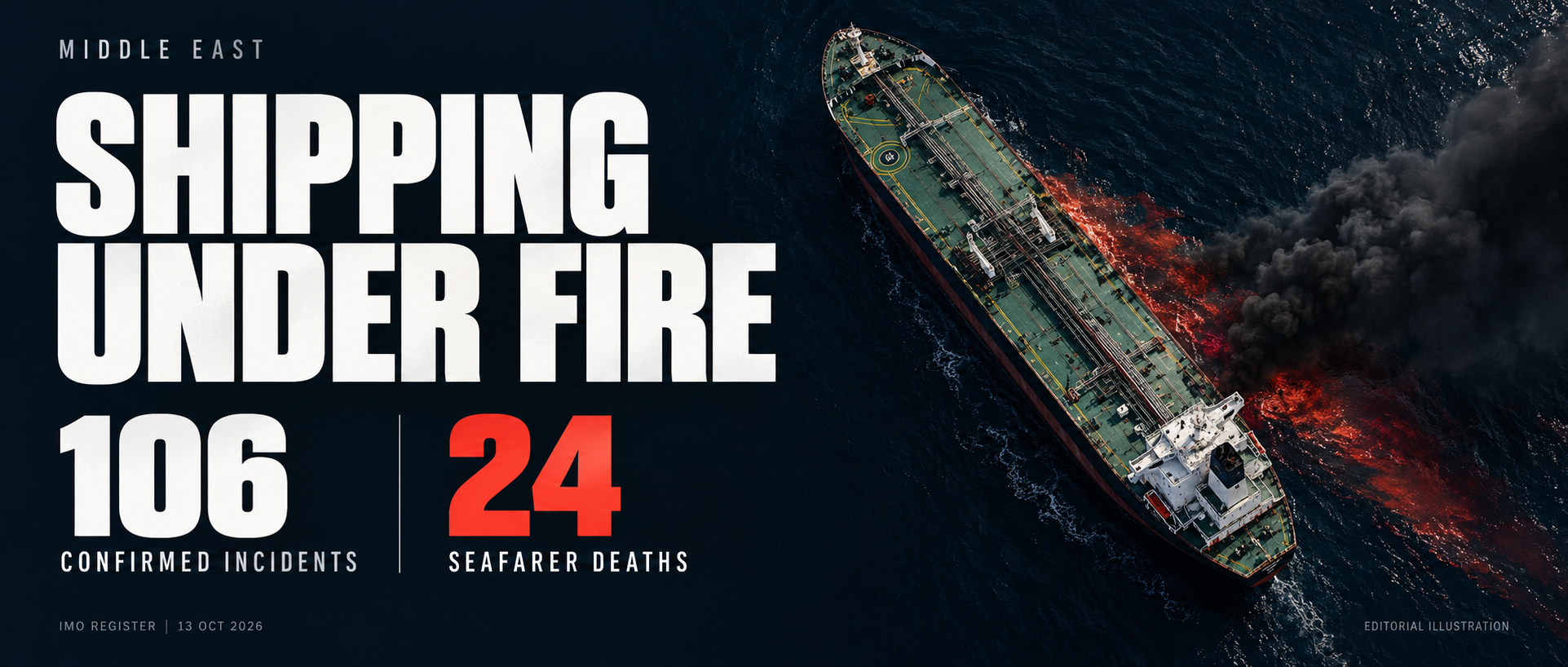
Middle East war leaves mounting toll on merchant shipping
 Safety
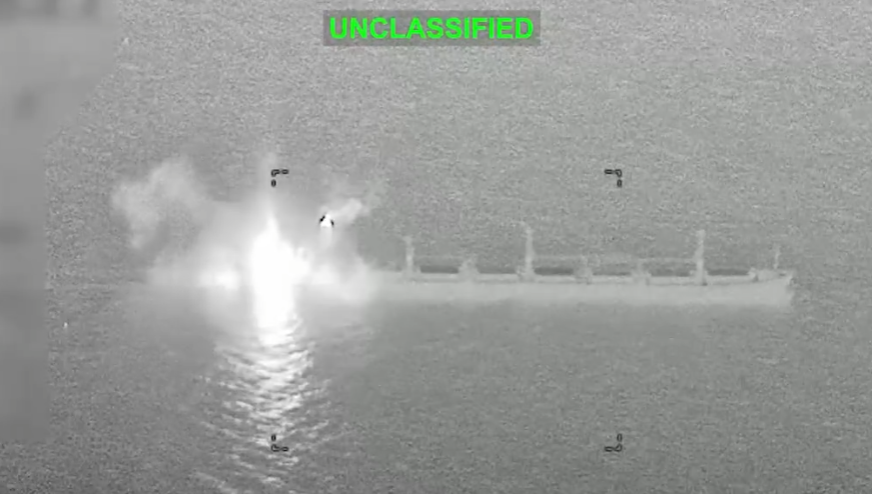
US Says It Disabled Hong Kong-Owned Bulker off Oman
 Safety
Alcohol‑Control for Seafarers and Key Points for PSC Inspections
 Safety
Attacked Just 42Days After Delivery: George Prokopiou’s 115,000-Dwt Tanker Hit in Hormuz
 Safety
Five Seafarers Reported Dead as Puntland Retakes Hijacked Tanker Honour 25
 Safety
China-U.S. Consensus Highlights Free Navigation: No Country or Entity Should Impose Transit Fees on International Waterways
 Safety
1 seafarer killed, Fatal attack in the Strait of Hormuz: Capesize bulker CAPE DAO hit by unknown projectile
 Safety
25 Crew Abandon MSC Container Ship in the South China Sea — All Rescued, Vessel Still Adrift
 Safety