


The Northern Route Is Becoming a Specialised Energy Corridor
Three Arc7 LNG carriers are sailing east as Russian Arctic gas projects, ice-class tonnage, floating storage units and Chinese import terminals become increasingly interconnected
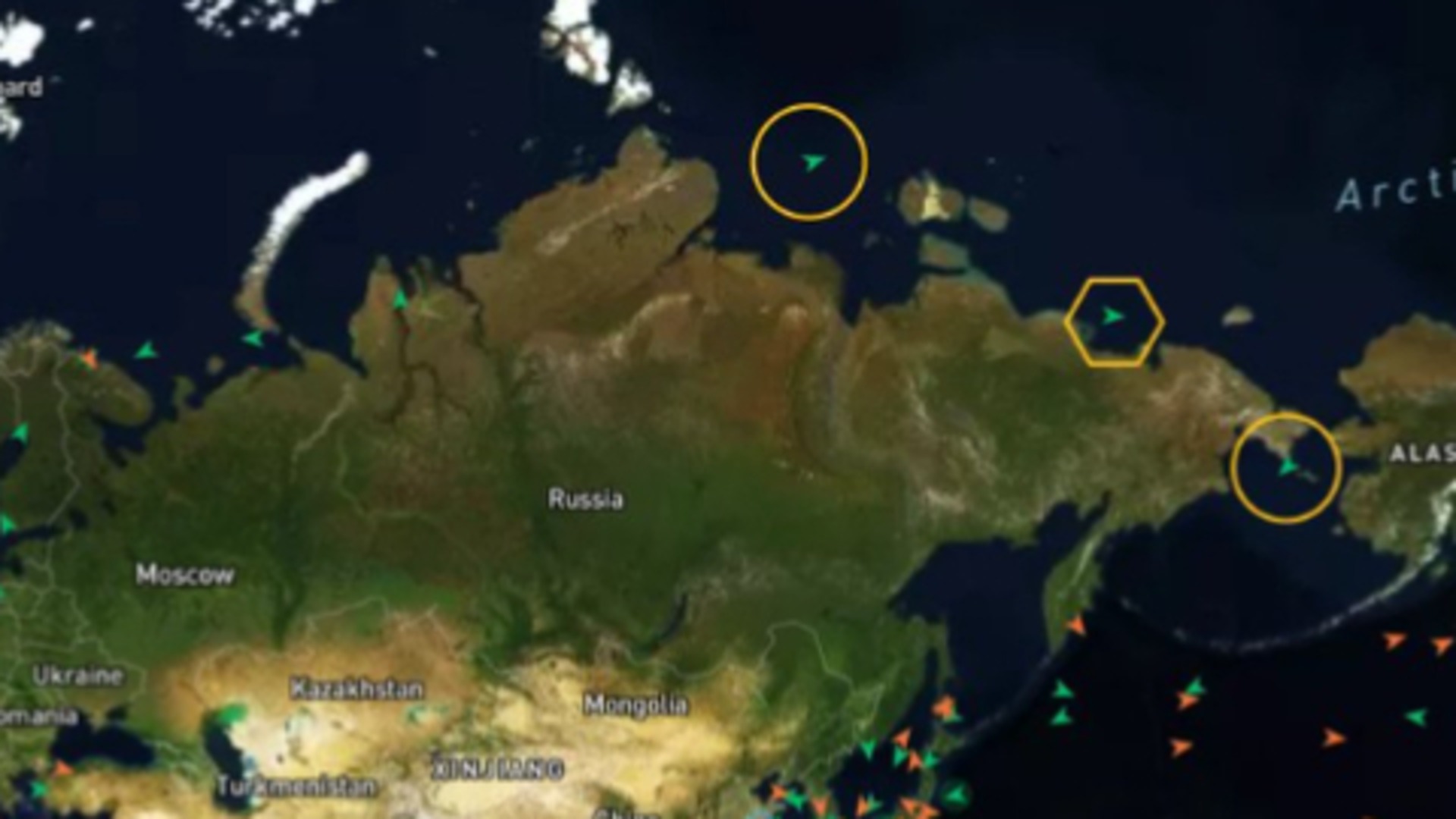

The Northern Route is becoming busy again as the 2026 Arctic navigation season gathers pace.
Recent vessel-tracking data shows three Arc7 icebreaking LNG carriers sailing east along Russia’s northern coastline: Christophe de Margerie, Eduard Toll and Boris Vilkitsky.
The cargoes do not all come from the same project. Christophe de Margerie is carrying LNG from the sanctioned Arctic LNG 2 development, while Eduard Toll and Boris Vilkitsky loaded at the established Yamal LNG project.
The three voyages reportedly represent the second, third and fourth eastbound LNG transits of the 2026 Northern Sea Route season. Christophe de Margerie had already completed the first eastbound LNG voyage earlier this year.
The growing traffic points to a broader development. Russia is gradually connecting Arctic LNG production, ice-capable shipping, nuclear-powered icebreakers, floating storage facilities and Chinese receiving terminals into a highly specialised energy logistics system.
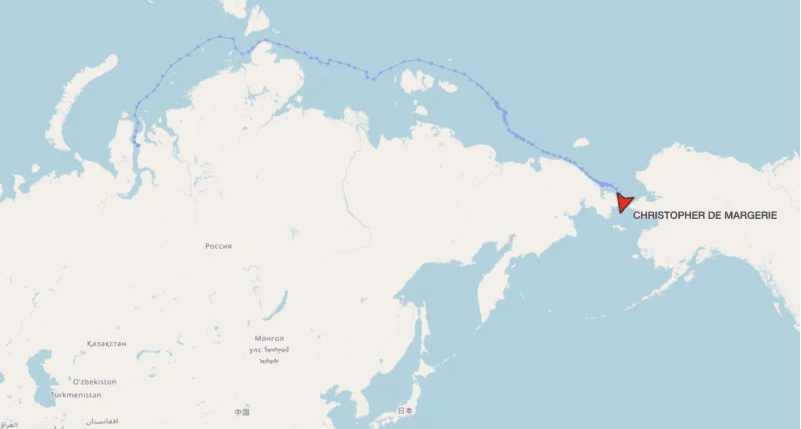
Christophe de Margerie’s route along the Northern Sea Route. (Source: GoRadar)
An early start to the 2026 season
This year’s eastbound LNG season began unusually early.
Christophe de Margerie departed the Arctic LNG 2 terminal at Utrenniy in late May and passed through the Bering Strait in early June. The Northern Sea Route section of the voyage took around 13 days.
The transit took place while significant ice remained across parts of the eastern Arctic. The vessel required icebreaker support and slowed considerably in more difficult sections.
Even under those conditions, the route remained substantially shorter than sailing west from the Russian Arctic, passing through European waters and continuing to Asia via the Cape of Good Hope.
After crossing the Arctic, the vessel proceeded towards the Koryak floating storage unit near Russia’s Kamchatka Peninsula. The cargo could then be transferred to a conventional LNG carrier for delivery to an Asian terminal.
Christophe de Margerie subsequently returned to the Russian Arctic and loaded another Arctic LNG 2 cargo. At the same time, Eduard Toll and Boris Vilkitsky began their own eastbound voyages with Yamal LNG cargoes.
The traffic pattern suggests that the 2026 season has moved beyond a single pioneering transit and into a phase of parallel LNG movements.
A project corridor rather than a conventional trade lane
The Northern Sea Route is often presented as a potential shortcut between Europe and Asia. The LNG system now taking shape has a much narrower and more industrial purpose.
The cargoes originate from Yamal LNG and Arctic LNG 2. Transportation through the most difficult ice-covered waters depends on a limited fleet of Arc7 LNG carriers. Nuclear-powered icebreakers provide support when conditions require it.
Once the cargoes reach the Russian Far East, floating storage units can receive the LNG from the Arc7 vessels. Conventional LNG carriers then complete the voyage to Asian import terminals.
The logistics chain can be summarised as follows:
Arctic LNG project — Arc7 carrier — Northern Sea Route — Kamchatka floating storage unit — conventional LNG carrier — Chinese receiving terminal
Every element is critical.
The availability of Arc7 tonnage, icebreaker scheduling, sea-ice conditions, floating storage capacity, ship-to-ship transfer efficiency and terminal access all determine how much Arctic production can reach the market.
For this reason, the Northern Sea Route increasingly resembles a dedicated energy corridor built around a specific group of projects, vessels and terminals.
Sanctions are redirecting trade flows
Yamal LNG and Arctic LNG 2 are both located in the Russian Arctic, but they operate under very different commercial conditions.
Yamal LNG continues to supply customers in Europe and Asia through a well-established production, shipping and marketing structure. Its shareholder base includes Novatek, TotalEnergies, China National Petroleum Corporation and the Silk Road Fund.
Arctic LNG 2 faces much tighter restrictions. Western sanctions have affected financing, equipment supplies, specialised vessel deliveries and the participation of international buyers.
Those restrictions have sharply constrained the project’s ability to reach its original production and export targets. They have not stopped cargo movements altogether.
Instead, sanctions are encouraging Russia to redesign the project’s export logistics around a smaller group of vessels, Russian-controlled infrastructure and a limited number of end markets.
China has emerged as the principal destination for Arctic LNG 2 cargoes. The Beihai LNG terminal in southern China has already received a substantial number of Russian cargoes, many of which were transferred through Russian floating storage units before arriving at the terminal.
The Northern Sea Route has therefore gained a new strategic function. It allows Russian Arctic gas to move directly towards Asia while reducing dependence on European ports, the Suez Canal and Western maritime service providers.
China is preparing an additional receiving point
The future scale of this corridor depends on receiving infrastructure as much as it depends on ships.
Arctic LNG 2 cargoes have so far been concentrated at the Beihai LNG terminal in Guangxi. That arrangement works while volumes remain limited, but dependence on a single receiving terminal creates operational constraints.
China is now preparing the Longkou LNG terminal in Shandong as an additional potential destination for Russian Arctic cargoes. The terminal is expected to have an initial receiving capacity of around 5 million tonnes per year.
Longkou is geographically better placed than Beihai for cargoes arriving from the Koryak floating storage unit. The shorter voyage could improve the utilisation of conventional LNG carriers and reduce round-voyage times.
Dalian has also been discussed as another possible receiving location.
If more northern terminals become available, the logistics network could develop several delivery options:
Koryak — Longkou
Koryak — Dalian
Koryak — Beihai
A wider terminal network would increase discharge flexibility and reduce the system’s dependence on a single Chinese port.
2027 could accelerate the shift towards Asia
For the moment, Yamal LNG continues to send large volumes to Europe. That trading pattern may change significantly from 2027.
The European Union is moving towards tighter restrictions on Russian LNG imports and associated services. As European demand and trading access decline, a larger share of Russian Arctic LNG may need to be redirected towards Asia.
Such a shift would increase demand for Arc7 carriers, conventional LNG vessels, Far Eastern transshipment capacity and Asian receiving terminals.
It could also raise the commercial importance of the Northern Sea Route beyond the seasonal export of sanctioned Arctic LNG 2 cargoes. Yamal LNG may need the eastbound corridor more frequently as its traditional European market becomes less accessible.
The three LNG carriers currently visible along Russia’s Arctic coast may therefore represent the early stages of a wider restructuring of Russian LNG trade.
Year-round navigation remains difficult
The route’s strategic value is increasing, but the Northern Sea Route has not become a reliable year-round LNG corridor.
The main eastbound navigation window still falls between early summer and the end of the year. Winter conditions in the eastern Arctic remain severe, with thicker ice, rapidly changing weather and higher requirements for propulsion power, ice class and emergency support.
Russia has repeatedly stated its ambition to establish year-round navigation. Progress remains constrained by the number of suitable vessels and the difficulty of winter operations.
The early 2026 voyage by Christophe de Margerie demonstrated what is technically possible. It also highlighted the continuing dependence on icebreaker assistance and reduced speeds in heavy ice.
The Arc7 fleet faces additional challenges. These vessels require specialised maintenance, suitable dry docks, low-temperature equipment expertise and access to replacement components. Sanctions on marine services, insurance and technology further complicate fleet support.
The Northern Sea Route therefore remains a high-cost, technically demanding and strongly seasonal operation.
Its value lies increasingly in the strategic access it provides, rather than in freight economics alone.
A corridor shaped by energy security
The Northern Sea Route has long been discussed as an alternative global shipping lane. In practice, energy and mineral exports have always provided the strongest commercial foundation for its development.
That pattern is now becoming even clearer.
Russia needs an export route for Arctic LNG. China is seeking diversified gas supply. Europe is reducing its exposure to Russian energy. Sanctions are narrowing the available shipping, financing and service options.
Together, these forces are reshaping Arctic energy flows.
The Northern Sea Route now links Russian gas fields, Arc7 LNG carriers, nuclear-powered icebreakers, floating storage units and Chinese import terminals. Its role is becoming more closely tied to energy security, sanctions and supply-chain resilience.
Volumes remain limited, and the technical constraints will not disappear quickly. Yet the underlying structure is becoming more defined.
The Northern Sea Route is evolving from a seasonal Arctic passage into a specialised energy corridor with dedicated cargoes, dedicated tonnage, dedicated transfer infrastructure and a clearly identified destination market.

READ MORE
 Ports & Terminals
Yantian Port plans RMB3.79bn Zhangjiagang terminal
 Ports & Terminals
Vietnam’s Cai Mep Terminals Open 1,200-Metre Shared Berth
 Ports & Terminals
Ningbo Port’s September Box Volumes Rebound 9.3%
 Ports & Terminals
Can a 134-Kilometre Canal Redraw China’s Shipping Map?
 Ports & Terminals
Germany Blocks COSCO’s Zippel Deal, Testing Inland Logistics Expansion
 Ports & Terminals
Keep buying!Inside the Maersk Family’s Infrastructure Buying Spree——From 70-Plus Ships to 50-Plus Terminals
 Ports & Terminals
US Fees on Chinese-Built Ships May Be Delayed Until January, Pending USTR Action
 Ports & Terminals
COSCO SHIPPING and Shanghai Post Launch 28-Day Postal Sea Route to Peru via Chancay
 Ports & Terminals
Pinglu Canal opens a new river-to-sea route for southwest China
 Ports & Terminals