


Shanghai Overtakes London to Become World’s Second-Leading International Shipping Centre
.

Shanghai has moved ahead of London for the first time in the Xinhua-Baltic International Shipping Centre Development Index, reflecting the growing influence of Asian maritime hubs and the expanding role of the Chinese city in global shipping, logistics and maritime services.
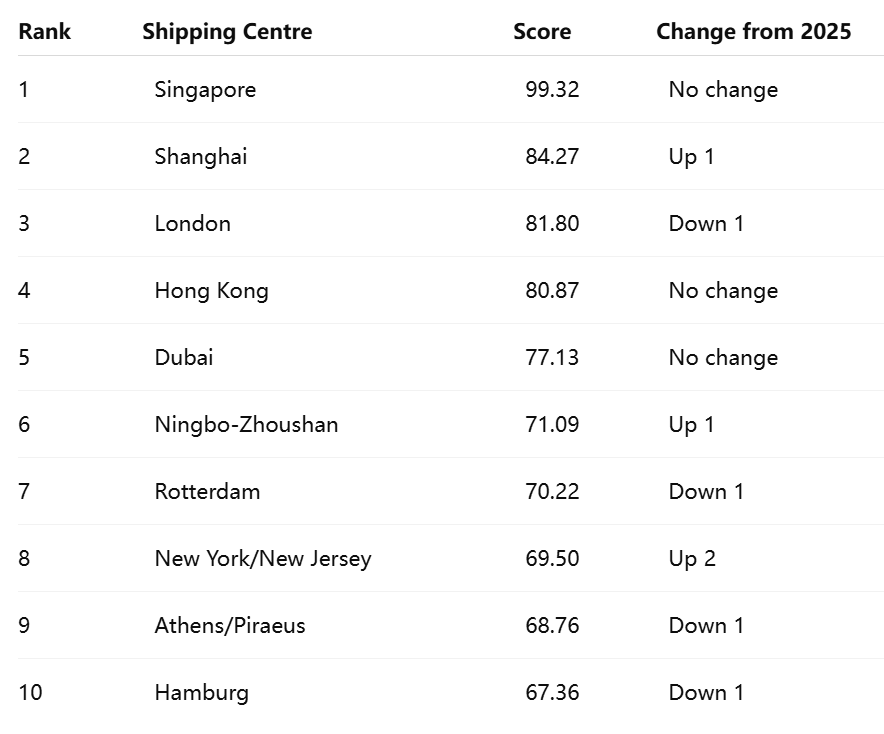
Shanghai has overtaken London to become the world’s second-ranked international shipping centre, according to the 2026 Xinhua-Baltic International Shipping Centre Development Index.
The result marks Shanghai’s highest position since the index was launched in 2014, when the city ranked seventh. It also changes a top-three order that had remained unchanged for six consecutive years.
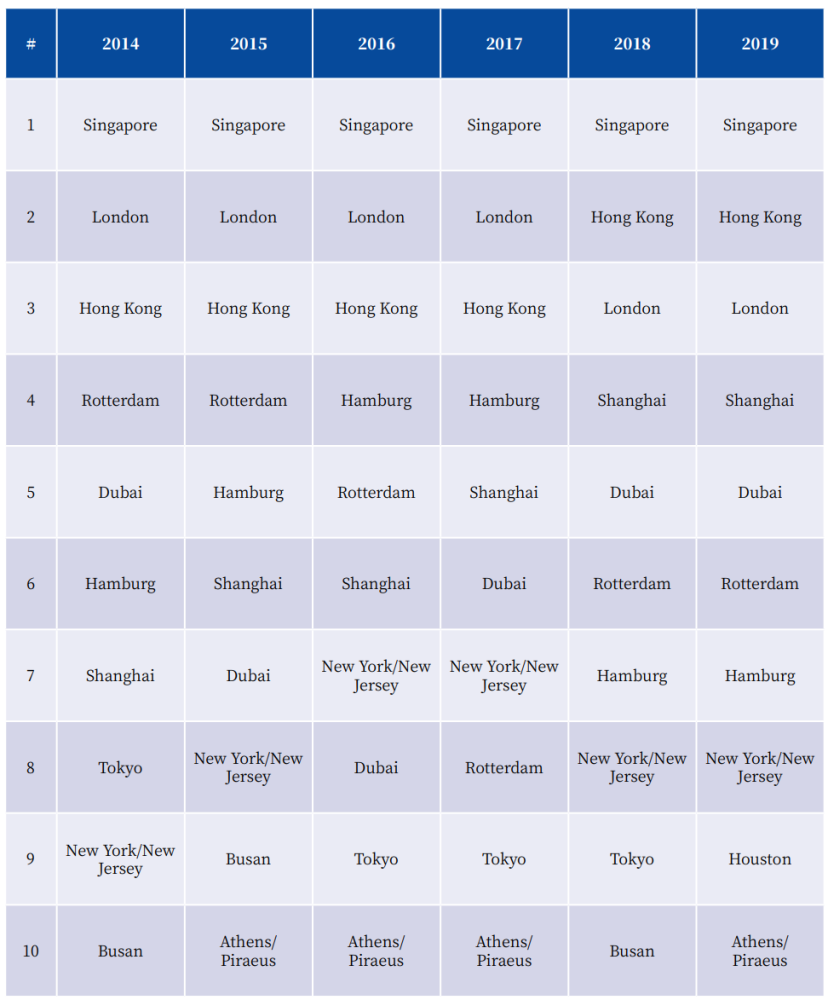
Singapore retained first place for the 13th year in a row, scoring 99.32 out of 100. Shanghai ranked second with 84.27 points, ahead of London on 81.80. Hong Kong remained fourth with 80.87, while Dubai completed the top five with 77.13.
2026 Xinhua-Baltic International Shipping Centre Rankings
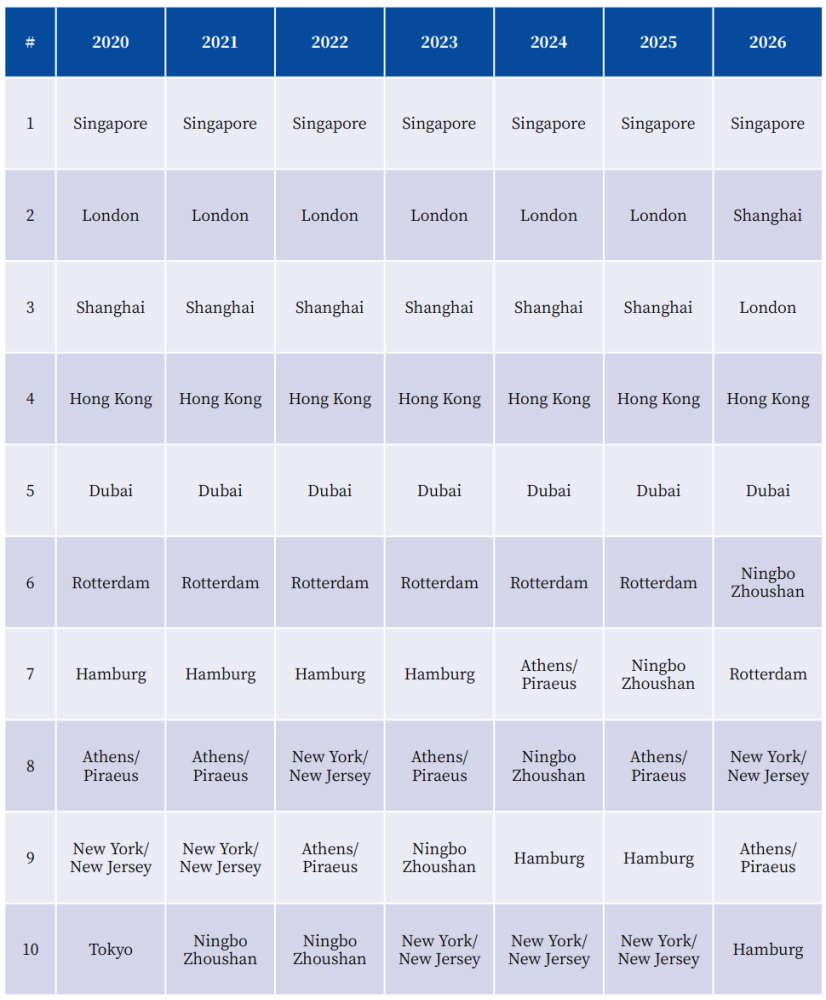
The annual index is jointly produced by Xinhua’s China Economic Information Service and the Baltic Exchange. Its 2026 edition evaluates 43 maritime centres through three broad categories: port factors, shipping services and the general business environment.
Shipping services carry the largest weighting at 50%, covering shipbroking, ship engineering, shipping companies, maritime law and ship finance. Port factors account for 20%, while the general environment—including government transparency, logistics performance, customs tariffs and the ease of doing business—accounts for the remaining 30%.
This methodology means that the index measures more than port size. It also assesses whether a city can provide the financial, legal, commercial, technical and regulatory infrastructure required by international shipping companies.
Shanghai’s rise built on port scale and service expansion
Shanghai’s ascent has been supported by its position at the centre of global containerised trade.
Shanghai Port handled 55.063 million teu in 2025, an increase of 6.9% year on year, retaining its position as the world’s busiest container port for the 16th consecutive year. The port reached the 50 million teu threshold on November 26, about four weeks earlier than in 2024.
The Yangshan Deepwater Port complex remained the principal driver of growth. It accounted for 52.1% of Shanghai’s total container throughput, with volumes rising 10.4% from the previous year. International transshipment traffic increased by 10.6% to 7.91 million teu, while the Yangshan Phase III terminal handled more than 10 million teu for the first time.
Shanghai is also attracting further investment from global shipping and logistics companies. In November 2025, Maersk opened a flagship logistics centre in the Lin-gang Special Area, close to Yangshan Port, to support international logistics and cross-border e-commerce activities.
The city’s development, however, is increasingly extending beyond cargo handling and terminal infrastructure.
The North Bund International Legal Service Port opened in May 2025, bringing maritime arbitration, legal advisory and commercial services into a single cluster. The surrounding area is now home to more than 4,600 shipping-related businesses.
The International Chamber of Shipping also established a representative office in Shanghai, while China Classification Society created an international ship-survey operations team in the city. The London P&I Club became the first member of the International Group of P&I Clubs to establish a representative office in Shanghai.
These developments have strengthened Shanghai’s ability to serve shipowners, operators, charterers, insurers and other participants across the maritime value chain.
London remains a maritime services powerhouse
Shanghai’s overall rise does not mean that it has displaced London in every category.
London remains one of the world’s most influential centres for maritime law, arbitration, insurance, broking and ship finance. In the shipping services component of the index, London ranked first, followed by Singapore and Shanghai.
The result highlights the different strengths of the leading centres. Shanghai combines unmatched container throughput, large-scale port infrastructure and growing professional services. London’s position continues to rest on a mature concentration of maritime lawyers, arbitrators, insurers, brokers, financiers and industry organisations.
The gap in high-end maritime services remains an important issue for Shanghai. The city’s next stage of development will depend on its ability to expand internationally recognised capabilities in marine insurance, ship finance, maritime arbitration, information services and the formulation of global industry rules.
That challenge has been acknowledged in Shanghai’s development planning. The city’s emerging five-year transport strategy places greater emphasis on high-value maritime services alongside port infrastructure, logistics and connectivity.
Chinese maritime centres gain ground
Shanghai’s rise formed part of a broader improvement in the performance of Chinese maritime centres.
Ningbo-Zhoushan moved from seventh to sixth, overtaking Rotterdam. Guangzhou and Qingdao each climbed one place to 11th and 12th, respectively, while Tianjin moved up to 17th.
Seven Chinese centres were included in the global top 20: Shanghai, Hong Kong, Ningbo-Zhoushan, Guangzhou, Qingdao, Tianjin and Shenzhen.
Elsewhere, New York/New Jersey recorded the largest advance among the top 10, moving up two places to eighth. Athens/Piraeus and Hamburg each fell one position, while Busan moved ahead of Tokyo for the first time, ranking 14th and 15th, respectively.
The changes point to a wider shift in maritime activity towards Asia-Pacific, where major ports are combining cargo growth with investment in logistics, digitalisation, alternative fuels and professional maritime services.
Green fuels and digital capabilities reshape the competition
The 2026 report also suggests that competition among maritime centres is entering a new phase.
Cargo volume, berth capacity and shipping connectivity remain fundamental, but leading maritime hubs are increasingly being judged on their ability to support decarbonisation, digital operations and supply-chain resilience.
Shanghai became the first port to bunker domestically produced green methanol for internationally trading vessels in 2025. The city has also expanded shore-power coverage, developed green-fuel certification and trading services, and pursued green shipping corridor partnerships with ports including Los Angeles, Long Beach, Hamburg, Barcelona, Antwerp-Bruges and Melbourne.
Shanghai Port recorded 712,000 cubic metres of LNG bunkering and more than 10,000 tonnes of green methanol bunkering in 2025. It has also developed ship-to-ship green methanol bunkering capabilities, strengthening its position in the emerging alternative marine fuel supply chain.
Singapore is moving in a similar direction. The city-state remains the world’s largest bunkering port and supplied a record 56.77 million tonnes of marine fuel in 2025, including increasing volumes of alternative fuels. It is connected to more than 600 ports and hosts more than 200 international shipping groups.
Artificial intelligence is becoming another competitive differentiator. Shipping companies and ports are deploying AI in voyage optimisation, terminal operations, predictive maintenance, cargo planning and supply-chain management. The report nevertheless notes that adoption is running ahead of governance, with many companies testing AI applications but relatively few having established comprehensive systems for managing their use.
A milestone, with further work ahead
Shanghai’s move into second place is an important milestone in the city’s development as a global maritime centre.
Its rise reflects the scale of Shanghai Port, the strength of China’s trading and manufacturing economy, the growth of the Yangtze River Delta logistics network and the gradual development of a broader maritime services ecosystem.
It also illustrates how the definition of a successful shipping centre is changing. The leading centres can no longer rely on cargo throughput or geographical position alone. They must combine physical connectivity with finance, insurance, legal expertise, digital infrastructure, green fuel availability and influence over international maritime standards.
Shanghai has established itself as one of the world’s most important port and logistics centres. Its next challenge will be to translate that operational scale into deeper global influence across the commercial and institutional layers of international shipping.
Singapore remains the benchmark, while London continues to demonstrate the enduring value of a mature professional maritime cluster. Shanghai’s rise therefore signals stronger competition among the world’s leading centres—and a maritime map increasingly shaped by the growth of Asia.


READ MORE
 Ports & Terminals
Ningbo Port’s September Box Volumes Rebound 9.3%
 Ports & Terminals
Germany Blocks COSCO’s Zippel Deal, Testing Inland Logistics Expansion
 Ports & Terminals
Keep buying!Inside the Maersk Family’s Infrastructure Buying Spree——From 70-Plus Ships to 50-Plus Terminals
 Ports & Terminals
Vietnam’s Cai Mep Terminals Open 1,200-Metre Shared Berth
 Ports & Terminals
US Fees on Chinese-Built Ships May Be Delayed Until January, Pending USTR Action
 Ports & Terminals
COSCO SHIPPING and Shanghai Post Launch 28-Day Postal Sea Route to Peru via Chancay
 Ports & Terminals
Pinglu Canal opens a new river-to-sea route for southwest China
 Ports & Terminals
China’s $10.7bn Pinglu Canal to Open Sept. 16, Cutting Southwest–ASEAN Shipping Route by 560 km
 Ports & Terminals
Northern Europe Port Strikes Add New Pressure to Asia–Europe Container Schedules
 Ports & Terminals