


China Responds to Panama’s Remarks on Port State Control Inspections at OAS Dialogue
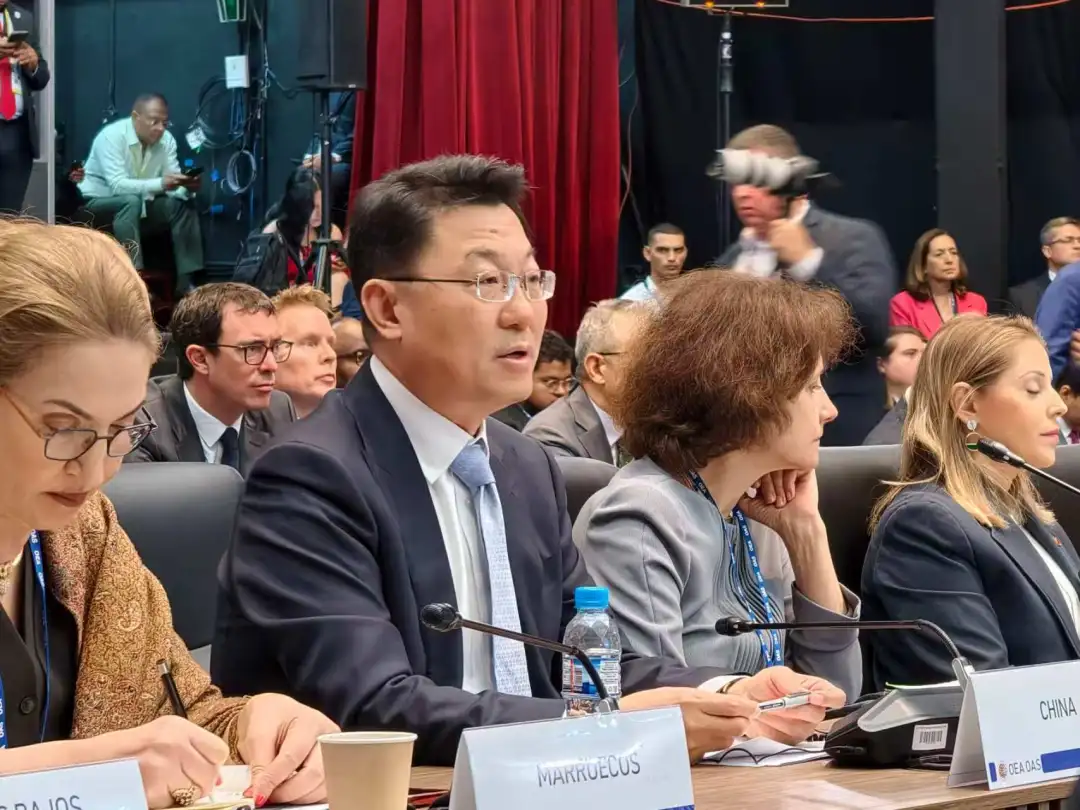
Chinese Ambassador Xie Feng Responds to Panama’s Remarks on Port State Control Inspections at OAS Dialogue
Xinde Marine News — Chinese Ambassador to the United States and Permanent Observer to the Organization of American States (OAS), Xie Feng, responded on June 23 to remarks made by the Panamanian side concerning China’s port state control inspections on visiting vessels, according to a statement released by the Chinese Embassy in the United States.https://us.china-embassy.gov.cn/eng/dshd/202606/t20260624_11951115.htm
Ambassador Xie made the remarks while attending the Dialogue with Permanent Observers of the OAS in Panama. The Chinese Embassy said the Panamanian side had made what China described as “groundless accusations” and “erroneous remarks” over China’s inspection of incoming vessels.
Xie said China, as a major shipping nation, attaches great importance to maritime transport safety and the safety of life at sea. He noted that since the beginning of 2026, Panama-flagged vessels had been involved in several consecutive collisions between merchant ships and fishing vessels in Chinese waters, resulting in deaths and missing persons.
According to Xie, China’s port state control inspections were carried out in accordance with Chinese laws and relevant international conventions, and were intended to ensure maritime safety, vessel safety and crew safety. He stressed that the inspections did not target any specific country or flag state.
The remarks came against the backdrop of wider tensions involving Panama Canal port concessions and Panama-flagged vessels. Earlier this year, Panama’s Supreme Court invalidated the legal framework supporting a 1997 concession held by a Hong Kong-linked company operating ports at both ends of the Panama Canal. The decision has drawn criticism from China and has become part of a broader geopolitical dispute involving China, Panama and the United States.
Xie said Chinese companies had been legally operating the ports at both ends of the Panama Canal since being granted the concession in 1997, and had contributed to Panama’s economic development. He said the cooperation had proceeded smoothly for nearly three decades, with no major disputes or complaints raised by the Panamanian side.
Referring to the court decision and subsequent takeover of the port operations, Xie said China viewed the move as politically driven. He warned that if contracts could be disregarded, market rules ignored, assets taken over and operators forced out, investor confidence and international cooperation would be damaged.
Xie urged the Panamanian side to “correct its mistakes” and protect the legitimate rights and interests of Chinese enterprises.
The issue has attracted close attention from the maritime industry because Panama is the world’s largest flag state by fleet size, while China is one of the world’s most important port state control jurisdictions and shipbuilding, shipping and port markets. Any prolonged friction involving Panama-flagged vessels, port inspections or canal-linked assets could have implications for shipowners, operators and investors active in global maritime trade.


READ MORE
 Ports & Terminals
China and US Extend Suspension of Maritime Measures Until January 2027: Implications for Global Shipping
 Ports & Terminals
China Extends Suspension of Special Port Fees on US Ships Until January 2027
 Ports & Terminals
Qingdao Port and Singapore MPA Sign Green and Digital Shipping Work Plan
 Ports & Terminals
Singapore Retains Position as World’s Leading Maritime City in 2026
 Ports & Terminals
Global Dockworker Strike Reaches 113 Ports: Greek Ferry Services Disrupted as Unions Mobilise Worldwide
 Ports & Terminals
US Proposes Extending Port Fee Relief for Chinese-Owned and Chinese-Built Ships
 Ports & Terminals
HONG KONG MARITIME WEEK 2026 10TH ANNIVERSARY 15-21 NOVEMBER
 Ports & Terminals
Chancay Port: Defending Legitimate Investment Through the Rule of Law
 Ports & Terminals
Chancay Port: A Gateway for Trade, Competition and Shared Prosperity
 Ports & Terminals