


Major Shift in U.S. East Coast Shipping Network: Charleston’s New $1 Billion Container Terminal to Pause Operations, Cargo to Be Rerouted
The U.S. East Coast container shipping network is set for a significant operational reshuffle as the Port of Charleston moves to temporarily suspend operations at its newest deepwater container facility.
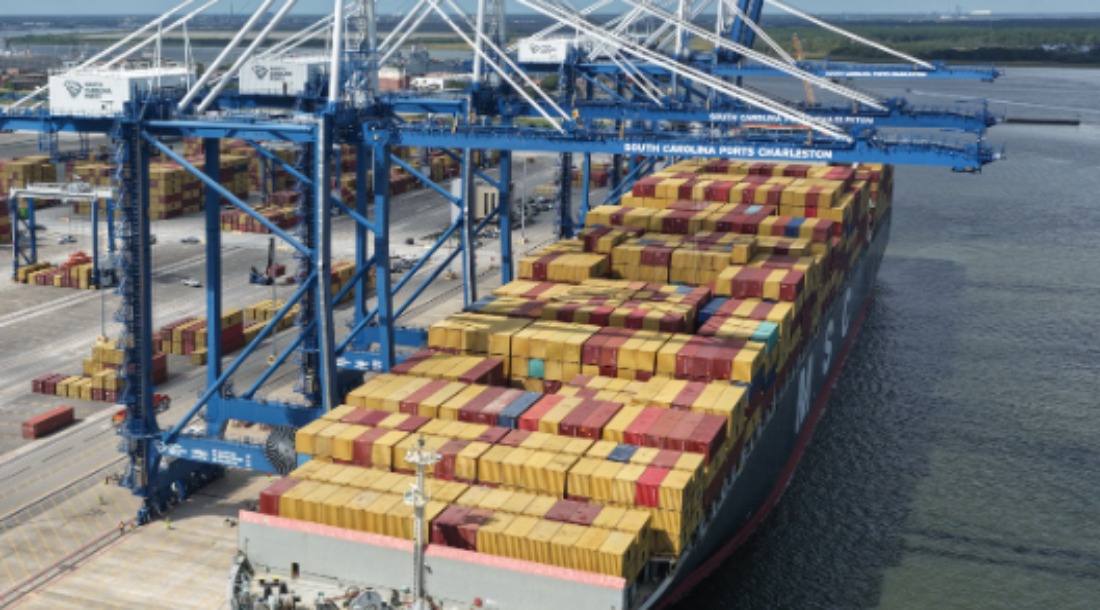

The South Carolina Ports Authority (SC Ports) confirmed on June 25, 2026, that the Hugh K. Leatherman Terminal will pause container operations starting August 1, 2026, with all cargo activity consolidated into the port’s two other major container terminals, Wando Welch Terminal and North Charleston Terminal.
New terminal underutilized despite major investment
The Leatherman Terminal, which opened in 2021 after more than a decade of planning, was developed as a flagship infrastructure project on the U.S. East Coast. The facility represented an investment of around $1 billion and was designed as a highly automated deepwater terminal aimed at handling ultra-large container vessels calling the Southeast U.S. market.
At full buildout, the terminal was expected to provide up to 2.4 million TEU of annual capacity, significantly expanding Charleston’s role in trans-Pacific and Asia–U.S. trade flows.
However, actual throughput has remained far below expectations. According to operational data cited by local reporting based on SC Ports figures, the terminal handled only around 75,000 TEU in the last fiscal year, equivalent to roughly 10% of its designed Phase 1 capacity.
Reasons behind the suspension
SC Ports said the decision is driven by a combination of:
weaker-than-expected container demand
uncertain trade outlook for the second half of 2026
elevated operating costs relative to other terminals in Charleston
industry-wide volume softening and carrier network adjustments
Port leadership emphasized that the move is a “short-term operational pause”, not a permanent closure, and that existing terminals have sufficient spare capacity to handle redirected volumes.
Cargo rerouting and operational impact
Starting August 1, all container operations currently handled at Leatherman will be shifted to:
Wando Welch Terminal (Mount Pleasant)
North Charleston Terminal
SC Ports stated that shippers can expect continued service reliability, but industry participants anticipate short-term network disruption, particularly in:
vessel berth planning and allocation
inland rail and drayage routing
chassis and yard congestion patterns
schedule reliability for Asia–U.S. East Coast services
Several weekly liner services currently calling at Leatherman are expected to be redistributed across other Charleston terminals, potentially altering carrier rotation patterns and inland delivery flows.
Broader implications for U.S. East Coast trade lanes
The decision highlights a broader challenge facing U.S. East Coast port expansion strategies: capacity growth has outpaced near-term demand growth in certain gateways, while carrier alliances continue to concentrate services at fewer high-efficiency terminals.
For ocean carriers, the immediate effect is expected to be re-optimization of East Coast port calls, with possible adjustments in:
Charleston service strings
Savannah–Charleston rotation balance
inland rail connectivity via Norfolk Southern and CSX corridors
Southeast U.S. distribution hub strategies
Structural question remains
The Leatherman Terminal was originally envisioned as a long-term growth engine for the Port of Charleston and a key infrastructure node supporting Southeast U.S. trade expansion.
However, its underutilization and now temporary suspension raise questions about:
timing mismatch between infrastructure investment and trade cycle
carrier willingness to shift volume to new cost structures
labor and operating cost competitiveness among East Coast ports
resilience of port expansion models in volatile demand cycles
SC Ports has reiterated that the facility remains part of its long-term capacity strategy and that operations will resume once market conditions and volume levels justify reopening.
Conclusion
The temporary shutdown of Charleston’s Leatherman Terminal marks one of the most significant operational adjustments in the U.S. East Coast container port system in recent years.
While positioned as a short-term consolidation, the move will immediately reshape cargo routing patterns across the Southeast U.S., and adds a new layer of uncertainty to liner network planning during a critical peak season preparation window.


READ MORE
 Ports & Terminals
US Fees on Chinese-Built Ships May Be Delayed Until January, Pending USTR Action
 Ports & Terminals
COSCO SHIPPING and Shanghai Post Launch 28-Day Postal Sea Route to Peru via Chancay
 Ports & Terminals
Pinglu Canal opens a new river-to-sea route for southwest China
 Ports & Terminals
Keep buying!Inside the Maersk Family’s Infrastructure Buying Spree——From 70-Plus Ships to 50-Plus Terminals
 Ports & Terminals
China’s $10.7bn Pinglu Canal to Open Sept. 16, Cutting Southwest–ASEAN Shipping Route by 560 km
 Ports & Terminals
Northern Europe Port Strikes Add New Pressure to Asia–Europe Container Schedules
 Ports & Terminals
Shanghai-Ningbo Delays Stretch to 11 Days as Typhoon Backlog Spills Into Liner Networks
 Ports & Terminals
Container Schedule Reliability Slumps to 56.4% as Port Congestion Spreads
 Ports & Terminals
Hormuz Toll Debate Tests the Rules Governing the World’s Strategic Straits
 Ports & Terminals